Korea AI Content Awards · Guide

How to win the Korea AI Content Awards.KRW 70 million in prizes. Three tracks. Cinema screenings.

The 2026 rules, what each track and the AI rule mean, and a plan to be ready when the 2027 call opens. The 2027 call is not announced: this guide follows the 2026 call. Then prepare the film in ScreenWeaver.
  • 2027 call not announced yet
  • Shorts under 30 minutes
  • Up to KRW 20 million per film
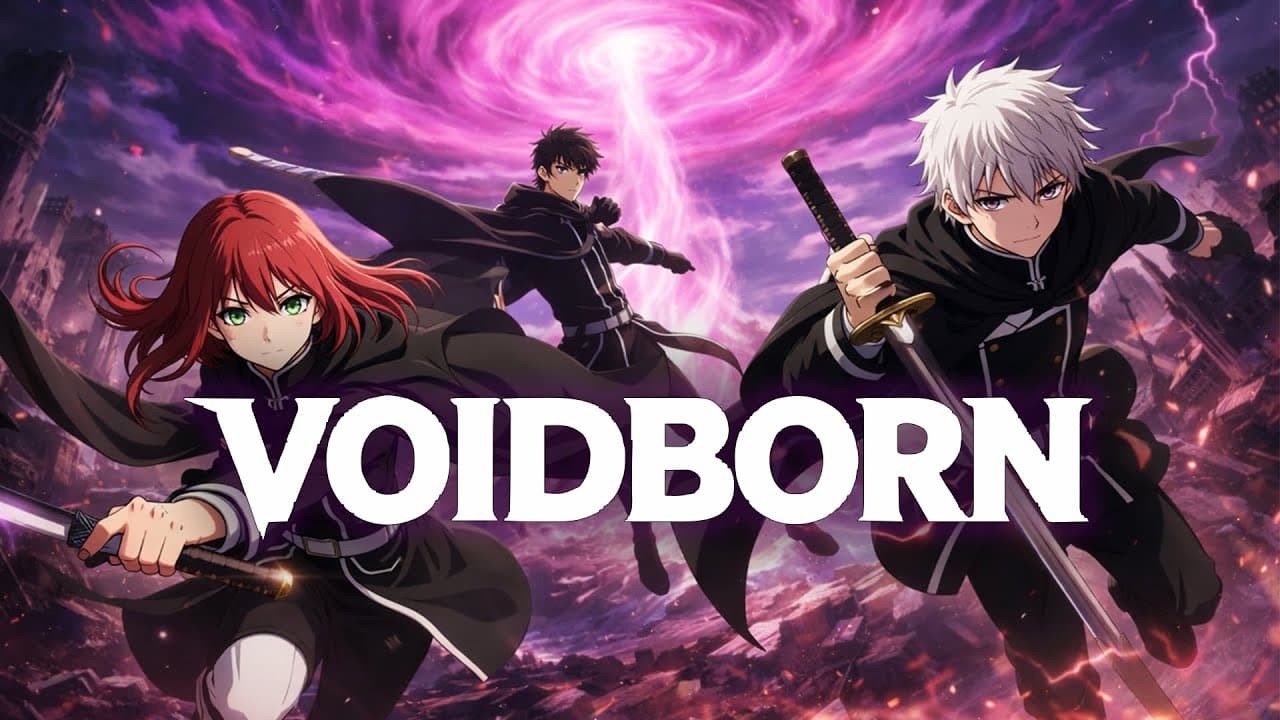
Voidborn · Episode 0

Independent guide. ScreenWeaver does not organise the Korea AI Content Awards and is not affiliated with Gyeonggi Province or the Gyeonggi Content Agency. Rules read on 1 October 2026. Official page

Available today in ScreenWeaver: free screenwriting, and a storyboard generated from your screenplay with Storyboard Beta, $9.99 a month.

Rolling out: video generation of each shot, powered by Seedance, with the Filmmaker plan. None of the sources we read names an imposed AI tool.

The rules on one card

What the 2026 call asked for.

The awards are hosted by Gyeonggi Province and organised by the Gyeonggi Content Agency. The 2025 edition was the renamed Korea International AI Film Festival. The 2026 call is closed, and its ceremony is on 15 and 16 October. The 2027 call is not announced, so this card is the 2026 rule set.
Status
2026 call closed, 2027 not announced
2026 call
1 June to 12 July 2026, 23:59 KST
Running time
Short under 30 minutes, mid-length 30 to under 60
Prizes in 2026
KRW 70 million in total, up to KRW 20 million per film
AI requirement
Generative AI in at least 2 of 4 production areas
Who can enter
18 or over, individuals or teams, any nationality
Delivery
4K or Full HD, English subtitles, a YouTube link
Completion
Completed after 1 January 2025

Source: Gyeonggi Province's 2026 call (gg.go.kr) and Korean press (Newspim, Ajunews, Cineplay), read on 1 October 2026. The FilmFreeway page was not reachable, and sources differ on the closing date: 12 July in the province's call, 22 July in some press. Rules can change for 2027.

Key dates

A summer call and an autumn ceremony.

Nothing is announced for 2027. The last two editions give the rhythm: a call in early summer, screenings and a ceremony in the autumn.
  1. 1 Jun 2026

    The call opens

    Gyeonggi Province opened the 2026 call. In 2025 the call opened on 1 July, after a pre-announcement on 22 May.

  2. 12 Jul 2026

    The call closes

    Submissions closed at 23:59 Korea time, through a Google Form or FilmFreeway, with the film as a YouTube link.

  3. 15 to 16 Oct 2026

    Screenings and ceremony

    Lotte Cinema Suwon hosts screenings, audience Q&As and an industry forum. Finalists then screen at 31 theaters in Seoul and Gyeonggi until 28 October.

  4. 2027

    The next call

    Not announced. The last two calls opened on 1 July 2025 and 1 June 2026, so start watching in May.

The three tracks

Three tracks, three different films.

The 2026 call had three tracks, each with its own limits and prizes. Pick the track before you write, since it decides the length, the entry limit and the prize.
  • 01

    Short film competition

    Under 30 minutes, any genre. Twelve of the 20 finalists in 2026 were shorts, and six shorts won. First place was KRW 8 million. The province's call allows one entry per applicant.

    The crowded track, with one shot per applicant. A tight film with a single idea and a finished sound mix beats a long film with several half ideas.

  • 02

    Mid-length competition

    From 30 to under 60 minutes, new in 2026. Six finalists were screened and three won: KRW 20 million, 10 million and 5 million. The number of entries was not limited.

    Few makers can hold a character and a world consistent for 30 minutes, and that is what a connected project is for. Think of a pilot or a first arc.

  • 03

    Nam June Paik Special Award

    No limit on genre, format or length. Works reinterpret the artistic world of Nam June Paik with AI, in the year of the 20th anniversary of his death. First place KRW 8 million, second KRW 3 million. One entry each.

    Homage and transformation, not imitation. The call bans his portrait, his artwork images, identifiable personal data and copies of existing works. Think signal, screen and rhythm, not biography.

The first two editions

What the numbers show.

In 2026 the awards received 1,528 entries from 87 countries. Twenty reached the finals and eleven won: six shorts, three mid-length films and two Nam June Paik works. The 2025 edition, the first under this name, had a prize pool of KRW 41 million.

  1. 01

    The odds are long. About one entry in 76 reached the finals and one in 139 won. A film that is merely competent does not get through.

  2. 02

    The call changes every year. 2025 had narrative, documentary and arts and culture, with a Grand Prize of KRW 15 million. 2026 moved to short, mid-length and a special award. Read the new rules, not last year's.

  3. 03

    Special themes return. 2025 added a prize for Stories of Sovereignty, tied to the 80th anniversary of Korea's independence. 2026 added the Nam June Paik award. A commemoration may come back in 2027.

  4. 04

    It is a cinema event. Finalists were screened in theaters, 31 of them in 2026. Frames that hold on a big screen matter more than a flashy first minute.

From script to screen

Voidborn: from a script page to six shots.

This is the ruins scene of Voidborn, episode 0, an anime action episode the ScreenWeaver team made with Seedance. It won an award at the Seoul International AI Film Festival, so it has already met a Korean audience. It also shows how a scene goes from a screenplay page to final shots, the path you may be asked to account for.

Logline. Every seven years, the Rift opens and swallows the world’s dreams. A swordsman sworn to a blind seer escorts her through its levels, toward a promise they made to a girl left behind.

Screenplay · episode 0 · English subtitles

EXT. RUINS OF THE FIRST LEVEL - NIGHT

Broken towers under a violet sky. SIM, a swordsman in a black cloak, walks beside LADY MARIA, blindfolded, all in white.

SIM

Tell me, Maria... do you think Leia believes we are still alive?

MARIA

We made a promise... the two of us.

A line of white automatons rises from the ruins.

AUTOMATON

The Rift will wait for no one.

SIM

What are machines doing at this level?

One automaton steps forward. Its face is blank.

AUTOMATON

We must return to the surface.

Its eyes ignite red.

SIM

I am Sim, guardian of Lady Maria... and I will proceed with your execution.

Steel meets steel. Lightning runs down the blade.

CUT TO:

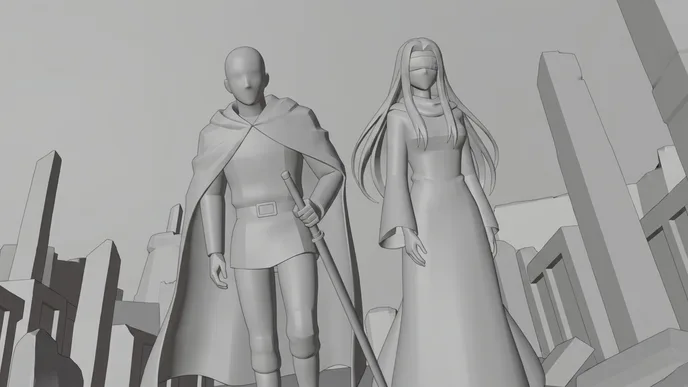
  1. A swordsman in a black cloak and a blindfolded woman in white walk through ruins at night
    Storyboard frame of the wide shot, in grey
    01

    Wide · the pair

    Wide shot, a bald swordsman in a black cloak and a blindfolded red-haired woman in white walk through night ruins

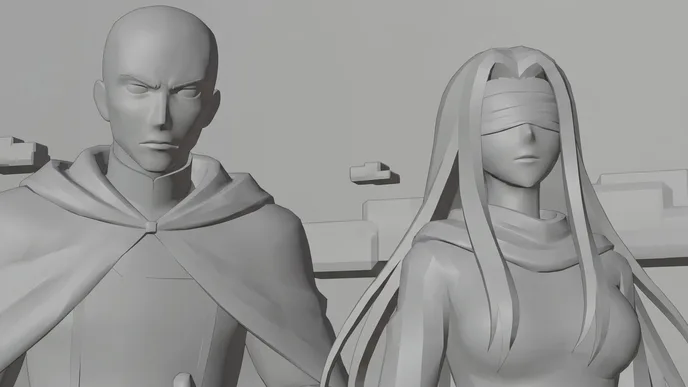
  2. Medium two-shot of a bald swordsman and a blindfolded red-haired woman
    Storyboard frame of the two-shot, in grey
    02

    Two-shot · the promise

    Medium two-shot, the swordsman and the blindfolded seer side by side, violet night sky, broken towers

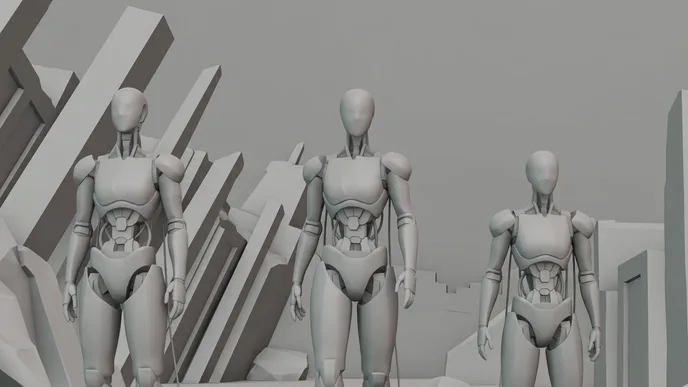
  3. Three white humanoid automatons stand in night ruins
    Storyboard frame of the automatons shot, in grey
    03

    Wide · the machines

    Wide low angle, three white humanoid automatons standing in the ruins, cold blue moonlight

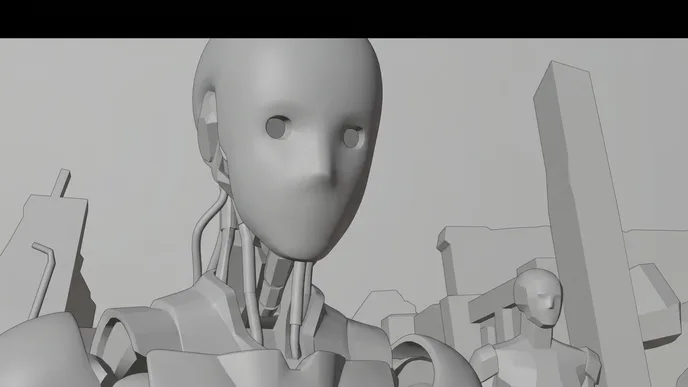
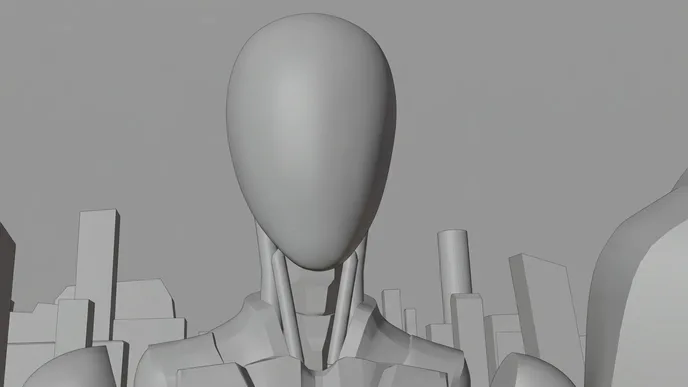
  4. Close-up of a white automaton with a smooth blank face
    Storyboard frame of the blank face close-up, in grey
    04

    Close-up · the blank face

    Close-up on an automaton's smooth faceless head, black eye slots, cables at the neck, ruins behind

  5. A white automaton's eyes glow red
    Storyboard frame of the red eyes close-up, in grey
    05

    Close-up · the red eyes

    Same framing, the automaton's eyes ignite red, the swordsman's shoulder out of focus in the foreground

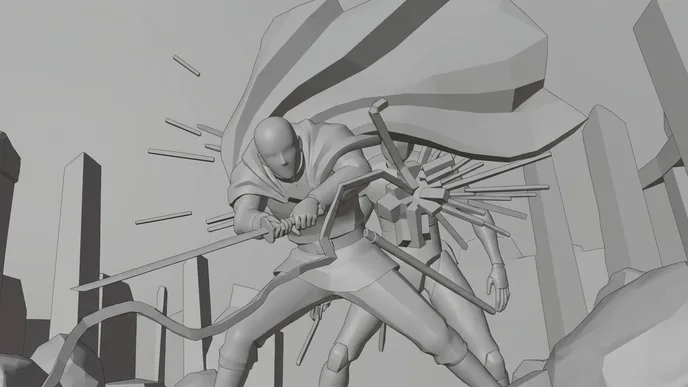
  6. A swordsman strikes with a katana wreathed in lightning and sparks
    Storyboard frame of the clash shot, in grey
    06

    Action · the clash

    Dynamic low angle, the swordsman strikes with his katana, lightning running along the blade, sparks, cape flying

Voidborn, episode 0, 13 minutes, 1st Place Silver and 2nd Place Dreamina at the Mondial Chroma Awards and an award at the Seoul International AI Film Festival. That is well under this competition's 30 minute short limit. The player opens on the ruins, about 7 min in.

The script

An 11 minute short in five movements.

Eleven minutes sits well under the 30 minute ceiling and gives a cinema audience time to settle. Aim for about 110 to 130 shots of 5 to 6 seconds.
  1. 0:00 to 0:45

    The first image

    A frame that works as a poster. Finalists were shown on cinema screens.

  2. 0:45 to 2:45

    The world and the want

    Who we follow and what they are after, in as few lines as possible.

  3. 2:45 to 7:45

    The descent

    Obstacles that cost something. This is where consistency is tested, and where most entries lose the face.

  4. 7:45 to 10:15

    The choice

    The character decides, and we see it rather than hear it.

  5. 10:15 to 11:00

    The last image

    A frame that answers the first one. Then the on-screen AI notice, then credits.

English subtitles are required whatever the language, so write dialogue that survives subtitling: short lines, little wordplay. A film with sparse dialogue travels farther.

Month by month

Ready before the call is public.

There is no deadline yet, so plan to be ready. The 2026 call opened on 1 June, so a film finished in April can be submitted on day one.
  1. 01

    October 2026

    Watch what got through

    Finalists screen in 31 theaters in Seoul and Gyeonggi until 28 October. If you cannot go, read the winners' list when it is published, and note the length and the look.

  2. 02

    November and December 2026

    Pick a track, write the screenplay

    Choose the short or the mid-length track and write for free in ScreenWeaver, in industry format. For a short, eight to twelve pages is a good target.

  3. 03

    January 2027

    References and storyboard

    One reference per character and per location. Generate the storyboard from the screenplay and judge every frame as if it were on a cinema screen.

  4. 04

    February and March 2027

    Generate and edit

    Use generative AI in at least two production areas. Keep the prompts, project files and screenshots. In 2025, winners could be asked to prove their AI use with exactly those.

  5. 05

    April and May 2027

    Finish the package

    Add English subtitles, the on-screen AI notice and a 4K or Full HD master, then watch the Gyeonggi Content Agency and FilmFreeway pages.

  6. 06

    When the call opens

    Check the rules, then submit

    Read the new completion window, tracks and entry limits first. Then upload the film to YouTube, as the 2026 call required, and submit.

Disqualification traps

Seven ways to be out before the review.

Most come from small print in the call. Re-read each one when the 2027 call is published, since the rules changed between 2025 and 2026.
  • Only one AI area

    Generative AI must be used in at least two areas among picture, sound or music, dialogue or narration, and editing or visual effects. A film with AI visuals and a human soundtrack is one area short.

  • No visible AI notice

    According to Korean press on the 2026 call, every work must show that it was AI generated: a logo or watermark, an opening or closing caption, or a metadata watermark. Put it in the film.

  • No English subtitles

    English subtitles are required whatever the original language, and the master must be at least Full HD. A film in Korean, Spanish or French still needs them.

  • A film outside the window

    The 2026 call took works completed after 1 January 2025. Each year sets its own window, so a film finished too early may be ineligible next time.

  • Splitting one idea

    In the province's call the short film and the special award track accept one entry each. Only mid-length had no limit. Submit your best film, not three versions.

  • Using Paik's image

    The special award bans his portrait, images of his artworks, identifiable personal data and replication of existing works. Any of them is grounds for disqualification.

  • No proof of process

    The 2025 rules said winners could be asked for prompts, production videos, screenshots or software logs. If you cannot show how it was made, expect trouble.

Why ScreenWeaver

Prepare now, for a call that opens later.

ScreenWeaver is built for the long haul: one project holds the screenplay, the storyboard and the footage from the first page to the last render.
  • A mid-length film needs a project, not a folder

    Thirty minutes means hundreds of shots. Characters, locations and references carry from shot to shot, so the lead keeps the same face from the first minute to the thirtieth.

  • Proof of process, already kept

    A shot always points back to its scene, its storyboard frame and its prompt, because the pipelines are built on the script. That answers a request for prompts and project files.

  • Frames judged for the big screen

    The storyboard lets you check framing, angle and movement shot by shot, before you spend any generation. A composition that holds in a frame holds in a cinema.

  • Free until the call opens

    The Screenwriter plan costs $0 and never expires, so the writing costs nothing while you wait. Storyboard Beta costs $9.99 monthly during the beta. Footage generation is rolling out with the Filmmaker plan.

Real productions

International festival-recognized films have been written and produced with ScreenWeaver.

ScreenWeaver is already being used as a creative workspace for real AI film productions, from cinematic shorts to animated series pilots selected, nominated, and awarded by international festivals.

  • Video thumbnail for VOIDBORN

    VOIDBORN

    AI animated / cinematic short

    Festival recognition

    • 1st Place Silver

      Mondial Chroma Awards

    • 2nd Place Dreamina

      Mondial Chroma Awards

    • Award Winner

      Seoul International AI Film Festival

  • Video thumbnail for Les Fils du Vinnana

    Les Fils du Vinnana

    AI short film

    Festival recognition

    • Honorable Mention

      Top Quark Film Festival

    • People's Choice Nominee

      Illuminate Oneness of Humanity

    • Nominee

      ALTFF Supershort

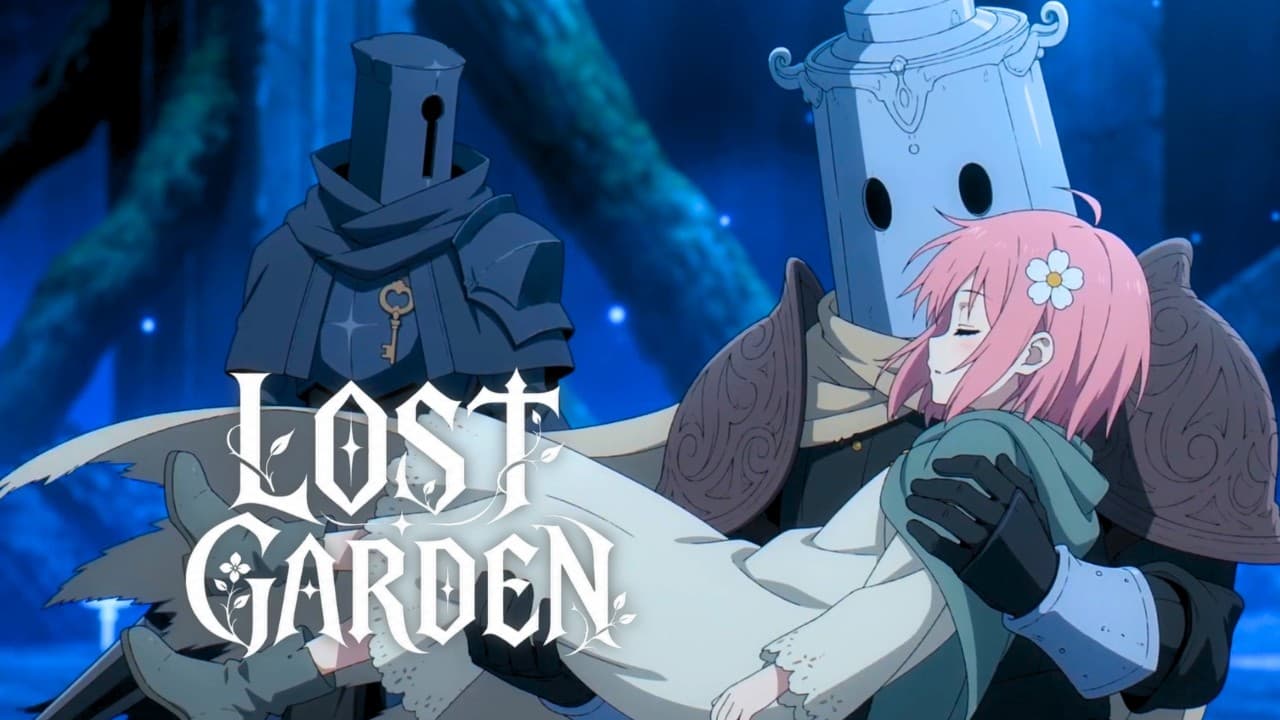
  • Video thumbnail for Lost Garden

    Lost Garden

    AI animated series pilot

    Festival recognition

    • Finalist

      AI London Festival

The pipeline

Write. Board. Produce.

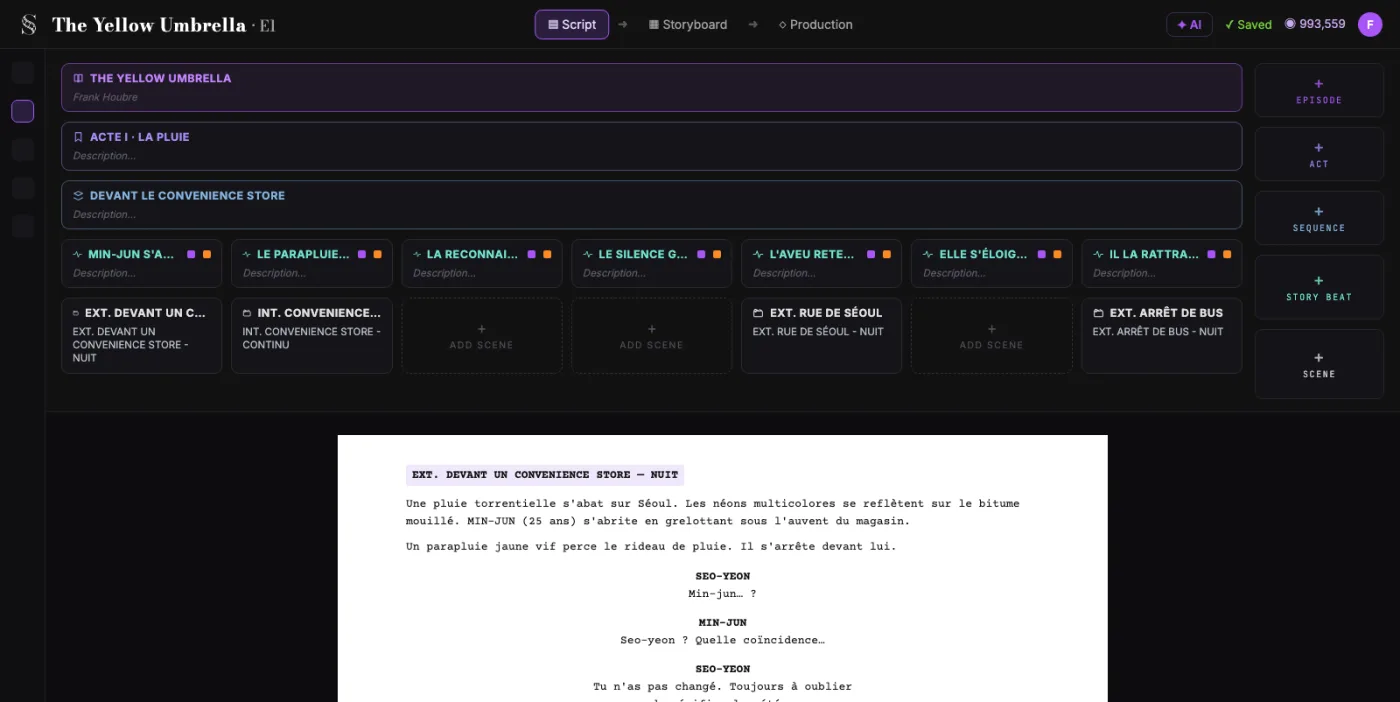
  1. ScreenWeaver screenplay editor: acts, sequences and beats above the formatted script of The Yellow Umbrella

    01The screenplay, enriched

    An industry-standard screenplay editor, and more: a visual outline and beat editor, your writing inspirations (notes, photos, audio) kept next to the page, and an AI researcher to support your writing, not replace it.

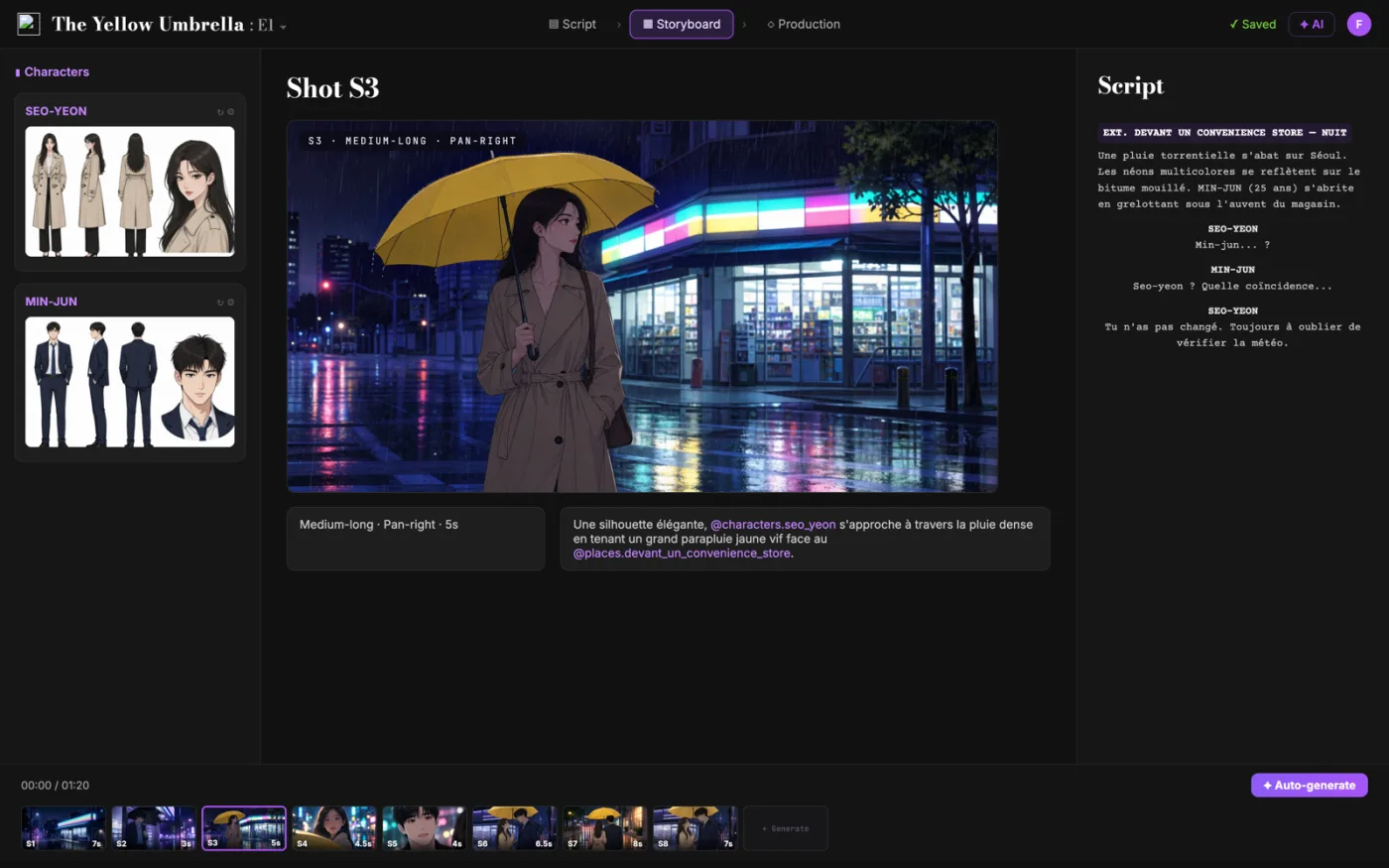
  2. ScreenWeaver storyboard: shot S3 of The Yellow Umbrella with characters, shot settings and the script beside it

    02The storyboard, made easy

    Shot breakdown generated from your screenplay, manual control over every shot (frame, angle, movement, duration), and generative AI previsualization in one click.

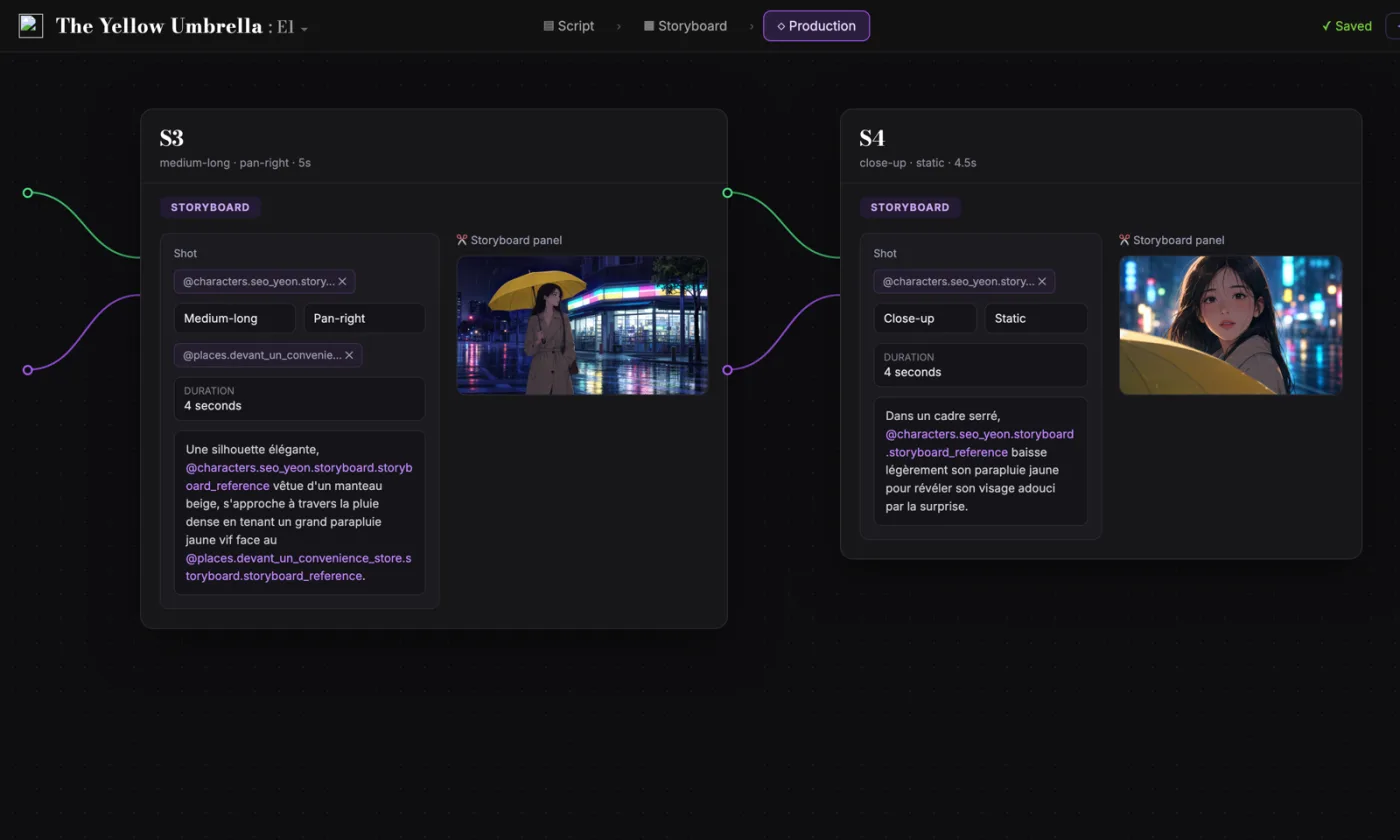
  3. ScreenWeaver production canvas: shots S3 and S4 as connected nodes carrying their storyboard panels and prompts

    03AI production, with finesse

    Footage generation pipelines connected to your screenplay and storyboard. Optimized out of the box, fully editable workflow.

FAQ

The Korea AI Content Awards, your questions

How do you win the Korea AI Content Awards?
The sources we read publish no scoring grid. Press says the review also looks at how far AI is combined into the real creative process, on top of the rule that AI is used in at least two production areas. Choose the right track, keep the film tight and keep proof of how it was made.
Is the 2027 call open?
No. It is not announced. The last two calls opened on 1 July 2025 and 1 June 2026, and the 2026 ceremony is on 15 and 16 October. Watch the FilmFreeway page and Gyeonggi Province from May 2027.
Can I make my film for these awards with ScreenWeaver?
None of the sources names an imposed tool. In ScreenWeaver you write and storyboard today, and shots generated with Seedance 2.0 and 2.5 are rolling out with the Filmmaker plan. Declare what you used where the call asks.
How much can you win?
In 2026 the pool was KRW 70 million. Mid-length prizes were KRW 20 million, 10 million and 5 million. A short's first place was KRW 8 million, and the Nam June Paik award paid KRW 8 million and KRW 3 million. In 2025 the Grand Prize was KRW 15 million.
Does it cost money to enter?
The 2025 call said there was no submission fee, and none of the 2026 sources mention one. Confirm it when the 2027 call is published.
Who can enter?
People aged 18 or over, of any nationality, as individuals or teams. You must hold the rights to the work. In 2026 entries came from 87 countries.
What counts as an AI production area?
Four areas: picture and video generation, sound and music generation, dialogue and narration generation, and editing or visual effects. The call requires generative AI in at least two of them.
Who judges the films?
The sources we read do not name the jury. They say a review picked 20 finalists from 1,528 entries, and that 11 won. Screenings and an industry forum run alongside.

The call is not open. The page is.

Start the screenplay today, at no cost. Storyboard it, then be ready for June.