
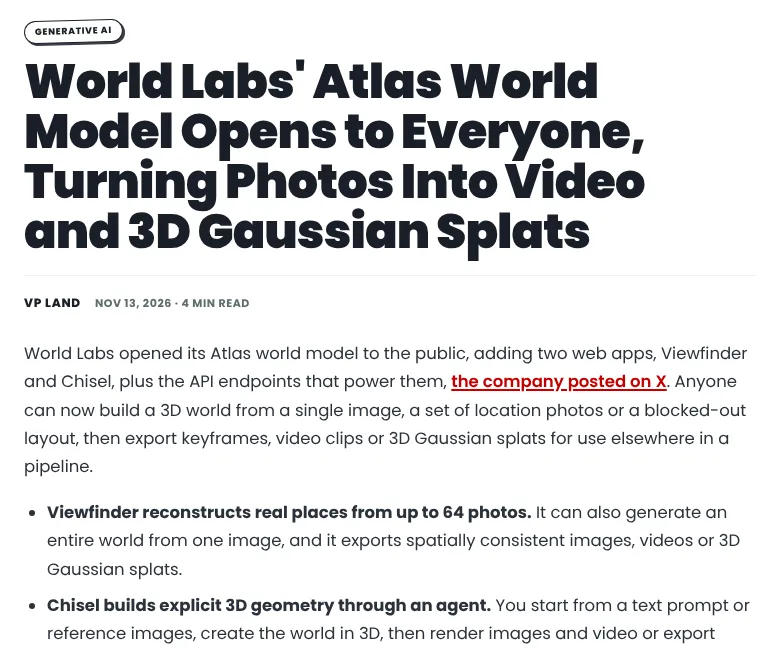
World Labs has opened Atlas, its world model, to everyone. Until now it was limited to partners. Since 12 November 2026, anyone can sign in, turn a photo or a set of location photos into an explorable 3D scene, move a camera through it, and export keyframes, video clips or 3D Gaussian splats.
For previz, that last line is the one that matters. A model that keeps a place consistent in 3D gives you something a text-to-video model rarely does: the same room from every angle, shot after shot.
What follows comes from World Labs' Atlas page, its technical post on Atlas from 1 September 2026, and VP Land's report of 13 November, all read on 13 November. The opening itself was announced in a World Labs post on X. We have not built a set with Atlas yet.
What World Labs opened
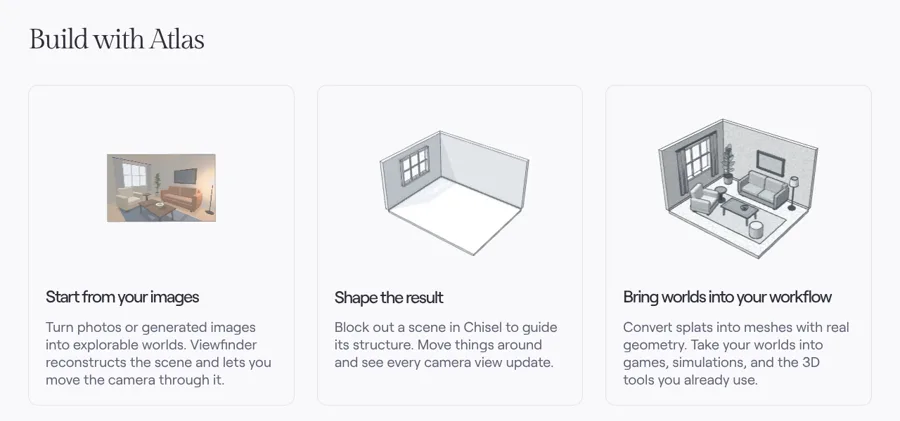
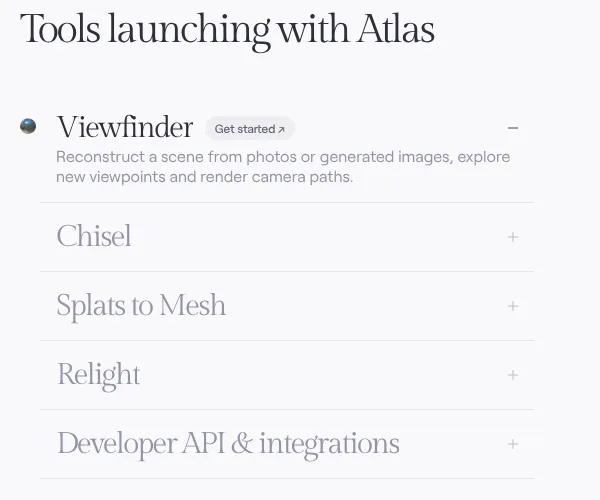
Atlas launches with a handful of tools, all on the same model:
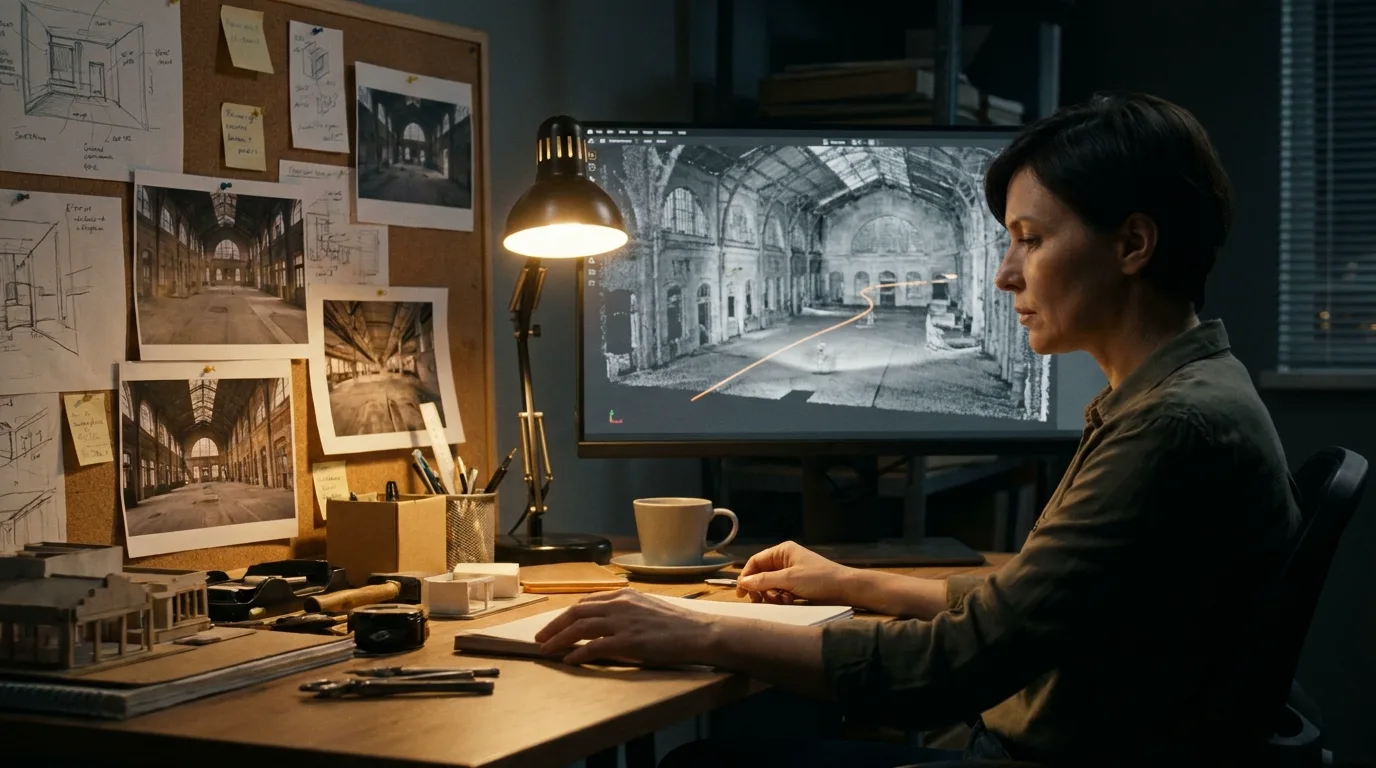
- Viewfinder rebuilds a scene from photos or generated images, lets you explore new viewpoints and renders camera paths. According to VP Land, it takes one image or up to 64 overlapping photos of a real place.
- Chisel builds a scene from simple shapes. You block out walls and furniture, then style the result with a prompt or reference images while every camera view updates.
- Splats to Mesh turns a splat into a mesh with real geometry, for game engines and 3D tools.
- Relight experiments with lighting on splats.
- A developer API, including a Blender integration, according to World Labs.
The Atlas page names film directly. Under "Film & VFX", World Labs writes: "Build a set, direct the camera through it and render the shots you need."
What Atlas does that a video model does not
In its September post, World Labs describes Atlas as an "omni" model trained on text, images, video and 3D at once. It keeps everything it has seen in a shared spatial context, so a new view stays consistent with the rest of the scene. The company says it can generate up to 1 minute of video at 1440p from one to six images, with camera control given as precise camera geometry rather than words like "slow dolly in".
That is the difference for a storyboard. Ask a text-to-video model for the same kitchen in five shots and you usually get five kitchens. A world model is built to give you one kitchen, seen five ways.
How we would use it in previz
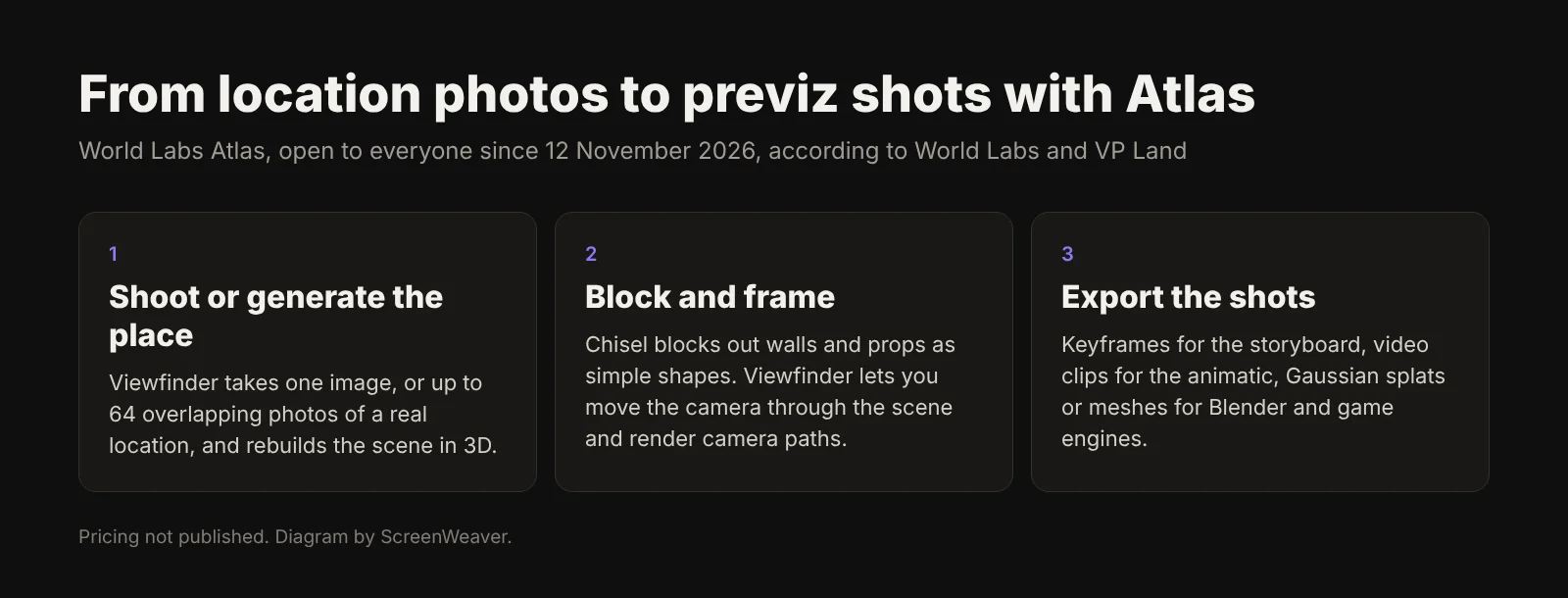
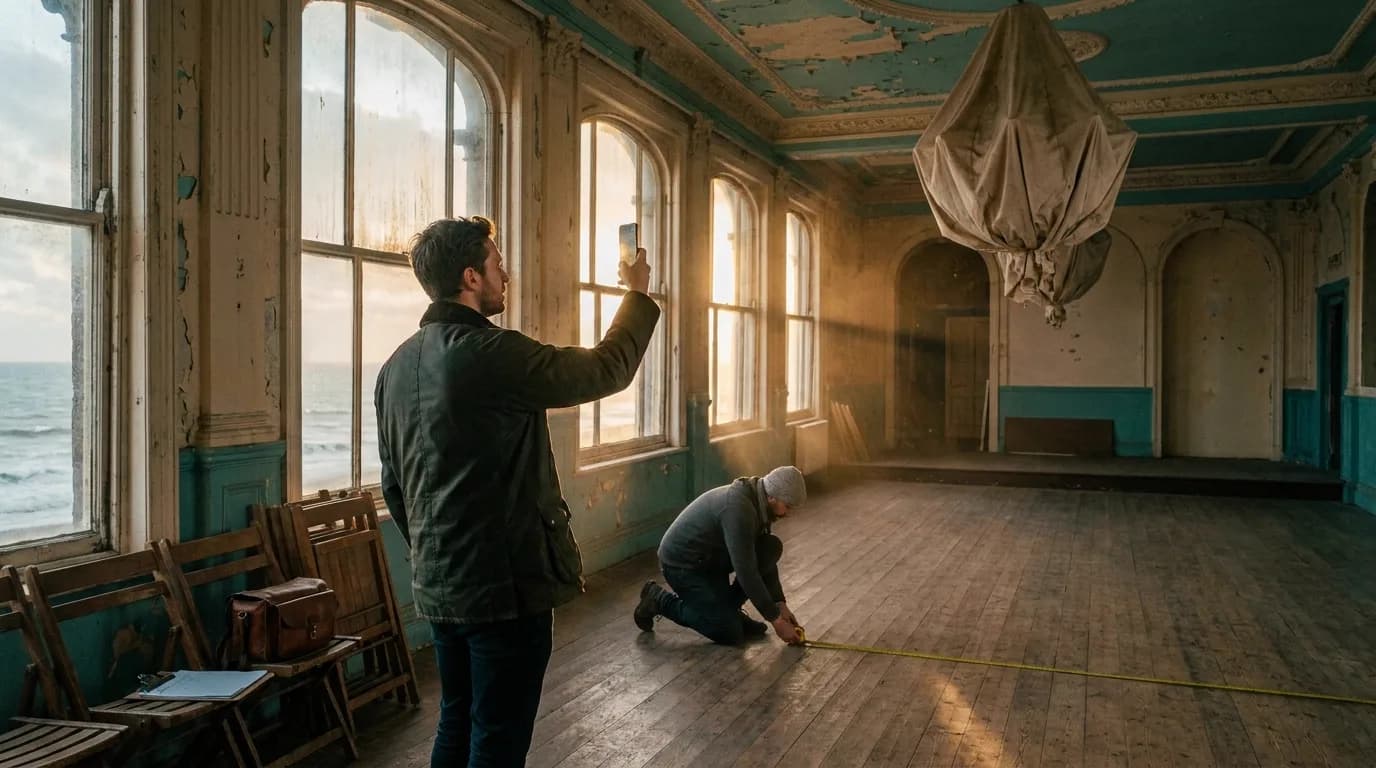
- Scout first, then reconstruct. If you have a real location, shoot overlapping stills from the angles you think you will need. Our location scouting checklist covers what to bring back.
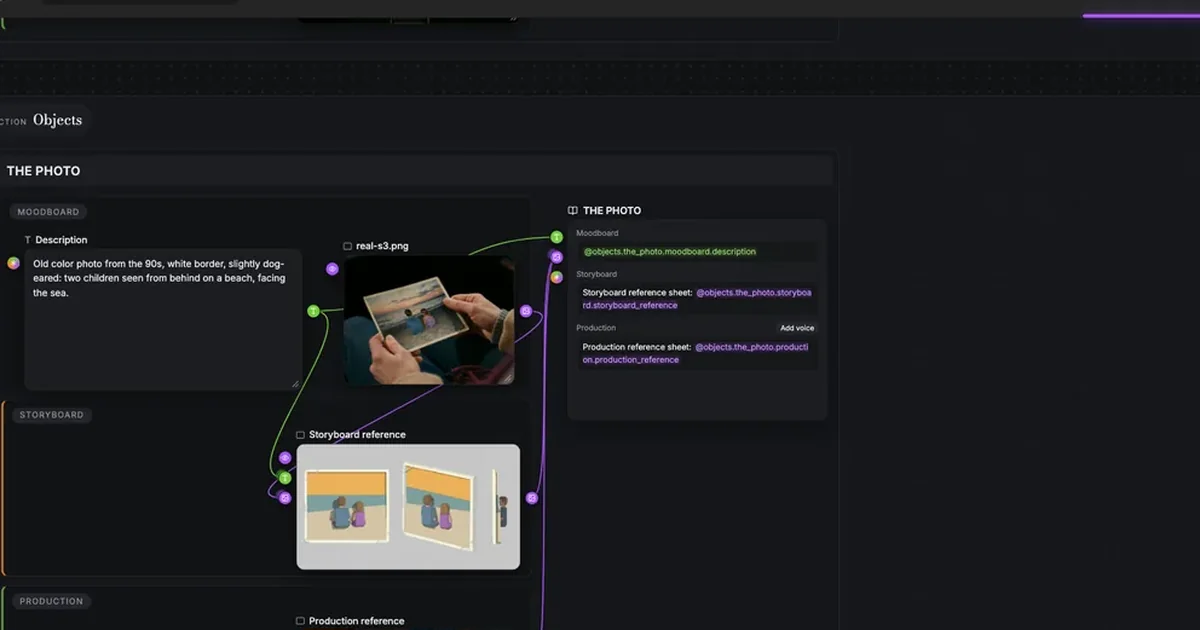
- Lock the set before the shots. One reconstructed set per location, reused for every scene that happens there. It is the 3D version of what we already ask for in ScreenWeaver: a place is a story element with its own reference sheet, and every shot that shows it cites it.
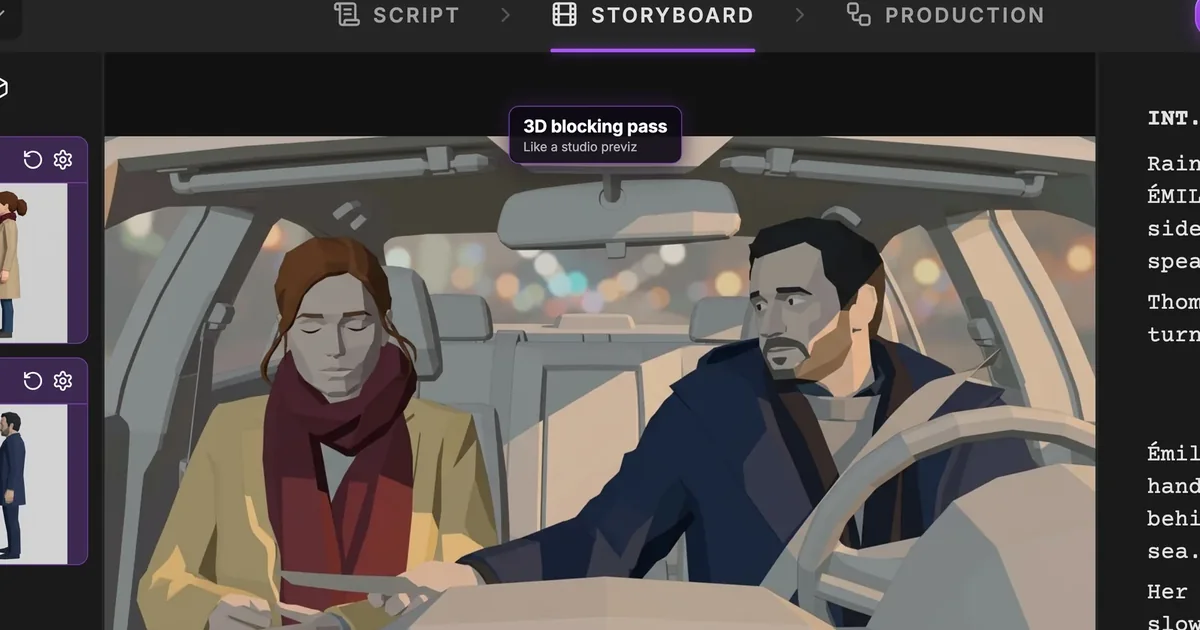
- Frame in the set, generate on top. Render keyframes from the camera positions in your shot list, then use them as references for your panels. Our guide on keeping locations and props consistent in AI video picks up from there.
- Keep the animatic rough. A camera path through a splat is enough to judge a move. Save the polish for the shots that survive the edit.
If your previz starts from the script rather than from a location, AI previz from a script shows the order we follow.
Try it free
Try ScreenWeaver for free on your script
It is free. Import your existing project, get a clearer view of your outline, and regain control of your story structure in minutes.
Start FreeWhat we don't know
- The price. World Labs has not published Atlas pricing, according to VP Land and AlphaSignal.
- Quality with people in the frame. The examples are rooms, streets and landscapes. Atlas builds the set, not the actors.
- How it holds up on a real shoot. The speed and quality claims are World Labs' own, and the docs and API still carry beta labels, according to VP Land.
- What changes after the AMD deal. World Labs announced in September that it is joining AMD, with the transaction expected to close by the end of 2026.
FAQ
What is World Labs Atlas? A world model from World Labs that generates and reconstructs 3D scenes from text, images and video. It can render new camera views, video clips and 3D Gaussian splats of a scene, according to World Labs.
Is Atlas available to everyone? Yes. World Labs opened access to everyone on 12 November 2026, with the Viewfinder and Chisel web apps and public API endpoints, according to its post on X and VP Land's report. Access had been limited to partners before.
How many photos does Atlas need to rebuild a location? One image is enough to generate a plausible scene, and Viewfinder can use up to 64 overlapping photos to reconstruct a real place, according to VP Land.
What can you export from Atlas? Keyframes, video clips and 3D Gaussian splats. Splats can be converted into meshes for Blender and game engines with the Splats to Mesh tool.
How much does Atlas cost? World Labs has not published a pricing page for Atlas.
How does Atlas help with a storyboard? It keeps a location consistent in 3D, so you can render the same set from every camera position in your shot list and use those frames as references for your panels. In ScreenWeaver, locations are story elements with reference sheets, and shots cite the places they show.
From script to shots
Turn your script into a film, shot by shot
Write the scene, get its storyboard, then generate each shot with consistent characters. You direct every step.
Start your film free