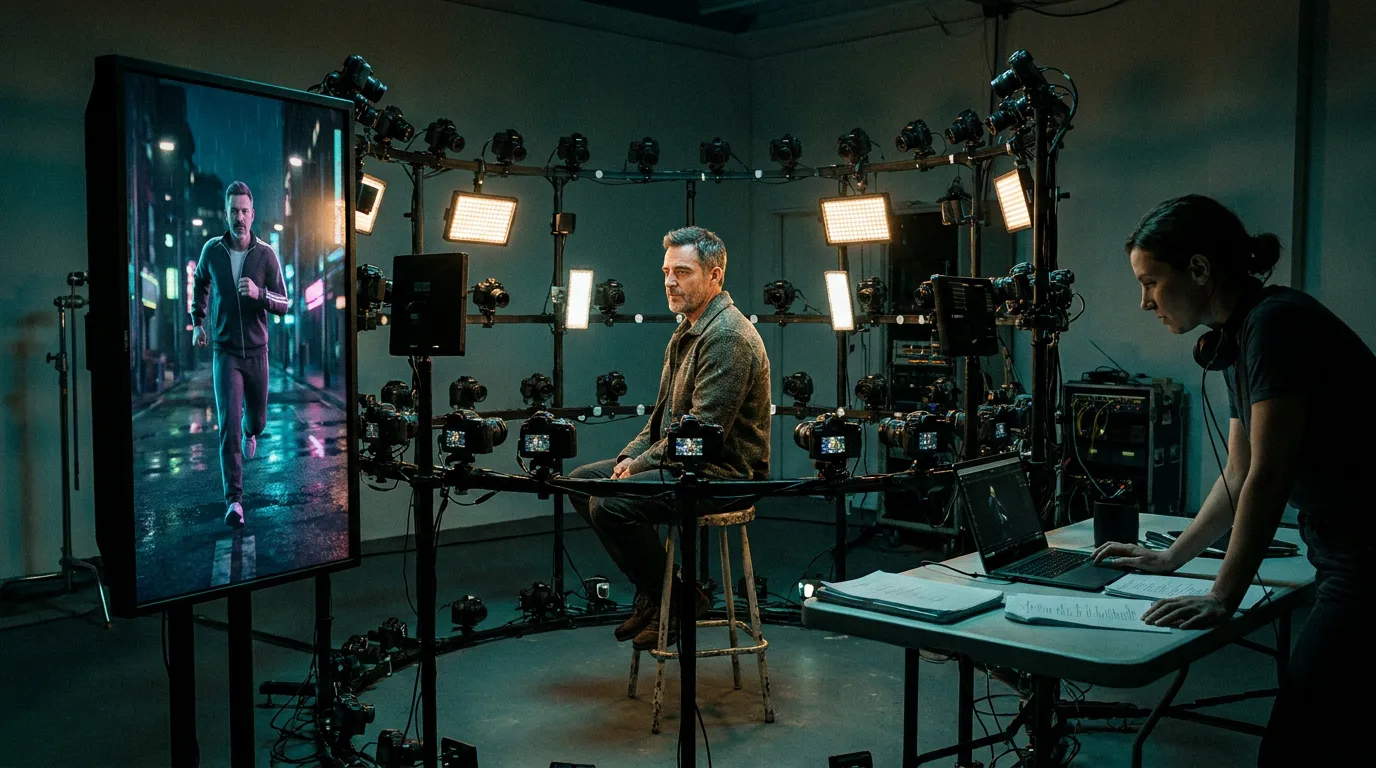

Most stories about AI actors start with someone who never agreed to anything. Inevitable starts the other way round. The Israeli actor Aki Avni helped build his own digital double, then let it play the lead in a fully AI-generated vertical series about an actor who loses control of his likeness.
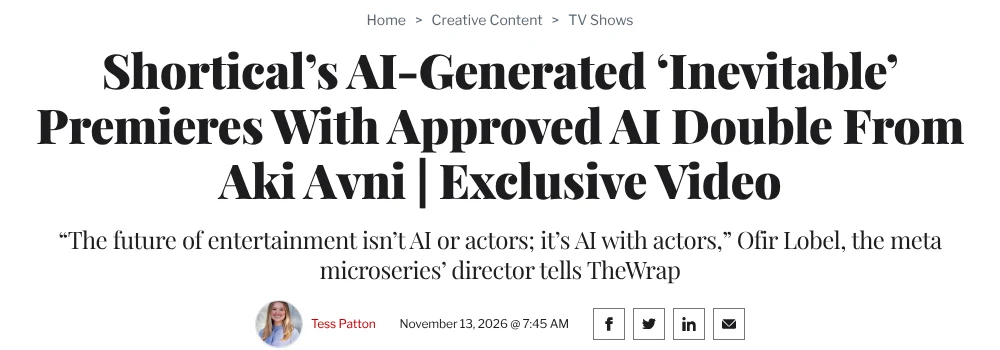
The microdrama premiered on 13 November 2026 on Shortical, a short-drama app. We read TheWrap's exclusive report (Tess Patton, 13 November) and Shortical's own pages on 16 November 2026. For writers, the interesting part is not the tech. It is who decided what, and where that was written down.
What Shortical released
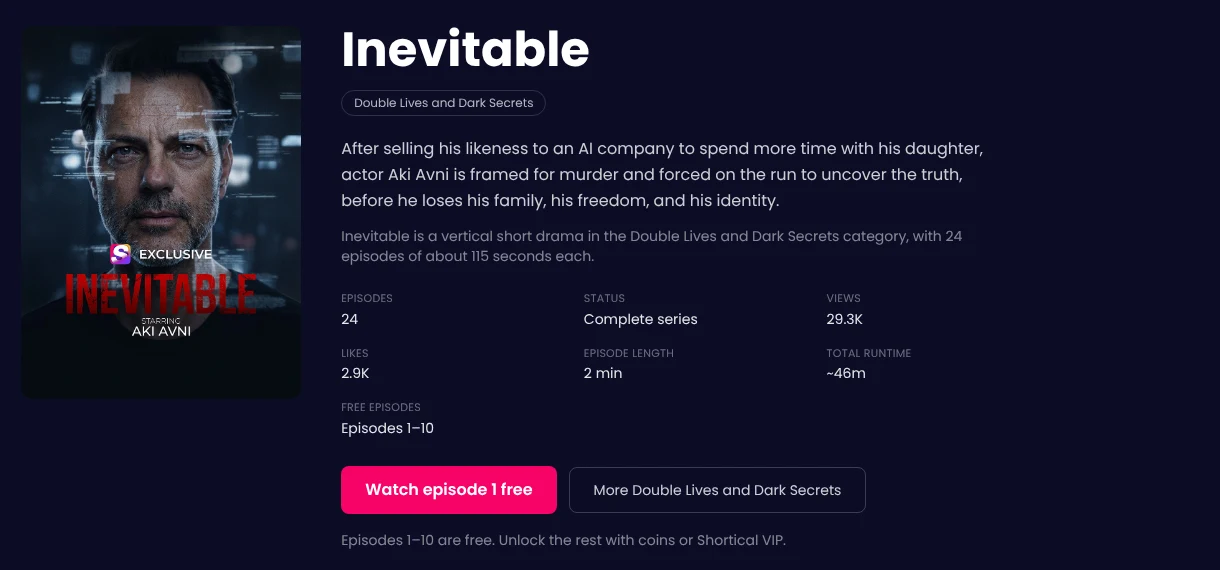
The premise, in Shortical's words: after selling his likeness to an AI company to spend more time with his daughter, actor Aki Avni is framed for murder and has to clear his name before he loses his family, his freedom and his identity. In TheWrap's exclusive clip, he drives onto a studio lot while the news reports that his AI double is starring in 12 projects at once, and nobody works on set in person anymore.
The credits, according to TheWrap:
- Created and directed by Ofir Lobel, who directed episodes of the Netflix series Blank Space and Trust No One. This is his first AI-generated project and his first vertical series.
- Written by Sharon Ben Tovim.
- Produced by Shortical, led by CEO Guy Shimoni.
The counts don't fully match. TheWrap describes a 50-episode series that opened with 24 episodes, with new ones weekly. Shortical's page, on the day we checked, listed 24 episodes of about 115 seconds each, marked "Complete series", with the first 10 free. Treat the episode count as unsettled.
Consent written into the production
The line everyone will quote is Lobel's: "The future of entertainment isn't AI or actors; it's AI with actors." The more useful one comes just before it. "Inevitable is a microdrama series about losing control of your likeness," he told TheWrap, "and we made it by giving our actor, our main lead, the control of it."
Avni's own take is practical. Seeing his double act on screen was "surprising", he said, and "even weirder" than watching himself. His advice to other actors: "if you really put your step in and know exactly what is a yes for you and what is a no for you, you can win the situation."
Shortical is also turning this into a casting pipeline. Its License Your Face page invites people to submit their social media links. If a profile picture fits a future AI micro-series, the company sends a contract naming the series, the character and the payment. If the person declines, the page says, Shortical won't use the image any further.
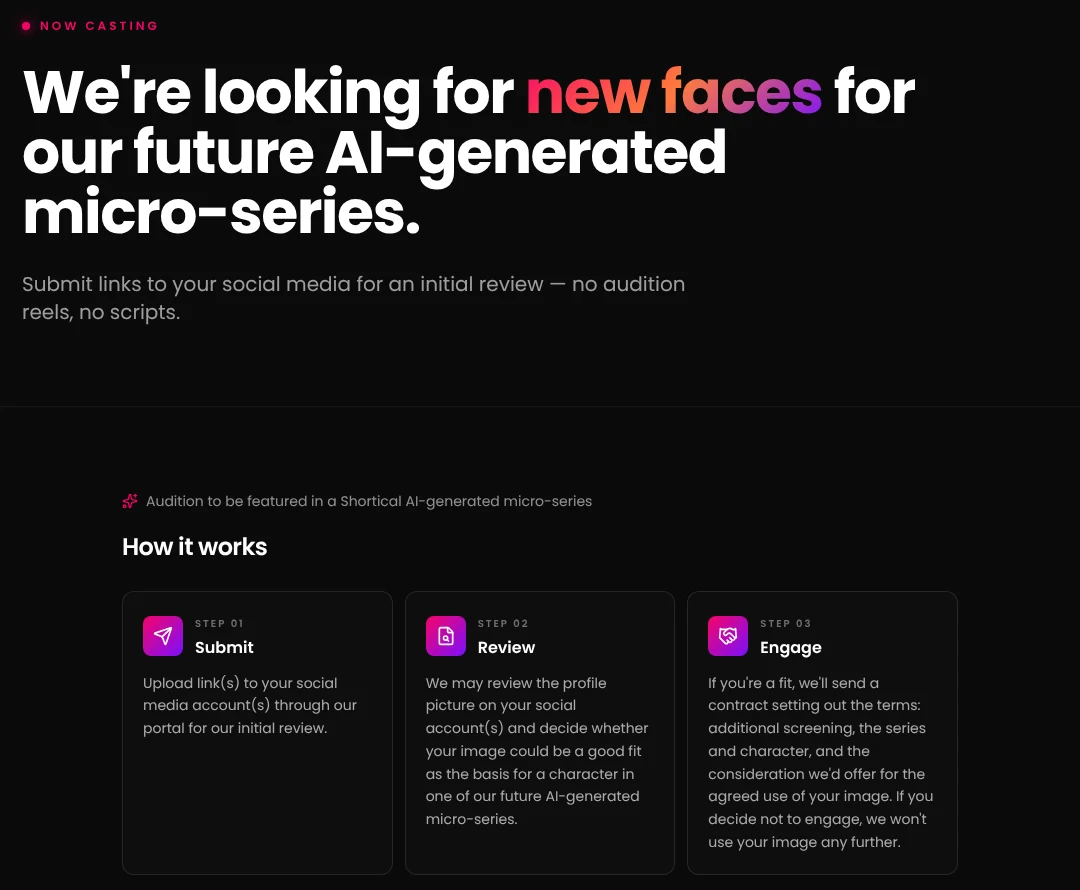
That page raises as many questions as it answers. It does not say how long a likeness can be used, whether it can appear in other series, or what happens to the model of a face after the contract ends. Those are exactly the clauses Avni's "yes and no" refers to.
What it changes for writers
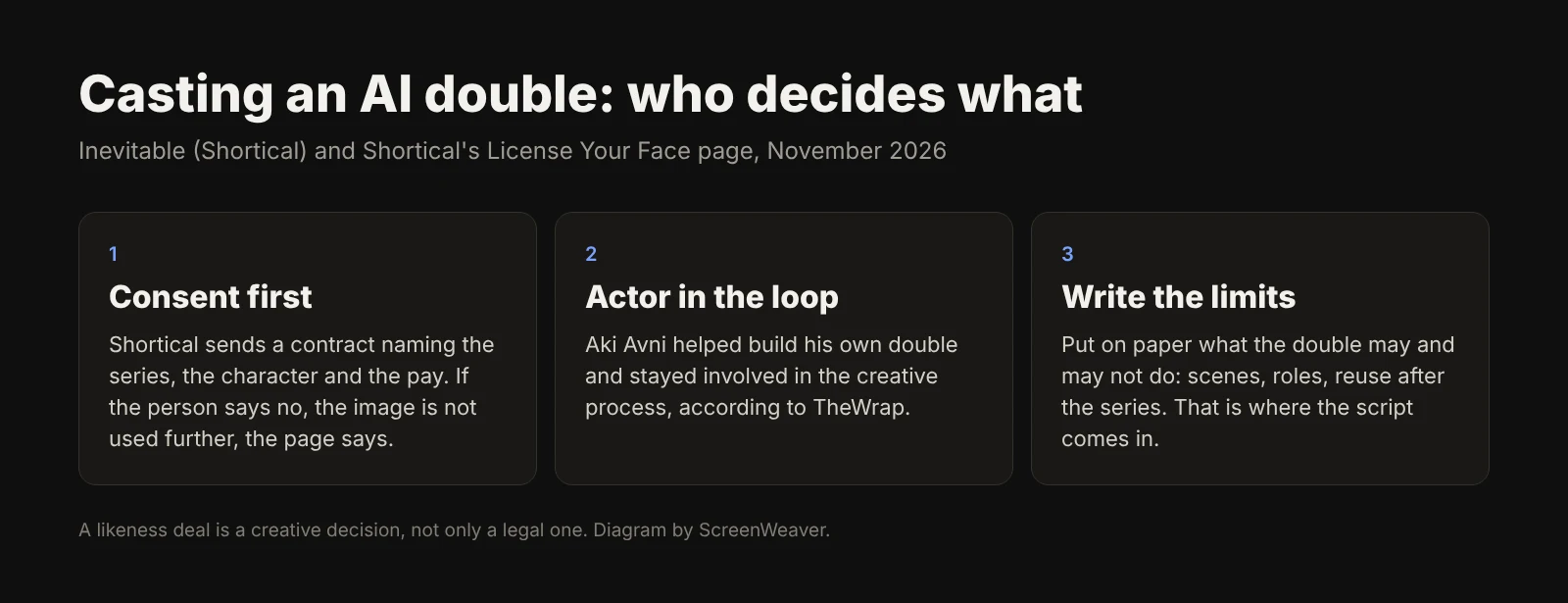
A digital double does whatever the script says. That moves a decision that used to happen on set, between the actor and the director, back onto the page. Three habits follow from it:
- Write the limits next to the character. If a performer has agreed to a double, note in the character description what that double may not do: certain scenes, certain words, nudity, real brands. Our guide on character descriptions that attract actors covers the rest of that page.
- Flag every scene that goes beyond the agreement. A stunt the actor would refuse in person is still a stunt when it is generated. Mark it in the script before anyone renders it.
- Keep one reference set per character, approved by the person. A double drifts across 50 short episodes unless every shot comes from the same approved sheets. That is the same discipline as keeping a series consistent.
Disclosure: ScreenWeaver is a pre-production tool where the script, the character sheets and the storyboard sit in one project. We have an interest in the argument that the page should carry these decisions, so weigh it against how your own team works.
Try it free
Try ScreenWeaver for free on your script
It is free. Import your existing project, get a clearer view of your outline, and regain control of your story structure in minutes.
Start FreeWhat I would do this week
- Watch the free episodes with the script question in mind: which scenes would an actor have needed to approve one by one?
- Add a "likeness" line to your character template: who the performer is, what they approved, what they refused, and until when.
- Read the contract before the casting call. If you write for a short-drama platform, ask how long a double can be reused and who decides what it says. Our guide to AI short dramas explains how these series are produced.
- Compare with the opposite case. Last week, Pine AI released an open-source drama studio where every character is generated from scratch. Two very different answers to the same casting problem.
What we don't know
- The terms of Avni's deal. Neither TheWrap nor Shortical says how long his double can be used, or whether it can appear in other productions.
- The final episode count. TheWrap says 50 episodes, Shortical's page shows 24 and "Complete series".
- Which tools generated the series. Neither source names the models used.
FAQ
What is Inevitable?
A fully AI-generated vertical microdrama from Shortical that premiered on 13 November 2026. Aki Avni plays an actor who sells his likeness to an AI company and is framed for a murder his double is linked to.
Did Aki Avni agree to his AI double?
Yes. TheWrap reports that he helped create his own digital double with the filmmakers and was involved in the creative process. TheWrap's headline calls it an "approved AI double".
Who made Inevitable?
Ofir Lobel created and directed it, Sharon Ben Tovim wrote it, and Shortical produced it, according to TheWrap.
How many episodes does Inevitable have?
The sources differ. TheWrap describes 50 episodes, 24 at launch and the rest weekly. Shortical's page listed 24 episodes of about two minutes on 16 November 2026, with the first 10 free.
What is Shortical's License Your Face page?
A casting call for faces to use in future AI micro-series. People submit social media links, and if their profile picture fits, Shortical sends a contract naming the series, the character and the payment. If they decline, Shortical says it won't use the image further.
What should a screenwriter take from it?
When a double does the acting, the limits a performer agrees to have to be on the page. Write them next to the character, flag scenes that go further, and keep one approved reference set per character.
From script to shots
Turn your script into a film, shot by shot
Write the scene, get its storyboard, then generate each shot with consistent characters. You direct every step.
Start your film free