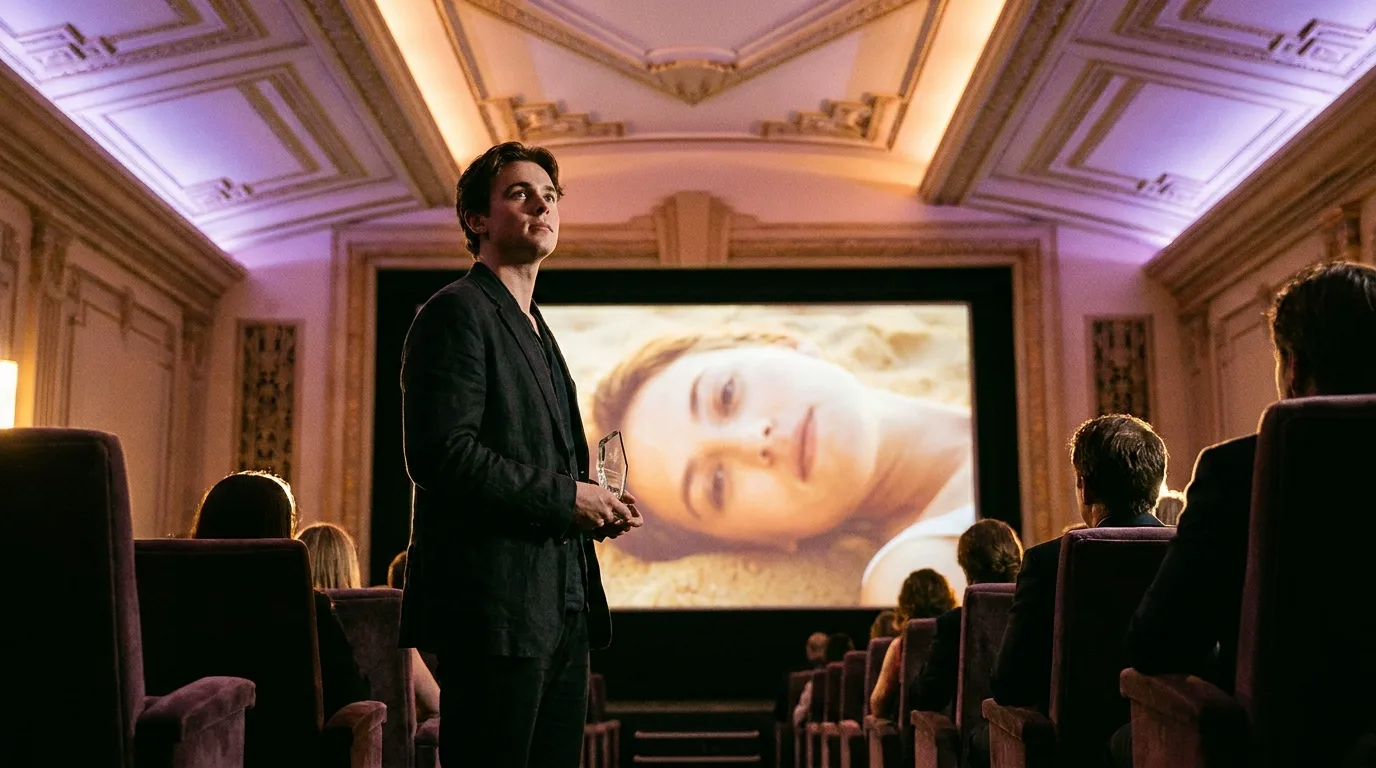
Everything Soft by Jamin Tasker won the Grand Prix at the second DISRUPT AI Film Festival (DAIFF), the Australian festival for generative AI film run by TBWA Australia. The winners were announced at the Melbourne gala at The Capitol on 18 November 2026. Daylight Saving Time! by Genki Yamasaki won Best Long Film, QWERTY by Jonathan Heath Best Short Film, and Ding! by Qian Deng Best Student Film.
We read the 2026 winners page on the festival's site and the 27-page festival report linked from it on 19 November. The PDF's metadata dates it 18 November, the day of the gala. For the prize pool, the jury and the Sydney date, we also used Campaign Brief's preview of 10 November. We have not seen the films.
The four winners
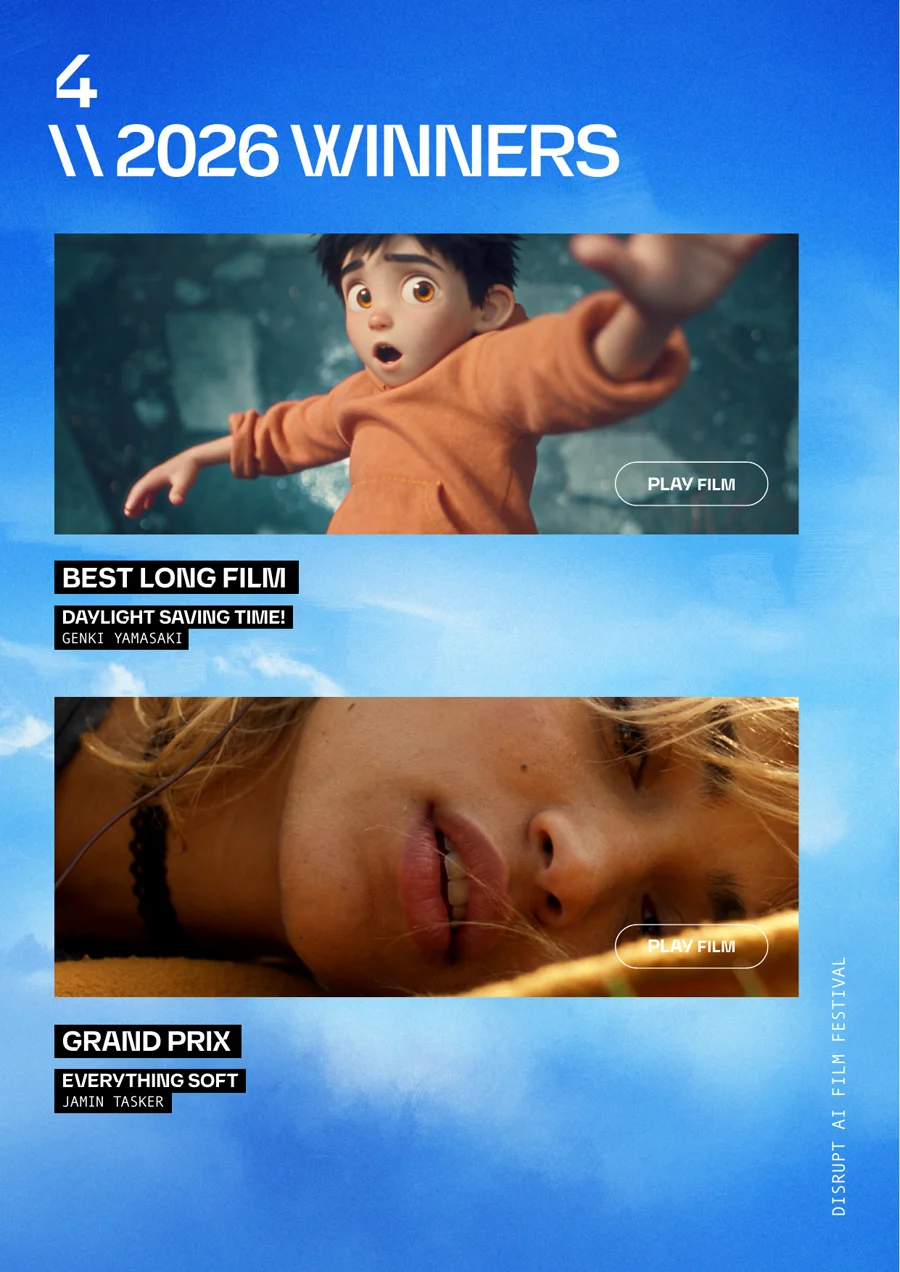
| Award | Film | Director |
|---|---|---|
| Grand Prix | Everything Soft | Jamin Tasker |
| Best Long Film | Daylight Saving Time! | Genki Yamasaki |
| Best Short Film | QWERTY | Jonathan Heath |
| Best Student Film | Ding! | Qian Deng |
The festival publishes no synopses, so we only know what the judges wrote about the films. Tessa Conrad, global head of innovation at TBWA\Worldwide, called Everything Soft "a great take" on hopefulness, "with gorgeous cinematography and art direction". She found QWERTY "laugh-out-loud funny". Lee Hickin, executive director of Australia's National AI Centre, wrote that the sound, editing and mix of QWERTY came together so well "that I forgot I was judging an AI film festival".
According to Campaign Brief, the festival had a $10,000 prize pool. Its 2026 theme was "Humans and Their Tools". The winning films screen again in Sydney on 24 November.
The numbers behind year two
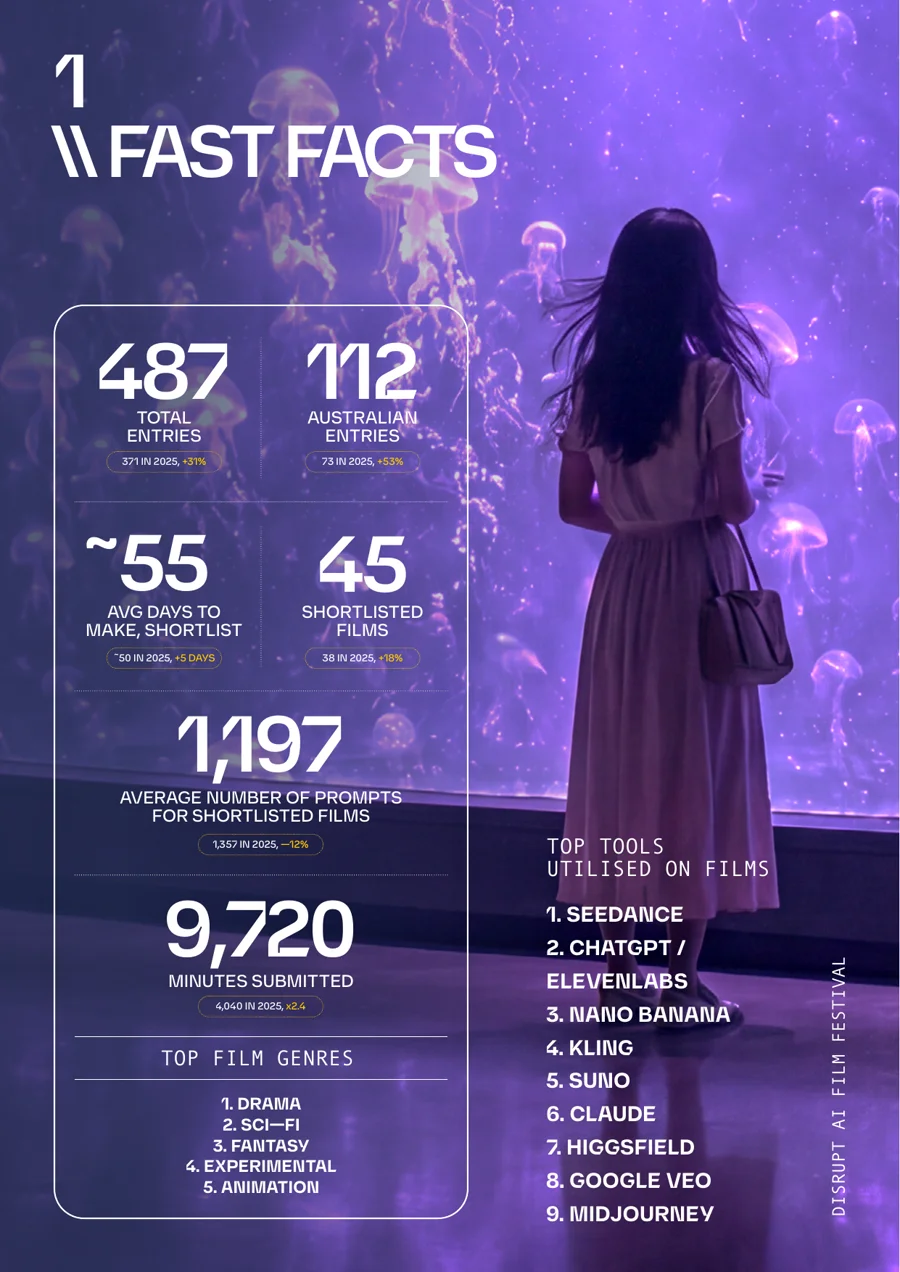
The report does something most AI festivals do not: it publishes what it learned about how the films were made. Entries rose from 371 to 487. The shortlisted films took about 55 days to make on average, five more than last year, and needed 1,197 prompts each, 12% fewer than in 2025.
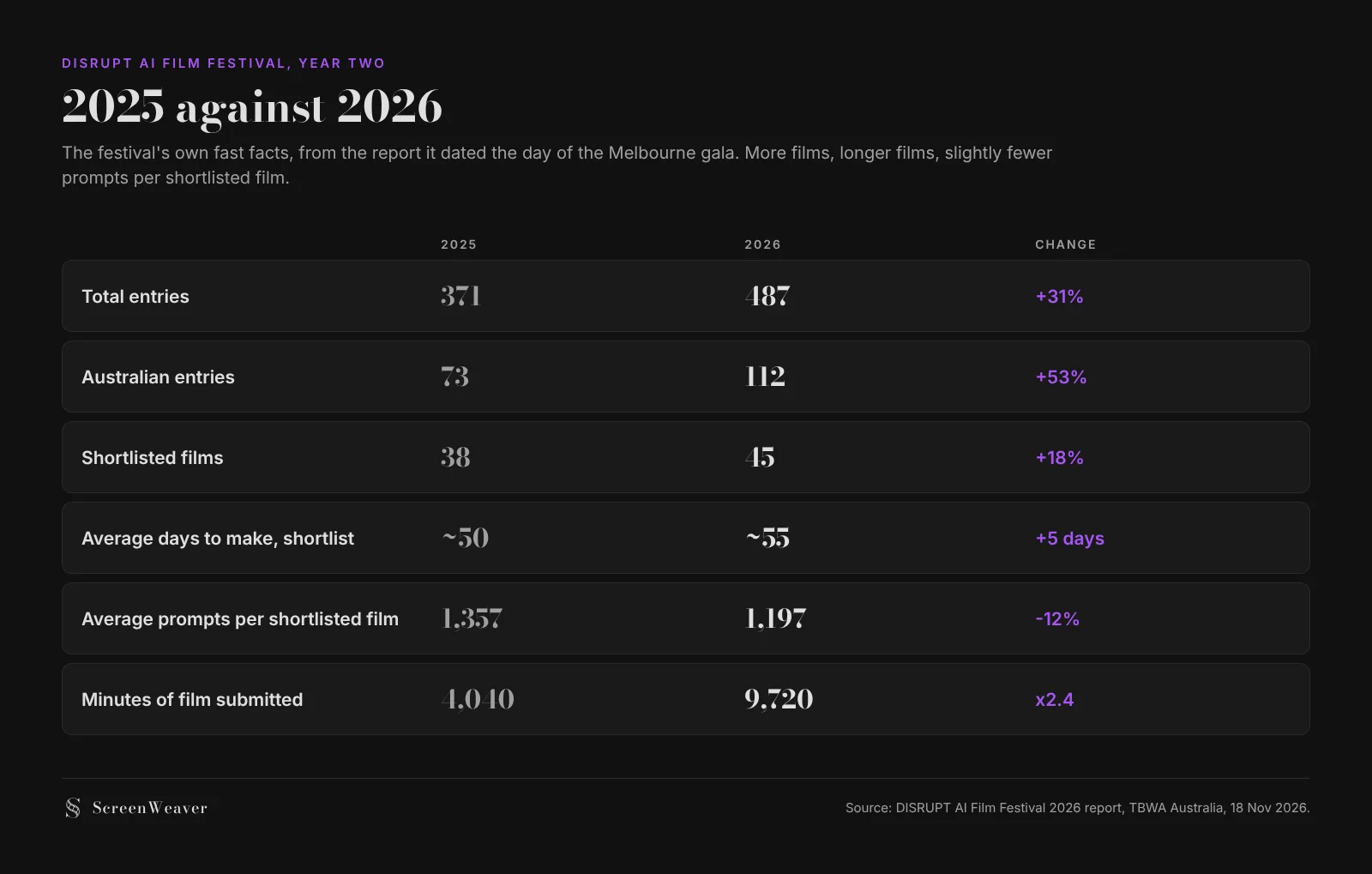
Two figures matter more than the headline count. Minutes submitted grew 2.4 times while entries grew 31%, so the average film got a lot longer, from about 11 minutes to about 20 by our own division. And the shortlist took more days but fewer prompts. Our reading, not the festival's: makers spent less time rerolling clips and more time on the rest of the film.
The top tools on the films were Seedance, then ChatGPT and ElevenLabs, then Nano Banana, Kling, Suno, Claude, Higgsfield, Google Veo and Midjourney. The report does not say how it counted them. We assume the counts come from the entry form, which asked filmmakers how they made their films.
How the jury scored
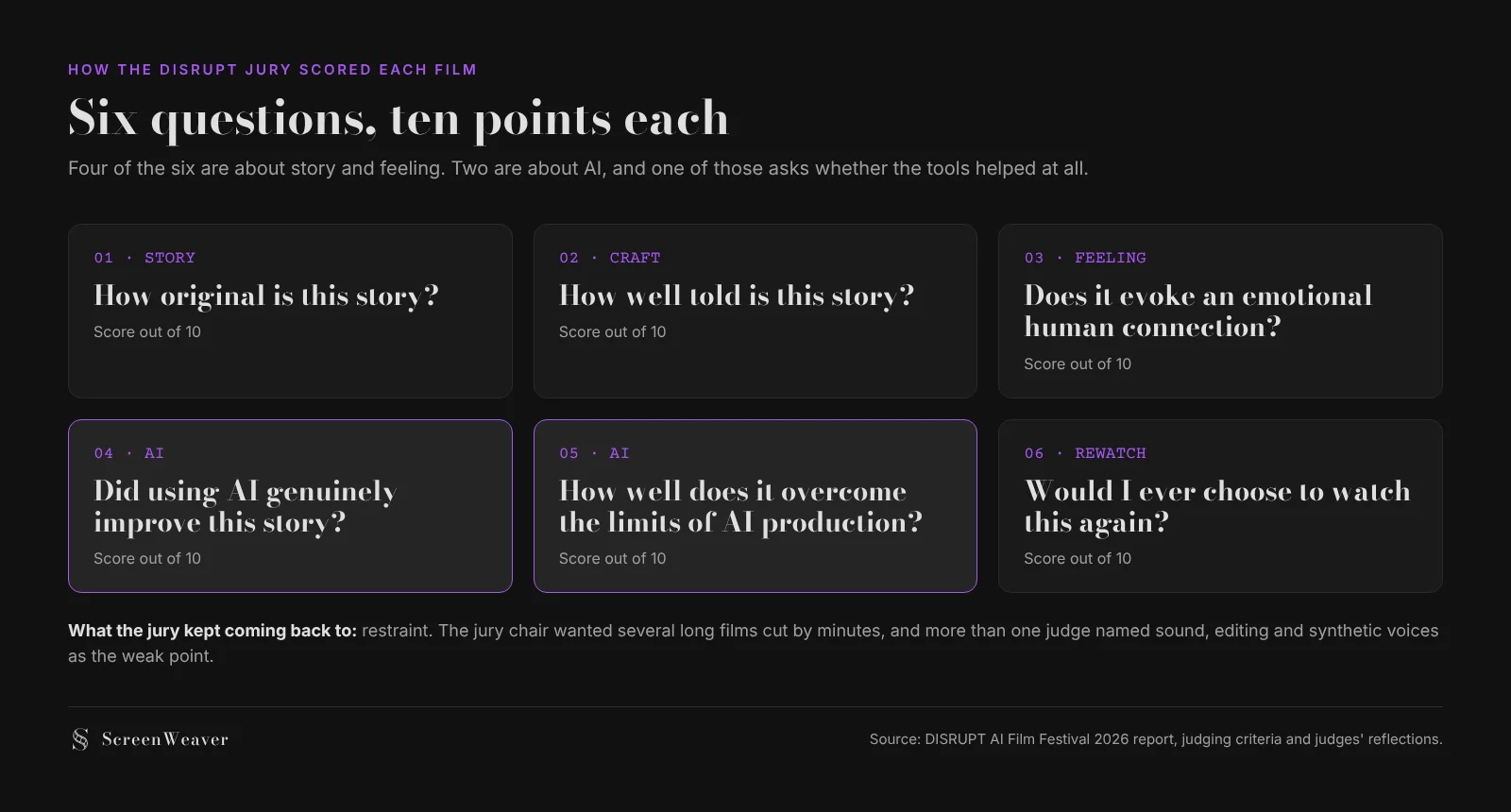
The jury had 12 members, chaired by Paul Reardon, chief creative officer of TBWA\Melbourne and co-founder of DISRUPT. Each film was scored out of 10 on six questions. Four are about story and feeling. The other two are about AI, and one of them asks whether "using AI genuinely improve[d] this story".
Reardon's note in the report is the most useful thing a festival has published this year for anyone making an AI film. "The tools have moved incredibly quickly. Faces are better. Movement is better. Consistency is better," he writes, but the same leap left some makers "seduced by what I like to refer to as 'the glint in the machine'". On the long films: "I know you've got 15 minutes. You don't have to use it." On one visually stunning entry: "Now shave four minutes off it immediately."
The other judges point at the same weak spots. Conrad wrote that the audio of people speaking is still the part of AI filmmaking that lags most. Bruce Hunt, the 2025 Best Short Film winner and a juror this year, singled out the close-up of a character crying as an AI trope: "The audience is smart. They want to feel it, not be shown it."
Try it free
Try ScreenWeaver for free on your script
It is free. Import your existing project, get a clearer view of your outline, and regain control of your story structure in minutes.
Start FreeWhat it means for your next entry
DISRUPT's 2026 call is closed, and the site already says it hopes "to see you again in 2027". If you plan to enter next year, our DISRUPT AI Film Festival guide covers the rules and timing, and the AI film festivals hub lists the calls that are open now. The AI film festivals guide for 2026 explains how to choose between them.
Three lessons from the jury notes carry over to any festival.
Cut the film. Two jurors complained about length in the same report. A tight 8 minutes beats a loose 15, and the clock is not a prize category.
Treat sound as half the film. Voice, mix and lip sync were the most cited weak points. Budget time for them, or bring in someone who does audio, as Conrad suggests.
Show the human decisions. The scoring rewards story and feeling first. Keep a short production note that says what you wrote, what you chose and what the tools did.
AI Movie Awards jurors in London landed on the same kind of film a week earlier, as our AIMA London 2026 winners report shows: one clear character and an ending that pays off.
What this means if you work in ScreenWeaver
Seedance, the most used tool on the DISRUPT films, is the default model of ScreenWeaver's video node, and Kling is in the same node. We have no link with the festival, and the report does not say which tools any winning film used. The part of the jury's advice ScreenWeaver can help with comes before generation: a locked script, a storyboard you can cut before you spend a clip, and one reference per character so the face holds over 20 minutes. Our storyboard-first workflow shows that order.
Checklist before you enter DISRUPT 2027
- Write a story that would stand without AI, then ask what the tools add to it.
- Set a target length before you generate, and cut to it.
- Spend real time on voice, mix and lip sync, or bring in someone for audio.
- Avoid the tear-filled close-up unless the scene earns it.
- Log your tools and your prompts count as you go: festivals now ask.
- Watch the full cut cold, a day later, and remove what you no longer need.
FAQ
Who won the DISRUPT AI Film Festival 2026? Everything Soft by Jamin Tasker won the Grand Prix. Daylight Saving Time! by Genki Yamasaki won Best Long Film, QWERTY by Jonathan Heath Best Short Film, and Ding! by Qian Deng Best Student Film.
When and where were the winners announced? At the Melbourne gala at The Capitol, 113 Swanston Street, on 18 November 2026. A Sydney screening follows on 24 November.
How many films entered DISRUPT 2026? 487, up 31% from 371 in 2025, including 112 Australian entries. The jury shortlisted 45 films.
Which AI tools did the films use most? Seedance came first in the festival's count, followed by ChatGPT and ElevenLabs, Nano Banana, Kling, Suno, Claude, Higgsfield, Google Veo and Midjourney.
How does the DISRUPT jury judge films? Six questions scored out of 10: originality, storytelling, emotional connection, whether AI improved the story, how well the film overcomes AI's limits, and whether a juror would watch it again.
Can I enter DISRUPT in 2027? The 2026 call is closed. The festival says it plans a 2027 edition but has not published dates. See our DISRUPT AI Film Festival guide for what to prepare.
From script to shots
Turn your script into a film, shot by shot
Write the scene, get its storyboard, then generate each shot with consistent characters. You direct every step.
Start your film free