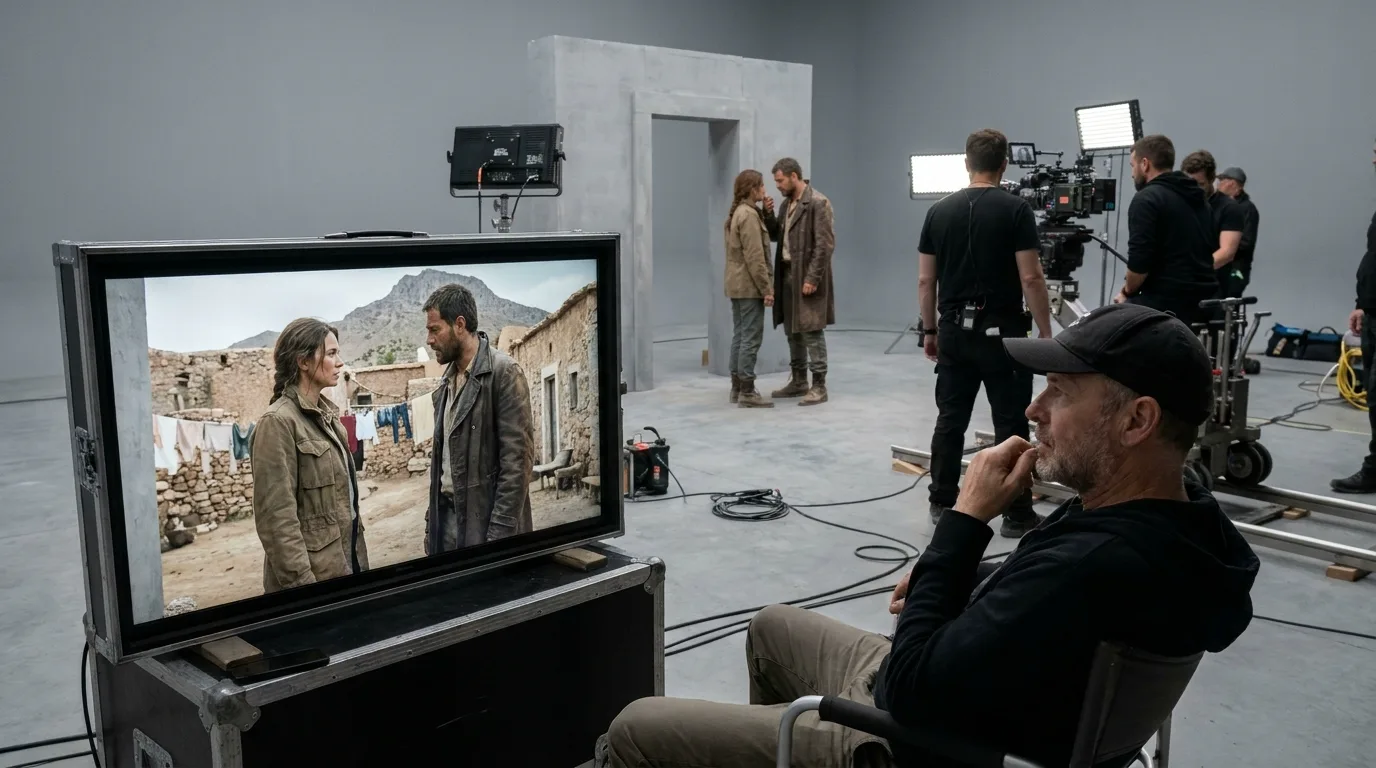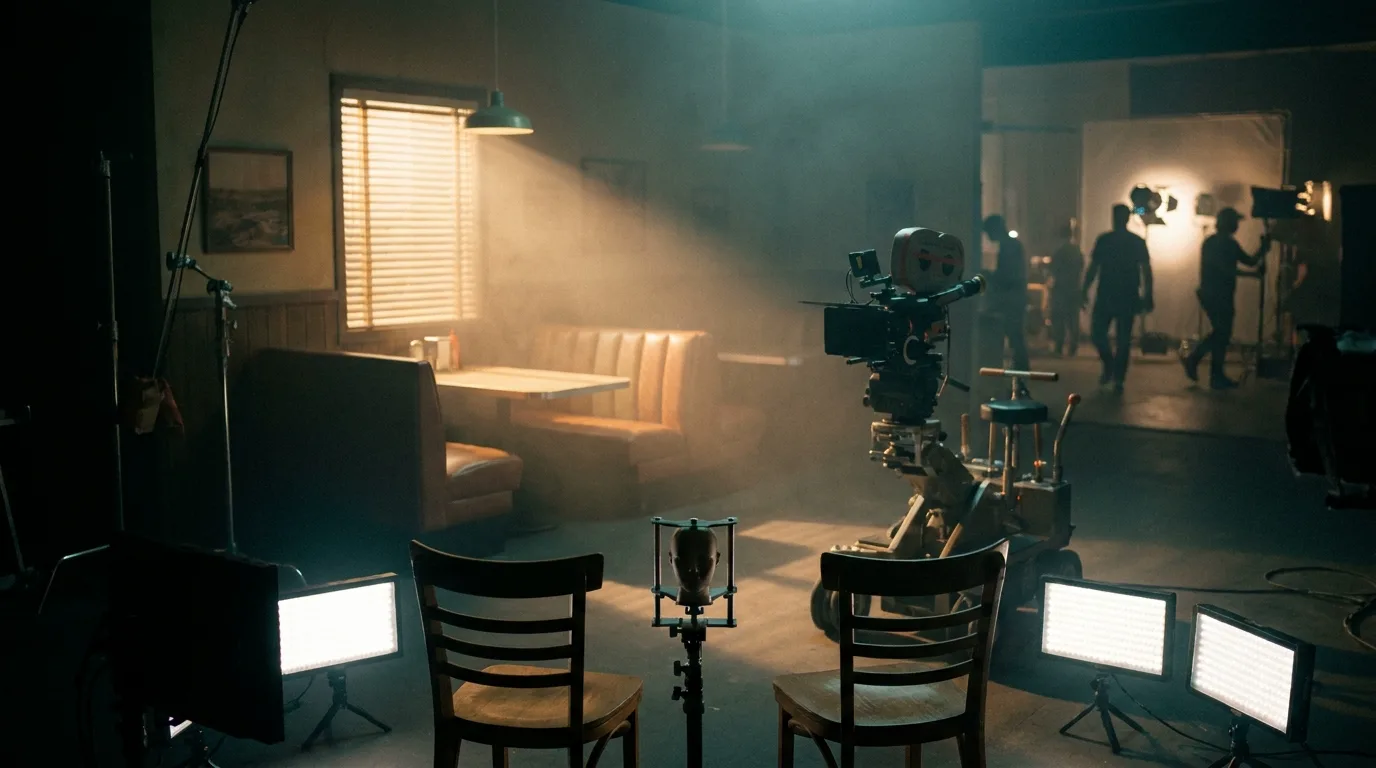

David Fincher has said on the record that AI was used in the post-production of The Further Mis-Adventures of Cliff Booth, and he went further: he described a way of shooting where only the master is filmed on set, and the close-ups and over-shoulders are built afterwards from capture.
The film opened in Imax on 25 November, after days of complaints from early viewers about what looked like generative AI on screen. Fincher's interview was recorded before those complaints, so it doesn't answer them. What it does give is a director's working plan for AI, in detail, from a director known for asking for a very high number of takes.
This is based on Corbin Bolies' report for Variety and TheWrap's write-up of Fincher's appearance on The Ringer's The Big Picture podcast, both published on 25 November 2026, plus Deadline for his earlier Los Angeles Times quotes. We read them on 26 November. We did not listen to the full podcast, so quotes are as those outlets transcribed them.
Disclosure: ScreenWeaver sells AI tools for screenwriting, storyboards and production, so we have a stake in how directors use AI. Read our take with that in mind.
What Fincher says AI did on Cliff Booth
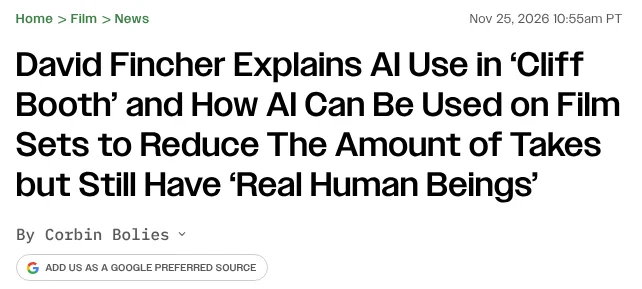
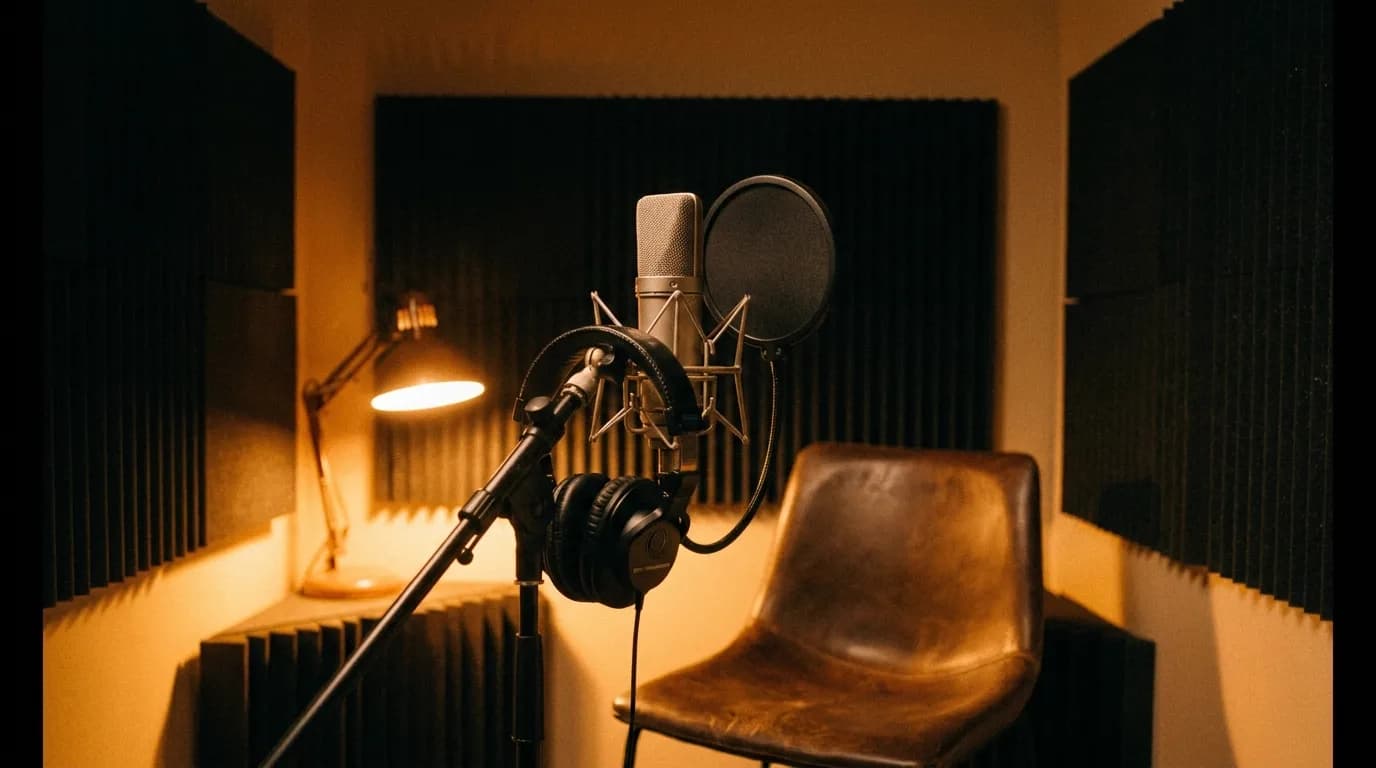
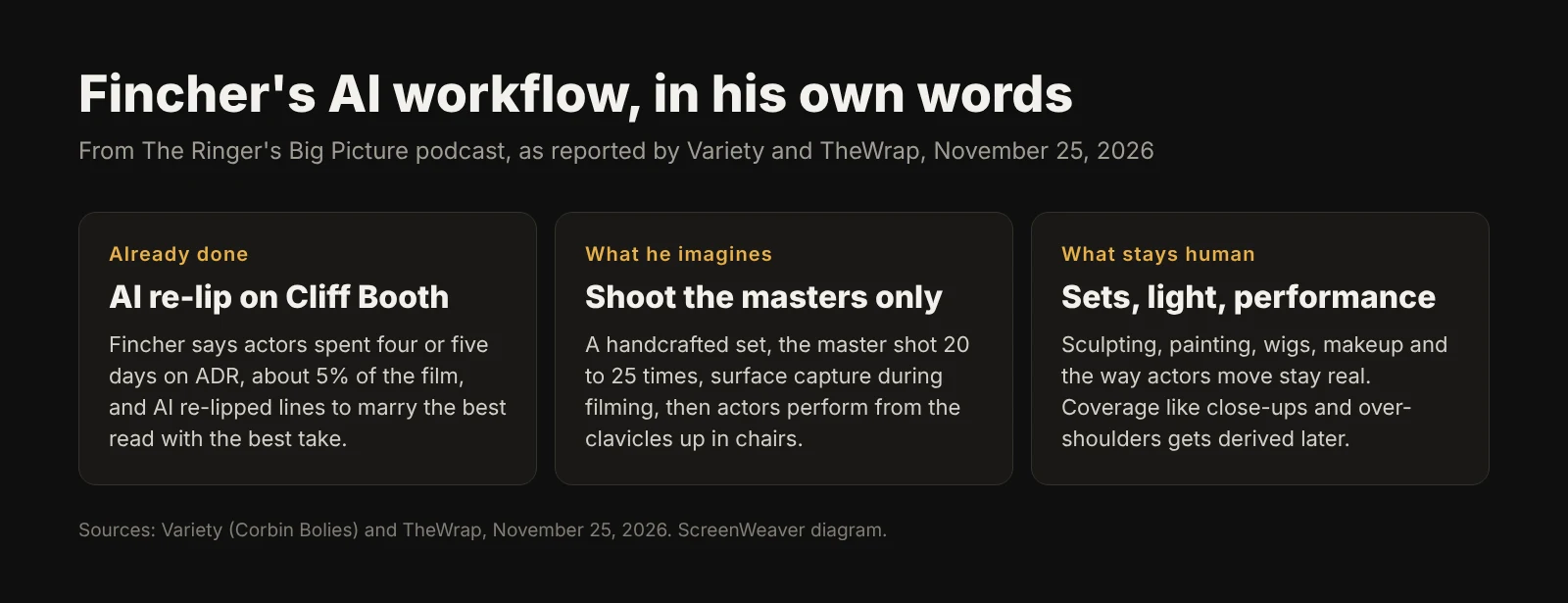
According to Variety, Fincher told host Sean Fennessey that AI helped sync the best line reading with the best performance take when the two didn't line up on camera. He said actors spent only four or five days re-recording dialogue, that ADR covered about 5% of the film, and that the rest was "all AI."
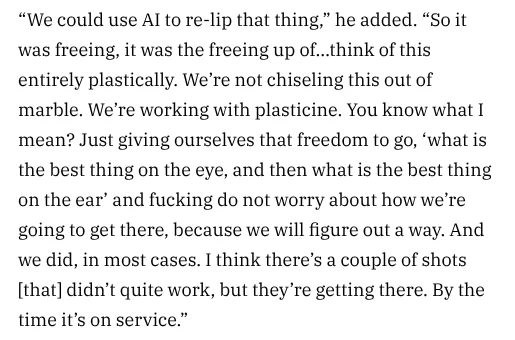
"We could use AI to re-lip that thing," he said. "We're not chiseling this out of marble. We're working with plasticine." He also admitted that "a couple of shots didn't quite work," and said they are "getting there" before the film reaches Netflix on 23 December.
That is a narrow, specific use: picking the best picture and the best sound separately, then fixing the mouth. It isn't the same as the generated images viewers have pointed at, such as a flashback carriage that seems to have two wagons. Fennessey said the interview predates those allegations, and Variety notes that neither Fincher nor Netflix has commented on them.
The bigger idea: only the master is shot
The part filmmakers will argue about is what Fincher imagines next. In his version, all the craft departments stay: sets, painting, aging, haze, a shaft of light, wigs, makeup. The master is shot 20 or 25 times on a handcrafted set.
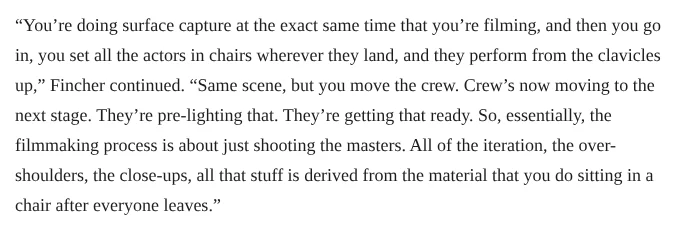
During that master, the actors are captured. Then they sit in chairs and "perform from the clavicles up" while the crew moves on to pre-light the next stage. "All of the iteration, the over-shoulders, the close-ups, all that stuff is derived from the material that you do sitting in a chair after everyone leaves," Fincher said, as quoted by TheWrap.
His pitch is fewer takes, not fewer people. "I won't miss focus in AI and I will land the dolly shot in AI," he said. "It'll still be based on real human beings," with the way they move, cross a set or take off a coat. "People will only have to do it 15 times."
Why it matters for writers and directors
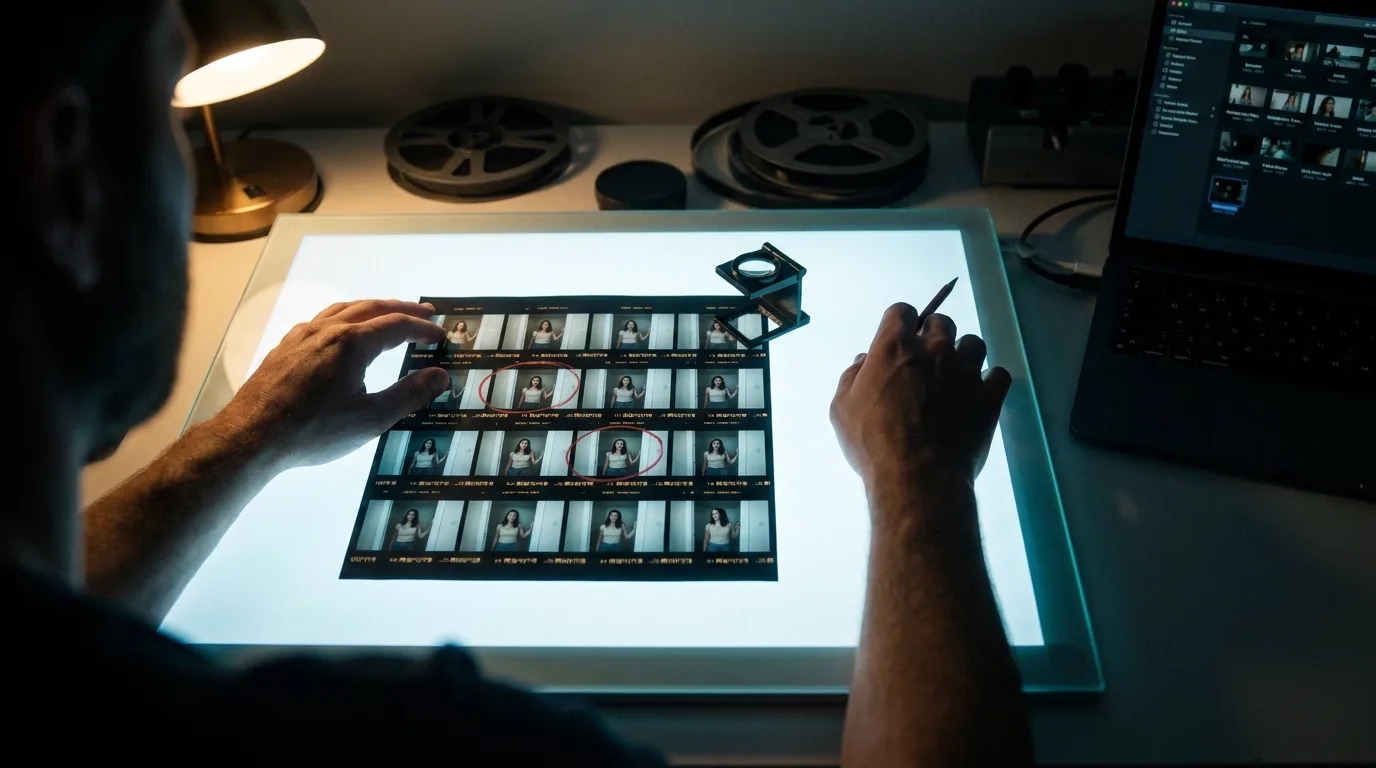
If coverage can be derived after the shoot, the decisions that used to happen on set move earlier and later. Earlier, because the master has to contain everything: blocking, eyelines and props must be right in the one setup that gets filmed. Later, because choosing the close-up becomes an edit decision made with a library of captured faces.
That makes the page and the shot plan more important, not less. A scene written as a list of reactions and inserts assumes a camera will be there to catch them. In Fincher's model, the writer and director need to know which beats live in the master and which will be built in a chair. Our guide on reviewing generated takes like dailies covers how to judge that material, and AI voices and lip sync for film explains the re-lip step he describes.
It also puts performance rights in the middle of the workflow. Capturing an actor once and deriving shots later is close to what David Ayer's Acme is testing with grey-box performance transfer. Who approves a derived close-up, and how it is paid, is the question unions will ask.
Try it free
Try ScreenWeaver for free on your script
It is free. Import your existing project, get a clearer view of your outline, and regain control of your story structure in minutes.
Start FreeWhat it means for you
- Plan the master as the source of truth. Block it fully on paper and in your storyboard, because every derived shot inherits its errors.
- Separate eye and ear in your notes. Mark which take you want for picture and which for sound, the way Fincher describes choosing them independently.
- Log what was altered. Re-lipped lines and derived close-ups should be listed for the edit, the actors and, if needed, the audience.
- Get consent in writing before capture. If faces will be reused for shots nobody filmed, the contract has to say so.
What we don't know
- Which shots used generative AI beyond the re-lip work Fincher described. He and Netflix haven't addressed the specific scenes viewers flagged.
- Which tools were used. Netflix bought Ben Affleck's AI startup InterPositive in March, Variety notes, but no source links it to this film.
- How actors were consented and paid for re-lipped lines.
- Whether the fixes Fincher mentioned will change the Netflix version compared with the Imax release.
FAQ
Did David Fincher use AI in Cliff Booth?
Yes, for part of the post-production. On The Ringer's Big Picture podcast he said AI was used to re-lip dialogue, matching the best line reading with the best picture take, according to Variety.
How much of the film used ADR?
Fincher said ADR covered about 5% of the film and took four or five days of re-recording, with AI handling the rest of the lip work, as reported by Variety.
What is Fincher's idea of "shooting the masters"?
Film the master shot many times on a real set while capturing the actors, then record their faces in chairs and derive close-ups and over-shoulders later, so the crew can move on, as quoted by TheWrap.
Did Fincher respond to the AI criticism of the film?
Not directly. The podcast was recorded before the allegations surfaced. Earlier, he told the Los Angeles Times "It exists. Should we not use it?", according to Deadline.
When does Cliff Booth reach Netflix?
On 23 December 2026, after its Imax release on 25 November.
Does this mean fewer crew jobs?
Fincher says no: he describes hiring the same departments and building handcrafted sets, with fewer takes for actors. Whether studios would follow that model is an open question.
From script to shots
Turn your script into a film, shot by shot
Write the scene, get its storyboard, then generate each shot with consistent characters. You direct every step.
Start your film free