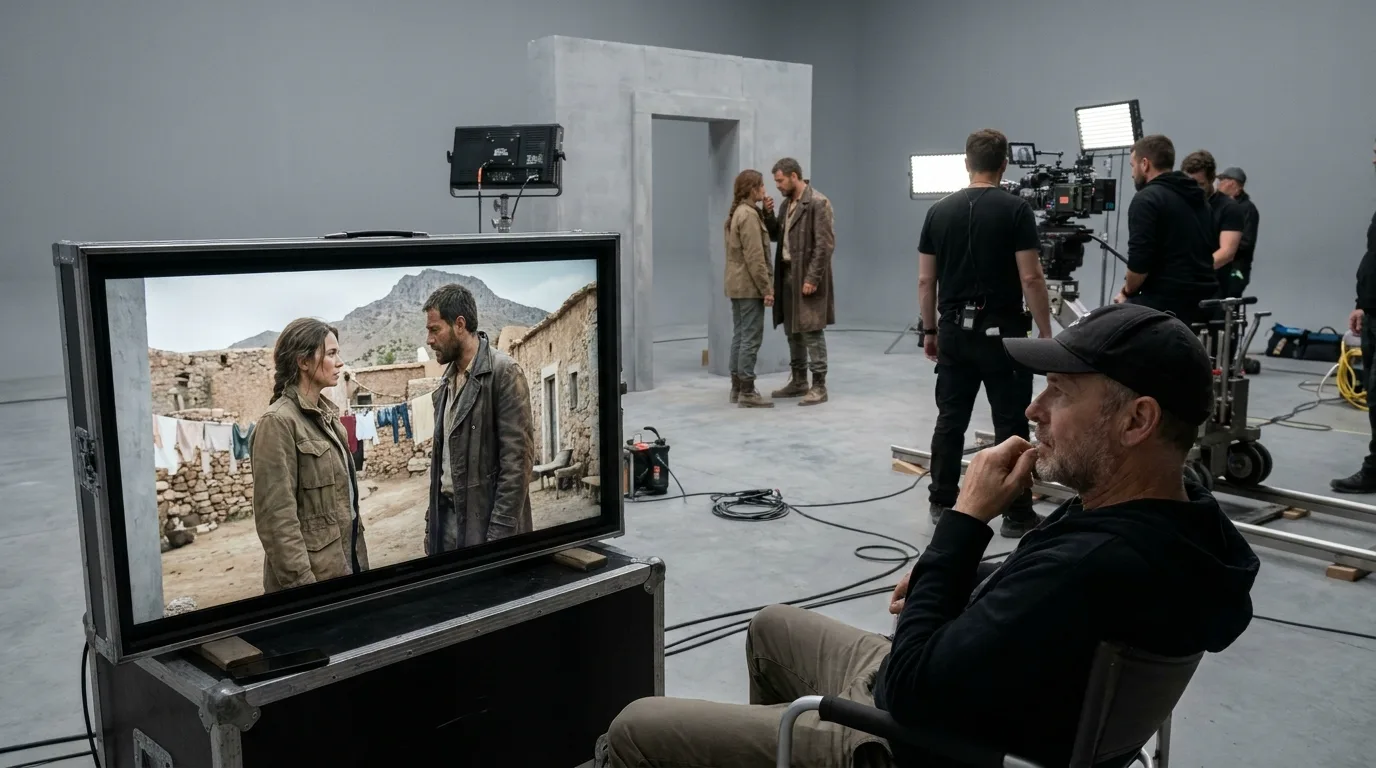

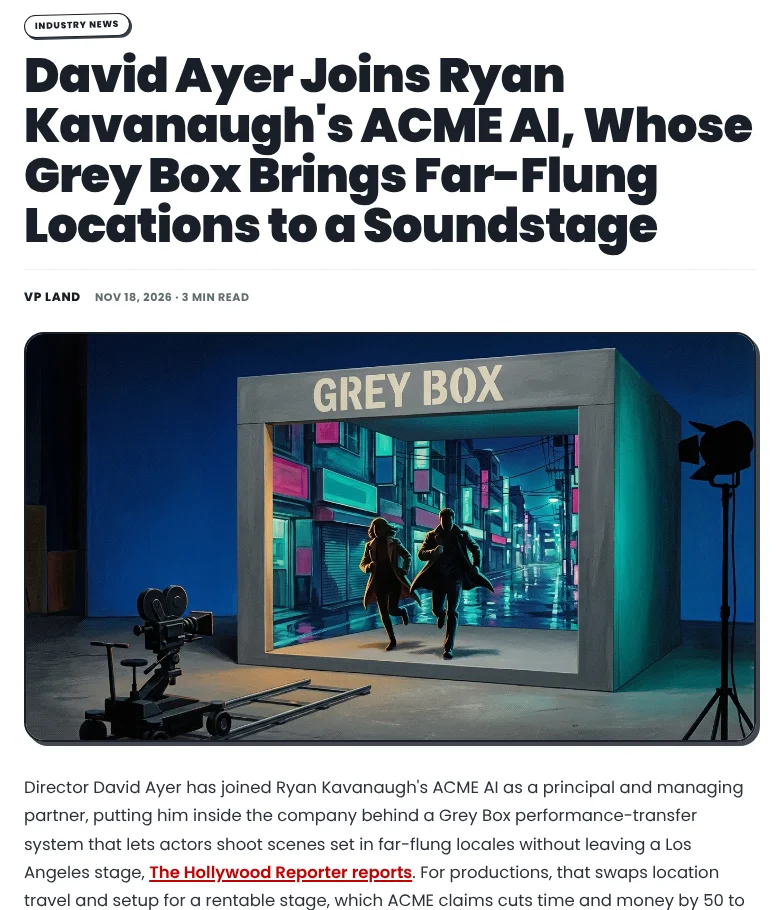
David Ayer, writer of Training Day and director of End of Watch, Suicide Squad and The Beekeeper, is joining ACME AI as a principal and managing partner. The company, founded by Relativity Media co-founder Ryan Kavanaugh, runs what it calls a "Grey Box": a stage in Los Angeles where actors play full scenes, and AI rebuilds the location around them.
The news is an exclusive by Steven Zeitchik in The Hollywood Reporter on 17 November 2026, which we read through its Yahoo syndication, alongside VP Land's summary of 18 November. We read both on 18 November 2026. We have not seen the stage.
What ACME AI's Grey Box does

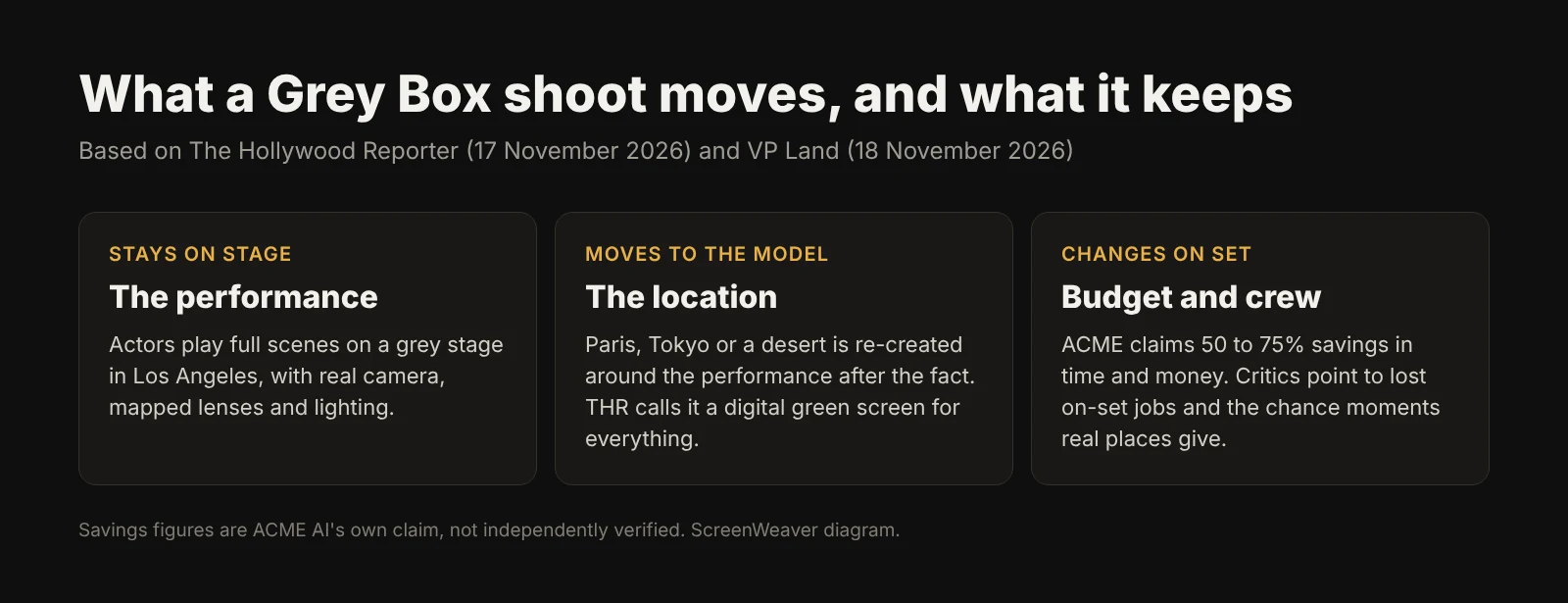
The method is called performance transfer. Actors perform on a grey stage with a real camera crew. The location (a street in Tokyo, the Eiffel Tower, a desert) is re-created by models afterwards. THR describes it as "a digital green screen, but for everything". To make it look real, ACME says it mapped many lenses and lighting packages, then combined that data with models that rebuild physical places.
The business pitch is simple. Instead of flying a unit to a location and building there, a production rents the stage, the way it would rent any soundstage. ACME claims that cuts time and money by 50 to 75 percent. That figure is the company's own.
There is already a feature behind it, according to THR: Doug Liman shot Bitcoin, starring Casey Affleck, mostly on the stage, even though the story is set in Australia and other countries.
Why Ayer signed
Ayer frames it around one thing: getting films made. "As a storyteller half my job is litigating over budget," he told THR. "This pulls so many stories within striking distance."
He also talks about what it does to the shoot itself. "If I'm not worried about getting kicked off a location or a lightning storm shutting me down, it takes away a lot of the friction of filmmaking," he said, adding that "the staging starts to feel more like a Broadway play, where you know exactly what you're going to get."
THR puts the other side plainly. Real locations give a film chance moments nobody planned, and a stage that replaces travel and builds also replaces a lot of below-the-line work. According to VP Land's reading of THR, the pitch keeps above-the-line work intact while "radically reducing" the need for much of the crew. That is the part unions and crews will watch.
What it changes on the page
Disclosure: ScreenWeaver is a pre-production tool where the script, the characters, the locations and the storyboard live in one project. We have an interest in pre-production mattering more, so weigh our angle with that in mind.
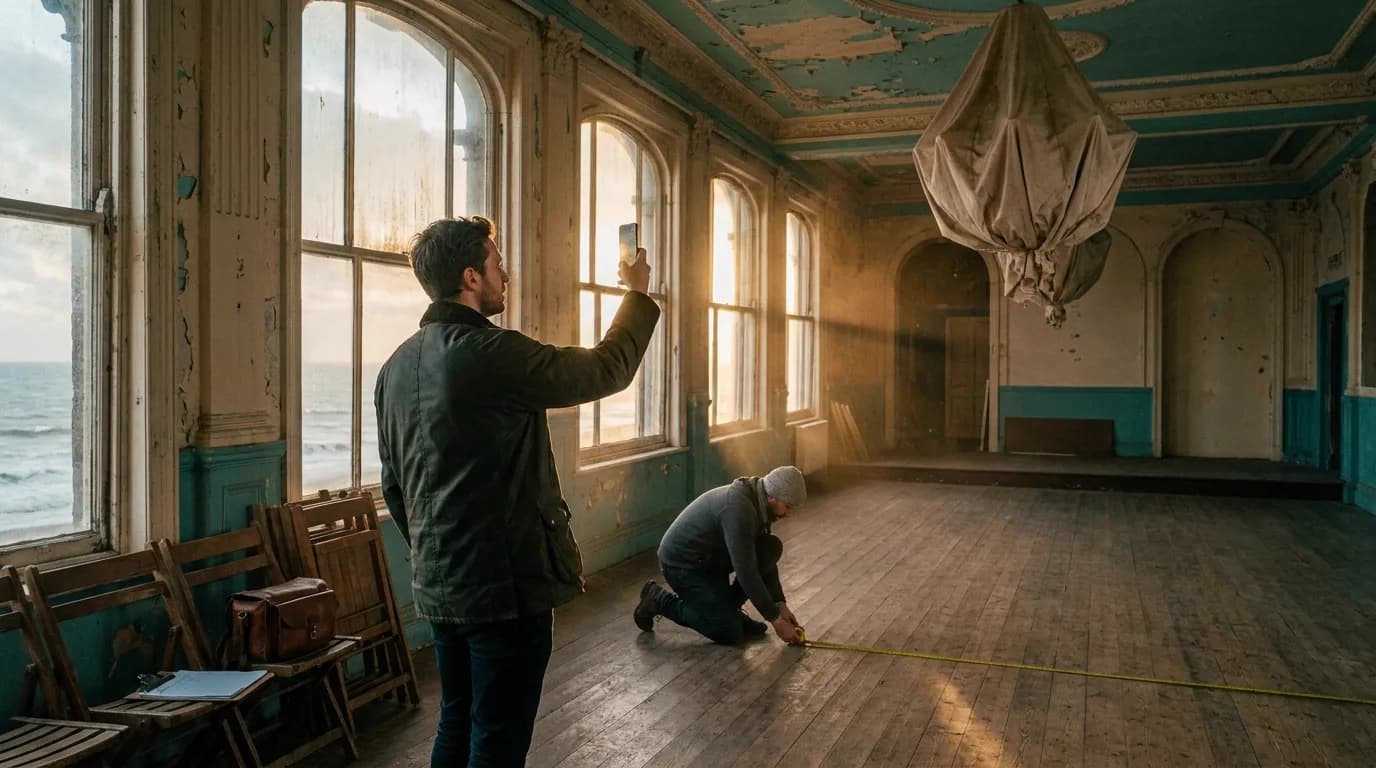
If a location costs the same whether it is a kitchen or a harbour in Marseille, the writer's budget pass changes. The scene that used to be cut in the "move it somewhere cheaper" rewrite can stay. But the description of that place has to do more work, because nobody will discover it on a scout. Three habits follow:
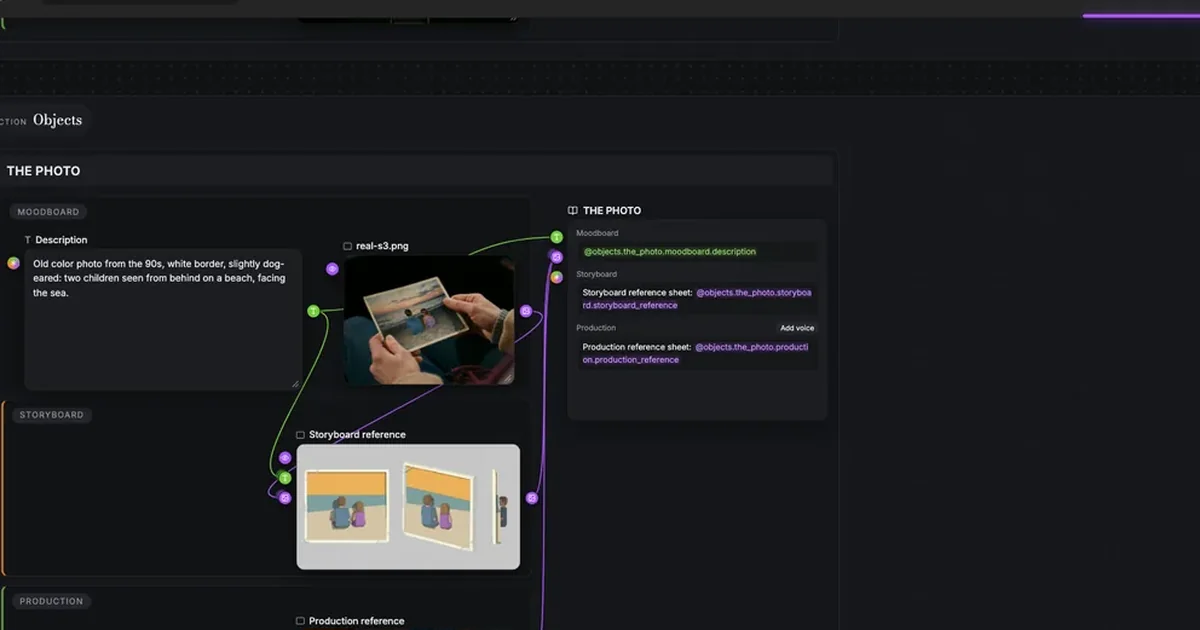
- Write the location as a brief, not a mood. Time of day, weather, how big the space is, what the actors touch. A model re-creating a place needs what a production designer needs. Our guide to consistent locations and props in AI video shows how reference images carry that detail.
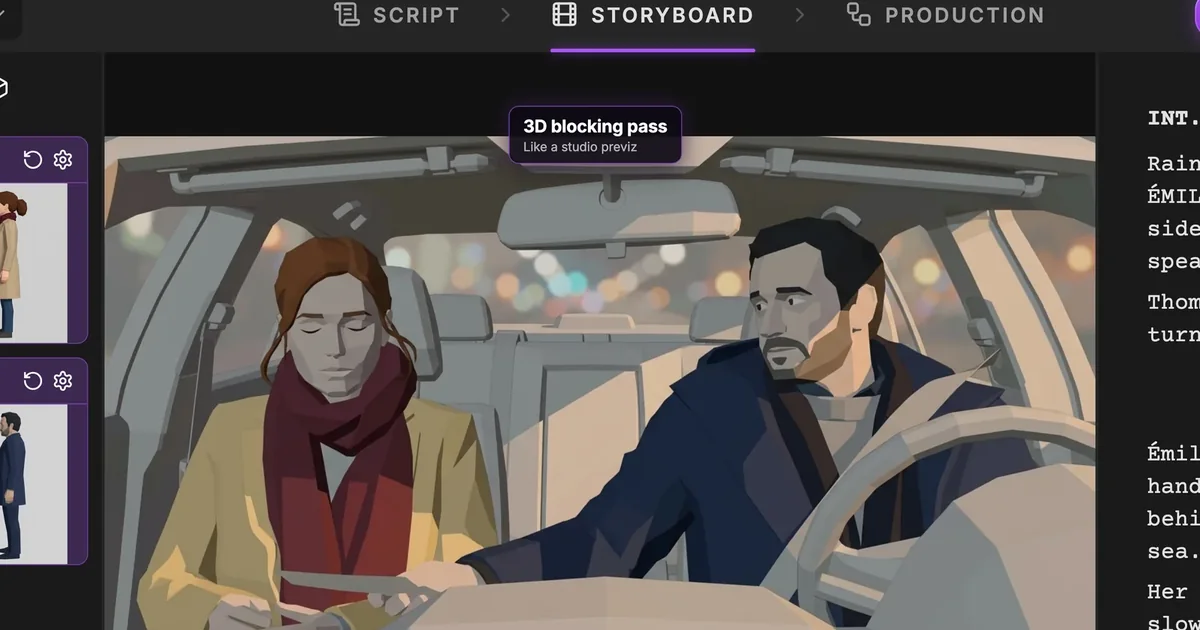
- Block the scene before the shoot. Ayer's "Broadway play" line is the key. On a grey stage, actors play against nothing, so entrances, eyelines and the doorway they lean on must be decided in advance. That is what a storyboard built from the script is for.
- Mark what must be real. Some scenes live on weather, crowds or chance. Flag them early so the producer knows which ones still need a real place, the same way a VFX-heavy script flags its expensive shots.
Try it free
Try ScreenWeaver for free on your script
It is free. Import your existing project, get a clearer view of your outline, and regain control of your story structure in minutes.
Start FreeWhat we don't know
- The real savings. The 50 to 75 percent figure comes from ACME, not from an audited production.
- What it costs to rent. Neither THR nor VP Land gives a day rate.
- How it looks on screen. We have not seen footage from Bitcoin, so we cannot judge the result.
- Which models re-create the locations. ACME does not name them.
FAQ
What is ACME AI?
ACME AI is a company founded by Ryan Kavanaugh, co-founder of Relativity Media. It runs a "Grey Box" stage in Los Angeles where actors perform scenes and AI re-creates the location around them, a method it calls performance transfer.
What is David Ayer's role at ACME AI?
According to The Hollywood Reporter, Ayer joins as a principal and managing partner and will be involved in the company's operations.
What is performance transfer?
Actors perform full scenes on a plain stage with a real crew and camera. The setting is then rebuilt by models trained to re-create real places, using data from mapped lenses and lighting packages. THR calls it a digital green screen for everything.
Has a film been shot this way?
Yes, according to THR. Doug Liman shot Bitcoin, with Casey Affleck, mostly on the Grey Box stage, even though the story takes place in Australia and other countries.
How much does it save?
ACME AI claims 50 to 75 percent savings in time and money compared with traveling to locations and setting up there. That figure has not been independently verified.
What do critics say?
Critics quoted in the coverage say it risks losing the chance moments real locations give a film, and that it reduces work for on-set crews.
From script to shots
Turn your script into a film, shot by shot
Write the scene, get its storyboard, then generate each shot with consistent characters. You direct every step.
Start your film free