
Three projects map the current state of AI features. Cully Hill Boys is a $2 million Higgsfield film that premiered free online, Punky Duck is the Amazon series Jorge R. Gutierrez cancelled after two days of backlash, and Critterz is an OpenAI-backed feature reportedly budgeted under $30 million. Each one exposes a different limit.
I plan AI productions for a living. When one of these projects makes headlines, my first question isn't "how good does it look." It's "where did the money go, where did the humans sit, and how did it reach an audience." Those three questions turn out to be the whole story here.
Cully Hill Boys shipped a feature for two million dollars, then gave the prompts away
The facts first. Higgsfield released Cully Hill Boys in August 2026, a 110-minute action comedy about struggling East London rappers who steal a boat for a music video and find it stuffed with cash, landing them between rival crime cartels. According to Semafor, the film cost $2 million, half of which went to AI tokens, and the whole thing came together in about four weeks. Higgsfield hired a human screenwriter for the script. The company's own announcement calls it the first AI film starring real celebrities, built on licensed likenesses, and says the prompts and assets are public for anyone to study. Variety covered the licensed cast, which includes AI avatars of the streamer N3on and UFC fighters Israel Adesanya and Quinton "Rampage" Jackson.
Now the analysis, and I want to be clear that this part is my read, not reporting.
Look at where it premiered. Free, online, on Higgsfield's own platform. Not in theaters. That tells you what the film is: a product demo with a plot. Higgsfield sells generation tools, and a feature that streams free on the company site, with every prompt published, is the most elaborate case study a tool vendor has ever shipped. That's not an insult. It's a business model. But it means nobody has yet proven that an audience will pay to watch a fully AI-generated feature, and this release doesn't test that question at all.
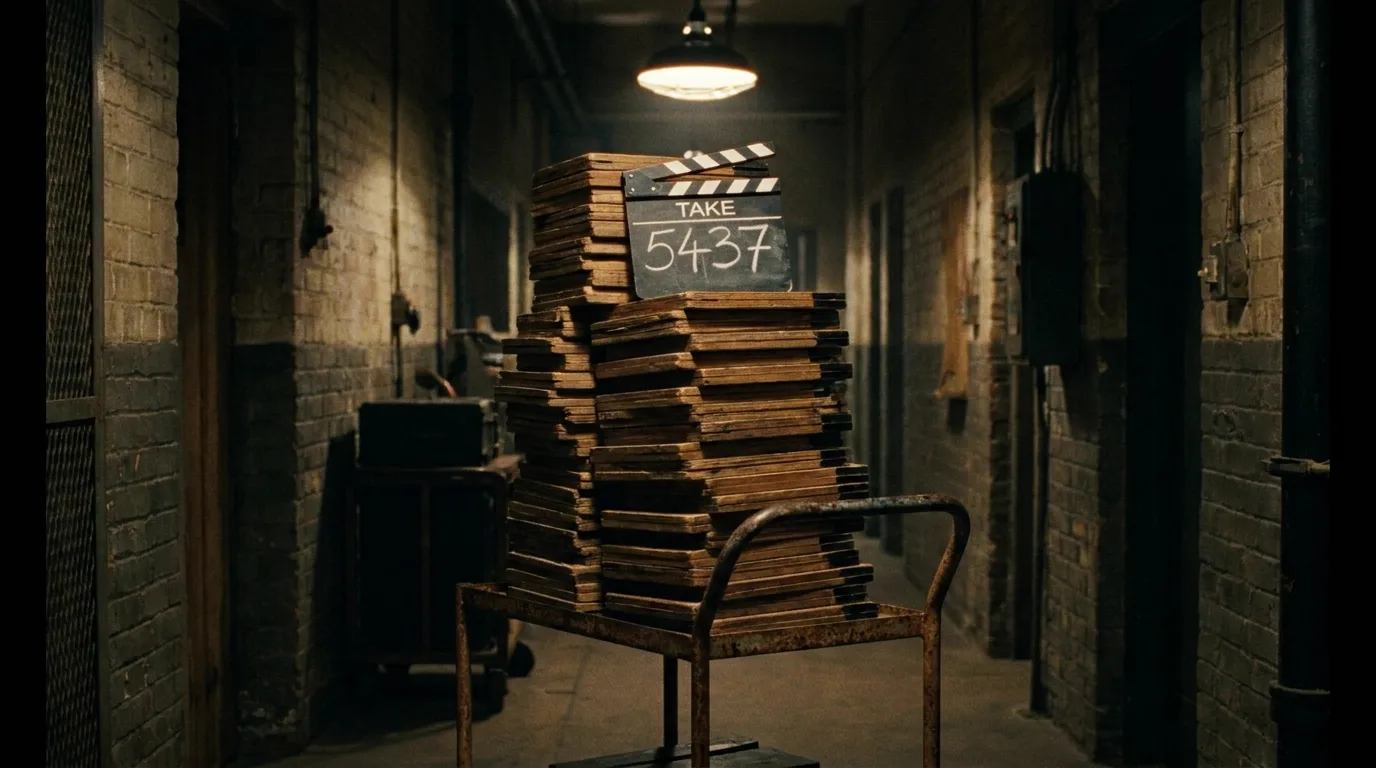
The budget breakdown is the number I'd pin to the wall. Half of $2 million on tokens. One million dollars of rerolls, retries, and regeneration to get 110 usable minutes. If you're budgeting your own project, that ratio should worry you more than any demo reel impresses you, and it's exactly the math we walk through in what an AI film actually costs in credits and rerolls.
And note the quiet detail everyone skips: they hired a screenwriter. A company whose entire pitch is generative tooling paid a human to write the script. The generation was automated. The story wasn't.
Punky Duck lasted two days
The timeline is short enough to quote in full. On May 27, 2026, Jorge R. Gutierrez, the director behind The Book of Life, El Tigre, and Maya and the Three, announced Punky Duck as part of Amazon MGM's generative AI animation initiative. On May 29, per Cartoon Brew, he posted: "I have decided to drop out of the AI program at Amazon. I will not be making a Punky Duck series. Actions speak louder than words."
Two days. No episode existed, and not one frame of footage had ever been judged by anyone.
That's the part worth sitting with. The backlash that killed Punky Duck had nothing to do with output quality, because there was no output. Animation artists and fans reacted to the announcement itself, reading the partnership as an endorsement of tools they see as a threat to animation jobs and to artists' work. Gutierrez said his intent was "to showcase artists, both new and seasoned, both inside and outside the studios, driving this new tech," and he apologized to the people he'd upset.
Here's my read. Gutierrez built a two-decade reputation on handcrafted, artist-forward work, and that reputation is precisely why the reaction was so fierce. Audiences and peers hold you to the identity you built. If your name means "made by human hands," attaching it to a generative pipeline reads as betrayal regardless of how the pipeline actually works, and no press release about artists driving the tech survives contact with that reaction.
For anyone planning an AI project with a public profile, Punky Duck is the risk case: the trust question gets litigated at announcement, before a single frame renders. That's a labor and ethics conversation as much as a craft one, and it connects directly to where the WGA drew its line on AI in screenwriting.
Critterz puts the humans where the money is
Critterz is the most conventional of the three, which is what makes it interesting. Chad Nelson, a creative specialist at OpenAI, originated the concept, which grew out of a short film released in 2023. Vertigo Films and the AI-focused studio Native Foreign are producing, with funding from Vertigo's Paris-based parent company Federation Studios, and OpenAI supplying tools and computing resources. The reported budget is under $30 million, with a target of roughly nine months of production instead of the usual three years. Deadline reported in May 2026 that the film was headed to the Cannes market.
Look at the human roster on this "AI film." As Vice describes the pipeline, human-drawn sketches and human voice performances are fed into OpenAI models like GPT-5. Vertigo's own announcement adds that the script comes from writers on the team behind Paddington in Peru.
Story, design, voice. All human.
What the AI actually replaces, on this model, is the expensive middle of the pipeline: the years of animation, rendering, and iteration that push a studio feature toward $200 million. The creative decisions that make an audience care sit exactly where they always sat. Critterz is a bet that you can compress the execution layer without touching the authorship layer, and its under-$30-million budget against a nine-month schedule is the number the rest of the industry is watching.
If that bet lands, the lesson isn't "AI makes movies." It's "AI compresses one stage of a pipeline that still starts with a writers' room and a design department."
Three projects, one pattern
Put the verified facts side by side and the pattern is hard to miss.
| Project | Backer | Reported budget | Where the humans sit | Distribution |
|---|---|---|---|---|
| Cully Hill Boys | Higgsfield | $2M, half on AI tokens | Hired screenwriter, licensed celebrity likenesses | Free online, on Higgsfield's platform |
| Punky Duck | Amazon MGM (GenAI initiative) | Not disclosed | Never got that far; cancelled after two days | Never produced |
| Critterz | OpenAI, Vertigo Films, Federation Studios | Under $30M | Script, sketches, voices all human | Targeting theatrical, shopped at the Cannes market |
The projects that exist, or are on track to exist, are the ones with conventional pre-production discipline under the generation: a finished screenplay, a design pass, cleared rights, a distribution plan. The one that collapsed, collapsed on the trust question before production even started.
Nobody in this trio skipped the writer. That's the finding.
Try it free
Try Screenweaver for free on your script
It is free. Import your existing project, get a clearer view of your outline, and regain control of your story structure in minutes.
Start FreeWhat this means if you're making one
You're probably not spending $2 million. The lessons still transfer, and they're mostly about sequence.
Write and lock the script before you generate anything. Cully Hill Boys hired a screenwriter; Critterz brought in feature writers. If the flagship AI projects treat story as human work done up front, your short should too. The full sequence, from pages to storyboards to shot lists to generation, is laid out in our AI filmmaking workflow from script to screen, and the broader planning picture lives in the complete guide to making an AI film.
Budget for regeneration, not generation. Half of a professional production's budget went to tokens. Your reroll ratio won't be better than theirs, so price it honestly using the framework in our breakdown of AI film costs, credits, and rerolls before you promise anyone a delivery date.
Get the rights conversation done in writing. Higgsfield's entire marketing hook is licensed likenesses. The inverse also holds: an unlicensed face in your film is a liability, not a feature.
Decide your disclosure posture before you announce. Punky Duck died in the gap between a creator's reputation and his announcement. You're not Gutierrez, but the same dynamic operates at every scale: say what's AI and what's human before someone frames it for you.
And pick tools against your actual pipeline, not against launch-day demos. The current field is compared in script-to-video AI tools compared for 2026, and the honest summary is that every one of them rewards the production that shows up with finished pre-production and punishes the one that improvises.
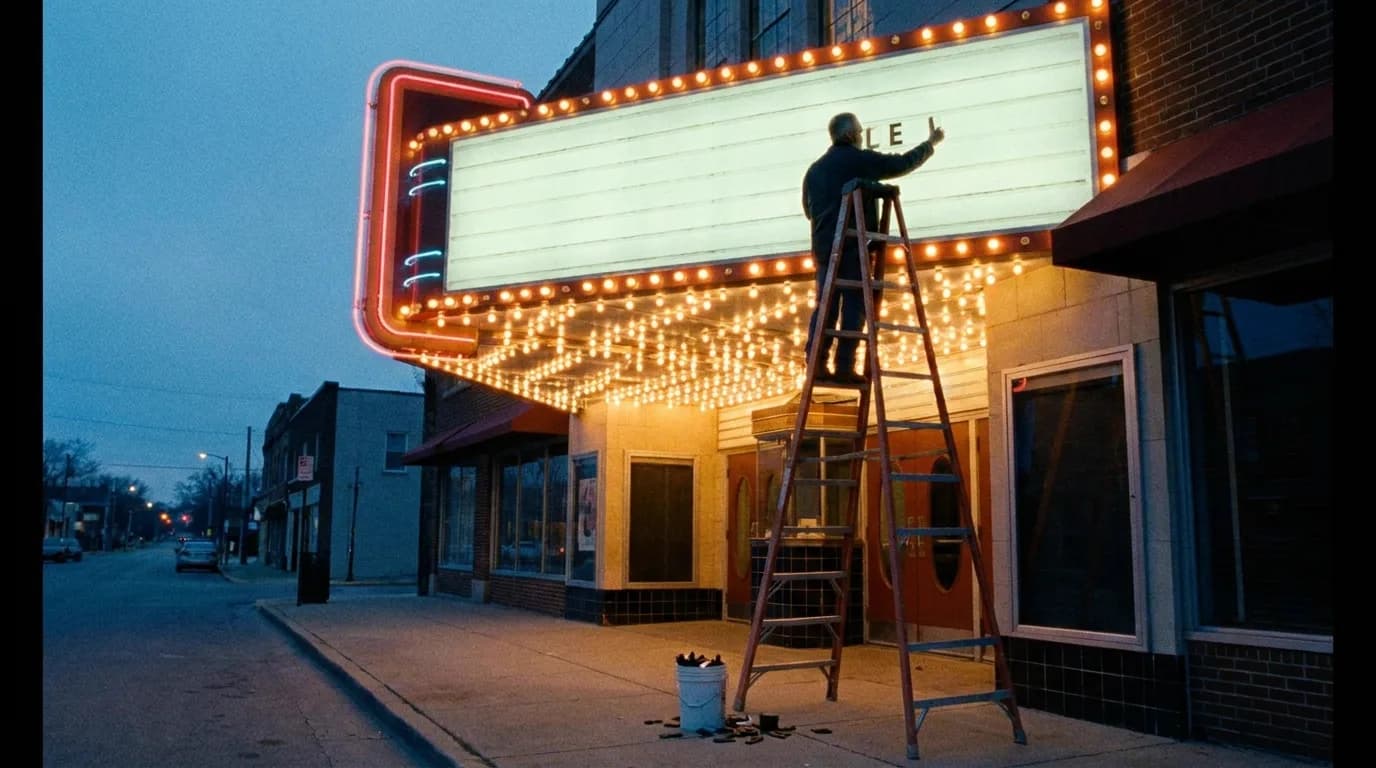
The marquee in the hero image up top is the right metaphor to end on. The letters are getting swapped fast right now. The building underneath, story, design, rights, distribution, hasn't moved.
FAQ
What is Cully Hill Boys?
Cully Hill Boys is a 110-minute AI-generated action comedy released by Higgsfield in August 2026. According to Semafor, it cost $2 million, half of which went to AI tokens, and was produced in about four weeks from a screenplay by a hired human writer. It features licensed AI likenesses of real celebrities and streams free online, with its prompts and assets published for study.
Why was Punky Duck cancelled?
Jorge R. Gutierrez announced the AI-generated series under Amazon MGM's generative AI initiative on May 27, 2026, and dropped out on May 29 after intense backlash from animation artists and fans. Critics saw the partnership as an endorsement of tools that threaten animation jobs. No episode was ever produced; the project collapsed on the announcement alone.
Who is making Critterz and what is OpenAI's role?
Critterz originated with Chad Nelson, a creative specialist at OpenAI, and is produced by Vertigo Films and Native Foreign with funding from Federation Studios. OpenAI supplies tools and computing resources rather than acting as a traditional studio. The reported budget is under $30 million, with human voice actors, human concept artists, and a script from writers on the Paddington in Peru team.
Are AI-generated feature films released in theaters?
Not so far in any proven way. Cully Hill Boys, the highest-profile fully AI-generated feature, premiered free online on its maker's own platform rather than in cinemas. Critterz is targeting a theatrical release and was shopped at the Cannes market, so it may become the first real test of whether audiences will buy tickets for an AI-assisted feature.
Do AI films still need a human screenwriter?
Every project in this trio treated the script as human work. Higgsfield hired a screenwriter for Cully Hill Boys, and Critterz brought in writers from the Paddington in Peru team. Generation tools compress production, but story, structure, and dialogue remain the human layer, which is why locking a real screenplay before generating is the step that separates finished projects from abandoned ones.
How much does an AI feature film cost to make?
The two reported data points are far apart: $2 million for Cully Hill Boys and under $30 million for Critterz, reflecting very different production models. The detail worth remembering is that half of the Cully Hill Boys budget reportedly went to AI tokens, meaning regeneration and retries are a major cost center, not a rounding error, at any scale.
Final Step
Build your next script with Screenweaver
Move from ideas to production-ready pages faster with timeline-native writing and AI-assisted story flow.
Try Screenweaver