
The audience exhales. The story resolved. Credits roll. Most people stand, gather coats, check phones. Then a fraction stays - because they have been trained that something else might come.
The post-credits scene (or stinger, tag, coda, button) is no longer a novelty. After a decade of franchise filmmaking, it is an expectation in certain genres. Write one badly and it feels like a contract obligation. Write one well and it reframes the entire film, sets up a sequel without a clumsy cliffhanger, or delivers a final emotional note the main ending could not carry.
This guide explains how post-credits scenes function on the page, when they earn their place, and how to format them so production, budget, and audience trust stay intact.
How It Works: Types of Post-Credits Scenes
Not every tag is the same. Know which type you are writing before you format a single line.
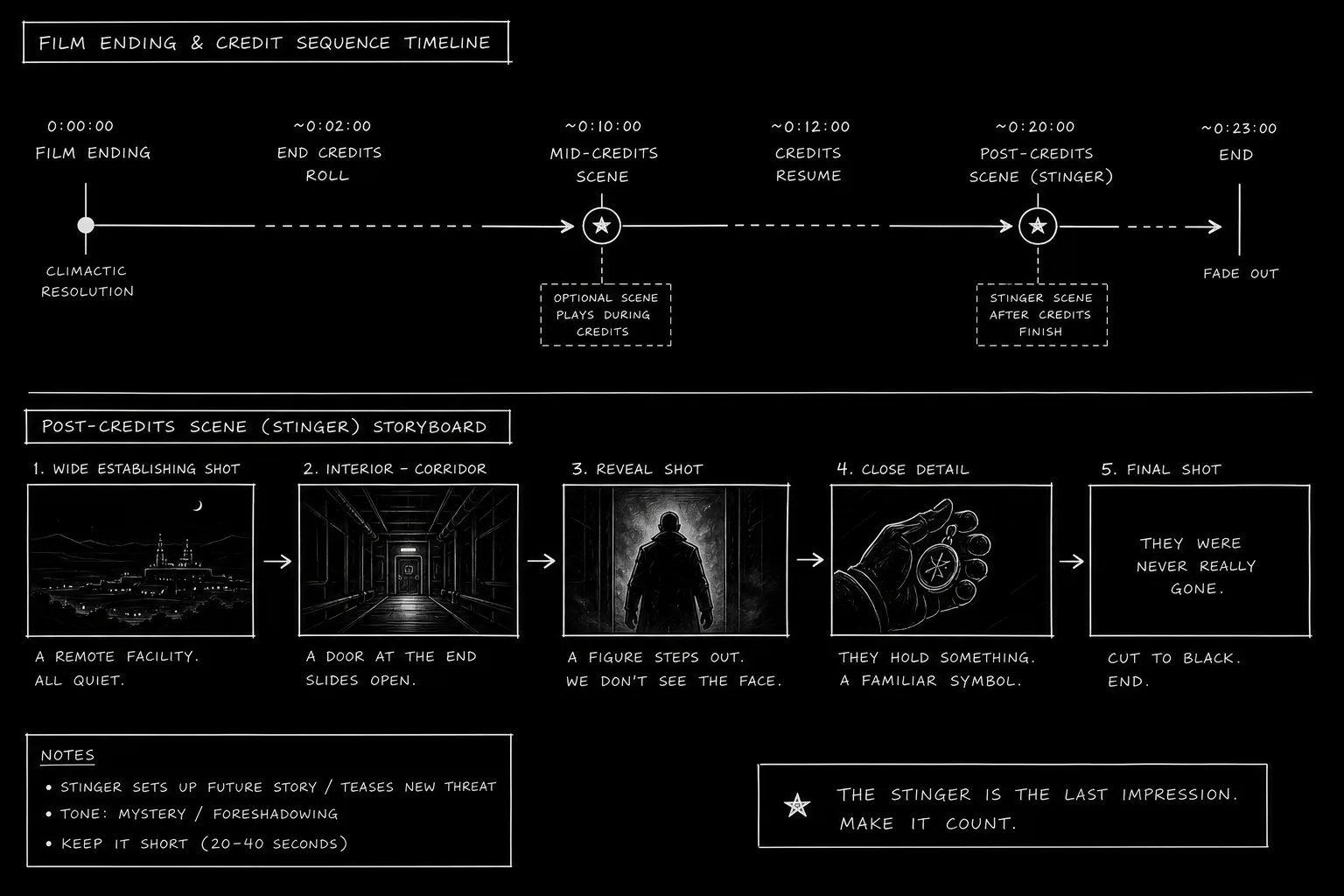
Mid-credits scene. Plays after initial cast credits, before the scroll completes. Often lighter, comedic, or a plot tease. Audience is still partly in theater mode.
End-credits scene (post-credits). Plays after the full credit roll. Only the committed remain. Must reward patience with substance.
Stinger as sequel hook. Reveals new information that changes context: a villain survives, an artifact is stolen, a character arrives in a new location.
Stinger as tone button. No plot consequence. A joke, a dance, a quiet character moment. Pure texture.
Stinger as franchise glue. Connects your film to a larger universe. Highest risk category: feels hollow if the main story was thin.
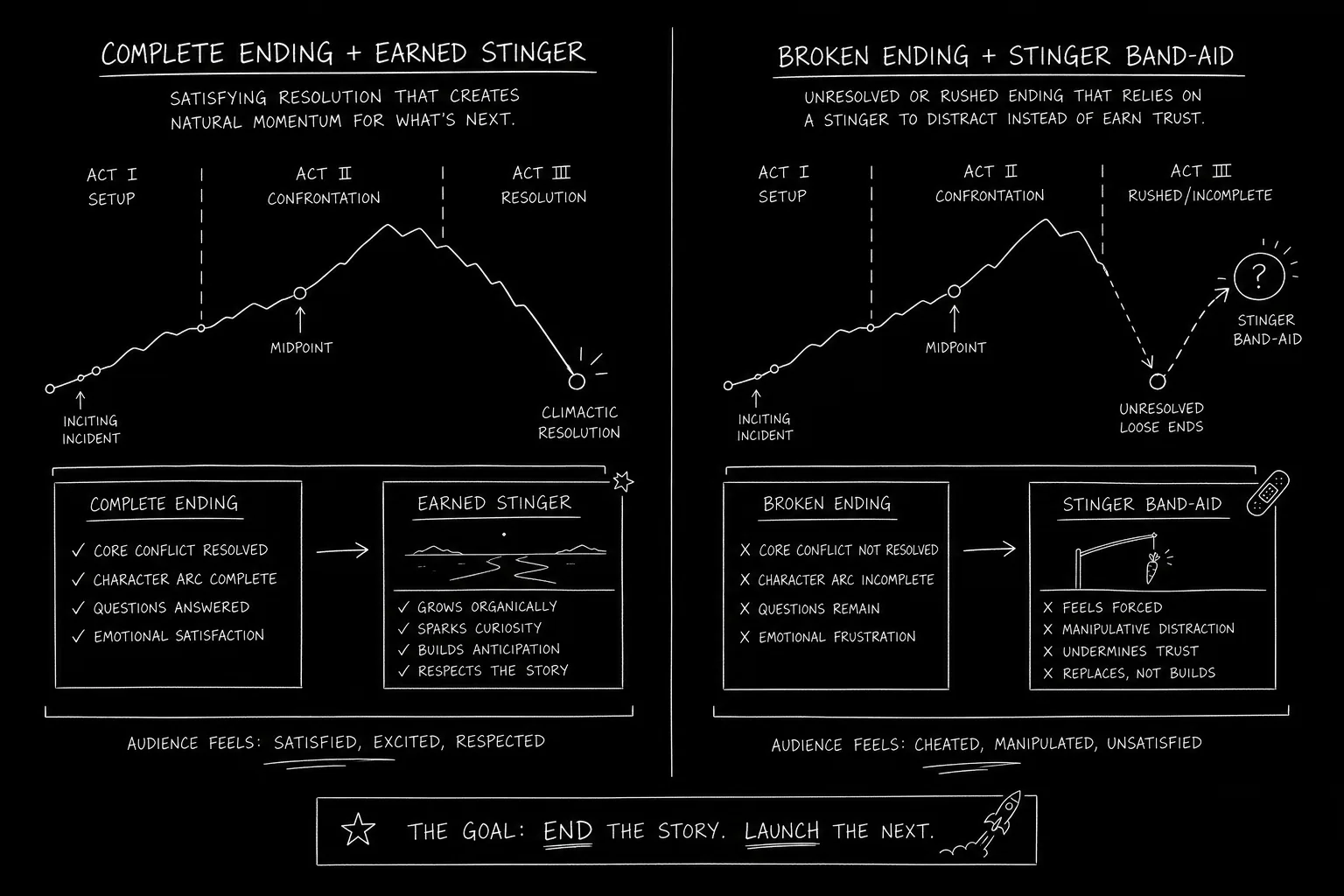
A post-credits scene is a promise. Break the promise and the audience feels cheated twice.
For alternate endings and branching narrative craft, see alternate endings in psychological thrillers. For how to plant setups that pay off later, see Chekhov's gun in your script.
Platform and Use-Case Sections
Franchise / Shared Universe (Marvel Model)
When worth it: You have a genuine story reason to extend the world. The stinger reveals character survival, location shift, or antagonist escalation that the main plot could not accommodate without bloating Act Three.
When skip it: You are copying Marvel because Marvel does it. If your stinger is only "and then a portal opened," the audience will groan.
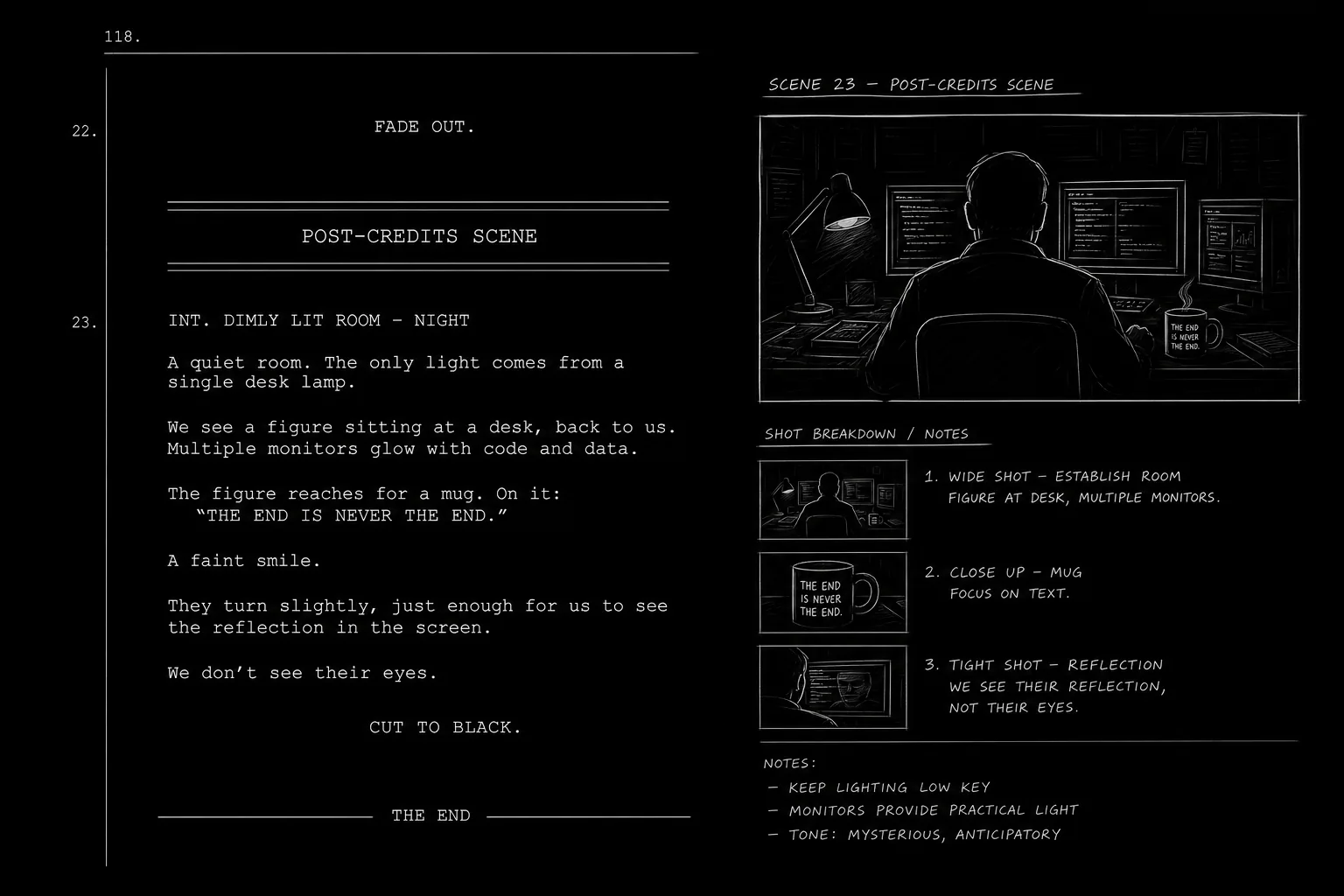
Format note: Label clearly in the script as POST-CREDITS SCENE or TAG so production budgets it separately.
Standalone Feature (Drama, Thriller, Horror)
When worth it: The stinger recontextualizes the ending. The protagonist was unreliable. The monster is not dead. The "happy" reunion was a dream. These work when the main ending is emotionally complete but intellectually open.
When skip it: You need the stinger to fix a broken third act. If the movie only makes sense after the tag, the movie failed.
Comedy
When worth it: The button is a payoff to a running gag the main plot could not land without breaking pace. Think blooper energy, not plot bombshell.
When skip it: The joke undercuts sincerity you earned in the final scene.
Streaming vs. Theatrical
Theatrical audiences trained by Marvel may stay. Streaming audiences may not watch credits at all. If your stinger is essential plot, consider integrating a version into the main ending for streaming cuts, or accept that some viewers will miss it. Writers' rooms increasingly discuss "credit skip rate" in post-launch analytics.
TV Series (Episode Tags)
End-of-episode tags are cousins to post-credits scenes. Shorter, cheaper, often comedic. Same rule applies: earn it or cut it.
Step-by-Step: Writing and Placing Your Stinger
Step 1 - Finish the main ending first. Write the film as if no stinger exists. The story must stand alone. The tag is dessert, not structural support.
Step 2 - Ask the worth-it question. Does this scene change understanding, launch a earned sequel, or deliver irreplaceable tone? If it only "sets up the universe," reconsider.
Step 3 - Choose mid vs. end credits. Mid-credits suits lighter teases. End-credits suits heavier reveals. Match audience energy.
Step 4 - Keep it short. Most effective stingers run thirty seconds to two minutes. One location when possible. Few characters. Tight dialogue.
Step 5 - Format on a new section. After FADE OUT. on the main story, insert a page break. Header: POST-CREDITS SCENE or TAG - INT. LOCATION - NIGHT. Write cleanly as a mini-scene.
Step 6 - Plant the setup earlier. The stinger should not introduce information from nowhere. A background news report, an unexplained object, a character who left mid-film - seed it in Act One or Two. Track setups with Chekhov's gun discipline.
Step 7 - Test with readers. Give script to three readers without flagging the stinger. After they finish, ask: "Does the ending feel complete?" Then let them read the tag. If they say the main ending felt incomplete before the tag, revise the main ending.
[YOUTUBE VIDEO: Breakdown of three famous post-credits scenes showing what each adds versus what each main ending already delivered.]
Try it free
Try Screenweaver for free on your script
It is free. Import your existing project, get a clearer view of your outline, and regain control of your story structure in minutes.
Start FreeOperational Section: Production and Story Requirements
Budget Implications
Post-credits scenes are often shot after principal photography wraps. They may require cast recall, additional locations, or VFX. Flag them in the script so line producers do not treat them as afterthoughts.
| Element | Budget risk | Mitigation |
|---|---|---|
| Lead cast return | High (schedule, salary) | Write tag for secondary character |
| New location | Medium | Single room, existing set redress |
| VFX reveal | High | Practical alternative when possible |
| Voice-only tag | Low | Phone call, radio, AI voice |
Contract and Cast Notes
Lead actors may have limited days. A stinger requiring your A-list star on day twenty-five of a twenty-four-day schedule kills the tag. Write alternatives: silhouette, over-shoulder, audio only.
Spoiler Discipline
Marketing teams hate accidental leaks. Label stinger pages CONFIDENTIAL in revision drafts. Some productions shoot stinger under a code name.
Legal / WGA
Stingers are part of the screenplay. Include them in delivery. Do not add a tag in production without writer involvement unless contract allows.
Outcome Section: What the Stinger Should Achieve
A successful post-credits scene produces one of these measurable outcomes:
Reframe. Audience rethinks the last thirty minutes. "He was the villain all along" lands harder in silence after credits than over a loud score.
Anticipation. Sequel interest rises without cliffhanger whiplash. The hero does not have to be in danger. A new mission can be named.
Satisfaction. Comedy button, character grace note, world detail that rewards fans. No plot required.
Failure modes to avoid:
- Bait and switch. Stinger contradicts emotional truth of the ending.
- Exposition dump. Villain explains the sequel in monologue.
- Empty tease. Logo, silhouette, no information.
- Mandatory viewing. Story incomprehensible without the tag.
Test outcome: describe your film to someone in two sentences. Then mention the stinger. If their interest jumps more than twenty percent, the tag is doing real work. If they shrug, cut it.
Why It Matters: Old Way vs. New Way
The old way: Post-credits scenes were Easter eggs for genre fans. Optional. Often shot as jokes on set. Ferris Bueller's day off, not franchise architecture.
The new way: Audiences schedule bathroom breaks around credit timing. Social media spoils stingers opening weekend. Writers plan tags during outlining, plant setups in Act One, and budget them in initial breakdowns. The stinger is part of franchise literacy.
But literacy is not obligation. The Marvel model succeeded because main stories often worked first. Copy the format without the craft and you train audiences to leave early.
The best post-credits scene is the one you almost cut - because the main film already landed - and kept because it added one perfect note, not a sales pitch for a sequel you have not written.
Final CTA: Earn the Extra Scene
Before you write POST-CREDITS SCENE, ask whether the main ending breathes on its own. If it does, write the shortest possible tag that adds reframing, anticipation, or satisfaction - then stop.
Your audience stayed through the credits. Reward them with craft, not obligation.
Finish the film first. Plant the seed second. Write the stinger last. That order keeps the button worth pushing play for.
Final Step
Build your next script with Screenweaver
Move from ideas to production-ready pages faster with timeline-native writing and AI-assisted story flow.
Try Screenweaver