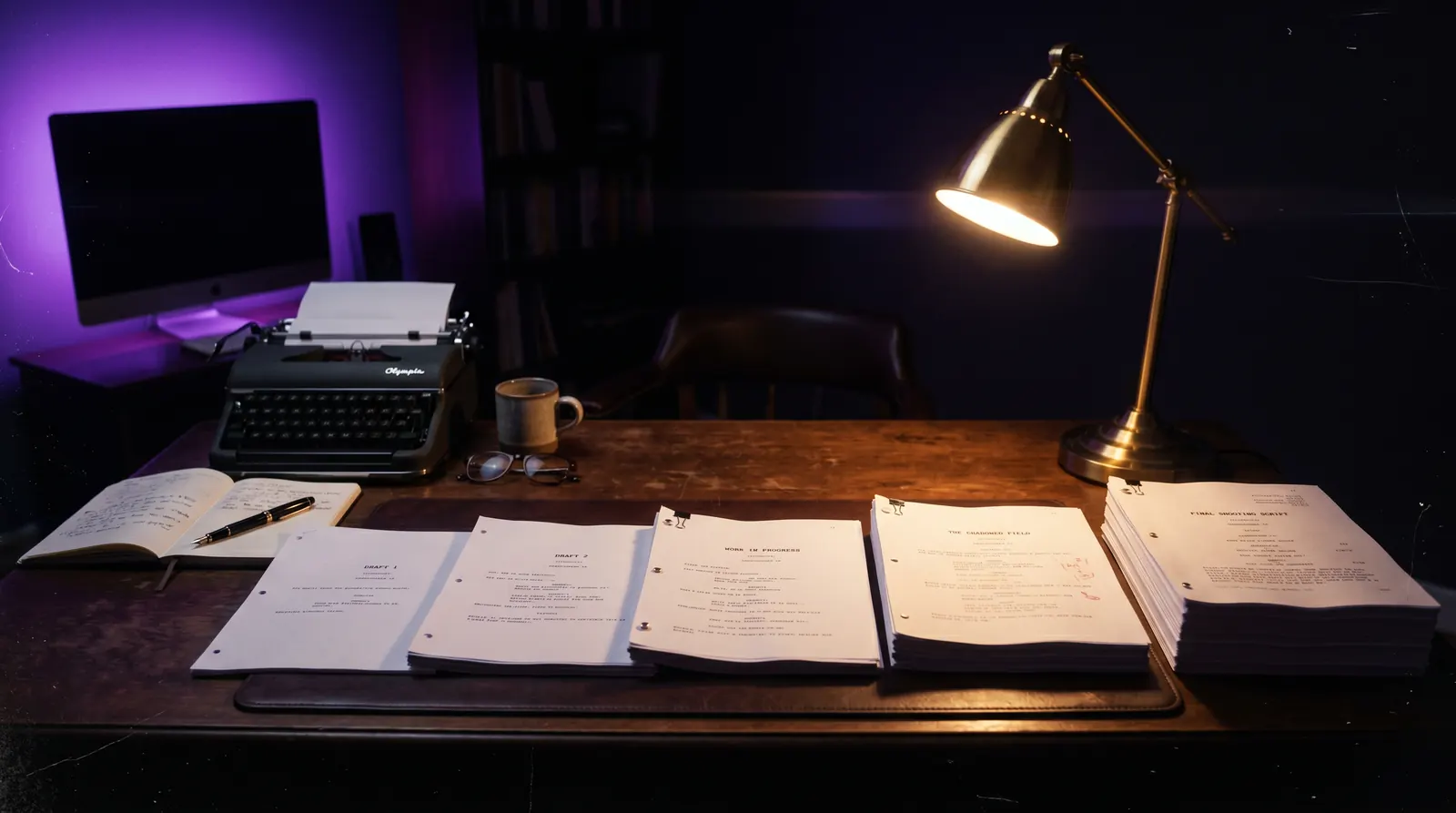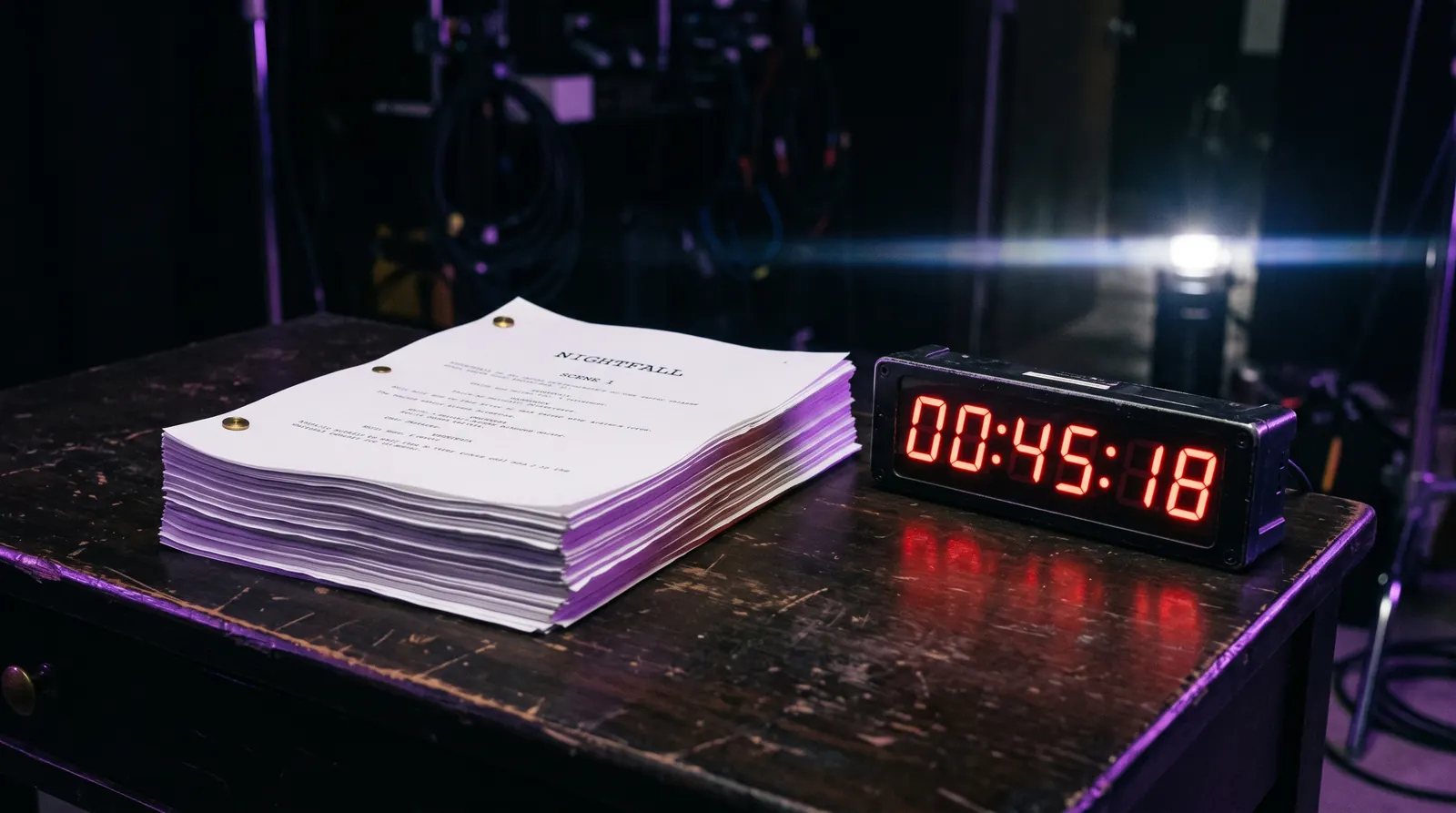

Short answer: a 90-page script runs approximately 90 minutes on screen, following the standard one-page-per-minute rule for correctly formatted screenplays. That lands squarely in feature-film territory, on the tight end of the range, and close to the lean side of most studio comedies and genre films.
The precise answer, by genre
Ninety minutes is a runtime, not a genre-neutral number. How that page count is read shifts depending on what kind of film it is meant to be.
| Genre | How 90 pages reads | Typical studio range |
|---|---|---|
| Horror / thriller | On target, often ideal | 85-100 pages |
| Comedy | On target | 90-105 pages |
| Action / genre | Slightly tight, acceptable | 95-115 pages |
| Prestige drama | Notably short for the category | 105-120 pages |
| Animated feature | On target | 85-100 pages |
For the full breakdown of accepted ranges across every format, see How Long Should a Script Be?
The nuance that changes the answer
A 90-page script is not automatically a 90-minute film. Two things shift the real number in production.
Format drift. A script exported with slightly off margins or the wrong font can run several pages longer or shorter than the same words in true standard format, so the page count itself has to be trustworthy before the one-page-per-minute rule means anything.
Content mix. A 90-page script that is mostly dense action description can play under 85 minutes once shot and edited, since a reader's eye moves faster than a scene actually executes on camera. A 90-page script heavy in dialogue tends to track closer to true 90 minutes because dialogue timing is harder to compress in the edit without losing lines. For the mechanics of counting each type accurately, see Script Timer: How to Time a Screenplay Accurately.
Try it free
Try Screenweaver for free on your script
It is free. Import your existing project, get a clearer view of your outline, and regain control of your story structure in minutes.
Start FreeHow to check yours in seconds
Do not estimate a specific script's runtime by genre alone. Paste your script or enter your exact page count into the free Script Time Calculator and get a runtime estimate built on the same one-page-per-minute logic, adjusted for how the tool reads your actual content.
Free tool: the Script Time Calculator estimates runtime from page count or pasted script text in seconds, no signup.
FAQ
Is a 90-page script considered a short movie or a feature?
A 90-page script is a full feature. Ninety minutes clears the minimum feature-length threshold used by studios, festivals, and the WGA, and sits comfortably inside the accepted range for comedy, horror, and animated features specifically.
Is 90 pages too short for a drama?
It can read as short for prestige or ensemble drama, where 105 to 120 pages is more typical. It is not too short in an absolute sense, but a 90-page drama should expect readers to ask whether the story has been under-developed before they engage with the pitch.
How many minutes is a 90-page script exactly?
Approximately 90 minutes, following the one-page-per-minute convention that standard screenplay format is built around. The real number can land a few minutes on either side depending on how dialogue-heavy or action-heavy the script is.
What genres suit a 90-page script best?
Horror, thriller, comedy, and animated features are the genres where 90 pages is squarely on target rather than tight. Action and prestige drama typically expect more page count to deliver a satisfying runtime in those genres.
Final Step
Build your next script with Screenweaver
Move from ideas to production-ready pages faster with timeline-native writing and AI-assisted story flow.
Try Screenweaver