
Short answer: a feature runs 90 to 120 pages, a one-hour TV pilot runs 50 to 65, a half-hour comedy runs 28 to 35, and a short film runs 1 page per intended minute of screen time. The rule behind all of it is the same: one page of standard screenplay format equals roughly one minute of screen time. Everything else in this guide is what changes that number for your specific project.
Page count is not a style preference. It is the unit readers, agents, and financiers use to estimate budget and runtime before they read a single scene. Land outside the expected range and the first note you get has nothing to do with your story.
The rule and why it holds
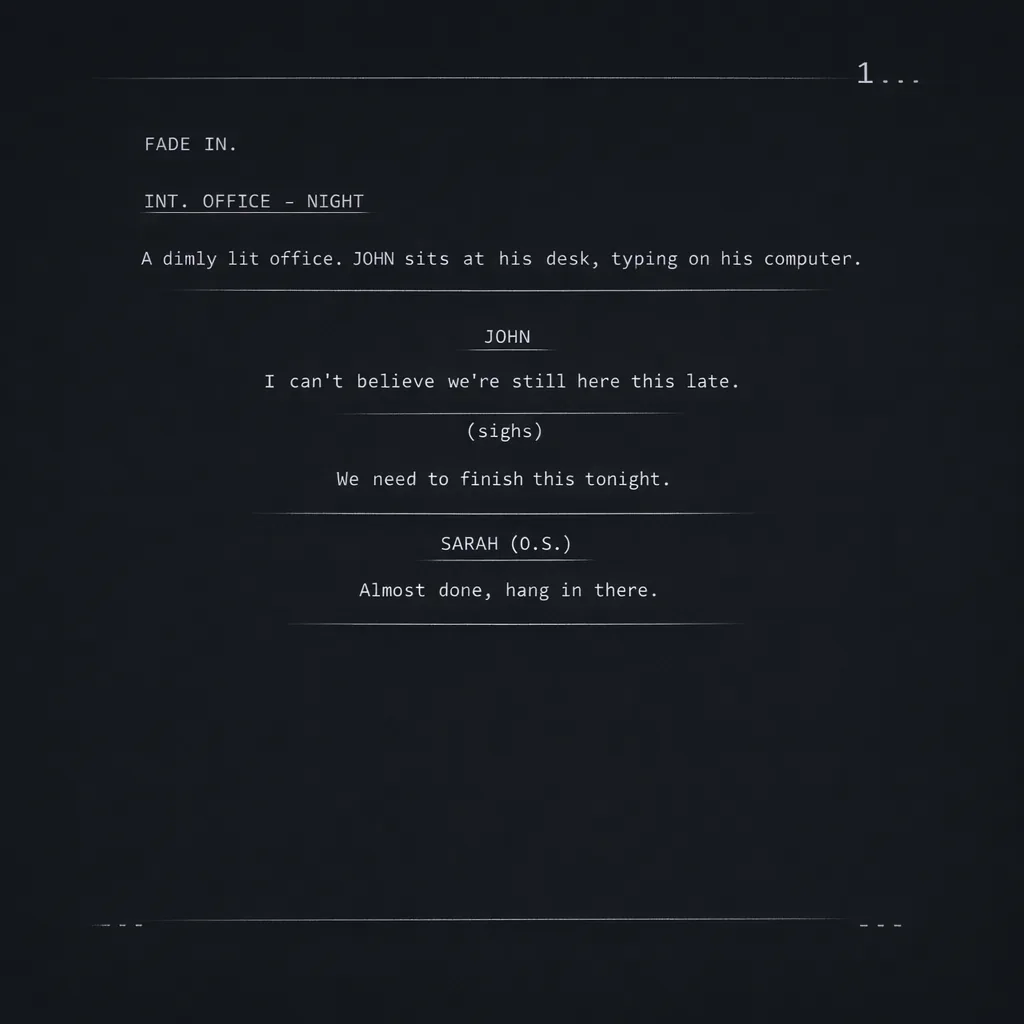
Standard screenplay format (Courier 12pt, 1-inch margins, the usual scene heading and dialogue spacing) was built so that one page reads in about one minute. That is not folklore, it is why the format has those exact margins and that exact font. Dense action blocks and rapid-fire dialogue can shift the ratio slightly, but the rule survives contact with almost every produced script within a few percentage points.
That means page count is really a proxy for runtime, and runtime is what a reader is actually estimating when they weigh your script. A 145-page spec does not just look long; it tells a reader your movie is pushing two and a half hours before they have read page one.
Page count is the first thing a reader estimates and the last thing a writer thinks about. Fix that order and fewer scripts get set aside on reputation alone.
How long is one page of a script?
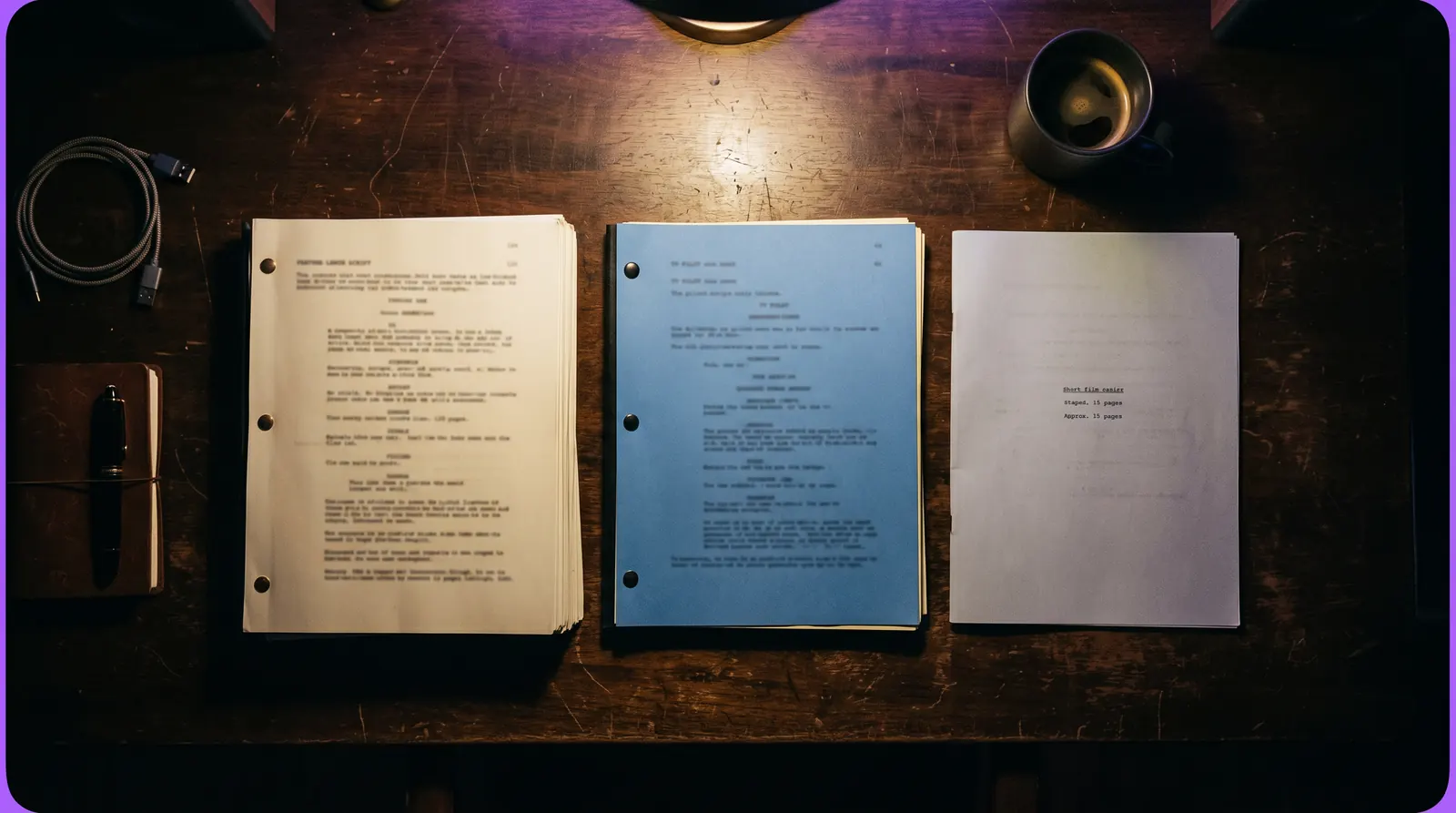
One page of a screenplay plays for about one minute of screen time. A standard page holds roughly 55 lines of Courier 12 with 1-inch margins, and the format was built so that a page reads in about a minute. The ratio holds within about 5 percent for a script that balances dialogue and action. A page of fast back-and-forth dialogue tends to play longer than a minute, and a page of terse action lines often plays shorter, which is why dialogue-heavy dramas and comedies run 10 to 20 percent over their page count. The full list of exceptions is in why the one-page-per-minute rule breaks.
How long is a movie script?
A movie script, meaning a feature-length screenplay, runs 90 to 120 pages, so a 2-hour movie script is about 110 to 120 pages and a 90-minute film is about 90 to 100. For a spec, 95 to 110 pages is the safest range. The sections below break that range down by format and genre.
By format: the ranges that matter
Feature film: 90 to 120 pages. Ninety to 110 is the safe zone for most specs, especially genre and mid-budget drama. Comedies often run tighter, 95 to 105. Epics and ensemble dramas can push toward 120, but past that you are asking a reader to trust you more than a first-time writer usually gets. For the full breakdown by subgenre and studio expectation, see Feature Film Script Length in 2026.
One-hour TV drama: 50 to 65 pages. Streaming dramas run looser than old network hours, but 55 pages is still the center of the bell curve for a pilot. Half-hour comedy: 28 to 35 pages. Multi-cam comedies read shorter than single-cam because of the sparser page layout. The format-by-format detail, including act breaks and streaming's looser rules, is in TV Pilot Page Count: Half-Hour vs Hour-Long.
Short film: 1 page per intended minute, with less slack. A 10-minute short runs close to 10 pages, not 8 or 14. Festival programmers and short-film labs read length as a signal of whether you understand pacing at a small scale. See how short film length affects festival routes for how programmers actually read runtime.
Micro-budget feature: still 85 to 100 pages, but page count is doing different work. On a tight budget, page count maps to location count and shoot days more directly than to story scope. Micro-Budget Feature Screenplay: Page Count and Locations covers how to hit a producible length without shrinking the story.
Commercial and music video: no page-count convention, timing convention instead. A 30-second spot is not measured in pages; it is measured in the beats that fit inside 30 seconds of screen time. That is a different discipline covered separately in the timing cluster on this site.
What actually moves the number
Genre moves it first. Horror and thriller specs run shorter and tighter, often 90 to 100 pages, because the format rewards momentum. Prestige drama and ensemble pieces earn more room, sometimes to 115 or 120, because the reader expects a slower burn.
Dialogue density moves it second. A page of rapid back-and-forth reads faster than a page of description, so dialogue-heavy scripts can run a few pages longer than the same story told in action lines without changing perceived runtime.
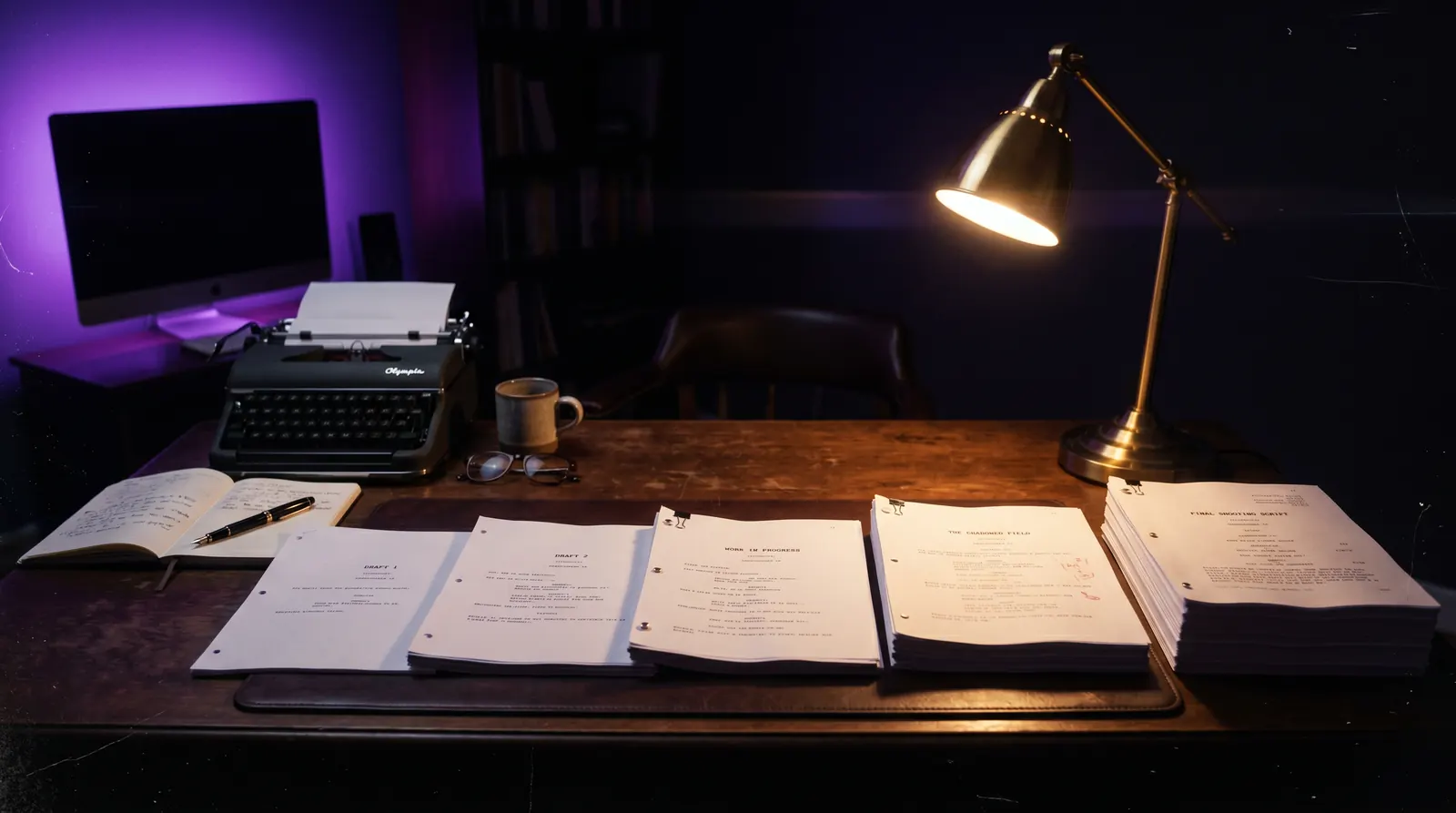
Your draft stage moves it third. A first draft runs long almost every time. Professional writers expect to cut 5 to 15 pages between draft one and the version that goes out. If your first draft is already at the top of its range, budget for a trim pass before anyone outside your desk reads it.
Try it free
Try Screenweaver for free on your script
It is free. Import your existing project, get a clearer view of your outline, and regain control of your story structure in minutes.
Start FreeCheck yours in seconds
Guessing your runtime by eye is how scripts drift 10 pages past their format without anyone noticing until coverage flags it. Paste your script or enter a page count into the free Script Time Calculator and get an estimate aligned with the one-page-per-minute rule, adjusted for the format conventions above.
Free tool: the Script Time Calculator estimates runtime from page count or pasted script text in seconds, no signup.
FAQ
How long should a screenplay be for a feature film?
90 to 120 pages, with 95 to 110 the safest range for most specs. Comedies tend to run shorter, ensemble dramas and epics can push toward 120. Below 85 or above 130 pages, expect readers to ask why before they engage with the story.
How many pages is a 2-hour movie?
Roughly 110 to 120 pages, following the one-page-per-minute convention. A 90-page script runs closer to 90 minutes, not 2 hours, which is why page count and intended runtime should be checked against each other early, not after the first full draft.
How long is a page of script in minutes?
About one minute. A standard screenplay page holds roughly 55 lines, and that density plays at close to a minute of screen time. Dialogue-heavy pages run a little longer, action-heavy pages a little shorter.
How long is a movie script?
90 to 120 pages for a feature film. A 2-hour movie is about 110 to 120 pages, a 90-minute movie about 90 to 100.
Is a 100-page script too short for a feature?
No. 100 pages sits comfortably in the standard feature range and is often the target for genre films and comedies specifically because tighter pacing reads well in those formats. Too short becomes a real concern under 85 pages.
Does TV pilot length work the same way as feature length?
The one-page-per-minute rule still applies, but the target runtime is shorter and format-dependent: about 50 to 65 pages for a one-hour drama, 28 to 35 for a half-hour comedy. See the TV pilot page count guide for the streaming-era nuances.
How do I check my script's length without counting manually?
Paste the text or enter your page count into the free Script Time Calculator. It applies the one-page-per-minute rule and flags where your script sits relative to its format's expected range.
Final Step
Build your next script with Screenweaver
Move from ideas to production-ready pages faster with timeline-native writing and AI-assisted story flow.
Try Screenweaver