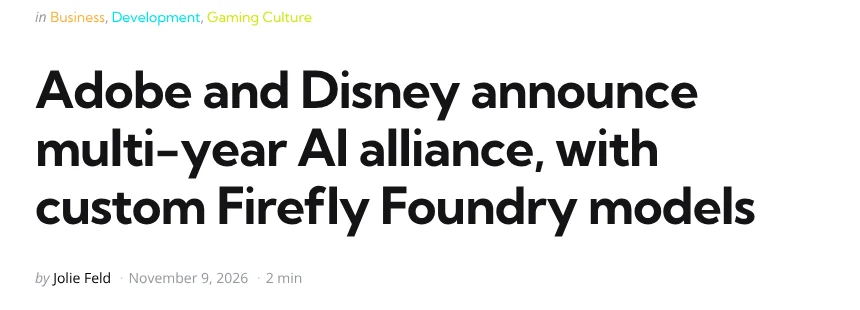
Disney has named Adobe its "Official AI Innovation Partner". The multi-year alliance, announced on 9 November 2026 at Adobe MAX, gives Disney's creative teams generative AI models built for them on Adobe Firefly Foundry, customized on Disney properties and trained on its characters, environments and visual styles.
For anyone making films with AI, the interesting part is not the logo on the press release. It is the shape of the deal: the biggest studio in the world does not want a public model that knows a bit of everything. It wants private models that know its own world, and that stay on model.
What follows comes from GamesBeat's report by Jolie Feld, published on 9 November 2026 and read on 10 November, which quotes the companies' press release, and from Adobe's June 2026 announcement of its first work with Walt Disney Imagineering. We have not seen the models in use.
What Disney gets
According to GamesBeat, the press release lists four things:
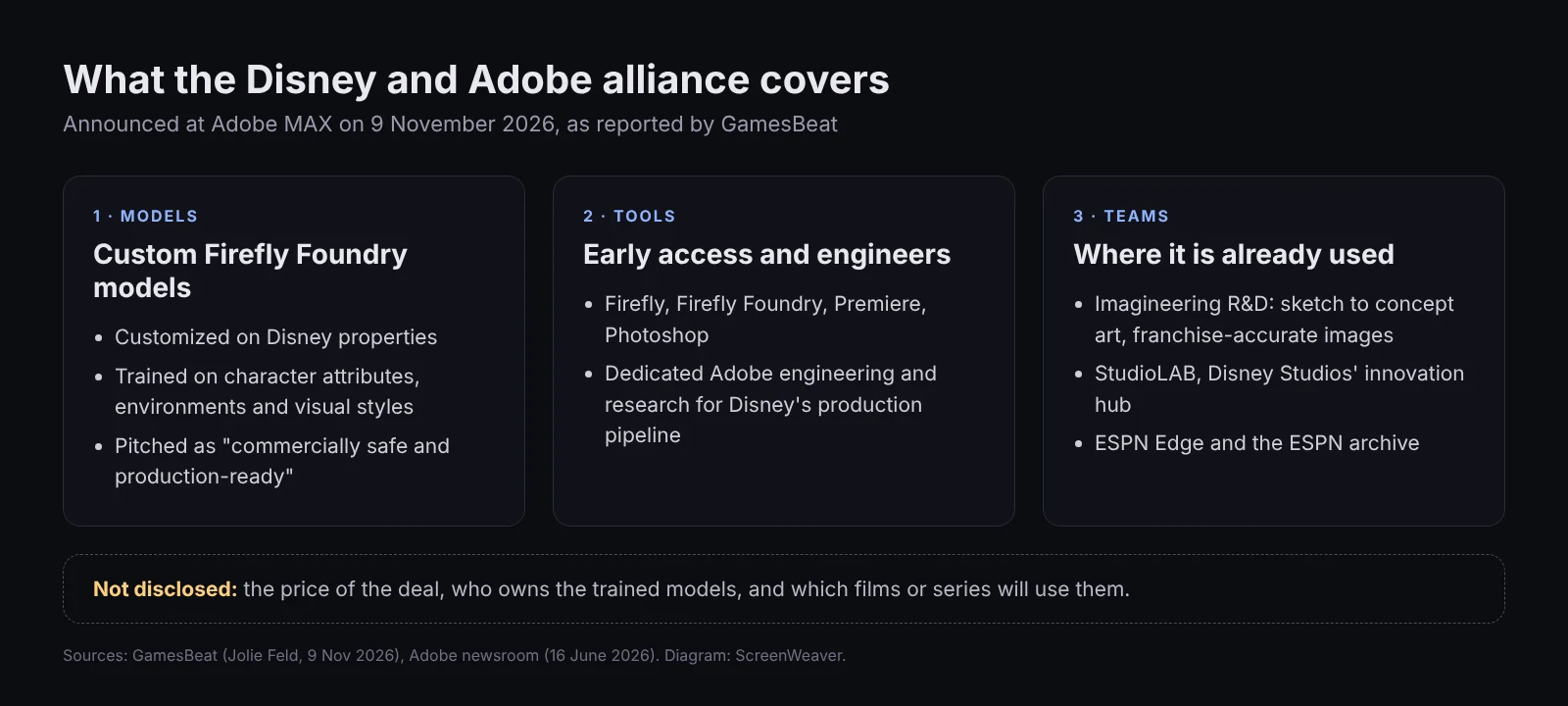
- Custom models on Firefly Foundry, Adobe's enterprise service for building generative models around one company's assets. Disney's are "customized on Disney properties and trained on character attributes, environments, and visual styles", to produce what both companies call "commercially safe and production-ready" outputs.
- Early access to Adobe's latest AI, creative and media technology, with Firefly, Firefly Foundry, Premiere and Photoshop named.
- Dedicated Adobe engineering and research resources to support Disney's production pipeline.
- Joint projects with StudioLAB, the innovation hub of The Walt Disney Studios, which Adobe joins as a "StudioLAB Innovation Partner", and with ESPN Edge, where the two will look at using AI "to bring ESPN's archive to life".
In return, Adobe gets marketing activations and a bigger presence across Disney's parks, cruise line, ESPN and media platforms.
Hannah Elsakr, Adobe's vice president of GenAI New Business Ventures, called the deal "the next chapter" of a decades-long relationship. Becca Vodnoy, Disney's SVP of Corporate Alliances, said it gives Disney's creative teams "new ways to explore and develop their ideas".
It already started at Imagineering
This is not a cold start. In June, Adobe announced that Walt Disney Imagineering Research & Development would use Firefly Foundry for theme park design.
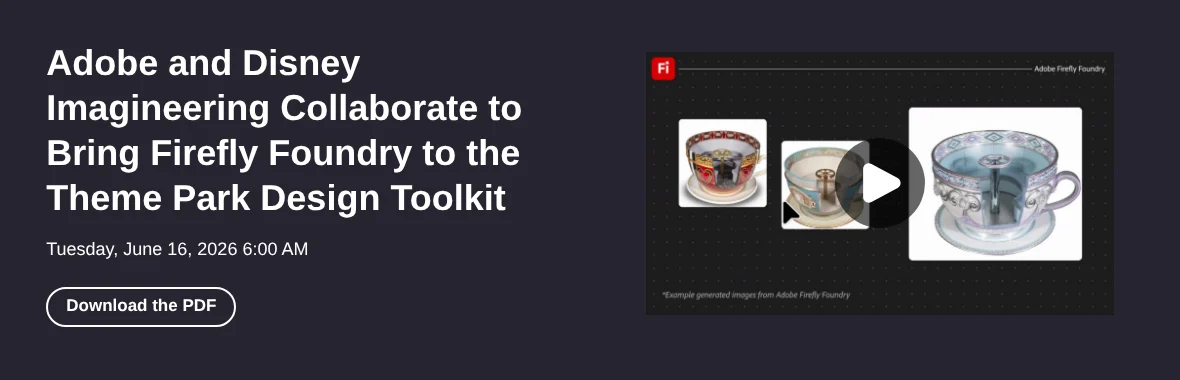
That release describes three workflows: a sketch-to-image model that turns rough hand-drawn concepts into rendered 2D concept art, a custom image model that generates "franchise-accurate" assets for franchises such as Frozen, Moana and Cars, and a tool that turns 2D concepts into 3D prototypes. Adobe also wrote that models trained on scraped internet data "offer no guarantees around IP fidelity, brand consistency or the provenance of what they produce". That sentence is the sales pitch for the whole deal.
Why this matters if you make films with AI
You are not Disney, and you will not get a team of Adobe engineers. But the problem the deal tries to solve is the one every AI filmmaker hits on day two: the model does not know your film. It does not know what your lead looks like from the left, what colour the kitchen is, or how the light falls in your world. So every shot drifts a little, and a sequence stops looking like one film.
Disney's answer is to train models on its own characters, places and styles. For an independent production, the same principle applies at a smaller scale:
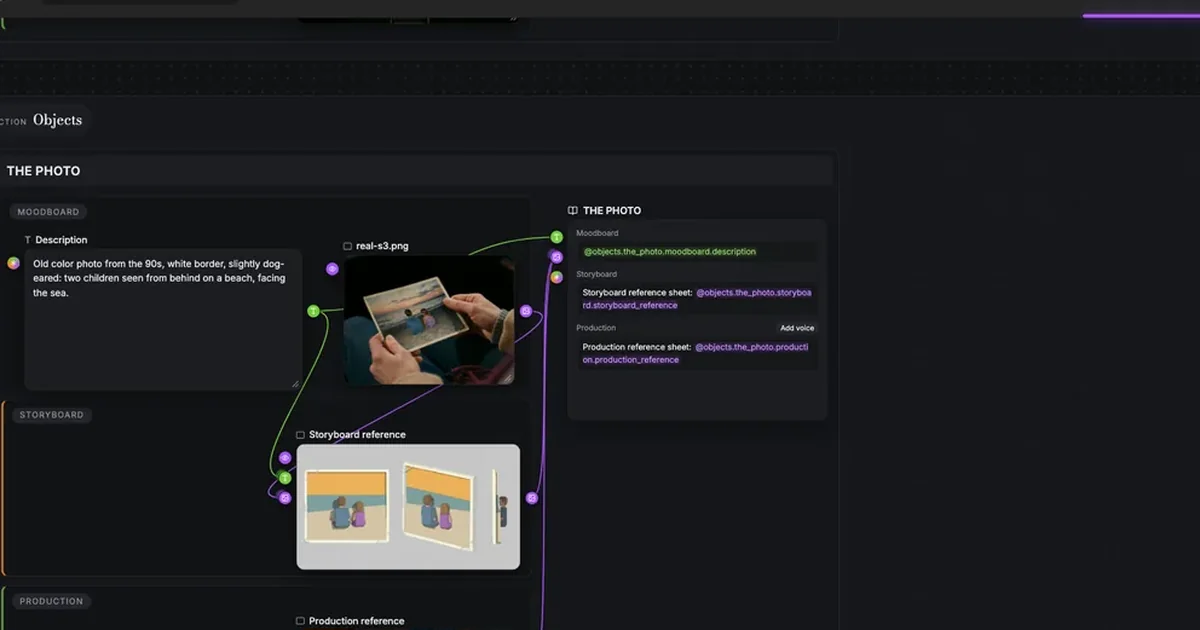
- Define your world once. Every character, place and recurring object gets a written description and reference images before you generate a single shot.
- Make every shot point to those references. A shot of your hero in the kitchen should pull the hero sheet and the kitchen sheet, not a fresh prompt typed from memory.
- Keep a style reference for the whole project. The look should come from one place, so a change of art direction is one change, not forty.
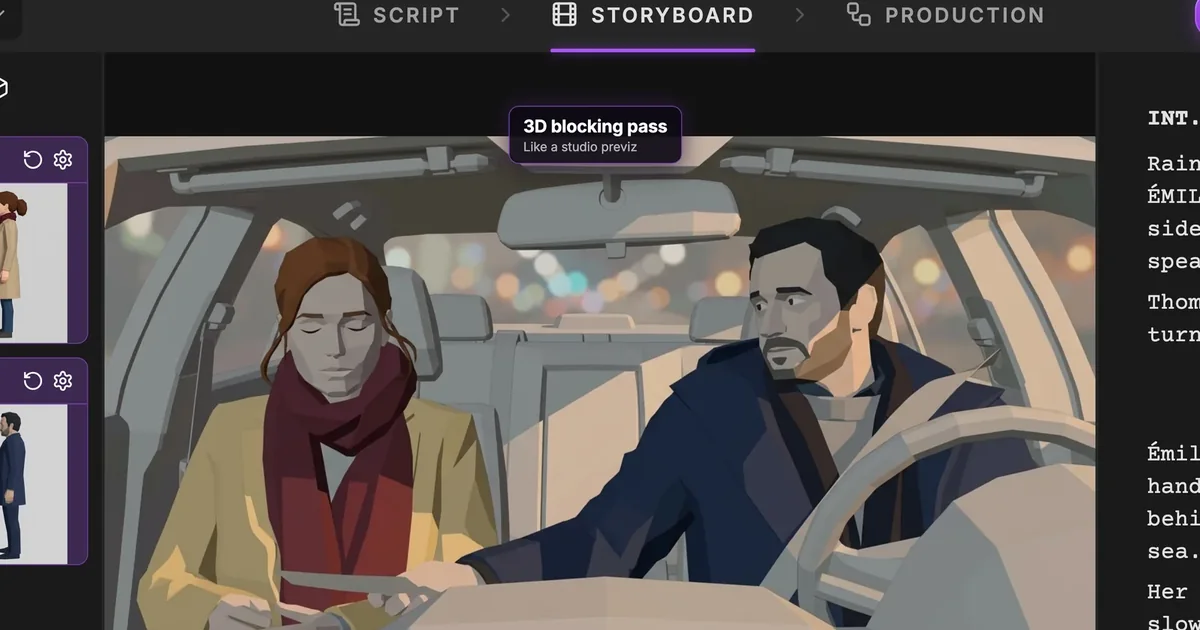
- Start from sketches when you can. Imagineering's first workflow is sketch to concept art. A rough board you drew gives the model far more intent than a sentence.
This is how ScreenWeaver is organised: characters, places and objects live as story elements with their own reference sheets, the art direction sits at project level, and each storyboard shot cites the elements it shows. Our guides on keeping characters consistent across a storyboard and consistent locations and props in AI video go into the details, and previz from a script shows the whole chain.
Try it free
Try ScreenWeaver for free on your script
It is free. Import your existing project, get a clearer view of your outline, and regain control of your story structure in minutes.
Start FreeWhat we don't know
- The terms. Neither company has published the value or length of the alliance beyond "multi-year".
- Who owns the models. The coverage we read says the models are customized on Disney properties, not who owns the trained weights.
- Which productions will use them. Imagineering, StudioLAB and ESPN Edge are named. No film or series is.
- The context inside Disney. The Decoder, citing Bloomberg, notes that Disney is reportedly planning thousands of job cuts. Neither company links the two, and we do not either.
FAQ
What did Disney and Adobe announce? A multi-year alliance, announced on 9 November 2026 at Adobe MAX, that makes Adobe Disney's "Official AI Innovation Partner". Disney gets custom generative AI models built on Adobe Firefly Foundry, early access to Adobe's AI and creative tools, and dedicated Adobe engineering support for its production pipeline, according to GamesBeat.
What is Adobe Firefly Foundry? An enterprise service in which Adobe builds generative AI models tuned on one company's own assets. Disney's models are customized on Disney properties and trained on character attributes, environments and visual styles. Adobe describes the outputs as "commercially safe and production-ready".
Is Disney already using these models? Yes, at Walt Disney Imagineering Research & Development. Adobe announced in June 2026 that Imagineering would use Firefly Foundry for a sketch-to-concept-art model, a franchise-accurate image model and a 2D-to-3D prototyping tool for theme park design.
Will Disney use AI models in its films? Nothing announced says so. The deal names Imagineering, StudioLAB (the innovation hub of The Walt Disney Studios) and ESPN Edge. No film or series has been named.
How can an independent filmmaker get the same consistency without a custom model? Define each character, place and object once with references, make every shot cite those references, keep one style reference for the project, and start from sketches or boards. ScreenWeaver organises a project this way, with story elements, a project art direction and storyboard shots that point to the elements they show.
From script to shots
Turn your script into a film, shot by shot
Write the scene, get its storyboard, then generate each shot with consistent characters. You direct every step.
Start your film free