Free screenplay converter
Word to FDX Converter
Turn a .docx screenplay into a Final Draft file
Convert a screenplay written in Word into a Final Draft .fdx file with every element typed. Styles named after screenplay elements are used directly; scripts formatted by hand with tabs and indents are recognized from their layout. Free, in your browser, no upload.
- Private: your script never leaves this browser tab.
- Free, no signup, no watermark.
- Industry layout kept: scene headings, cues, dialogue, (MORE) and (CONT'D).
Drop your Word file here
Final Draft, Fountain, PDF, Word, Fade In, Highland, Celtx, WriterDuet, Trelby or plain text. Any of them converts to any output.
Private by design: the conversion runs in this tab and nothing is uploaded.
How it works
The converter opens the .docx, reads every paragraph with its style, indent, alignment and bold, italic or underline runs. If the document uses screenplay styles (from Final Draft, Fade In, Highland, WriterDuet or a Word template), each style decides the element. If the script was formatted by hand, the converter learns the columns of the document (where the cues, dialogue and parentheticals start, tabs included) and classifies each paragraph from its position and capitals. Without any layout at all, it reads the text like Fountain: scene headings from INT. and EXT., cues from capital lines followed by speech. The title page before the first page break is rebuilt too.
Every screenplay format, both ways
Any format in the left column converts to PDF, Final Draft, Fountain, Word or plain text. Apps without a writable format here all open FDX or Fountain.
| Format | Reads | Writes |
|---|---|---|
| Final Draft (.fdx) | ||
| Fountain (.fountain) | ||
| Word (.docx) | ||
| Fade In (.fadein) | Use FDX, which it opens | |
| Highland (.highland) | Use Fountain, which it opens | |
| Celtx (.celtx) | Use FDX, which it opens | |
| WriterDuet (.wdz, .json) | Use FDX, which it opens | |
| Trelby (.trelby) | Use FDX, which it opens | |
| Text (.txt) |
From a Word screenplay to Final Draft without retyping
Many scripts start in Word: a first draft before buying software, a script from a writing class, an adaptation a producer typed up. Final Draft can open some of them, but a document indented with tabs comes in as one long stream of Action. This converter types every paragraph first, so the .fdx opens with real scene headings, cues and dialogue.
It handles the three ways people write screenplays in Word: with proper styles, with indents and tabs, or with no formatting at all. In every case the preview shows the recognized elements in color before you download, so you know what Final Draft will receive.
The .docx is read inside your browser and nothing is uploaded. The same page also turns the Word file into a properly paginated PDF or a Fountain file.
Who uses it
- Writers moving up to Final Draft: bring first drafts written in Word into professional software.
- Producers and development teams: convert scripts that arrive as .docx into the format production needs.
- Students: turn a class assignment written in Word into an industry format.
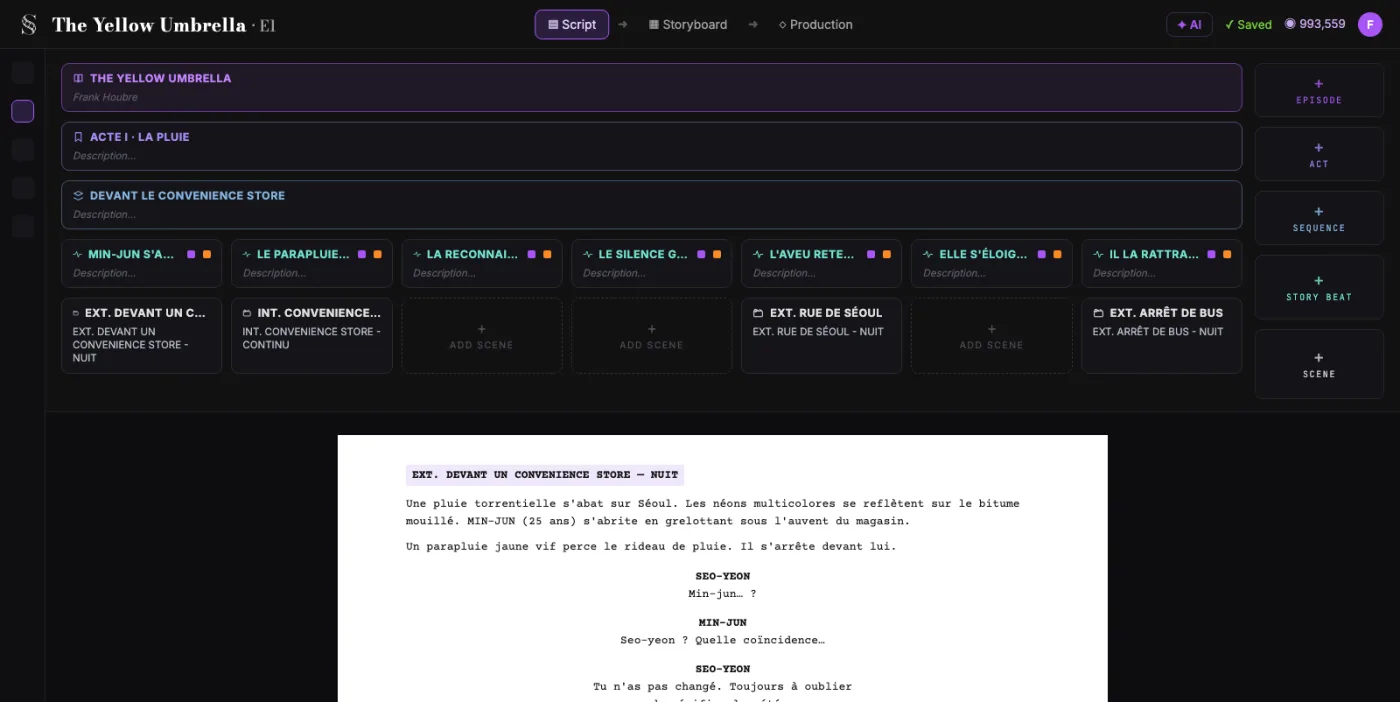
Stop fixing margins.Formatting is built in.
ScreenWeaver handles industry-standard formatting and exports to PDF and Final Draft (.fdx). Free, with unlimited pages.
- $0, does not expire
- PDF and Final Draft export
- Mac, Windows, Linux, iPad
Word to FDX Converter: the complete guide
It reads the .docx paragraphs with their styles, indents, tabs, alignment and emphasis; uses screenplay styles when present, learns the document's columns when the script was formatted by hand, and falls back to Fountain-style rules when there is no layout at all.
For this workflow, the central problem is clear: a screenplay typed in Word usually opens in Final Draft as one stream of Action, because indents and tabs are not element types. Left unresolved, this creates downstream friction and slower decisions. The practical target is a Final Draft file with every heading, cue, parenthetical, speech and transition typed, from styled, hand-formatted or unformatted Word files.
Limitation to keep in mind: Unformatted documents rely on capitals and INT. or EXT. to find cues and headings; .doc files from Word 97 to 2003 must be saved as .docx first.
Advanced workflow: Development teams convert every incoming .docx to FDX on arrival, check the element view, then file the FDX as the working copy.
Step-by-Step Workflow
- Drop the .docx.
- Check the element view in the preview.
- Choose the scene number option.
- Download the .fdx.
Use Cases By Profile
- Writer: move a first draft from Word into Final Draft.
- Producer: convert a .docx script into the format production needs.
- Student: turn a class assignment into an industry format.
Common Mistakes To Avoid
- Opening a hand-formatted Word script directly in Final Draft and retyping every element.
- Using a .doc file instead of .docx.
- Typing cues in lower case, which hides them from layout recognition.
Professional Best Practices
- If you write in Word, use one paragraph style per element.
- Put the title page before a page break so it is rebuilt as a title page.
- Check cues followed by a blank paragraph in the element view.
Treat this tool output as a decision support layer, not a replacement for authorship. Great scripts are remembered for specific choices, emotional precision, and clarity of dramatic movement. Tools help by removing noise so your energy can go where it matters: character, conflict, escalation, and payoff. If you review outcomes after each pass and keep an explicit log of accepted changes, your workflow becomes faster and more predictable from draft to draft. That consistency is exactly what professional collaborators value: fewer surprises, clearer rationale, and a script that evolves with intent.
Extended FAQ
Can Final Draft open Word files?
It can import some, but a script formatted with tabs and indents usually comes in as Action. This converter types every paragraph first.
What if my Word script has no formatting at all?
The converter then reads it like Fountain: INT. and EXT. lines become headings, lines in capitals followed by speech become cues.
Does it work with .doc files?
No, only .docx. Open the .doc in Word, Pages or LibreOffice and save it as .docx.
Is the title page kept?
Yes, when it sits before the first page break of the document.
Is my document uploaded?
No. It is read inside your browser tab.