
A Chinese AI lab's systems opened private links that people had put in their prompts, days after the requests were processed. Some of those prompts were flagged "Zero Data Retention", the strictest privacy setting there is. MiniMax confirmed the behavior on 24 November 2026 and says it has switched it off.
If you paste an unreleased script, a pitch deck link or a shared Drive folder into an AI tool, this is your story too. The test behind it shows that a prompt can travel through several companies before it reaches a model, and that a privacy checkbox does not always follow it.
This is based on Mr. HD Moore's research post for Dragos, published on 19 November, MiniMax's official statement of 24 November, OpenRouter's incident notice of 22 November and Atlas Cloud's security notice of 24 November. Reuters reported on 26 November that Mr. Moore named MiniMax as the lab; we could not open the Reuters text ourselves. We read the other sources on 28 November.
Disclosure: ScreenWeaver sends prompts to third-party AI model providers to run its generation features. This research is about our industry, and our own supply chain, so read our take with that in mind.
What the test found

Between July and November 2026, the Dragos research team sent about two million prompts to widely used AI services. Each one carried a unique web link or fake credential that no legitimate system would ever touch. If anyone opened it later, the team knew that someone had read the prompt.
The results are not reassuring. Dragos says it found attackers inside three hosting providers, resellers on an inference marketplace who could read customer prompts through ordinary logging, and providers that ignored the privacy settings customers had chosen.
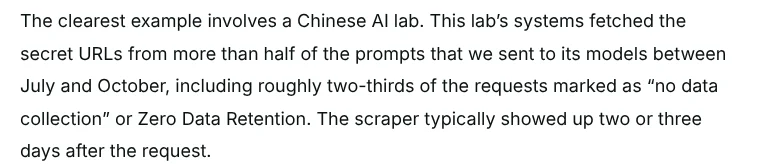
The clearest case is a Chinese lab. Its systems opened the secret links from more than half of the prompts sent to its models between July and October, including about two-thirds of the requests marked Zero Data Retention, usually two or three days later. Prompts sent to U.S. companies that resell the lab's models triggered the same scraper. In a separate case, Dragos says a link sent to a U.S.-based provider with the Zero Data Retention flag turned up 24 days later in a company chat in China, where it was opened from six devices in Beijing and Shanghai.
What MiniMax says
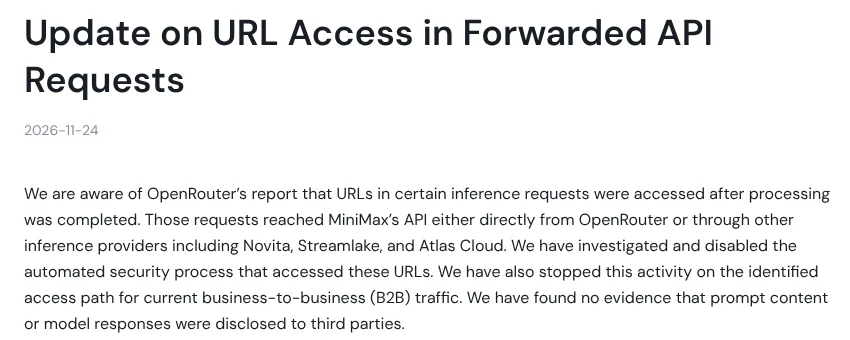
MiniMax's statement confirms the core of it. Its security monitoring extracted web links from forwarded requests, logged them, and its internal programs and agents later opened some of them to check for threats. The system was on by default, and it covered requests flagged Zero Data Retention.
The company says it logged only links and IP addresses, not full conversations, that it has deleted those links and disabled the process, and that it found no evidence that prompts or responses reached third parties. Its statement does not say how long the links were kept, as Atlas Cloud points out, and according to Reuters it does not address the chat incident.
How a prompt ends up somewhere you did not choose
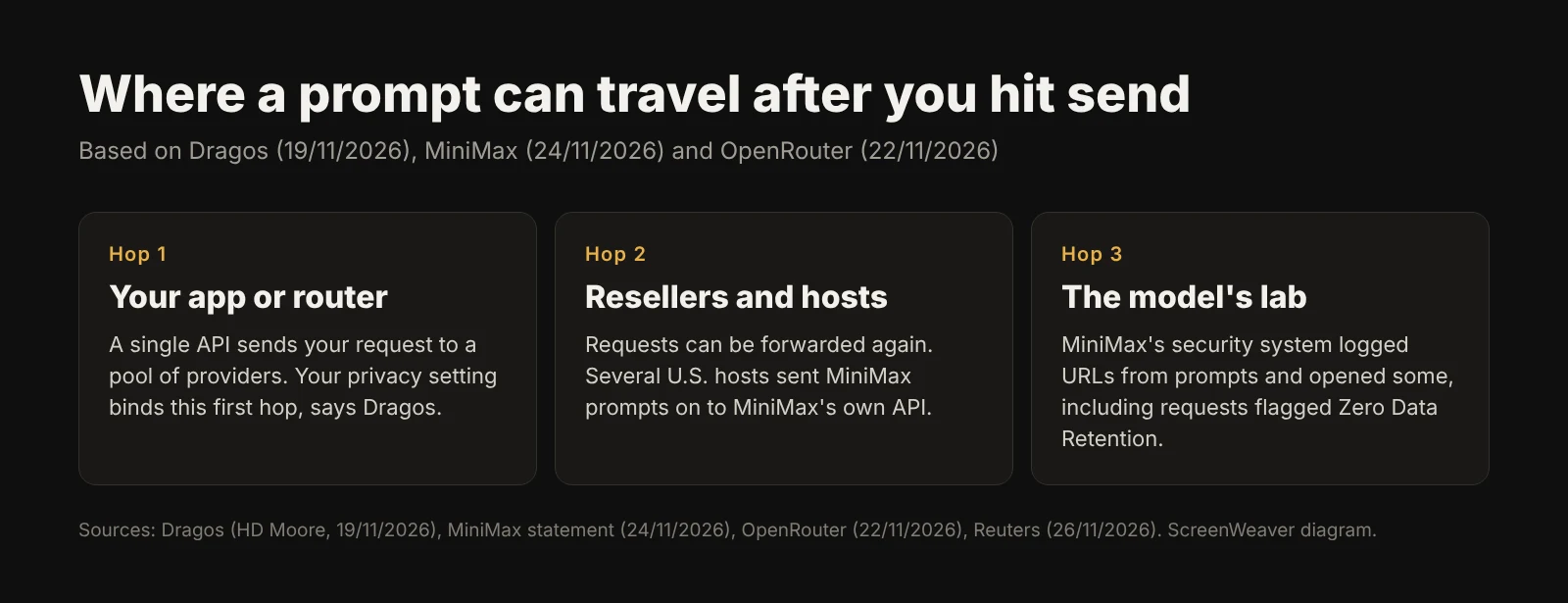
Many AI tools don't talk to the model maker directly. They go through a router, a single service that forwards each request to whichever provider is available or cheapest. That provider may forward it again. Mr. Moore's point is blunt: "a privacy flag only binds the first hop."
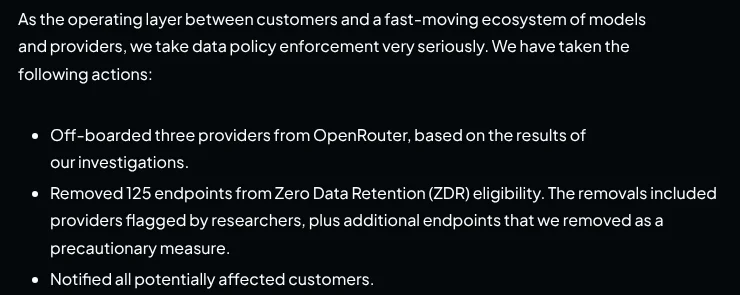
The industry is reacting. OpenRouter, the largest of these routers, says its own systems were not breached, but it has removed three providers and taken 125 endpoints off its Zero Data Retention list. Atlas Cloud stopped sending requests to MiniMax's API and tells users of MiniMax M3, M2.7 and M3.1 Flash to treat any secret they sent as exposed.
Try it free
Try ScreenWeaver for free on your script
It is free. Import your existing project, get a clearer view of your outline, and regain control of your story structure in minutes.
Start FreeWhat this means for screenwriters
Your script is confidential material. A spec in development, a rewrite under NDA, a series bible with a showrunner's notes: none of that should end up in a stranger's chat app. Yet those are exactly the files people paste into AI tools for coverage on a draft or a quick logline pass.
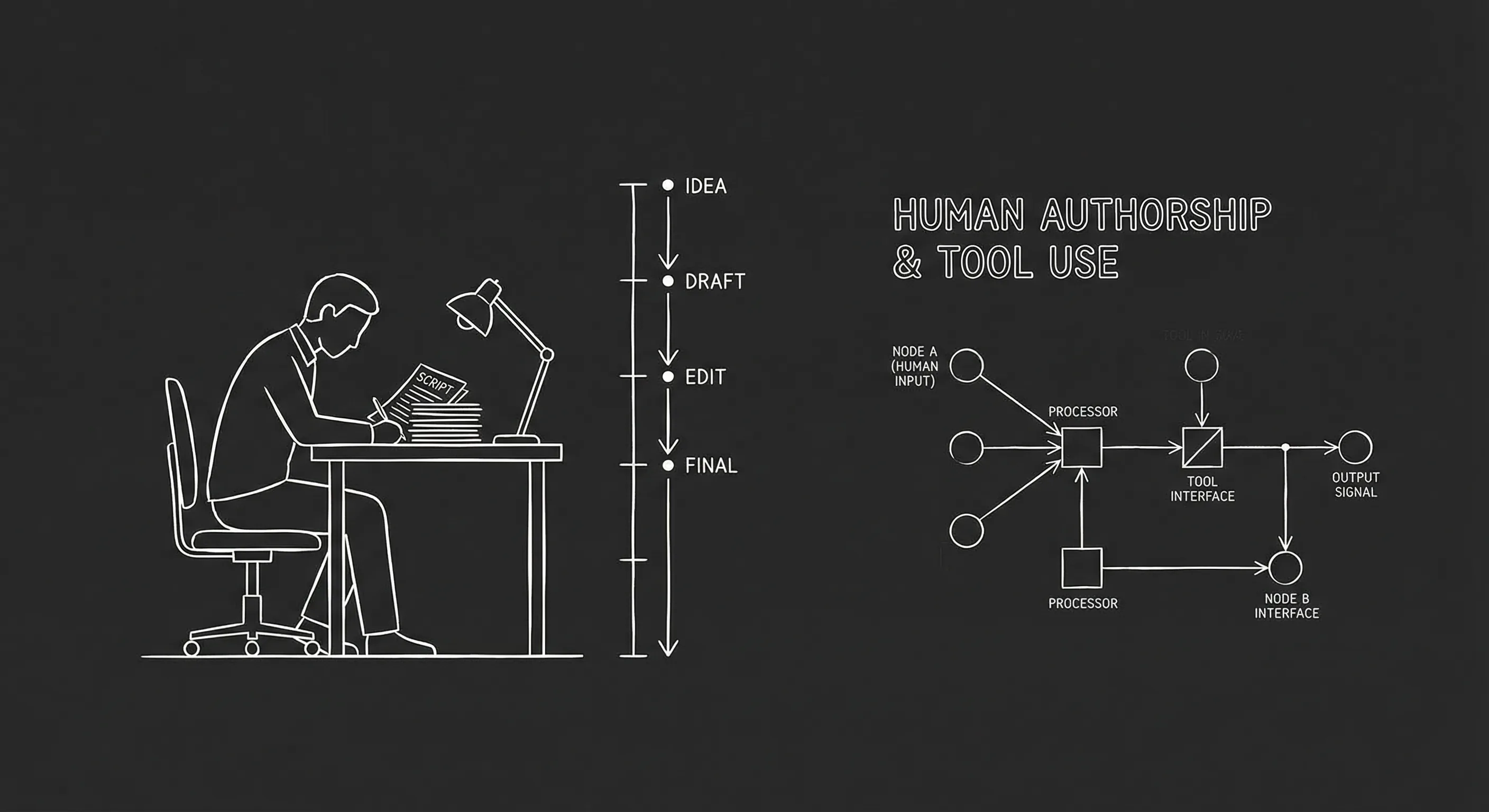
The test used links and fake passwords as bait, not scripts. But a lab that opens your links has read your prompt, and the prompt is where your pages are. We wrote about where AI fits in a writer's process; this adds a practical layer about where your words physically go.
What I would do now
- Never paste live links into a prompt. No shared Drive folders, no Frame.io review links, no private screener URLs. Paste the text you need, not the door to everything else.
- Know who runs the model. If a tool doesn't tell you which provider handles your request, ask. "AI-powered" is not an answer.
- Treat Zero Data Retention as a promise, not a guarantee. It still matters, but this test shows it can break further down the chain.
- Keep the crown jewels out. An unproduced script under NDA, financing documents, contracts: keep those away from any AI tool you can't audit.
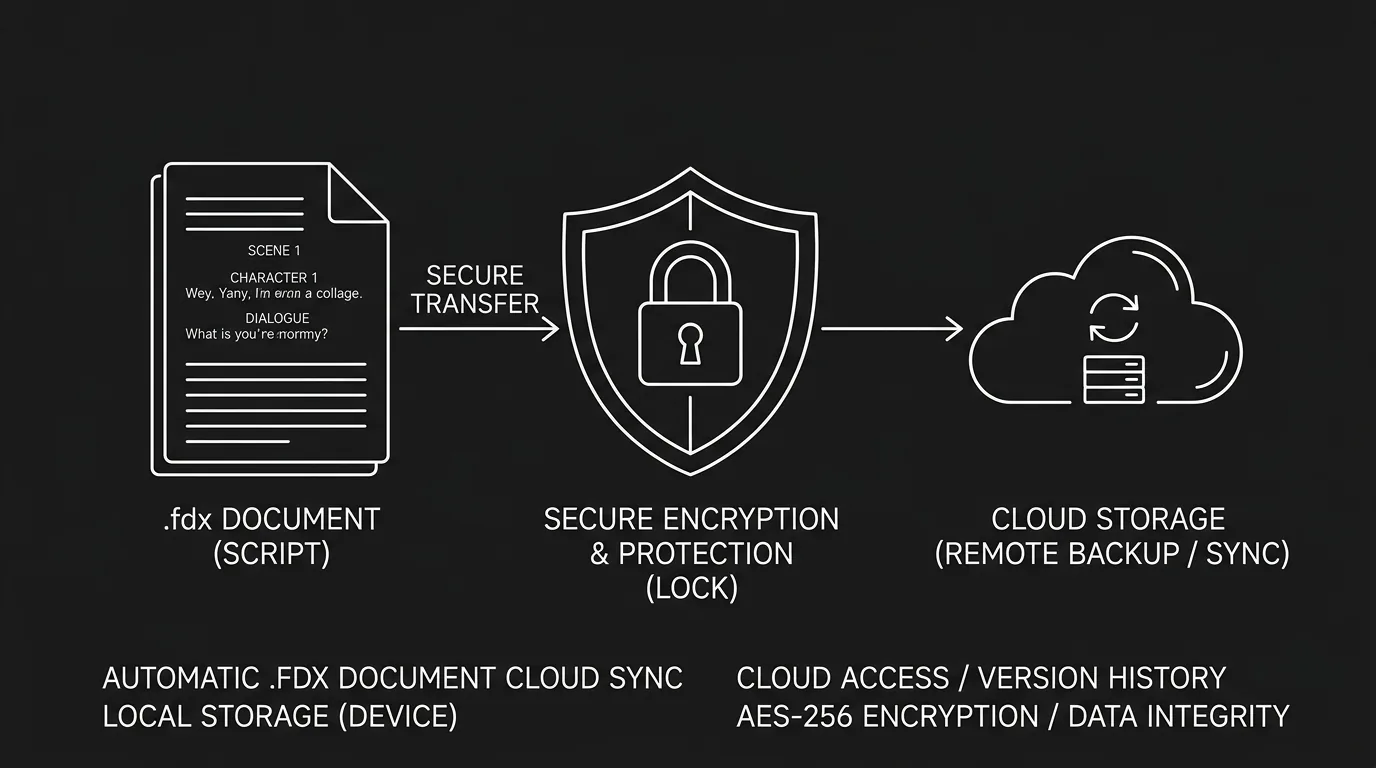
- Store your drafts safely first. Our guide on protecting your script files in the cloud covers the basics.
What we don't know
- How long MiniMax kept the links, and how many requests were affected. The statement gives neither.
- Who shared the link in that company chat, and from which stored copy.
- Which three providers OpenRouter removed. It has not named them all publicly.
- Whether full prompts were copied anywhere, beyond the links that were opened.
Sources
- Dragos, Mr. HD Moore, "Three breaches, endless leaks: Your AI supply chain needs canaries", 19 November 2026.
- MiniMax, "Update on URL Access in Forwarded API Requests", 24 November 2026.
- OpenRouter, "Data processing incidents on inference providers", 22 November 2026.
- Atlas Cloud, "Security notice: MiniMax's official API and how we protect your data", 24 November 2026.
- Reuters, via Investing.com, "Data from Chinese AI firm MiniMax accessed by unidentified parties, researcher says", 26 November 2026.
From script to shots
Turn your script into a film, shot by shot
Write the scene, get its storyboard, then generate each shot with consistent characters. You direct every step.
Start your film free