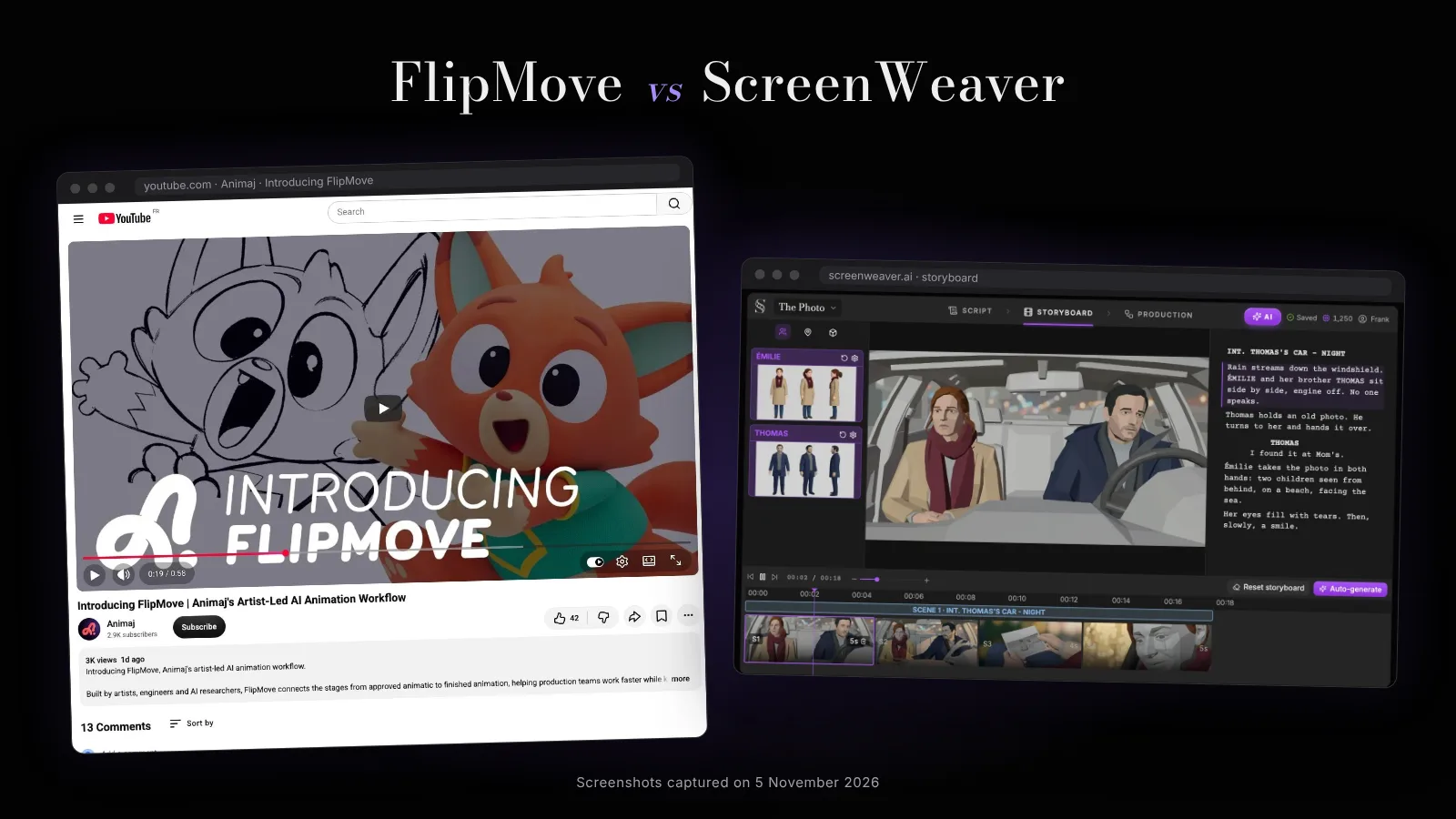

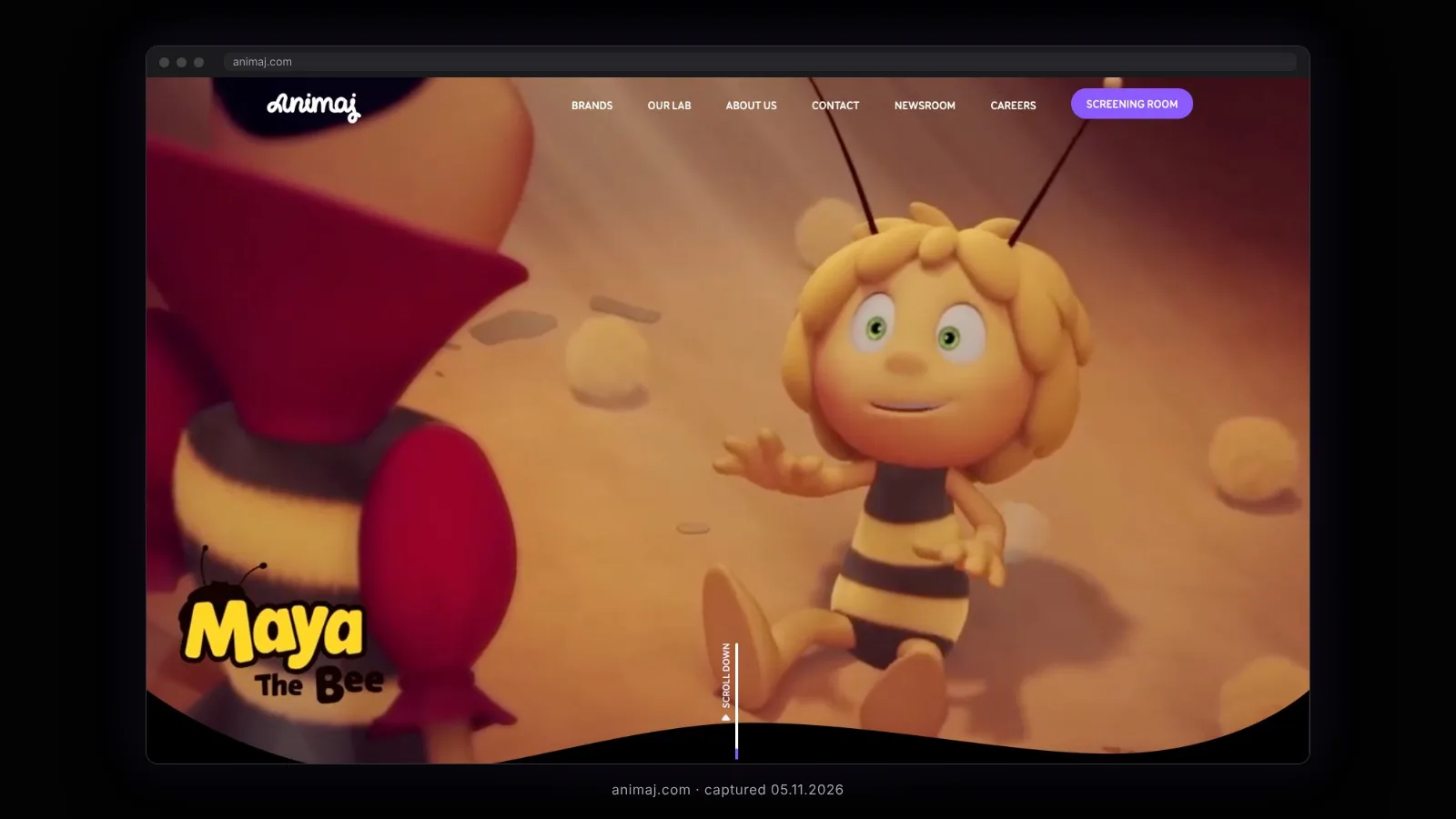
FlipMove is not a Disney tool, and you cannot buy it. It is the in-house animation workflow of Animaj, the studio behind Pocoyo, shown at the Disney Accelerator Demo Day on 3 November 2026. It takes an animatic that has already been approved and turns it into staged 3D shots in Blender. ScreenWeaver covers everything that comes before that animatic: the screenplay, the storyboard, the animatic itself and the AI video. Anyone can open it in a browser today.
So the two tools do not really compete. FlipMove speeds up one stage inside one studio. ScreenWeaver takes an independent creator from a blank page to a film they can watch.
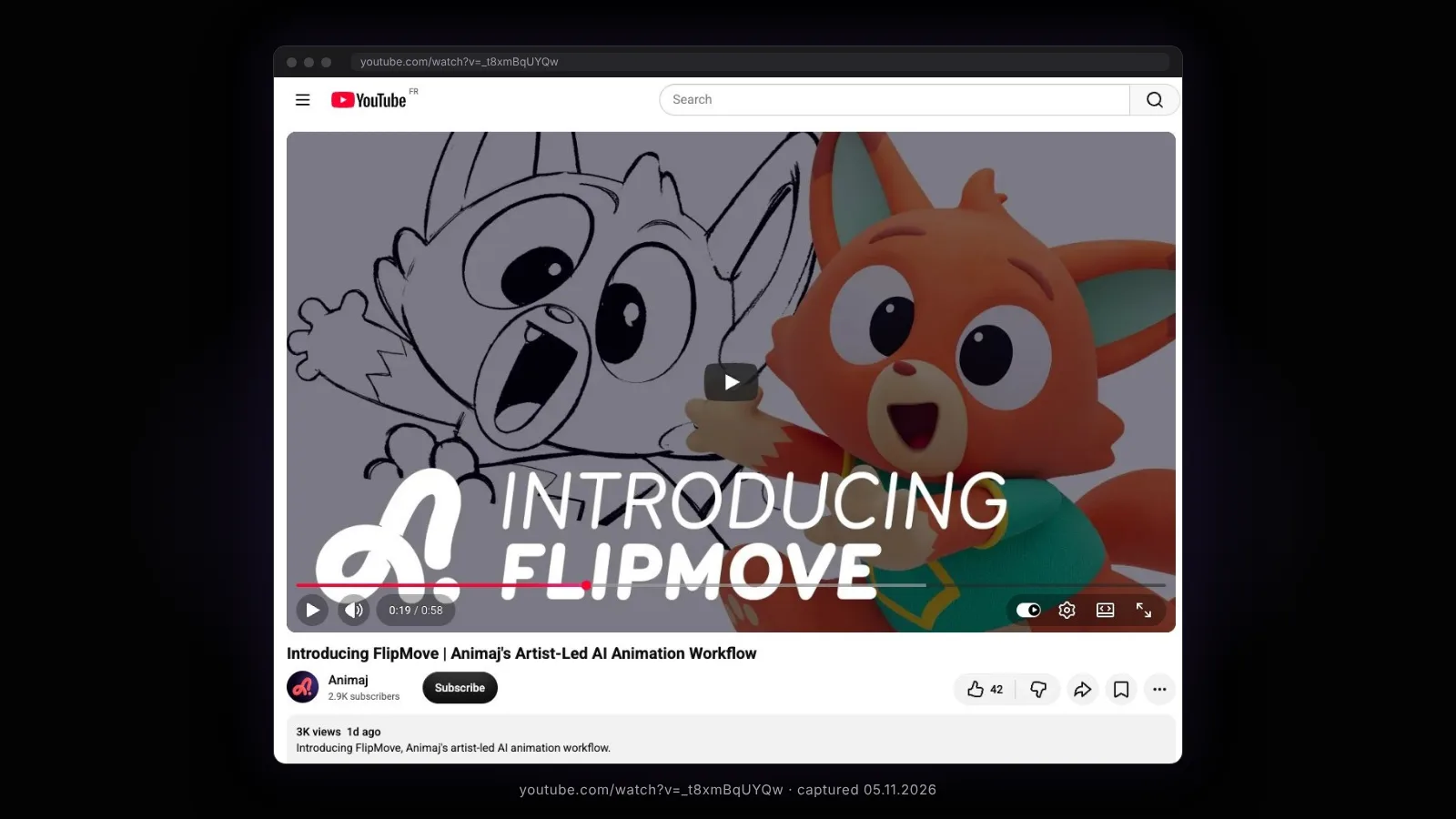
Every FlipMove fact below comes from Disney's Demo Day page, Animaj's own YouTube video and Señal News, all read on 5 November 2026. Animaj has not published a FlipMove product page.
What FlipMove is, in plain words
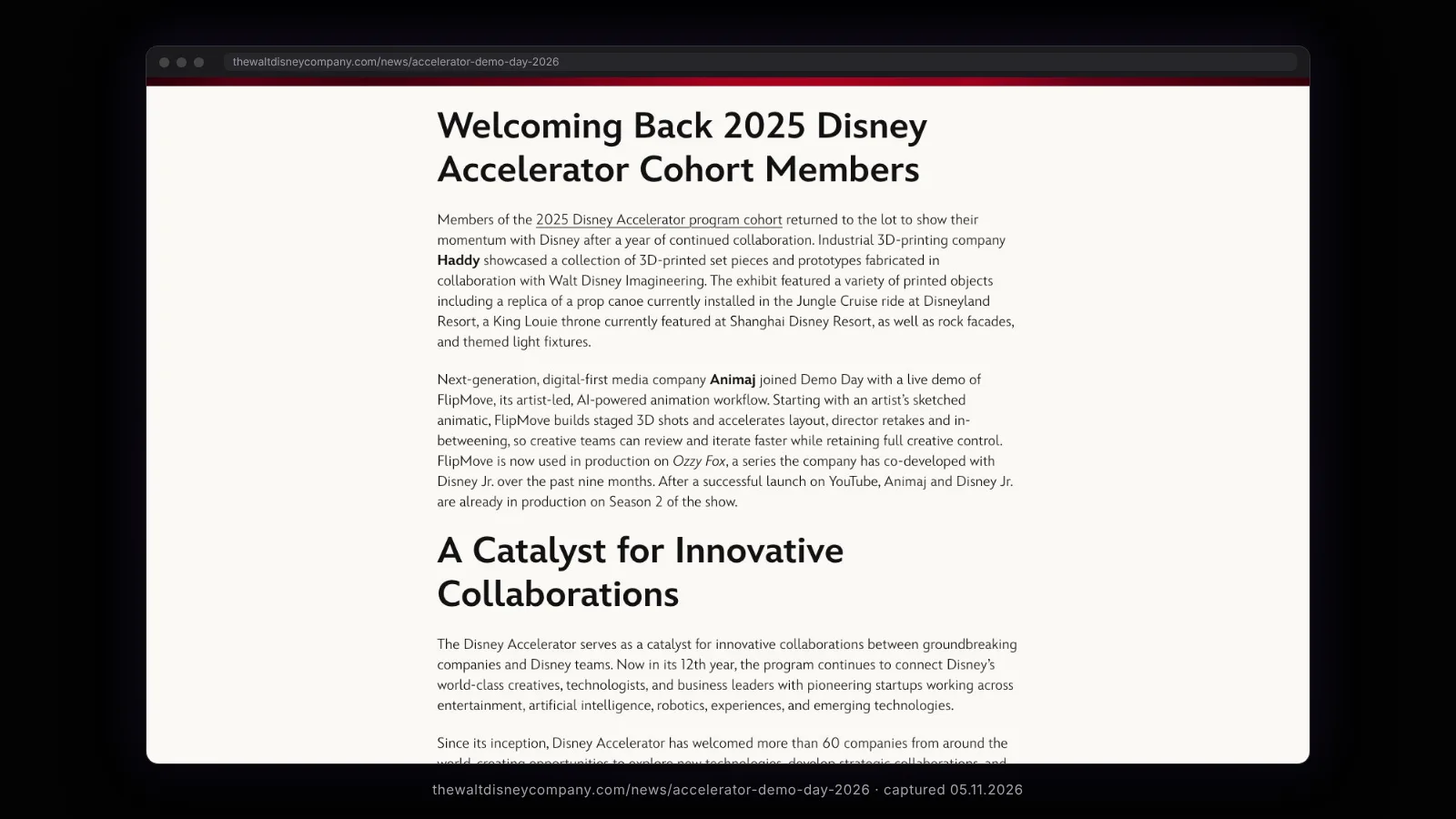
Disney describes FlipMove as Animaj's "artist-led, AI-powered animation workflow". In its words, "starting with an artist's sketched animatic, FlipMove builds staged 3D shots and accelerates layout, director retakes and in-betweening."
Señal News adds the detail. FlipMove joins tools Animaj used to run separately, Sketch-to-Pose and Motion-In-Betweening, and adds an Animatic-to-Layout step that turns 2D animatics into 3D camera placements, props and character staging. Animaj's CTO, Antoine Lhermitte, gives the one number on record: a director's note becomes "an editable 3D revision in two minutes rather than twenty", and "that revision lives in the Blender scene", where artists keep animating.
Three points get lost in the headlines:
- It is Animaj's tool, not Disney's. Disney lists Animaj among the returning members of its 2025 Accelerator cohort. Disney's role is Ozzy Fox, the preschool series Animaj co-develops with Disney Jr. and the first show made with FlipMove.
- It is not for sale. Señal calls it "proprietary technology". No source mentions a price, a waitlist or a sign-up.
- It starts where most creators are stuck. FlipMove needs an approved animatic, which means a script, boards and timing already exist. Animaj says it plans to use it on Pocoyo and Maya the Bee next.
FlipMove vs ScreenWeaver, side by side
| FlipMove | ScreenWeaver | |
|---|---|---|
| Made by | Animaj, for its own shows | ScreenWeaver, for any creator or team |
| Can you use it? | No, internal tool | Yes, in any browser |
| Price | Not sold | Writing free, Auteur $39.99/mo, Studio $149.99/mo |
| Starts from | An approved animatic | A blank page or your script (PDF, Final Draft, text) |
| Screenplay editor | No | Yes, free |
| Storyboard | No, boards come before it | Shots and frames generated scene by scene |
| Animatic | Input it receives | The sequencer plays your shots like a rough cut |
| 3D layout in Blender | Yes, its core job | No |
| In-betweening for animators | Yes | No |
| Final shots | 3D animation finished by artists | AI video for every shot |
| Same characters across shots | Handled by the 3D rig | Story elements with reference sheets |
What ScreenWeaver does that FlipMove does not
The screenplay. FlipMove never sees a script. In ScreenWeaver you write in a real screenplay editor for $0, or attach a PDF or Final Draft file to the assistant and ask it to import the script. Exports go back to PDF and .fdx.
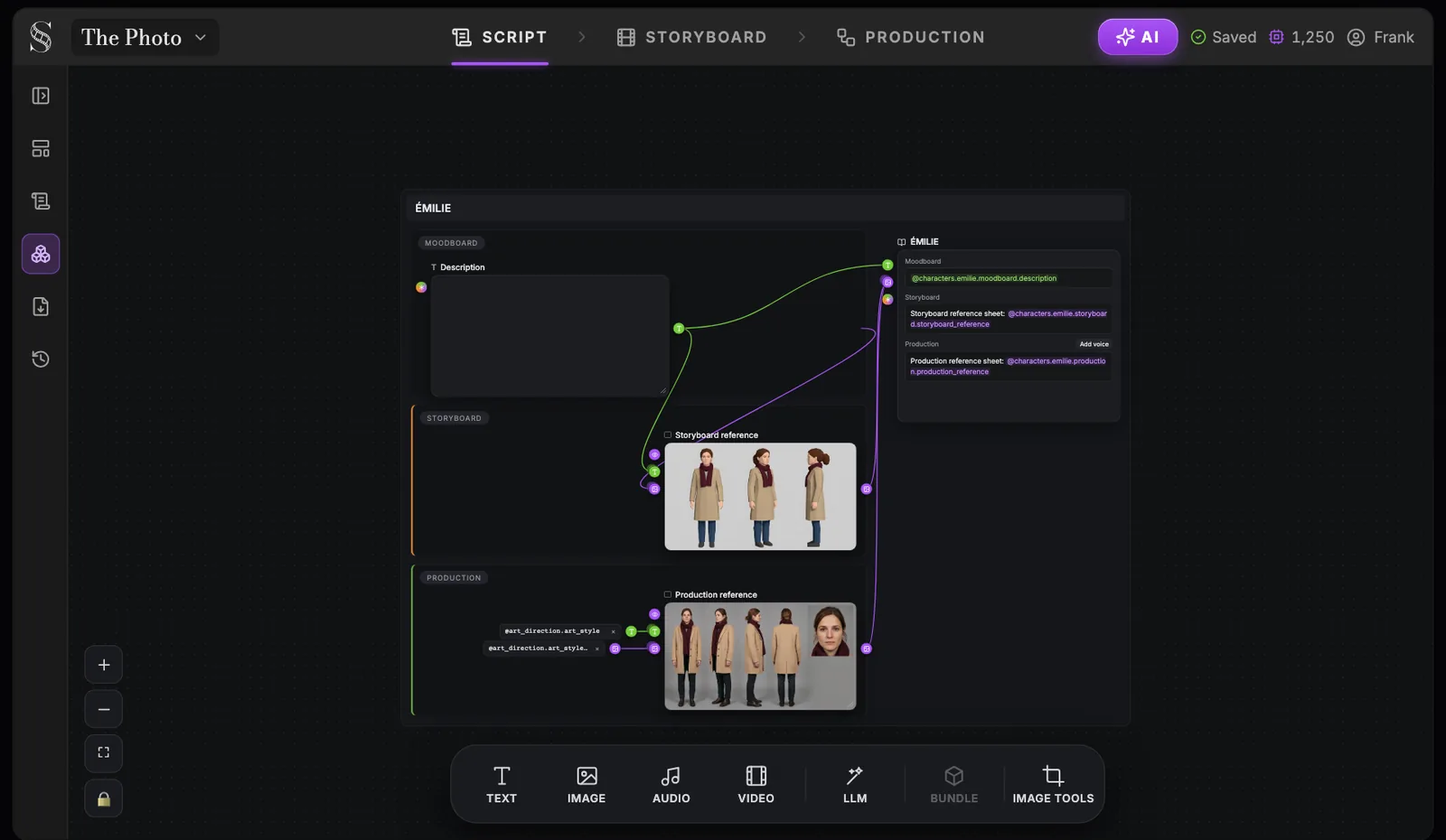
The storyboard. ScreenWeaver breaks each scene into shots and generates a frame for each one, linked to the scene it comes from. You set framing, angle, movement and duration. Characters, places and props are story elements with reference sheets, so the hero keeps the same face in the close-up and in the wide.
The animatic. This is the stage FlipMove needs as input. In ScreenWeaver every shot sits on the sequencer with its duration and plays back while the script scrolls beside it. You can judge pacing before a single second of video is generated, which is the whole point of an animatic. Our guide to previs, storyboards and animatics explains why that step saves money.
The video. On the Auteur plan, $39.99 a month with 6,000 credits, each shot can become AI video in the project's art direction. A studio needs animators and a 3D pipeline for this. A solo creator does not.
Access. It runs in the browser on Windows, Mac, Linux, iPad and Android, and the Studio plan, $149.99 a month, adds real-time collaboration for teams.
Try it free
Try ScreenWeaver for free on your script
It is free. Import your existing project, get a clearer view of your outline, and regain control of your story structure in minutes.
Start FreeWhat FlipMove does better
Fair is fair. FlipMove is built for a studio that already has 3D characters, rigs and animators, and for that team it does something ScreenWeaver does not try to do. It produces an editable 3D layout in Blender that artists keep animating by hand, and it cuts the cost of a director's retake from twenty minutes to two. If you run a 3D series pipeline, that is the real gain, and ScreenWeaver will not replace it.
Which one is for you?
- You work at Animaj on Ozzy Fox: you already have FlipMove.
- You run a 3D studio and want the same thing: look at layout and in-betweening tools for your own Blender pipeline. FlipMove is not licensed out.
- You have a story and no studio: that is ScreenWeaver's job. Write the script, board it, time it as an animatic, then animate it. Start with the AI storyboard generator, or see a full 3D comedy scene made shot by shot on the AI 3D animation page.
If you are turning a comic into an animated series, the comic to animation guide shows the same path from panels to moving shots.
FAQ
Is FlipMove made by Disney? No. FlipMove is made by Animaj. It was shown at the Disney Accelerator Demo Day on 3 November 2026 and is used on Ozzy Fox, a series co-developed with Disney Jr.
Can I download or buy FlipMove? No. As of 5 November 2026 it is Animaj's proprietary in-house tool. No price, beta or sign-up has been announced.
What does FlipMove actually do? It turns an approved 2D animatic into staged 3D shots in Blender, with camera placement, props and character staging, and speeds up director retakes and in-betweening.
Is there a FlipMove alternative I can use today? For the stages before 3D layout, yes. ScreenWeaver takes you from script to storyboard to animatic to AI video in the browser, with free screenwriting.
Can ScreenWeaver make 3D animation in Blender? No. ScreenWeaver does not create Blender scenes or rigs. It generates storyboard frames and AI video from your screenplay.
Sources: Disney Accelerator Demo Day 2026, Animaj, Introducing FlipMove, Señal News, animaj.com. Read on 5 November 2026.
See for yourself
Try the editor on your own script
Import your script or start a new one. Writing, PDF and Final Draft export are free.
Start writing free