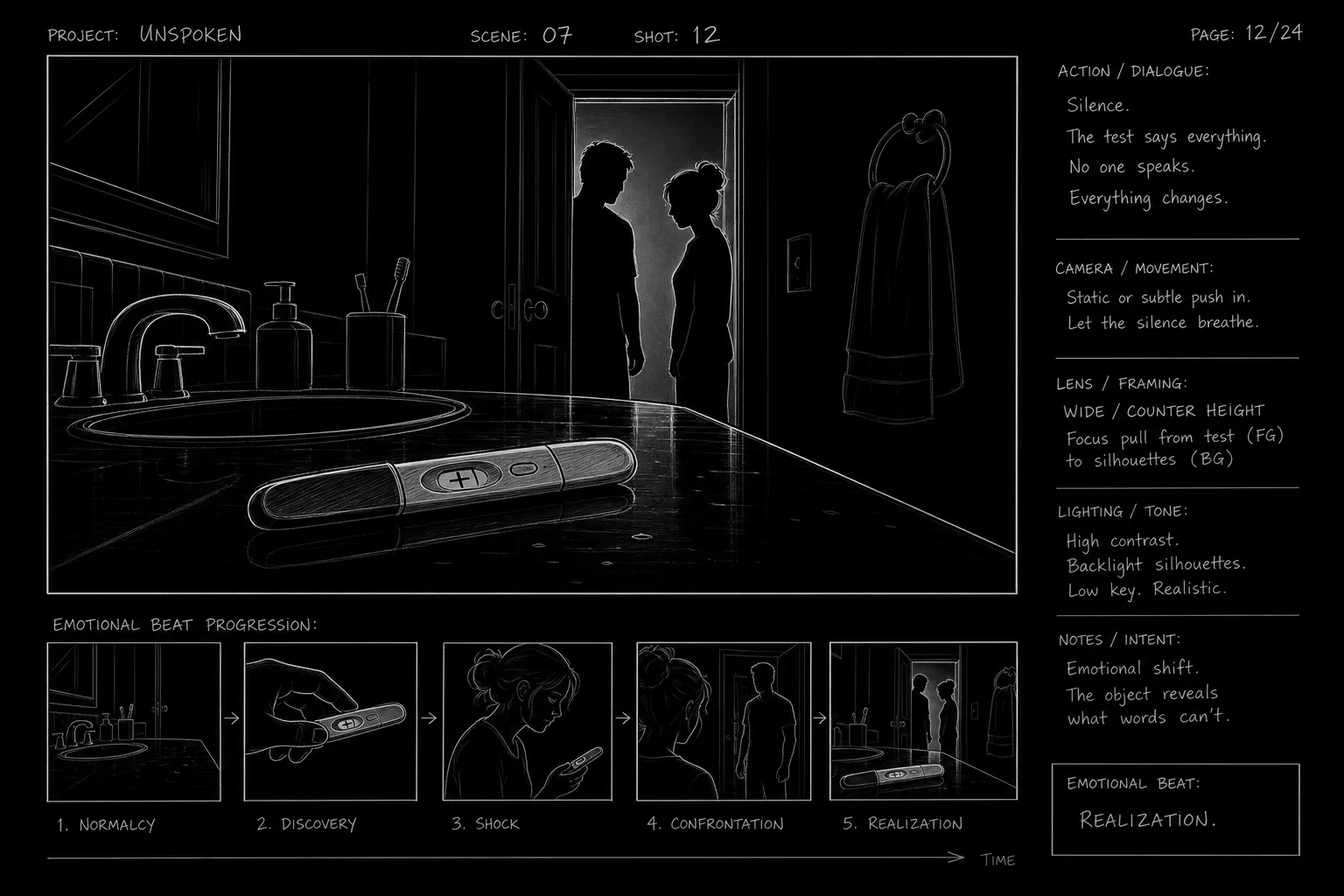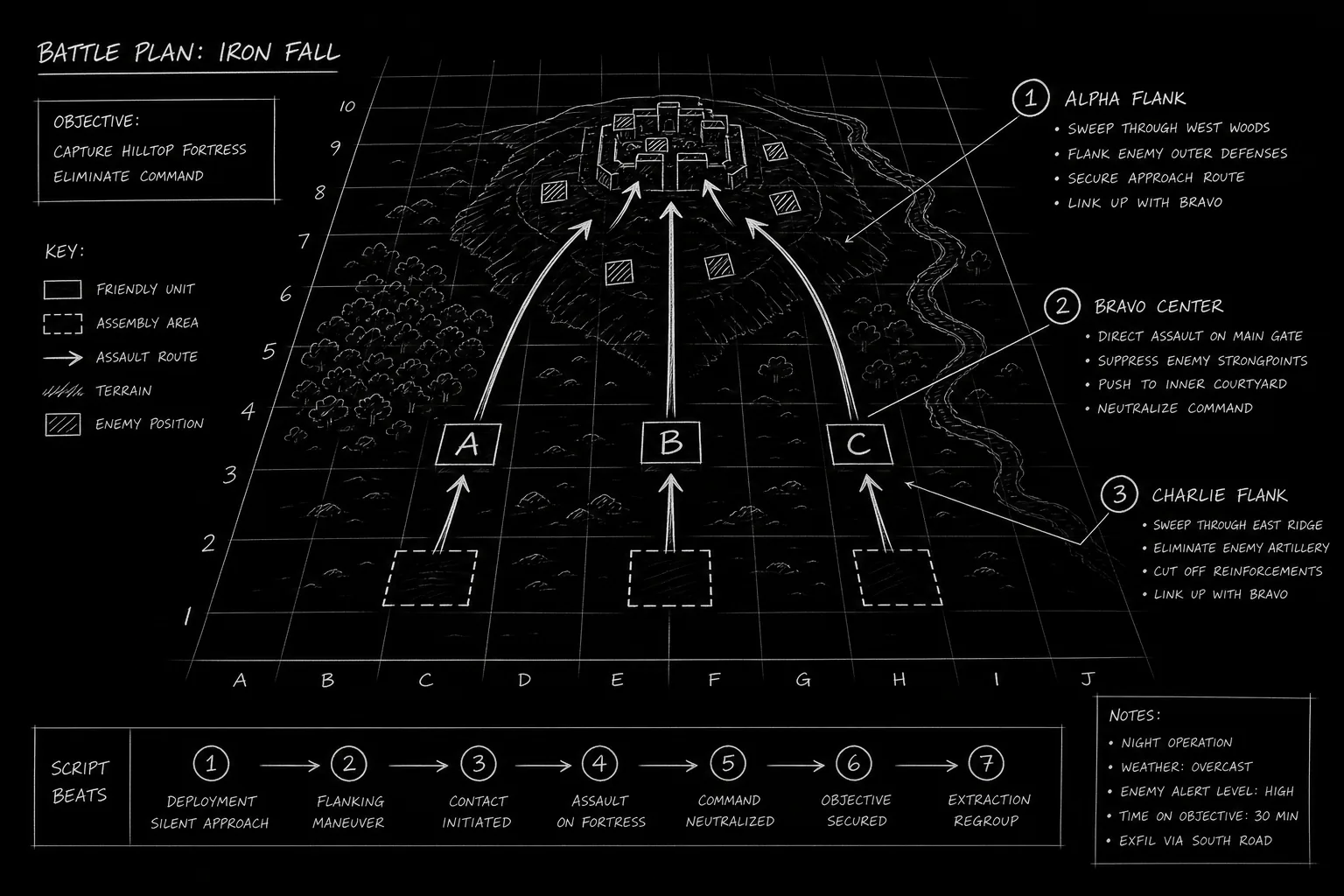
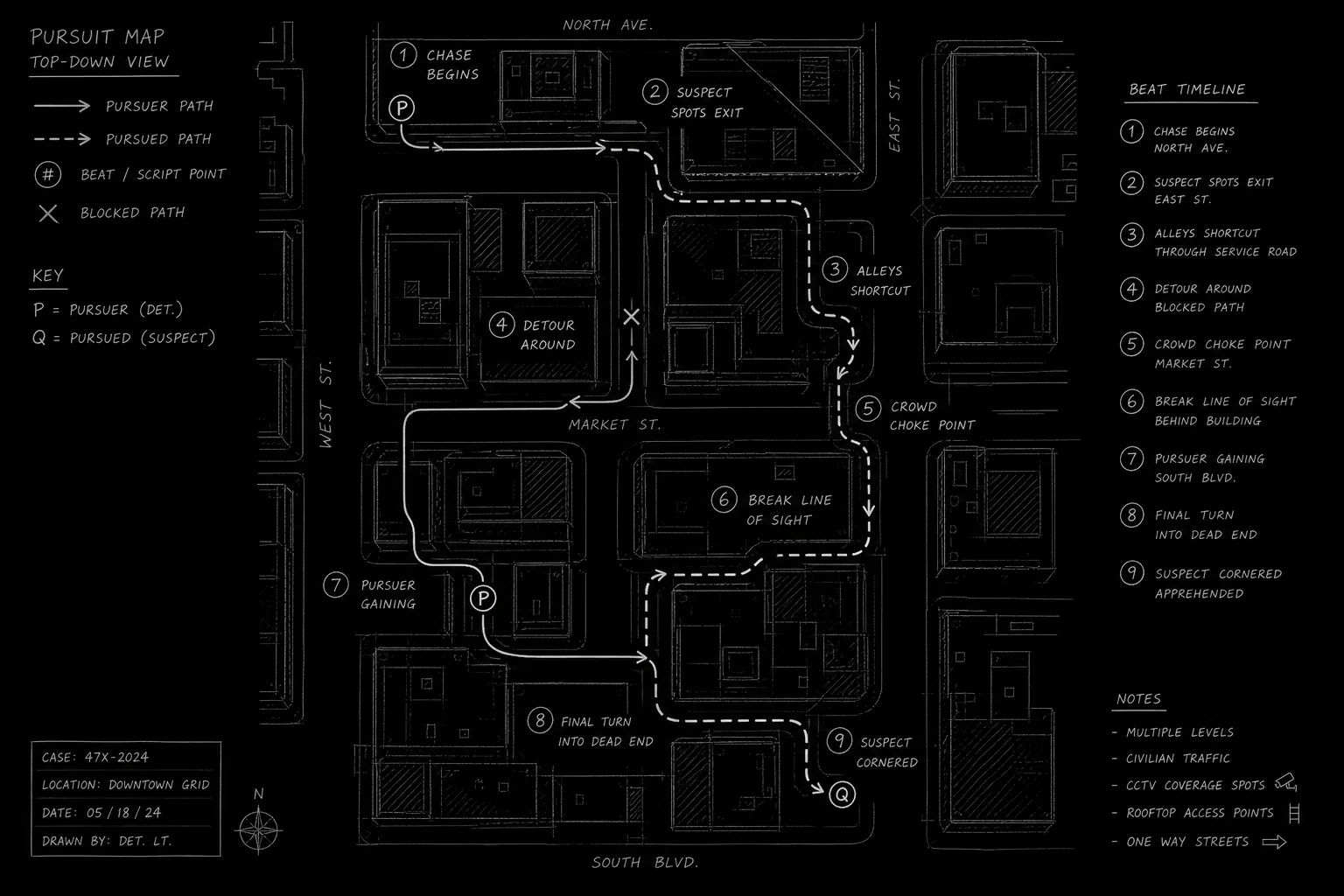
A chase scene is geography plus urgency. The reader should always know who is ahead, who is closing, and what happens if they catch up. When chase scene screenplay pages lose that thread, the sequence becomes noise: corridors, footsteps, shouts, and "they run."
Clarity is not the enemy of excitement. Clarity is how excitement travels down the page.
If the reader cannot answer "where are they now?" every half page, the chase is already lost.
Free tool: use the Slugline Formatter to clean up and standardize your scene headings.
How It Works: Pursuit as a Chain of Beats
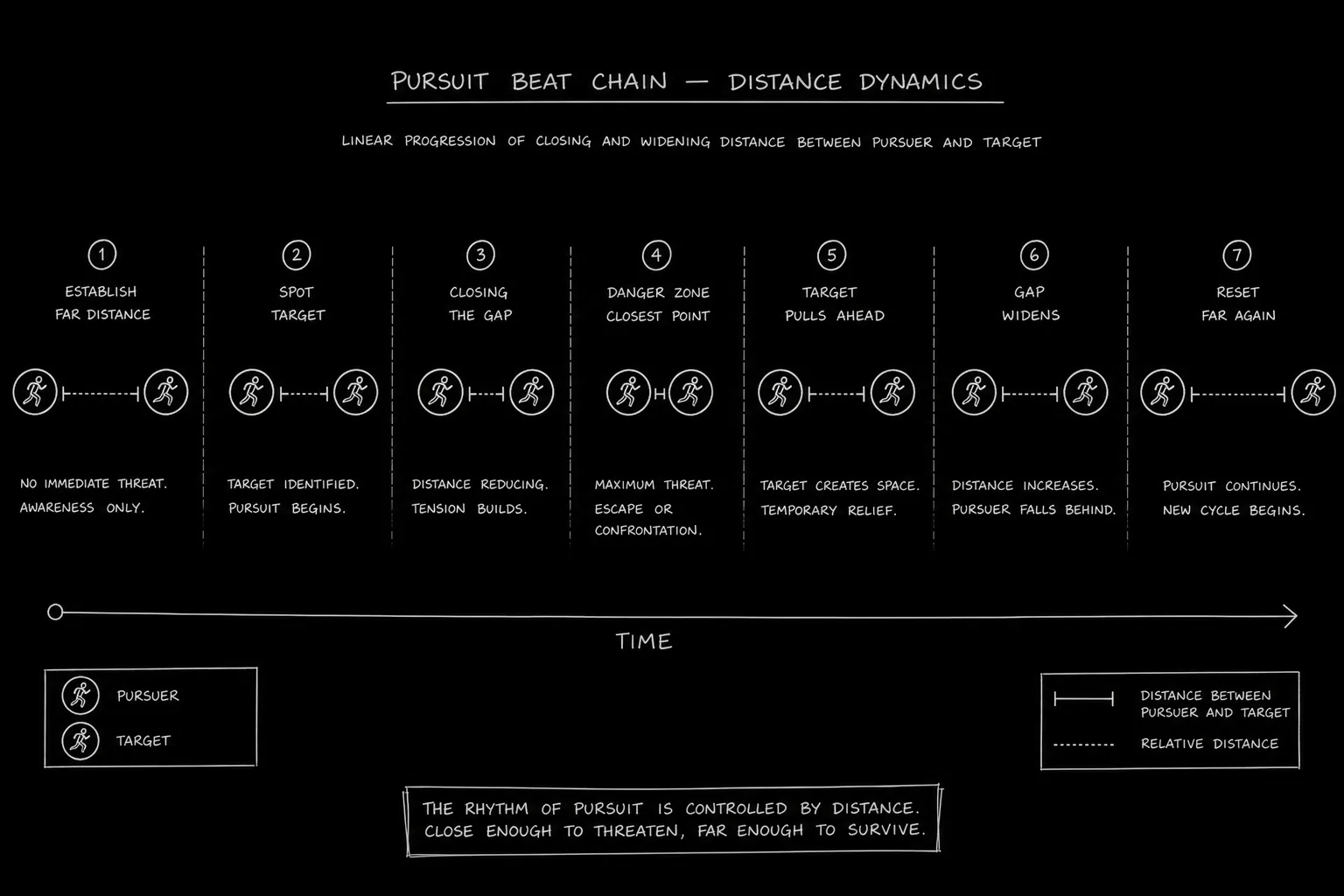
Think of a chase as linked micro-goals:
- Escape goal: door, vehicle, crowd, hide spot
- Pursuer tactic: cut off, flank, call backup
- Environment interference: traffic, weather, bystanders, locked gates
Each beat changes the distance between characters or the risk level. Distance is story. Format each beat so the delta is obvious.
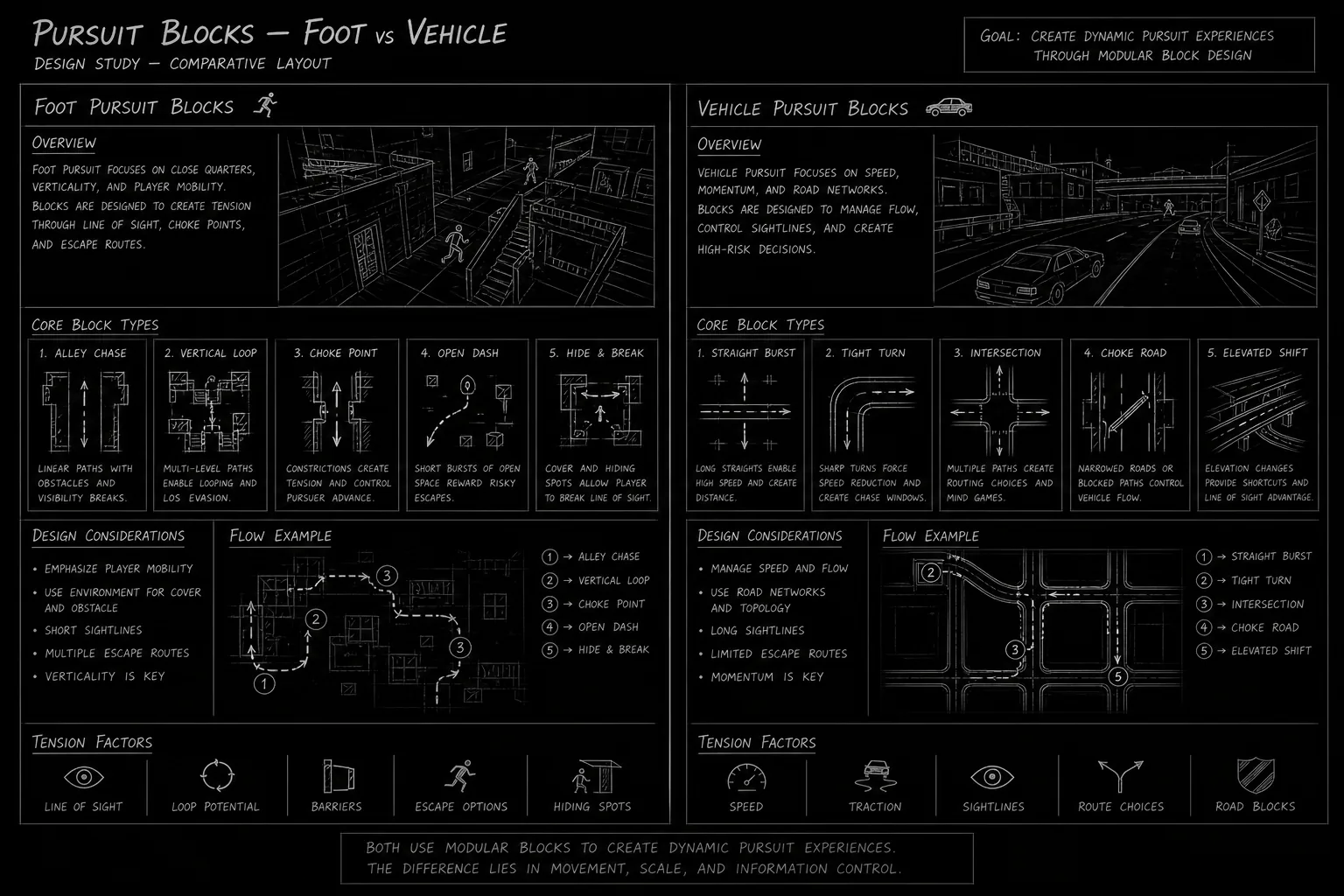
Chases share DNA with car chase clarity and foot pursuit. Cars add speed vectors. Foot chases add verticality and tight spaces. Both need named agents: who runs, who follows.
Platform and Use-Case Sections
Action Thrillers and Crime Features
Feature chases often anchor act two. Readers expect escalation: simple pursuit becomes multi-vector threat. Format with short action blocks. Name locations when they change: alley, stairwell, rooftop access.
Use intercutting parallel action when pursuit splits: hero runs while ally hacks a gate remotely. Intercut only if both threads change distance or stakes.
Horror and Survival Stories
Horror chases are about cornering. The pursued is prey. Format sound and breath. Use incomplete information: what is behind the next door. Do not describe the monster omnisciently if the protagonist cannot see it.
Character-Driven Drama
Not every chase is sprinting. A "chase" can be a slow walk through a wedding reception while someone tries to avoid a confrontational relative. Pursuit clarity still applies. Who is hunting whom socially?
Step-by-Step: Writing a Readable Chase
Step 1: Map the route before prose. Sketch start point, three turns, end point. Know why each turn exists.
Step 2: Open with relative position. "Mara three lengths ahead. Cole gaining on the straight."
Step 3: Write one obstacle per beat. Fence, skid, stalled tourist group, wrong turn. Each obstacle changes distance or direction.
Step 4: Tag perspective when needed. If we stay with Mara, we do not know what Cole radios unless she hears it. POV discipline creates tension.
Step 5: Mark escalation beats. First Cole alone, then two uniforms, then drone overhead. Escalation must be visible in text.
Step 6: Land outcome with consequence. Caught, escaped, traded places, injury, public exposure. The next scene should depend on this result.
Operational Section: Formatting Requirements and Stunt Reality
Sentence length. One or two sentences per beat in action. Long paragraphs kill pace and obscure position.
Capitalization discipline. Capitalize character names on first introduction in the scene, not every mention in action unless your template requires it. Too many caps feels shouty.
Stunt and safety implication. Write outcomes, not unsafe instructions. "She slides under the gate" not "she dives headfirst through razor wire."
Crowd and vehicle logic. Ground pursuits in plausible density. Midtown Manhattan behaves differently than a suburban cul-de-sac at 3 a.m.
Dialogue under exertion. Short lines. Broken rhythm. Do not write speeches mid-sprint unless the point is unnatural calm.
Sound. Footsteps, sirens, heartbeat in mix. Note only pivotal sounds. See sound effects in screenplays.
| Beat type | Write this | Avoid this |
|---|---|---|
| Turn | "She bolts into the parking structure." | "They run somewhere safer." |
| Gain | "Cole closes to arm's reach." | "He gets closer." |
| Setback | "A freight elevator blocks the aisle." | "Obstacle appears." |
| End | "She makes the train as doors seal." | "She escapes somehow." |
Try it free
Try Screenweaver for free on your script
It is free. Import your existing project, get a clearer view of your outline, and regain control of your story structure in minutes.
Start FreeOutcome and Results: What Pursuit Clarity Delivers
When clarity is right:
- Readers track stakes without rereading.
- Directors see spatial logic for coverage planning.
- Editors can imagine rhythm between cuts.
- Actors understand effort progression across the sequence.
Test by reading aloud in a table read. If listeners ask "wait, where are they?" the page needs another orienting line, not more adjectives.
Relatable Scenario: Market Chase at Dusk
Mara steals a folder. Cole is thirty feet behind in a crowded night market. The old way writes: "They weave through crowds. He is closer." The new way names the path: spice stall, lantern row, bridge over the canal. "Mara ducks under a vendor tarp. Cole loses sight for two seconds, then spots her scarf at the bridge rail." Each landmark is a beat with a distance change.
If Mara tosses a tray to slow Cole, write the consequence: he slips, gains anger, takes a shortcut that closes distance again. Pursuit clarity is cause and effect at speed.
Sample Beat Block (Foot Pursuit)
EXT. NIGHT MARKET - DUSK

Mara bolts past lantern row, folder crushed to her chest.
Cole ten feet back, calling her name once, then saving breath.

She cuts through a spice stall. Screams. Cloud of pepper.
Cole coughs, does not stop, loses a step.

Bridge ahead. Mara on the planks. Cole closes to arm's reach.
Short blocks. Named positions. One obstacle per beat. That is the template.
In ScreenWeaver
Make this shot in ScreenWeaver
The pipeline behind the Chase car shot clip of our film techniques library. Click the nodes to see how they are set.
Click a node to see its settings, drag it to move it.

Chase Types and Format Notes
Vertical chase (stairs, fire escape). Note up vs down each beat. Gravity changes exhaustion and advantage.
Vehicle-to-foot handoff. Mark the transition: "Cole abandons the sedan, on foot now." Distance resets; readers need the reset.
Stealth pursuit. Quiet beats still need position: "She is three aisles back in the warehouse, visible only by flashlight sweep."
Pair chase formatting with match cuts only when a written transition is story-critical; otherwise keep prose lean.
Reader Stamina and Page Length
Chase sequences longer than three pages without a turn (new obstacle, new stakes, new location zone) will feel redundant in read even if they feel fast on screen. Plan a turn every half page. A turn can be as small as "she thought she lost him; she has not."
When the chase ends, give one beat of consequence before the next scene heading: breath, injury, public witness, lost object. Pursuit clarity includes what the chase cost, not only who won the footrace.
Crowd scenes need the same discipline as alley scenes: name the choke point, the escape gap, and who sees the pursuit. Public space raises stakes because witnesses and cameras may matter in the next scene.
If your chase crosses into a new building, restate position at the threshold: "Mara inside the lobby. Cole at the revolving door, one rotation behind." Threshold beats prevent the reader from losing the thread at the worst moment.
Why It Matters: Old Way vs New Way
The old way: Writers mistook blur for energy. Pages filled with "they dash" and "he pursues" without anchors. Readers skimmed, then disengaged because nothing felt winnable or losable.
The new way: Writers design pursuit like heist beats: position, obstacle, consequence, repeat. The chase feels faster because it is legible.
That mirrors spec script restraint: suggest the experience, do not storyboard every cut. Give the reader chase logic, not a shot list.
Final CTA and Conclusion
Take your chase scene and highlight every action line that does not change distance, direction, or stakes. Cut or rewrite until each line moves the pursuit.
Draw the map in the margin if you must. Then translate that map into short blocks the reader can run through at reading speed.
A great chase feels breathless. A great chase on the page feels inevitable. Write pursuit clarity first. Speed follows.
Final Step
Build your next script with Screenweaver
Move from ideas to production-ready pages faster with timeline-native writing and AI-assisted story flow.
Try Screenweaver