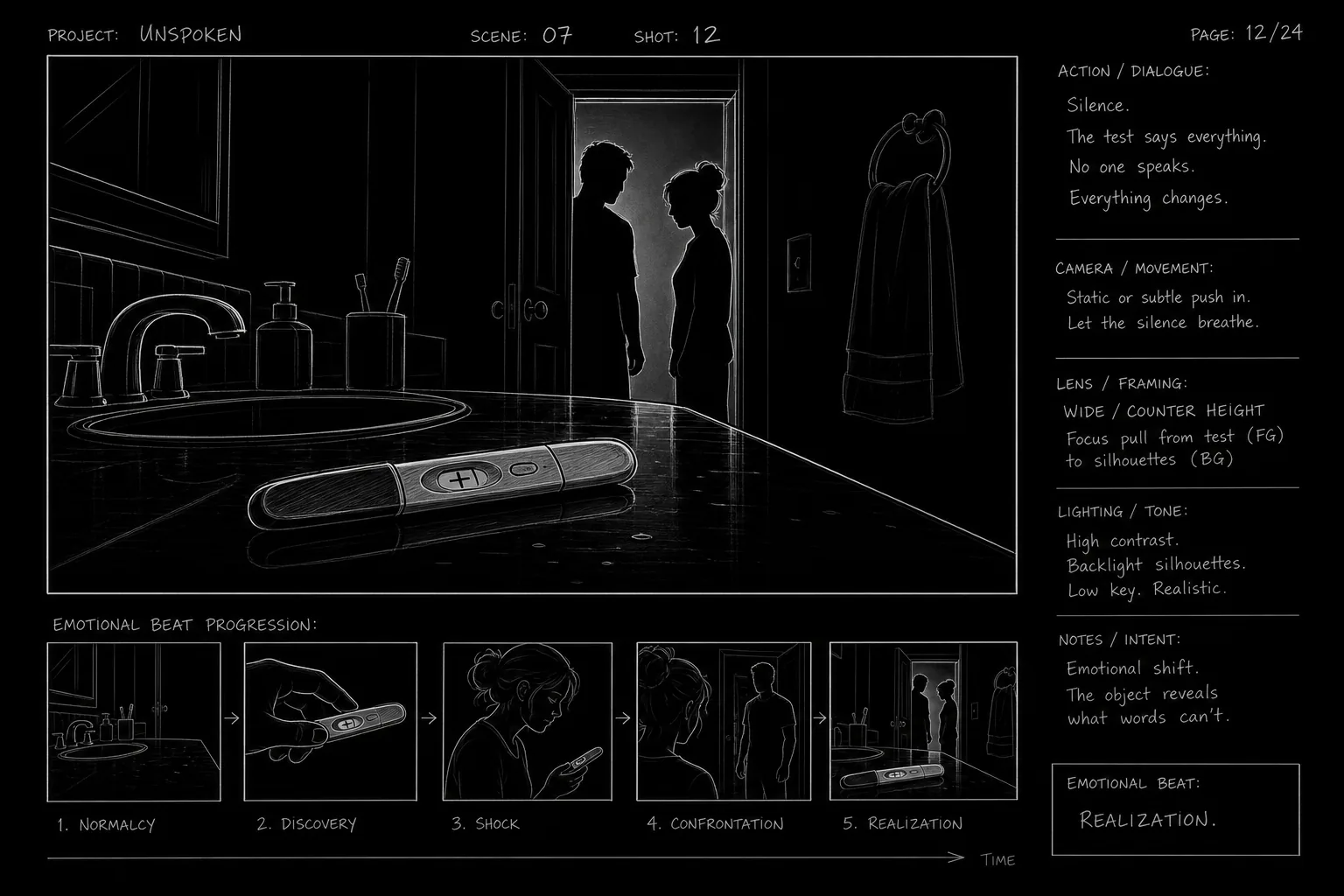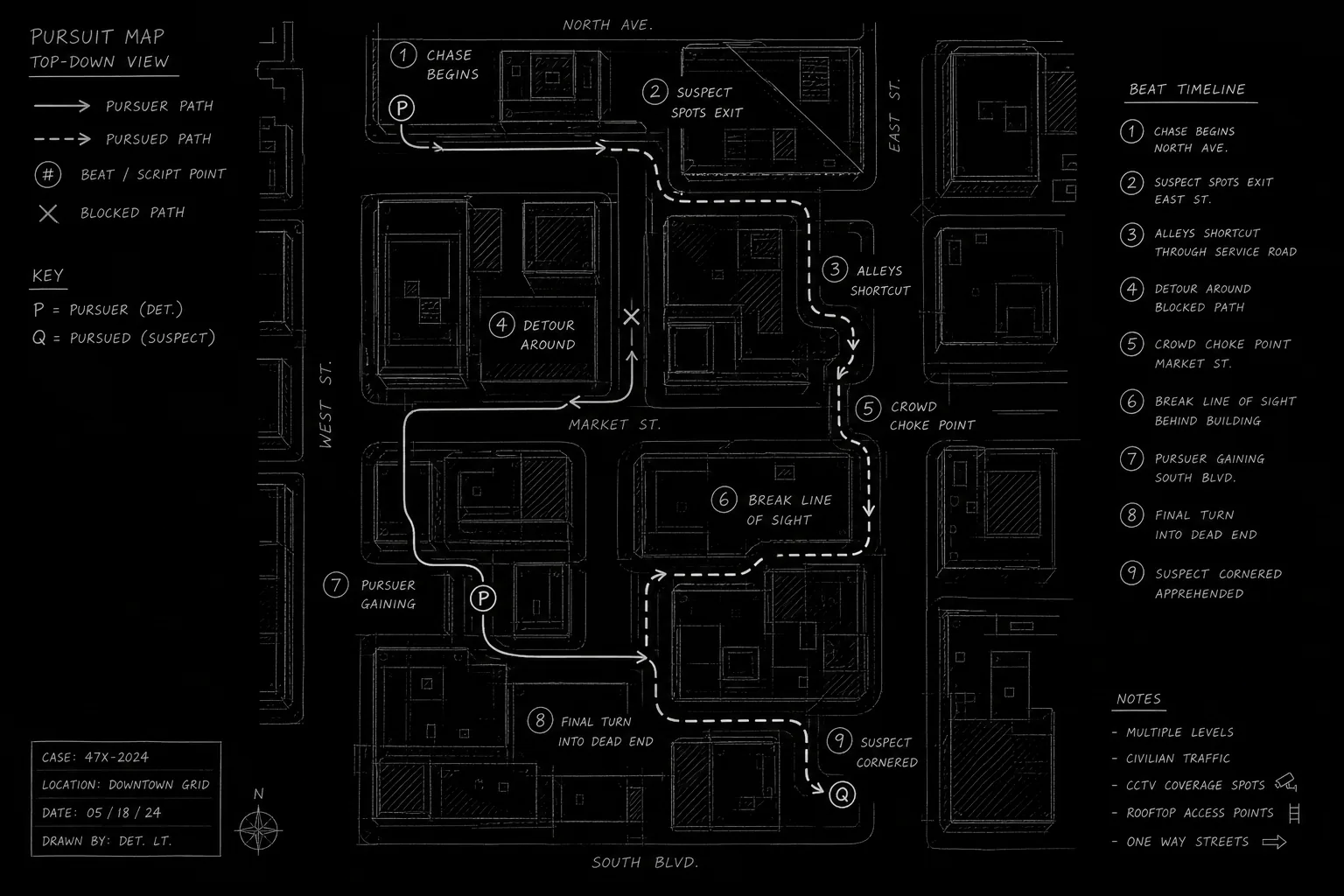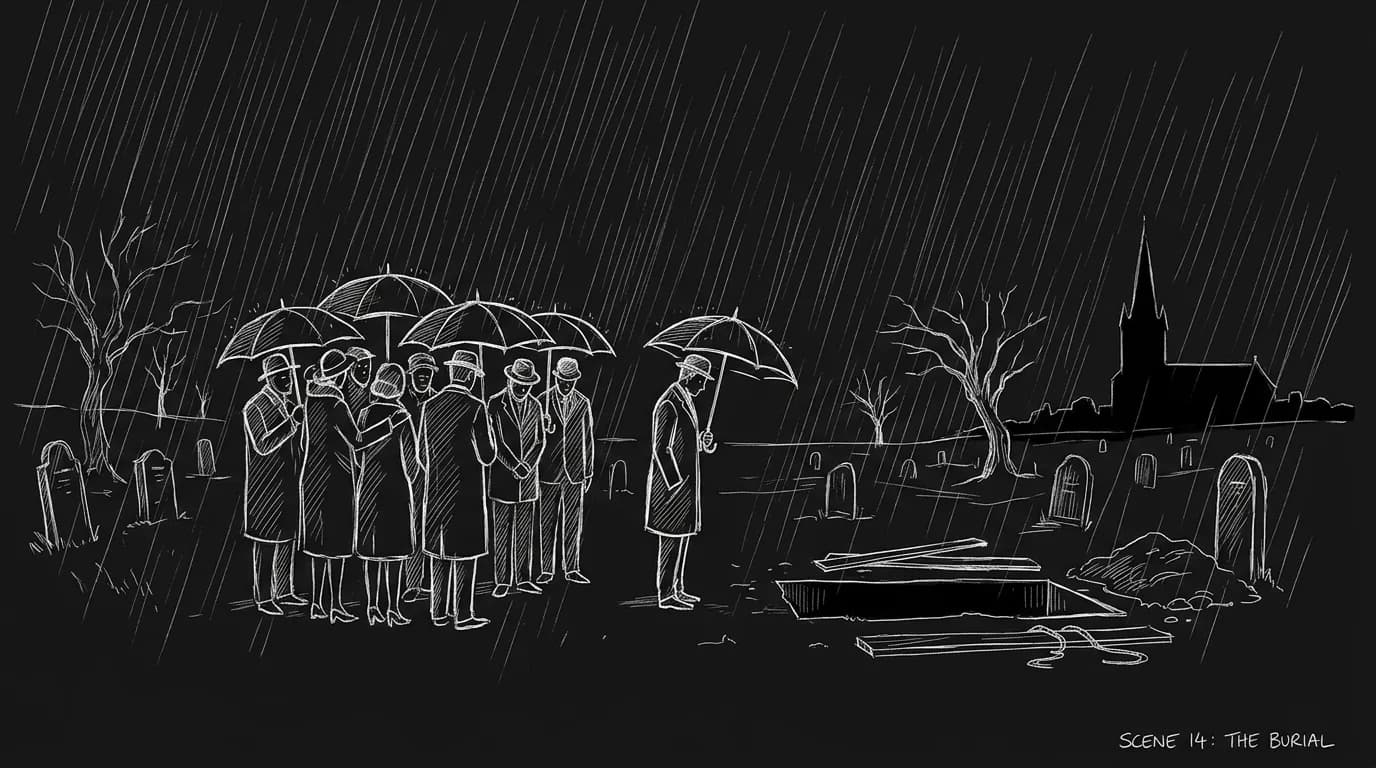

You are on page 74. A character is dead. The story needs to process that loss in public.
So you write a funeral scene.
And suddenly the script starts sounding like every other script.
People wear black, someone gives a speech, another person cries, and the audience is told to feel sad because funerals are sad. That is the trap. A funeral scene is not automatically emotional just because it contains grief rituals. Ritual gives you the container. Drama comes from what does not fit inside that container.
That is the real job.
A strong funeral scene reveals social hierarchy, unfinished conflict, inherited guilt, economic pressure, family mythology, and private truth under public performance. A weak funeral scene gives you weather, flowers, and polite dialogue that could belong to any characters in any story.
Here is why that matters: funerals are one of the rare story moments where everyone is forced into the same physical space while carrying radically different internal agendas. The scene is a pressure chamber. If you only write mourning, you miss the drama. If you only write conflict, you lose the sacred weight. The scene works when both realities collide at the same time.
What Makes Funeral Scenes Feel Cliche
Most cliche funeral scenes rely on borrowed symbols rather than character-specific behavior. Rain, trembling hands, folded programs, a quote about forever. None of these are wrong. They are just empty when they are not attached to the relational machinery of your story.
Think about it this way: a funeral scene is not about death. It is about narrative control over the dead.
Who gets to define who this person was? The spouse? The estranged child? The colleague? The institution? The person speaking at the podium is not simply honoring memory. They are curating legacy in real time while others in the crowd silently accept, reject, or resist that version of truth.
That is where cliche breaks.
Cliche also appears when beginners mistake solemn tone for dramatic depth. They slow everything down, lower every voice, and remove contradiction to appear respectful. But respect does not mean dramatic flatness. Real funerals contain awkward logistics, social misfires, bad timing, passive aggression, old rivalries, practical money questions, and moments of involuntary absurdity. If you strip those away, your scene stops feeling human.
The audience does not need perfect grief language. The audience needs recognizable human behavior under ceremonial pressure.
The Core Design Principle: Public Ritual, Private War
A funeral scene gets power from dual-layer writing.
Layer one is public ritual. Procession, seating, eulogy, prayers, songs, viewing, burial, reception. These are externally visible actions with social rules. They create order.
Layer two is private war. Hidden motives, unresolved conflict, inheritance anxiety, romantic secrets, shame, resentment, loyalty tests. These forces create disorder.
Your scene is not a monologue in black clothing. It is an event where order and disorder negotiate in front of witnesses.
When the scene works, every polite gesture carries subtext. A hug can be protection, accusation, or territorial marking. A late arrival can signal grief, contempt, or fear. Choosing where to sit becomes a statement. Signing the guest book becomes evidence for future family politics.
Once you begin writing at that level, generic funeral writing disappears.
Scenario One: The Adult Child Who Cannot Mourn Publicly
A common beginner version goes like this: the estranged son returns for his mother's funeral, cries during the service, reconciles with everyone, scene ends.
That is tidy.
Too tidy.
A truer version gives him practical tasks that prevent immediate catharsis. He has to approve the cremation paperwork because he is next of kin. He has to choose whether to allow an ex-stepfather to sit in the front row. He has to decide if he corrects factual inaccuracies in the eulogy while sixty people watch.
Now the scene has friction.
He might not cry at all during the service. He might cry while trying to open the cheap plastic umbrella dispenser outside the chapel because the machine jams and he cannot handle one more small failure. That beat is often more powerful than a polished graveside speech.
Scenario Two: The Family That Performs Unity for the Community
In many scripts, the funeral gathers relatives simply to deliver exposition. Cousin arrives, someone whispers old secrets, audience gets updates.
A stronger version treats the funeral as a reputational theater.
Everyone knows there was a lawsuit. Everyone knows two siblings have not spoken in eight years. But in public, they stand shoulder-to-shoulder because optics matter to business partners, church members, and political allies.
This gives you dramatic duality. Outward unity, inward fracture.
In scene terms, you can write one hand resting on another shoulder for cameras while the same two characters negotiate legal terms by text under the pew. One layer says family. The other says battlefield.
That contradiction is cinematic because actors can play both tracks simultaneously.
Scenario Three: The Funeral That Masks Relief
Writers often fear showing relief at funerals because it seems immoral. But relief is one of the most believable emotions in certain deaths: abusive parent, controlling spouse, predatory employer, violent sibling.
If you deny that emotional truth, your scene becomes sentimental and thin.
A non-cliche approach lets relief coexist with grief, guilt, and social performance. A character may deliver a beautiful eulogy and then feel an involuntary physical release when the coffin is lowered, followed immediately by self-disgust for feeling lighter.
That emotional contradiction is the scene.
You do not need to announce it with dialogue. You can stage it through breath, posture, and what the character does right after the ceremony. Maybe they finally remove a tracking app from their phone. Maybe they throw away a voicemail archive. Maybe they sit in the parking lot and cannot decide whether to call anyone.
Workflow: Writing the Scene So It Carries Story Weight
Step 1: Define the Dramatic Function Before the Ritual Function
Before selecting hymns, weather, or location, define why this funeral exists in your plot at this exact point. Is it a truth reveal trigger? A temporary truce? A power succession moment? A moral collapse? A forced reunion?
Write one sentence in your planning panel: "This funeral scene changes the story by ______."
If you cannot finish that sentence concretely, you are writing atmosphere, not drama.
Step 2: Identify the Legacy Conflict
Every strong funeral scene has a legacy conflict, explicit or hidden. Who owns the story of the deceased?
Map at least two competing narratives. Example: "He was a generous mentor" versus "He built that generosity on private cruelty." Then decide which narrative controls the microphone and which narrative controls the silent reactions.
This makes even simple beats charged with consequence.
Step 3: Build a Ceremony Timeline with Collision Points
Use your scene card tool and create a simple sequence: arrival, seating, opening words, eulogy, ritual act, exit, post-service gathering. Then mark two or three collision points where private conflict breaks through public protocol.
Collision does not require shouting. It can be a name omitted in a speech. A handshake refused. A donation envelope returned unopened. A child asking a question no adult wants to answer.
These collision points are your anti-cliche engine.
Step 4: Assign Immediate Objectives to Key Characters
Do not write everyone as "sad."
At minimum, assign an immediate objective to the three most important characters in the scene. One might want control of narrative. Another wants proof of belonging. Another wants to survive the event without exposure of a secret.
When objectives differ, dialogue naturally gains shape and tension.
Step 5: Design Environmental Leverage
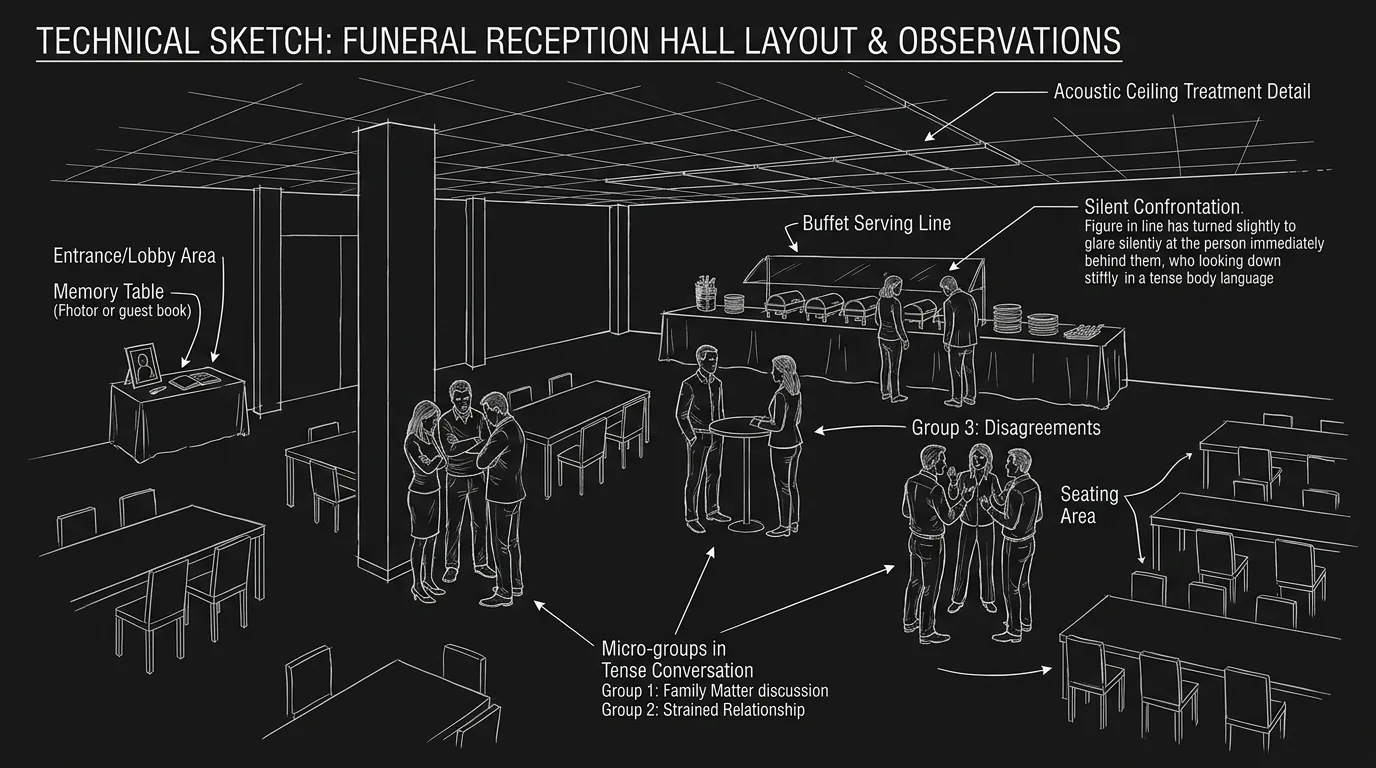
Funeral spaces are full of mechanical pressure points: podium, aisle, casket, family seating, condolences line, reception table, sign-in book, memorial slideshow screen, parking lot choke points, restroom mirrors, kitchen service doors.
Choose three. Use them intentionally.
If your confrontation happens at the podium microphone, there are witnesses. If it happens in the coat room, there is deniability. If it happens at the graveside, the physicality of earth and weather alters tempo and breath.
Environment is not backdrop. It is story physics.
Step 6: Write the Speech as Strategy, Not Poetry
Many funeral scenes include a speech. Fine. But treat speech as strategic action, not literary ornament.
Ask what the speaker is trying to achieve socially in this room. Seeking forgiveness. Preserving family image. Protecting a child. Erasing a scandal. Transferring authority. Then let that objective shape word choice, omissions, and tone.
A speech can sound elegant and still be manipulative. That complexity makes it watchable.
Step 7: End on Behavioral Consequence
Do not end with "ashes to ashes" and a fade-out.
End on a decision that changes the next sequence: someone refuses the wake, someone takes possession of keys, someone sits in the dead person's car and finds evidence, someone finally signs a document, someone walks away from inheritance money, someone lies to protect another person.
Funeral scenes become memorable when they launch plot, not when they freeze it.
Try it free
Try Screenweaver for free on your script
It is free. Import your existing project, get a clearer view of your outline, and regain control of your story structure in minutes.
Start FreeTable: Funeral Scene Choices and Their Dramatic Trade-Offs
| Scene Choice | What It Gives You | What It Risks |
|---|---|---|
| Formal church service | Social protocol and visible hierarchy | Generic solemnity if no private collision |
| Intimate home memorial | Raw personal detail and awkward proximity | Low dramatic scale without clear conflict design |
| Military or state honors | Institutional power and ritual precision | Character intimacy can get buried under ceremony |
| Graveside in harsh weather | Physical vulnerability and visual pressure | Symbolism can feel forced if overemphasized |
| Crematorium viewing room | Claustrophobic realism and modern tone | Underwritten supporting characters feel like props |
| Reception aftermath focus | Rich dialogue opportunities and alliances | Scene can sprawl without objective control |
The Trench Warfare Section: What Beginners Get Wrong and How to Fix It
Beginners usually do not fail because they are insensitive. They fail because they write funerals as mood pieces. Mood is useful, but mood alone does not move story. This section is blunt on purpose.
First failure: everyone speaks in the same grief dialect. One character says "she is in a better place," then three more characters use variations of the same sentiment. The fix is voice stratification. Religious language, legal language, practical language, ironic language, silence. Different people process death with different vocabularies.
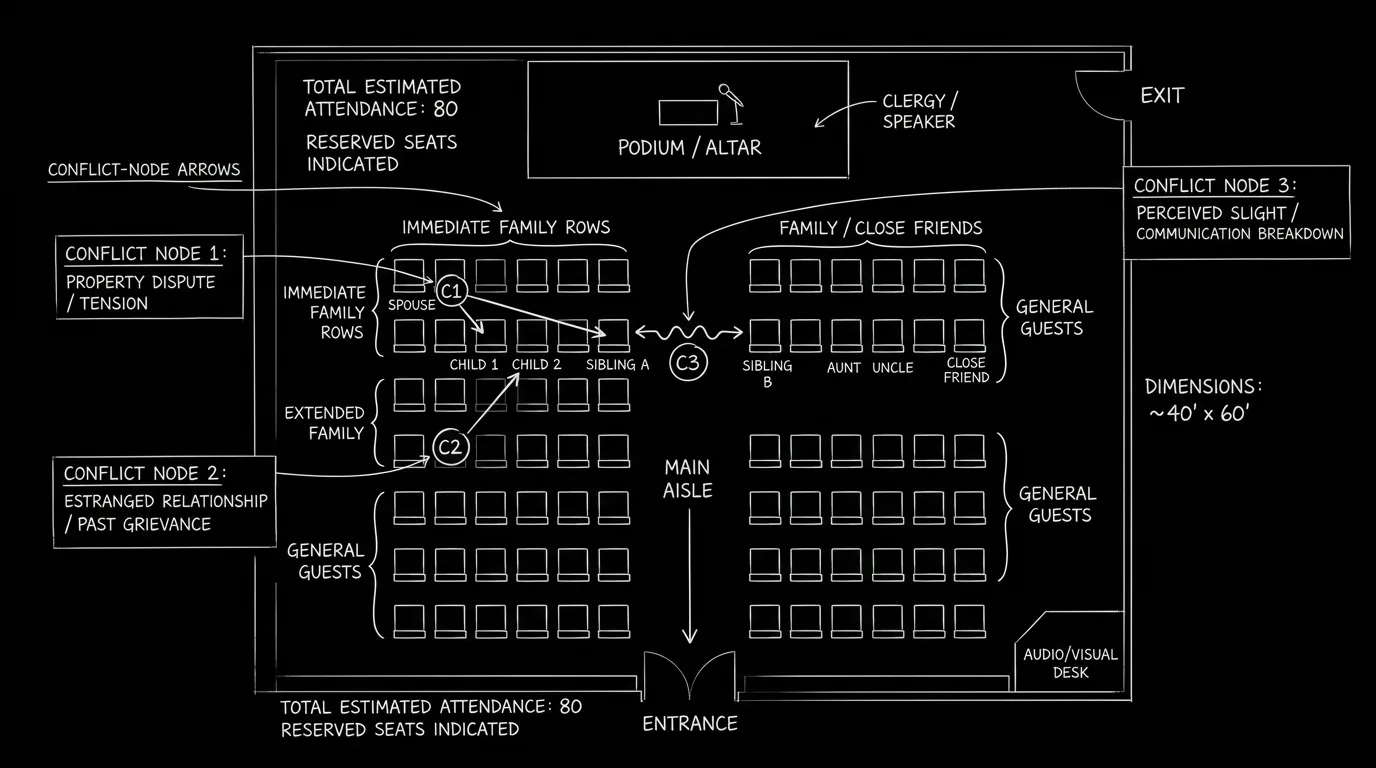
Second failure: the scene has no hierarchy map. Who has authority over ritual choices? Who has social status in the room? Who has historical legitimacy? Without hierarchy, blocking feels random. Fix it by sketching a power diagram before dialogue. Then stage movement according to that diagram.
Third failure: exposition disguised as condolence dialogue. Characters "catch up" on backstory while standing beside flowers. It reads false. Fix by moving factual exposition earlier in script and using funeral dialogue for pressure decisions, not recap.
Fourth failure: sentiment without contradiction. Every memory is warm and clean. Real mourning is messy. Add contradiction through selective omission, uncomfortable praise, or memory disputes. Let one person remember the deceased as savior and another as source of fear. Both can be true.
Fifth failure: no logistics. Funerals are logistical events. Transportation, timing, paperwork, costs, body release, venue constraints, reception coordination. Ignoring logistics removes realism and stakes. Use one or two logistical constraints as plot levers.
Sixth failure: endless speech page. A three-page eulogy often kills pace unless every paragraph changes leverage. Cut hard. Keep only speech lines that alter room dynamics or reveal hidden information.
Seventh failure: flattening supporting characters into crying extras. The room should be alive with micro-reactions, alliances, and social calculations. Give two or three side characters active micro-objectives so the scene has dimensionality.
Eighth failure: defaulting to rain for pathos. Rain can work, but symbolic weather becomes stale when it does all emotional labor. If you use rain, tie it to practical consequence: delayed hearse, ruined printed photos, muddy shoes that force an awkward pause.
Ninth failure: no post-funeral residue. Scene ends, script tone resets. That feels dishonest. Carry residue into the next sequence through changed routines, social ruptures, legal steps, and altered priorities.
Tenth failure: treating tears as climax. Tears are response, not structure. The climax should be a choice under pressure.
Eleventh failure: moral simplification of the deceased. "He was good" or "she was terrible" is dramatically weak. Strong funerals wrestle with incomplete verdicts. Legacy is often contested because people experienced different versions of the same person.
Twelfth failure: writing grief with polished literary speeches that no one would say in that moment. Stress distorts syntax. Let dialogue break, restart, dodge, and misfire. Controlled imperfection reads truthful.
Thirteenth failure: fear of discomfort. Writers avoid awkward beats because they seem disrespectful. Yet awkwardness is a core texture of real funerals: microphone squeal, wrong music cue, child question at the worst moment, stale catered food comments, phone ringing during prayer. Carefully chosen discomfort creates authenticity.
Fourteenth failure: genre blindness. A funeral in a legal thriller should carry evidentiary and reputational stakes. In horror, it can stage dread, denial, or impending contagion. In family drama, inheritance and memory politics dominate. In comedy, social masks cracking under protocol can be devastatingly funny and sad at once.
Fifteenth failure: no camera-aware writing on the page. You are not directing shots, but you are guiding attention. If every action line reads with equal weight, the reader cannot feel emotional focus. Use concise, targeted action lines that prioritize turning beats and reaction anchors.
Respecting grief does not require sanitizing grief. Sanitized grief is how scenes become forgettable.
Body Image: Funeral Scene Power Map
Practical Rewrite Pass: From Generic to Specific in 60 Minutes
Take your current funeral scene draft and run this exact rewrite circuit.
For the first fifteen minutes, remove every adjective describing emotion. Keep only observable action and spoken words. If the scene becomes unreadable, it means your emotional signal depends on labels rather than behavior.
For the next fifteen minutes, add one objective sentence in the margin for each key character and mark where objective changes. If no objective changes occur, insert a collision point around legacy, money, belonging, or truth.
For the next fifteen minutes, audit dialogue for repeated sentiment. If three lines express the same emotional idea, keep the most character-specific line and cut the rest.
For the final fifteen minutes, write a short aftermath beat that operationalizes consequence. A voicemail to a lawyer. A bank account freeze. A family group chat implosion. A child asking if the dead person was "good." This is where your funeral scene proves narrative value.
This pass is mechanical by design. Mechanical discipline gives emotional clarity.
Where to Place Funeral Scenes in Structure
Placement changes function.
Early-story funerals often serve as inciting incidents, introducing hidden relationships and shifting status structures. Mid-story funerals can act as mirror points where characters confront the cost of earlier choices. Late-story funerals can become moral verdict spaces where unresolved arcs finally collide.
If your funeral scene feels inert, placement may be wrong. A scene written with care can still underperform if the story has not earned the emotional and informational payload yet.
This is why funeral scenes should be planned with sequence logic, not added as decoration after a death beat.
For external craft references and produced script study, the Writers Guild Foundation Library is useful and should be treated as a nofollow source in publishing workflows.
As discussed in our piece on [how to write a character death scene without melodrama], the death beat and the funeral beat should not duplicate emotional function; they should escalate different dimensions of consequence.
If your funeral includes institution-heavy ritual language, pairing it with our guide on [how to write a confession scene in a thriller] helps when truth interrupts protocol.
And when family power games erupt during food and condolences, the framework from [how to write a dinner party scene with hidden conflict] can sharpen social choreography in the reception phase.
Body Image: Reception Aftermath Collision
YouTube Placeholder
Ending Perspective: Write the Living, Not Just the Dead
The biggest shift you can make is simple and hard.
Stop writing funeral scenes as tributes.
Start writing them as consequential social events where grief, memory, and power collide under ritual constraints.
When you do that, you stop chasing generic sadness and start capturing the real emotional mechanics of loss: who speaks, who stays quiet, who rewrites history, who carries practical burden, who gets erased, who refuses erasure.
A funeral scene that avoids cliche does not depend on dramatic weather, poetic speeches, or ornamental sorrow. It depends on precise character behavior under formal pressure, and on one or two irreversible choices that push the story into its next phase.
Write those choices clearly.
Write the cost directly.
Write the living people fighting over what the dead now mean.
That is where the scene becomes unforgettable.
Final Step
Build your next script with Screenweaver
Move from ideas to production-ready pages faster with timeline-native writing and AI-assisted story flow.
Try Screenweaver