Lined Script Generator
Line your script like a script supervisor, free
This free lined script generator lets script supervisors, directors, and film students mark camera coverage on a screenplay the way it is done on set: one vertical line per setup, drawn from the first covered line to the last. Paste your script, define your setups, and line each page in the browser instead of with a ruler, a paper script, and a pencil.
The lining convention is standard continuity practice: a straight line means the action on those script lines is fully on camera in that setup, and a wavy line means it happens off camera (the sound is recorded, the picture is not). Each setup gets its own vertical lane and a legend entry with its slate label and coverage note, so an editor can read at a glance which setups cover any moment of the scene.
Everything runs in your browser. Your script never leaves this page, and your setups and lines autosave locally so you can close the tab and come back.
One row per camera setup, like your slate: label (12A), coverage note (MED 2-shot), takes, and line style.
Add a setup to start lining. A setup is one camera position and framing, like 12A or 12B.
Page 1 of 1
Legend
No setups lined on this page yet.
No lines drawn yet. Select a setup, then click a start and end line in the script.
Your lined script
0 setups, 0 coverage lines, 1 script pages.
Autosaved in this browser. Download the PDF to share it with your editor or production files.
How it works
The tool formats your pasted text into standard Courier screenplay pages that break at 55 lines, the same layout Final Draft prints. You define setups exactly as they appear on the slate, then mark the span of script each setup covers. Every setup gets its own vertical lane so lines never sit on top of each other, spans that cross a page break split cleanly across pages, and each page carries a legend listing its setups, their coverage notes, and whether the line is straight or wavy. The PDF export reproduces the same pages with jsPDF, solid lines for on-camera coverage and dashed lines for wavy.
How to line a script like a script supervisor
Lining a script records which camera setups cover which lines of the screenplay. On set, the script supervisor draws a vertical line for each setup, from the first moment the camera covers to the last, and labels it with the slate number. Film students still learn this with a ruler and a paper script, and most digital options are paid apps aimed at working professionals. This script lining tool is free, works in the browser, and follows the same continuity lined script conventions.
The straight versus wavy distinction is the heart of the system. A straight line through a stretch of action or dialogue says the setup holds that material on camera. A wavy line says the material happens while this setup is rolling but out of frame: an off-screen reply, a reaction we hear but do not see. When the editor pulls up the script supervisor lined script in the cutting room, those two marks answer the first question of every cut: what coverage exists for this moment?
That is why editors treat a good lined script as the map of coverage. Without one, finding out whether scene 12 has a clean single on the reaction means scrubbing through every take. With one, it is a glance at the page. If you are prepping a shoot, pair this lined script template with a marked-up shooting script and a take log, and you hand post-production a document that saves hours per scene.
Who uses this
- Script supervisors on low-budget sets. Line each scene digitally during blocking and camera rehearsal, then export the PDF into the production book instead of scanning pencil pages.
- Film students learning continuity. Practice the straight and wavy convention on real scenes without printing scripts, and compare lined pages between exercises.
- Directors and editors in prep. Sketch planned coverage before the shoot: line the intended setups per scene and spot the moments no camera covers while changes are still cheap.
From script to shots,in one place.
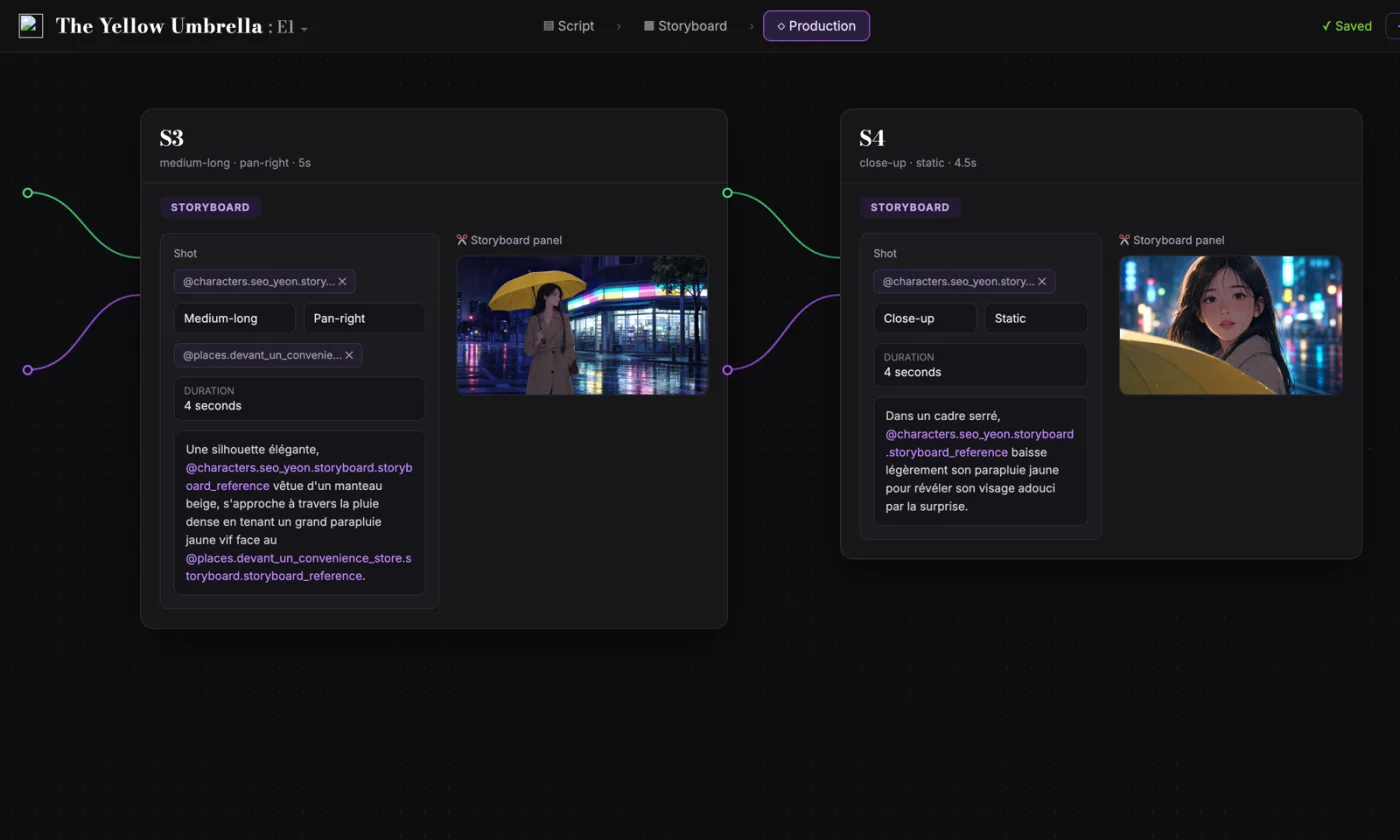
ScreenWeaver turns your screenplay into an automatic shot breakdown, then a storyboard. Characters, locations and references carry from shot to shot.
- $0, does not expire
- PDF and Final Draft export
- Mac, Windows, Linux, iPad
Lined Script Generator: the complete guide
It formats your pasted screenplay into 55-line Courier pages, lets you define camera setups with slate labels and coverage notes, and draws one labeled vertical line per setup across the exact script lines it covers, straight for on-camera and wavy for off-camera, with a legend on every page and a PDF export.
For this workflow, the central problem is clear: lining a script digitally normally requires paid apps like Scriptation or ScriptE, so most low-budget productions fall back to pencil, ruler, and scanned paper pages. Left unresolved, this creates downstream friction and slower decisions. The practical target is a clean, exportable lined script that records which setups cover which script lines, using the standard straight and wavy conventions.
Limitation to keep in mind: It lines coverage and take counts; it does not replace full continuity paperwork like facing pages, editor's notes per take, or timing logs, which still need a dedicated workflow on larger productions.
Advanced workflow: Experienced supervisors line during blocking, revise after camera rehearsal, and reconcile the lined pages against the camera and sound reports at wrap so the editor receives one authoritative coverage map per scene.
Step-by-Step Workflow
- Paste your Fountain or plain screenplay text and check that scene headings, cues, and dialogue landed on the right indents.
- Add one setup per camera position with its slate label, coverage note, take count, and straight or wavy style.
- Select a setup and mark its span by clicking the first and last covered line, or by picking line numbers from the selectors.
- Review the legend on each page, then download the PDF and file it with the day's continuity paperwork.
Use Cases By Profile
- Script supervisor: line each scene as setups are slated and export the PDF into the daily production book.
- Film student: practice the straight and wavy continuity convention on real scenes without printing a single page.
- Editor: read the lined pages before the first assembly to know instantly which setups cover a given beat.
Common Mistakes To Avoid
- Drawing one line for the whole scene when the setup only holds part of it on camera.
- Using straight lines for off-screen dialogue instead of wavy, which misleads the editor about available picture.
- Skipping the coverage note, leaving future readers with a slate number and no idea what the framing was.
Professional Best Practices
- Label setups exactly as they are slated (12, 12A, 12B) so the lined script matches the camera reports take for take.
- Line during rehearsal and adjust after the first take; coverage plans rarely survive contact with the actors.
- Update take counts as you go, since a setup with one usable take reads very differently in the cutting room than one with six.
Treat this tool output as a decision support layer, not a replacement for authorship. Great scripts are remembered for specific choices, emotional precision, and clarity of dramatic movement. Tools help by removing noise so your energy can go where it matters: character, conflict, escalation, and payoff. If you review outcomes after each pass and keep an explicit log of accepted changes, your workflow becomes faster and more predictable from draft to draft. That consistency is exactly what professional collaborators value: fewer surprises, clearer rationale, and a script that evolves with intent.
Extended FAQ
How do script supervisors line a script on set?
During each setup they draw a vertical line from the first script line the camera covers to the last, labeled with the slate number. Straight sections mean the action is on camera; wavy sections mean it happens off screen while the take rolls. The lines accumulate across setups until the scene's full coverage is mapped on the page.
What is the difference between a lined script and facing pages?
The lined script is the marked-up script page itself, showing coverage spans per setup. Facing pages are the notes opposite each script page: take numbers, lens info, timings, circled takes, and continuity remarks. Professional continuity paperwork uses both; this tool produces the lined page.
How many setups can I track per scene?
There is no fixed cap. Each setup gets its own vertical lane so lines never overlap, and the page legend lists every setup with its label and coverage note. In practice most scenes carry three to eight setups, which stays very readable on the page.
Do editors actually use the lined script?
Constantly. It is the map of coverage: before scrubbing footage, the editor checks the lined page to see which setups cover a beat and whether the material is on camera or wavy. A scene without a lined script means hunting through every take to answer questions the page would settle in seconds.
Can I line a Fountain screenplay directly?
Yes. Paste Fountain text and the tool reads scene headings, character cues, dialogue, parentheticals, and transitions, skips the title page block, and lays everything out in standard Courier indents. Plain unformatted text works too; it is treated as action and paginated the same way.
Is this script lining software really free?
Yes. There is no signup, no watermark, and no upload; the whole tool runs in your browser and the PDF is generated locally. Your work autosaves to local storage on your own machine so a closed tab does not lose your lined pages.
Lined script FAQ
A lined script is the script supervisor's marked-up copy of the shooting script. Each camera setup gets a vertical line through the exact script lines it covers, labeled with the slate number. Together with the facing-page notes, it tells the editor precisely what coverage exists for every moment of every scene.
A wavy line marks material that happens off camera during that setup: the words or action occur while the camera rolls, but out of frame. The audio exists on that take, the picture does not. A straight line means the material is fully on camera. This tool draws wavy coverage as a dashed line and always names the meaning in the page legend.
Yes. It follows the same conventions taught in film school: one vertical line per setup, straight for on-camera, wavy for off-camera, with a legend per page. For long-form professional work you may eventually want a dedicated paid app, but for shorts, student films, and indie features this covers the core workflow at no cost.
No. Parsing, lining, and PDF generation all run locally in your browser. Nothing is uploaded, there is no account, and the autosave uses your browser's local storage only.
Press Download PDF. The export redraws each 55-line Courier page with your vertical setup lines, solid or dashed to match straight or wavy, plus the per-page legend with each setup's label, coverage note, and take count. The file is generated locally and saved straight to your device.
Related tools
Script Eighths Calculator
Measure every scene in page eighths from pasted script text.
Script Breakdown Checklist Generator
Create per-scene production breakdown checklists.
Scene Extractor
Extract scene headings from screenplay text.
Shooting Script Converter
Turn a spec script into a numbered shooting script with A scenes and OMITTED markers.
You can also browse the full library on /tools.
Core blog guides
- Idea → first draft (process hub)
- Screenplay format guide 2026
- Hidden costs of “free” software
- Affordable software & TCO
- Revision passes (structure → dialogue)
Film techniques
Film techniques to explore
Each one with a short clip, a screenplay excerpt and the shot list line.