Script Eighths Calculator
Break your script into page eighths like a first AD
Paste your screenplay and this free script eighths calculator measures every scene in eighths of a page, the unit first ADs and line producers use to build the breakdown and the shooting schedule. Works with Fountain or plain screenplay text, from a single scene to a full feature.
Assistant directors divide each screenplay page into 8 horizontal strips of about one inch and measure every scene against them. A short establishing shot is 1/8, a long dialogue scene might be 2 4/8. Those eighths go straight onto the breakdown sheet and the stripboard, where they decide how much a shoot day can hold.
Everything runs in your browser. Your script never leaves this page and is not sent to any server.
Paste your script above to see the breakdown.
How it works
The calculator splits your text into scenes at each slugline, counts the non-empty lines in every scene, and converts them to eighths using the standard of a 55-line screenplay page divided into 8 eighths. Every scene gets at least 1/8, because even a two-second insert costs a setup on the day. Totals feed a shoot day estimate at the pages-per-day pace you pick, the same tiers used by our shooting schedule calculator.
How to calculate eighths of a page
The traditional method is physical: lay a ruler on the printed page, divide it into 8 horizontal strips, and mark where each scene starts and ends. A scene covering three strips is 3/8. This script eighths calculator automates that measurement by counting lines against the 55-line page that Courier 12pt on US Letter produces, so a scene page count in eighths appears the moment you paste your draft.
Eighths follow one strict production convention: they are never simplified. A 2/8 scene is written 2/8, not 1/4, and a scene running over a page reads 1 2/8. The reason is arithmetic on the stripboard. When every strip carries the same /8 denominator, an AD can add a day's worth of scenes in their head and know instantly whether 5 2/8 pages fit the schedule.
Eighths matter because they feed everything downstream in script breakdown. Page eighths per scene become strips on the stripboard, strips become shoot days, and shoot days become the budget. A 90-page feature is 720 eighths; at a low-budget pace of 5 pages per day, that is 18 shoot days. Measuring in eighths of a page is how a screenplay stops being literature and becomes a plan.
Who this is for
- First ADs and production managers: get every scene's eighths in seconds before building the full breakdown and stripboard.
- Indie producers: check whether the script's real scene load matches the shoot days the budget can afford.
- Writers and film students: see which scenes carry the most production weight and learn to read a script the way a scheduler does.
From script to shots,in one place.
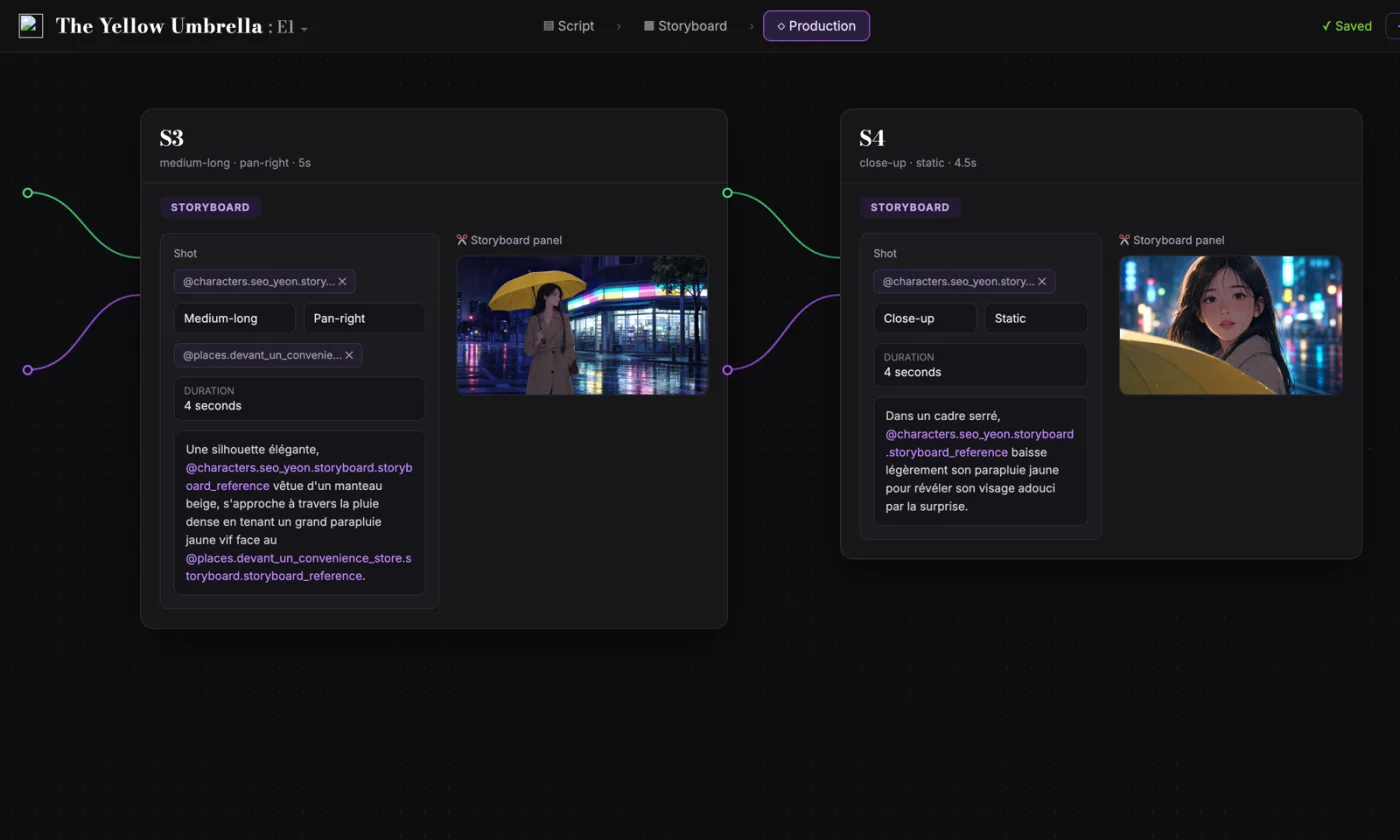
ScreenWeaver turns your screenplay into an automatic shot breakdown, then a storyboard. Characters, locations and references carry from shot to shot.
- $0, does not expire
- PDF and Final Draft export
- Mac, Windows, Linux, iPad
Script Eighths Calculator: the complete guide
It splits your script at each slugline, counts lines against the standard 55-line page, and reports every scene's length in production-style eighths that are never simplified.
For this workflow, the central problem is clear: measuring every scene in eighths with a ruler is slow, and skipping it leaves the schedule built on guesses. Left unresolved, this creates downstream friction and slower decisions. The practical target is a per-scene eighths table with totals and a shoot day estimate, ready to feed the breakdown and stripboard.
Limitation to keep in mind: It measures script length, not shooting difficulty; a 1/8 stunt can outweigh a 4/8 dialogue scene, so complexity still needs human judgment on the board.
Advanced workflow: Advanced teams export the CSV, add complexity and location columns, and use eighths per day as the running total when laying strips into shoot days.
Step-by-Step Workflow
- Paste the current shooting draft and confirm the scene count matches your own numbering before trusting the totals.
- Scan the per-scene eighths for outliers: any scene over a page deserves a look at whether it can split or shrink.
- Pick the pages-per-day tier that matches your crew, then compare the shoot day estimate against your calendar.
- Export the CSV into your breakdown sheet and re-run after each rewrite to track how the total moves.
Use Cases By Profile
- First AD: measure a full feature in seconds before committing days on the stripboard.
- Line producer: convert total eighths into shoot days at the pace the budget can actually pay for.
- Writer-director: spot which scenes carry the most page weight before locking the shooting draft.
Common Mistakes To Avoid
- Simplifying eighths to quarters or halves, which breaks quick addition on the stripboard.
- Treating eighths as shooting time instead of script length when planning a day.
- Measuring an early draft and never re-measuring the locked shooting script.
Professional Best Practices
- Flag every scene at 1/8 that involves stunts, VFX, or crowds; short scenes hide long days.
- Keep a running eighths-per-day tally when building days; 40 eighths is a common low-budget ceiling.
- Compare eighths totals between drafts to quantify how much a rewrite actually cut.
Treat this tool output as a decision support layer, not a replacement for authorship. Great scripts are remembered for specific choices, emotional precision, and clarity of dramatic movement. Tools help by removing noise so your energy can go where it matters: character, conflict, escalation, and payoff. If you review outcomes after each pass and keep an explicit log of accepted changes, your workflow becomes faster and more predictable from draft to draft. That consistency is exactly what professional collaborators value: fewer surprises, clearer rationale, and a script that evolves with intent.
Extended FAQ
What does 3/8 of a page mean in a script breakdown?
The scene occupies 3 of the 8 horizontal strips a screenplay page is divided into, roughly three inches of a printed page. It is the standard length unit on breakdown sheets and stripboards.
How is a script eighths chart used in scheduling?
Each scene's eighths go onto a strip, and the AD stacks strips into days until the day's total hits the crew's realistic capacity. The chart is the bridge between the script and the calendar.
Why do ADs use eighths instead of minutes?
Eighths can be measured from the page before anything is shot, and they add up cleanly across scenes. Minutes only exist after a cut; eighths exist at the breakdown stage, which is when the schedule gets built.
How many lines is one eighth of a page?
About 7 lines, since a standard Courier 12pt page holds roughly 55 lines and divides into 8 eighths. This calculator uses exactly that ratio, with a 1/8 minimum per scene.
Do page eighths work for TV scripts and shorts?
Yes. The unit is per page, so any screenplay-formatted document divides the same way. A half-hour episode of 30 pages is 240 eighths, and the same pages-per-day math applies.
Can I measure eighths from a Fountain file?
Yes. Paste the Fountain source directly; sluglines and forced scene headings starting with a period are both detected, and the line counting works the same as for plain screenplay text.
Frequently asked questions
It is one of 8 horizontal strips a screenplay page is divided into for scheduling. A 1/8 page script scene covers about one inch of the page, roughly 7 lines. ADs measure every scene this way because eighths add up cleanly across a shoot day.
Production convention keeps every measurement in the same /8 denominator so strips can be summed at a glance. 2/8 stays 2/8, and 4/8 stays 4/8. Writing 1/4 or 1/2 would force everyone to convert before adding scenes into a day.
It matches the ruler method closely for standard formatting, since Courier 12pt on US Letter yields about 55 lines per page. Unusual formatting, dense dual dialogue, or heavy parentheticals can shift a scene by an eighth, so treat borderline scenes as candidates for a manual check.
Neither directly. Eighths measure script length, which correlates with shooting effort. A 1/8 stunt scene can eat a full day while a 3/8 dialogue scene wraps in two hours. That is why schedules weigh eighths together with scene complexity.
It depends on the pace. At 5 pages per day, a common low-budget rate, a crew covers 40 eighths. Studio features shooting 2.5 pages per day cover 20. The pages-per-day selector above converts your total into shoot days at each tier.