Scene Numbering Tool
Turn a spec script into a numbered shooting script
Paste a spec script or Fountain draft and this free scene numbering tool turns it into a numbered shooting script, with scene numbers on both sides of every slugline the way production drafts are formatted. Built for writers, script coordinators, and ADs prepping a script for the shoot.
Spec scripts never carry scene numbers. Numbers are added when the script is locked for production, because every department indexes its paperwork by scene number: breakdown sheets, stripboards, call sheets, camera reports, editorial logs. Once locked, numbers do not shift. A new scene added between 12 and 13 becomes 12A, and a deleted scene becomes OMITTED with its number preserved, so the index survives every rewrite.
Everything runs in your browser. Your script never leaves the page and nothing is uploaded to any server.
Mark a scene as inserted to give it a letter tied to the previous scene number, or mark it omitted to drop the content while keeping the number.
- 1INT. KITCHEN - NIGHT
- 2EXT. BACKYARD - NIGHT
- 3INT. HALLWAY - NIGHT
- 4INT. BEDROOM - NIGHT
The first scene cannot be marked inserted: a lettered scene needs a preceding number to attach to.
Numbered shooting script
1  INT. KITCHEN - NIGHT  1

Maya checks the lock on the back door. Twice.

2  EXT. BACKYARD - NIGHT  2

A motion light snaps on. Nothing there.

3  INT. HALLWAY - NIGHT  3

Maya moves toward the bedroom, phone in hand.

4  INT. BEDROOM - NIGHT  4

She stops. The window is open.
How it works
The tool scans your text for scene headings (INT., EXT., EST., I/E, or Fountain forced sluglines starting with a period), strips any numbers from a previous pass, and assigns sequential numbers from your chosen start. Numbers print on both sides of the heading, the standard shooting script format. Scenes you mark as inserted get letter numbers (12A, or A12 if your production uses the prefix style) attached to the previous scene, and scenes you mark omitted keep their number with the heading replaced by OMITTED. The Fountain download writes each number in the #12# syntax so it survives a round trip through Fountain apps.
Screenplay scene numbering rules, explained
The core rule of shooting script scene numbers is that they lock once and never move. The moment a production locks the script, the AD builds the stripboard from those numbers, the script supervisor logs coverage against them, and editorial names bins after them. Renumbering after lock would silently break every one of those documents, which is why no scene numbering tool should ever shift existing numbers to make room for a new scene.
That is what A scenes exist for. In screenplay numbering convention, a scene added after scene 12 becomes 12A (some productions write A12, both styles are in active use), the next insert becomes 12B, and scene 13 stays exactly where it was. An omitted scene in a screenplay works the same way in reverse: the heading is replaced with OMITTED but the number stays in the sequence, so a department flipping through the draft knows the scene is gone rather than missing.
Converting a spec script to a shooting script is mostly this numbering pass plus the production headers that follow. If you add scene numbers to a script before it is truly locked, expect to redo the pass, which is fine at this stage: run the tool as many times as you like while the draft moves, then lock scene numbers when the script goes to the departments and switch to A scenes and OMITTED markers for every change after that.
Who this is for
- Script coordinators: number the locked draft in seconds and issue revisions with A scenes and OMITTED markers instead of renumbering, so every department's paperwork stays valid.
- ADs and line producers: get a numbered shooting script to build the stripboard and breakdown sheets from, even when the writer only delivered a spec draft.
- Writer-directors on small crews: learn the numbering convention on your own script before the shoot, so your call sheets and shot lists reference scenes the same way a professional set would.
From script to shots,in one place.
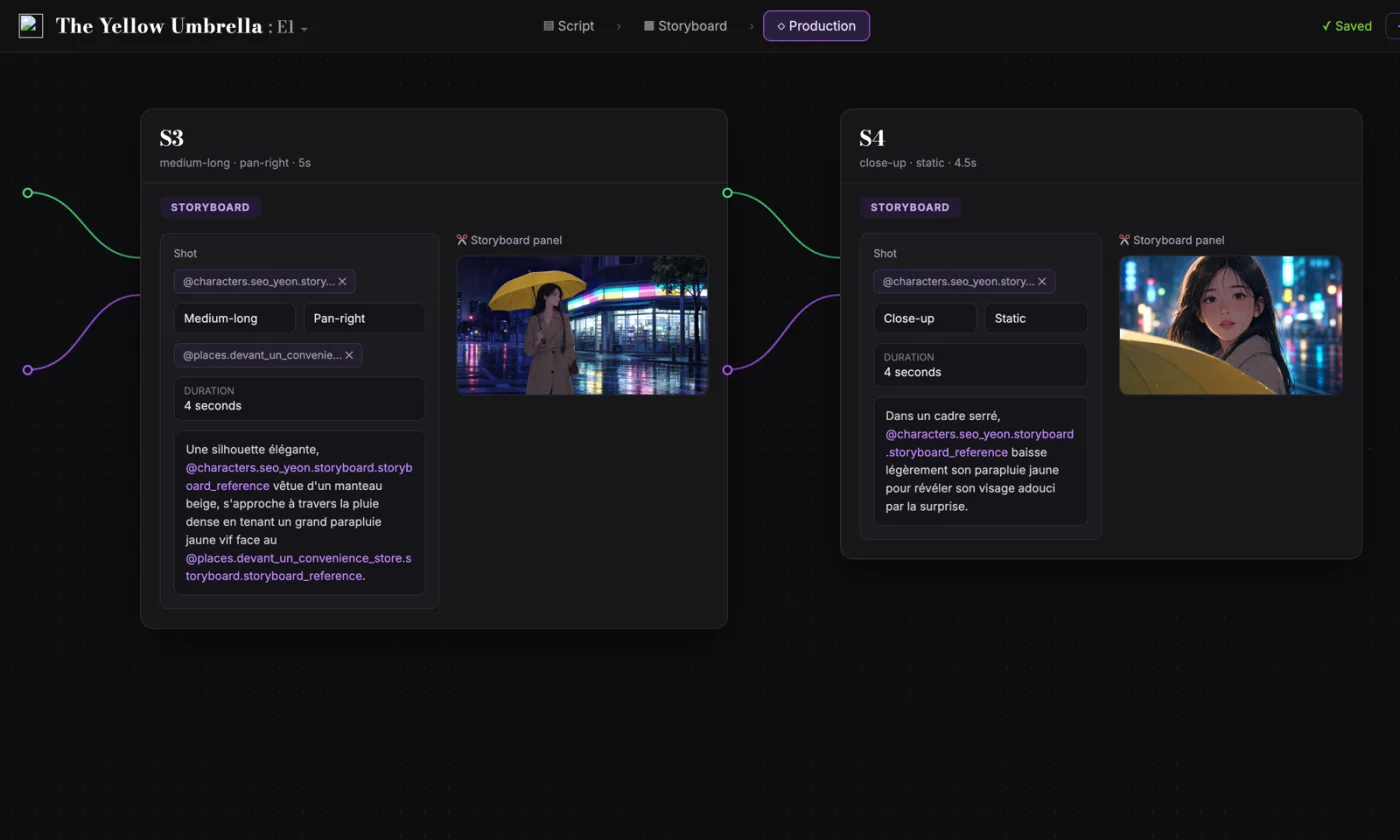
ScreenWeaver turns your screenplay into an automatic shot breakdown, then a storyboard. Characters, locations and references carry from shot to shot.
- $0, does not expire
- PDF and Final Draft export
- Mac, Windows, Linux, iPad
Shooting Script Converter: the complete guide
It detects sluglines in pasted Fountain or plain screenplay text, assigns production scene numbers on both sides of each heading, and lets you mark scenes as inserted (12A style) or omitted before exporting as text or Fountain.
For this workflow, the central problem is clear: spec scripts carry no scene numbers, and numbering by hand (or renumbering after a rewrite) breaks every breakdown, stripboard, and call sheet that referenced the old numbers. Left unresolved, this creates downstream friction and slower decisions. The practical target is a correctly numbered shooting script where inserted scenes get letter numbers and cut scenes read OMITTED, so the scene index stays stable through every revision.
Limitation to keep in mind: It numbers whatever headings it can detect, so malformed sluglines (lowercase, missing INT/EXT prefix, no forced period) are skipped, and it does not manage colored revision pages or track changes between drafts.
Advanced workflow: Coordinators run the tool at lock, archive the numbered draft as the reference copy, then re-run it on each revision using inserted and omitted marks so the new draft can be diffed against department paperwork without a single number moving.
Step-by-Step Workflow
- Paste your spec script or Fountain draft and confirm the detected scene list matches your actual sluglines before touching any options.
- Set the first scene number and pick your number style, then choose 12A or A12 for inserted scenes to match your production's house style.
- Mark late additions as inserted and cut scenes as omitted, and check that every untouched scene kept its original number.
- Export the .txt for printing and distribution, or the .fountain to keep working in Fountain apps with #12# scene numbers intact.
Use Cases By Profile
- Script coordinator: number the locked draft and issue lettered A scenes on revisions instead of renumbering the whole script.
- First AD: pull a numbered shooting script from a spec draft so the stripboard and breakdown sheets share one scene index with the script.
- Writer-director: convert your own spec script to a shooting script and learn the numbering conventions your crew will expect on set.
Common Mistakes To Avoid
- Renumbering the whole script after a cut instead of marking the scene OMITTED, which invalidates every department's paperwork.
- Numbering the draft before it is actually locked, then treating those disposable numbers as the production index.
- Mixing 12A and A12 styles across revisions of the same production, which makes lettered scenes ambiguous on call sheets.
Professional Best Practices
- Lock the script only when departments start building paperwork from it; before that moment, regenerate numbers freely on every draft.
- Keep OMITTED scenes in the distributed draft rather than deleting them, so nobody wastes a morning hunting for a scene that no longer exists.
- If a rewrite adds several scenes in one gap, letter them in story order (12A, 12B, 12C) so the stripboard sorts them correctly.
Treat this tool output as a decision support layer, not a replacement for authorship. Great scripts are remembered for specific choices, emotional precision, and clarity of dramatic movement. Tools help by removing noise so your energy can go where it matters: character, conflict, escalation, and payoff. If you review outcomes after each pass and keep an explicit log of accepted changes, your workflow becomes faster and more predictable from draft to draft. That consistency is exactly what professional collaborators value: fewer surprises, clearer rationale, and a script that evolves with intent.
Extended FAQ
Do spec scripts have scene numbers?
No. A spec script is a selling and reading document, and numbers would only add clutter. Scene numbers belong to the shooting script, where they exist so departments can index breakdowns, schedules, and reports against specific scenes.
How do I lock scene numbers in my script?
Locking is a decision, not a file format: at the start of pre-production you declare a numbered draft the locked script, distribute it, and from then on every change uses A scenes and OMITTED markers instead of renumbering. This tool produces that numbered draft.
Why do scene numbers appear on both sides of the heading?
So the number is visible no matter how the page is held, marked up, or photocopied on set. Left and right placement is the standard shooting script format used by Final Draft, Movie Magic, and studio production offices.
How are scenes numbered when a scene is added between 12 and 13?
The new scene becomes 12A (or A12 in the alternate style), attached to the preceding number. A second scene added in the same gap becomes 12B. Scene 13 keeps its number, which is the whole point of the convention.
Can I renumber scenes after the script is locked?
You can, but you should not: every stripboard, breakdown sheet, and camera report built from the old numbers becomes wrong at once. Production convention is to add lettered scenes and OMITTED markers so existing paperwork never has to change.
What counts as a scene heading for numbering?
Lines starting with INT., EXT., EST., INT./EXT., or I/E, plus Fountain forced sluglines that start with a single period (like .MONTAGE). Action lines, transitions, and dialogue are never numbered.
Frequently asked questions
At script lock, when pre-production starts in earnest. Spec drafts circulate without numbers; the shooting script adds them so breakdowns, schedules, and call sheets can all point at the same scene index. Before lock, numbers are disposable and you can regenerate them freely.
It is a scene inserted after scene 12 during a revision made after the script was locked. Lettering the new scene instead of renumbering keeps scene 13 and everything after it stable, so existing breakdowns and schedules stay correct. A second insert in the same spot becomes 12B.
A scene that was cut after the script was locked. The heading is replaced with OMITTED but the scene number remains, which tells every department the scene was deliberately removed rather than lost, and keeps the numbering sequence intact for the scenes around it.
Both conventions exist. 12A (letter after the number) is the most common style in US production and is what Final Draft produces by default; some productions and UK shows prefer A12. Pick one style for the whole production and stay with it. This tool supports both.
Fountain writes the scene number between pound signs at the end of the heading, like INT. KITCHEN - NIGHT #12#. Letters are allowed, so #12A# is valid. The .fountain download uses this syntax, so apps like Highland or Slugline will read your numbers correctly.
Related tools
Scene Extractor
Extract scene headings from screenplay text.
Script Eighths Calculator
Measure every scene in page eighths from pasted script text.
Shooting Schedule Calculator
Estimate how many shoot days your script needs.
Script Draft Compare
Scene aware diff between two screenplay drafts: added, omitted, and changed scenes.
You can also browse the full library on /tools.
Core blog guides
- Idea → first draft (process hub)
- Screenplay format guide 2026
- Hidden costs of “free” software
- Affordable software & TCO
- Revision passes (structure → dialogue)
Film techniques
Film techniques to explore
Each one with a short clip, a screenplay excerpt and the shot list line.