
The first draft dreamed in helicopter shots, crowd scenes, and a third-act fire. The budget said no. Most writers hear "no" as creative defeat. Producers hear it as Tuesday. A low-budget screenplay rewrite is not a punishment pass. It is the phase where story survives contact with math: cast days, location fees, night premiums, stunt insurance, and the number of meals you owe a crew.
This article teaches you to rewrite for constraints without sanding your voice flat, using the same structural clarity you would bring to a dialogue polish, but aimed at line items.
How It Works: Constraint-First Revision
Production constraints are creative parameters once you name them. A cap of eight speaking roles, six locations, zero night exteriors, and no minors on set are not arbitrary cruelty. They are the sandbox. Your rewrite maps every expensive element to a story function, then asks whether a cheaper element can perform that function.
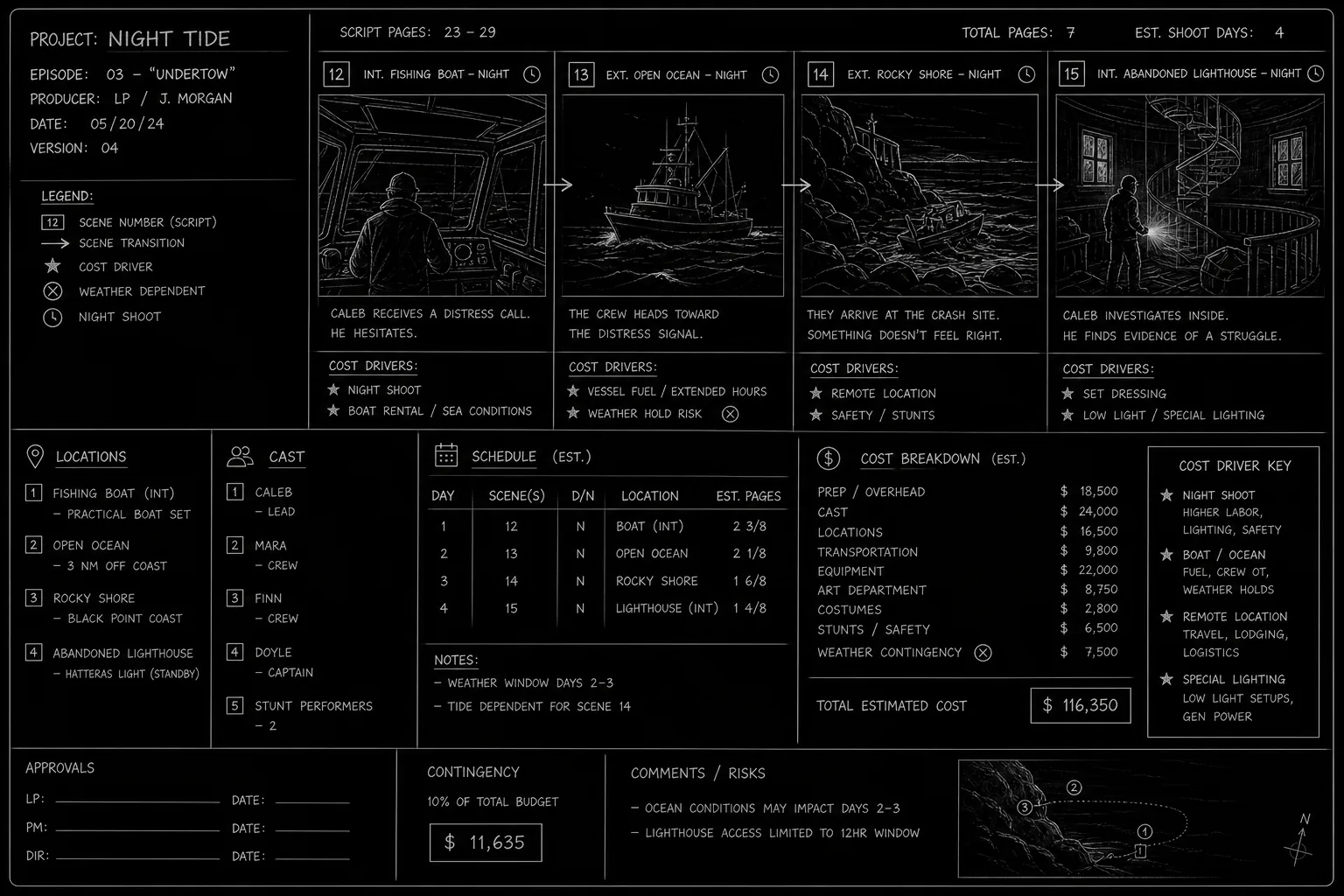
Start with a script breakdown mindset before you change a word. Tag scenes by cost drivers: cast size, company moves, special effects, period dressing, animals, vehicles. The top ten percent of scenes usually carry half the budget risk. Rewrite there first.
For VFX-specific trimming, cross-read writing VFX-heavy scripts on a budget. For contained storytelling models, see bottle episode on budget.
Platform and Use-Case Sections
Independent Features
Indie finance often locks budget before final polish. Your rewrite must preserve festival viability: clarity, performance spaces, one or two showcase scenes investors can picture on screen without VFX fantasy.
Micro-Budget and DIY
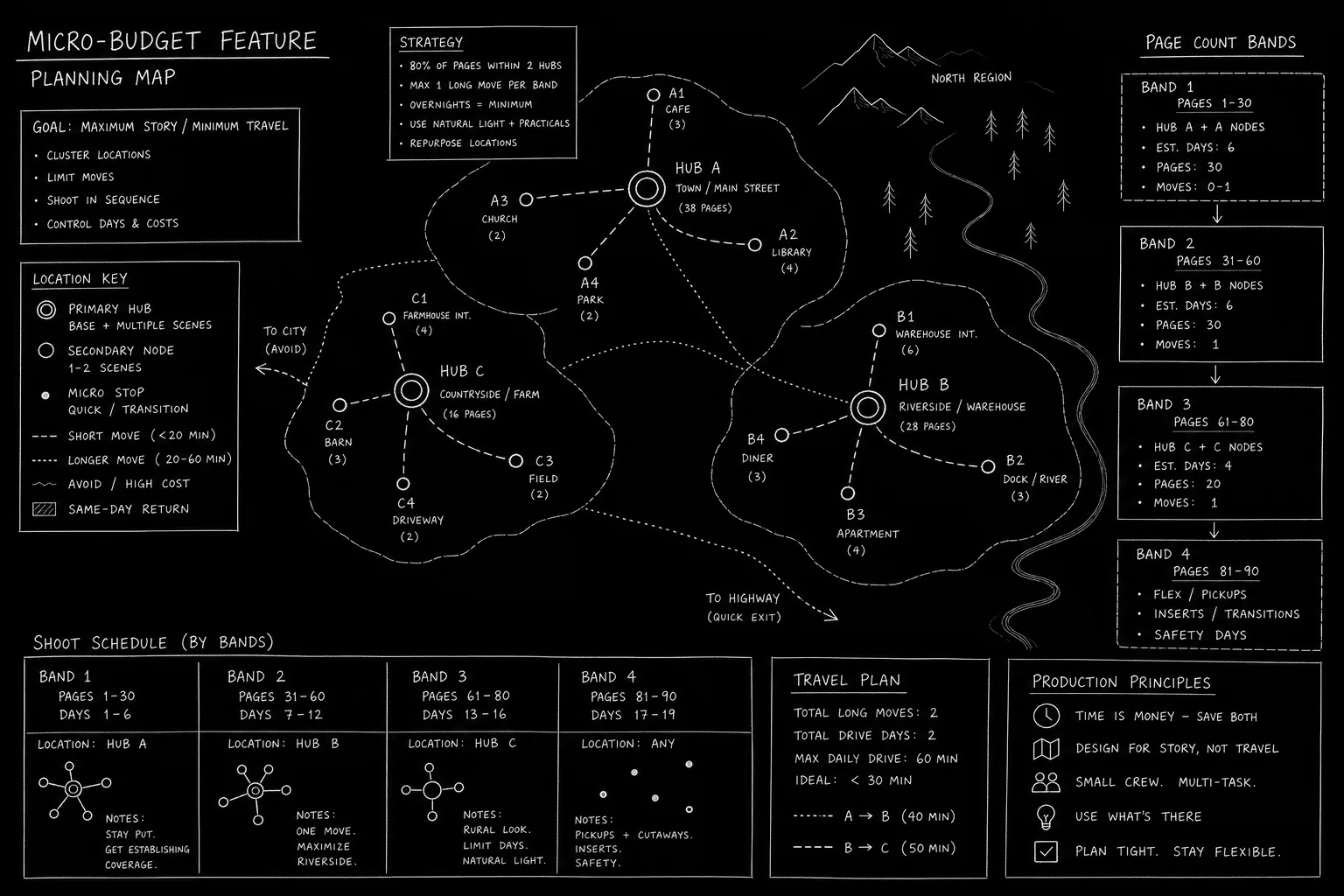
Sub-$100K projects treat the screenplay as a shooting schedule in prose. If a scene requires a company move, it must earn more than two pages of essential plot.
Television (Lower Licensed Budget Tiers)
Cable and streaming have episode cost bands. A rewrite that removes a recurring set can save an entire pickup conversation. Think in standing sets and reducible guest cast.
Proof-of-Concept Shorts
Shorts used to sell features need scale translation: prove tone and performance in a cheap container that implies the larger world without building it.
Relatable Scenario: The Wedding Set Piece
Your third act is a 200-guest wedding with a public confrontation. The budget supports twelve extras and a church you have for Saturday only. Rewrite: make the confrontation backstage at a courthouse wedding. Same emotional beat, twelve people max, one location you control. The audience still feels public humiliation because a streamed video leak carries the crowd digitally. You removed bodies, not stakes.
Relatable Scenario: The Multi-City Montage
Characters chase clues through Paris, Berlin, and Prague. You have one passport and a friend's apartment in one city. Rewrite the chase as documentary residue: passport stamps, mismatched time zones on video calls, a voice that lies about which city they are in. Geography becomes information, not travel budget.
The Trench Warfare Section: Common Rewrite Mistakes
Cutting only action, never talk. Dialogue-heavy scenes still cost cast days. Trim cast count, not just explosions.
Replacing visuals with narrator voice-over. VO explaining removed set pieces feels cheaper than showing small behavior.
Ignoring sound design. Off-screen sound can replace frame without feeling absent. Write sound cues intentionally.
Keeping "small" scenes that still company-move. Two one-page scenes in different buildings are one expensive day.
Step-by-Step: The Constraint Rewrite Pass
Step 1 - Run a cost-tag pass without rewriting
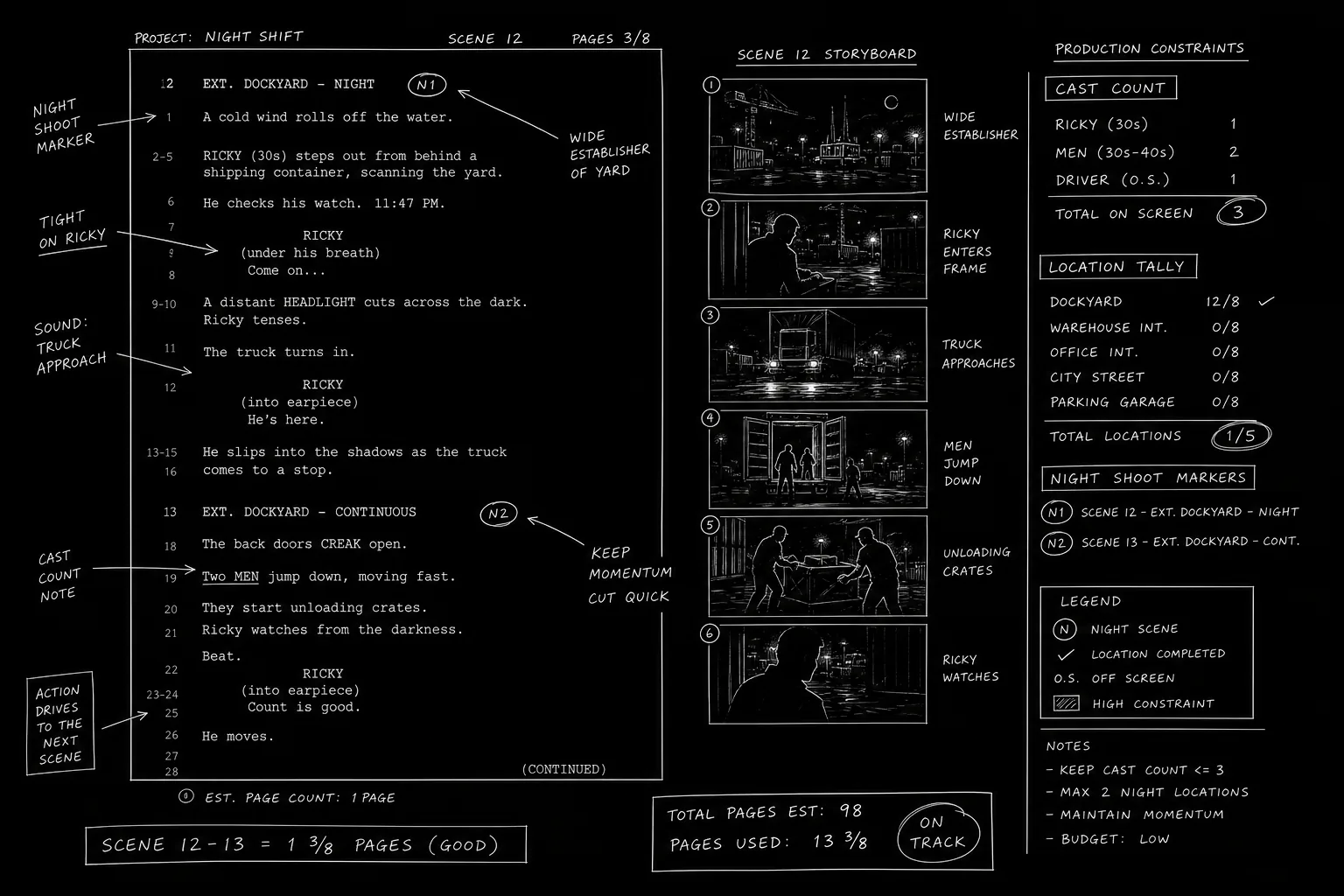
Mark each scene: CAST#, LOCS, NIGHT?, VFX?, STUNT?. Do not fix yet. Quantify pain.
Step 2 - Rank scenes by story ROI
Score each expensive scene 1-5 for plot necessity. Fives survive; twos get merged or cut.
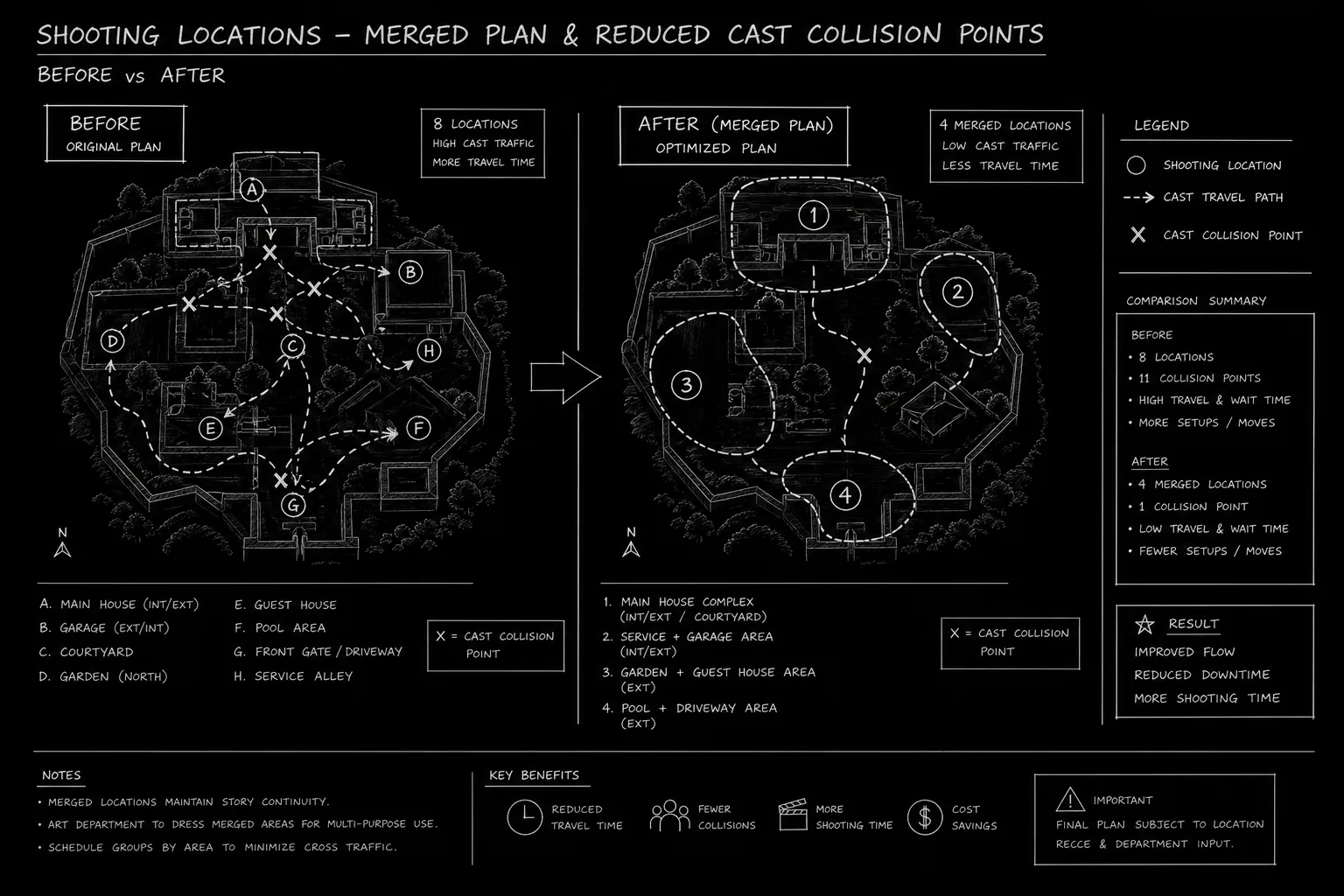
Step 3 - Consolidate locations
Combine scenes that share emotional purpose into one slug. Two kitchen arguments become one argument with a midpoint turn.
Step 4 - Reduce cast collisions
Examine scenes with six or more speaking parts. Can two roles merge? Can exposition move to a phone call with one person in frame?
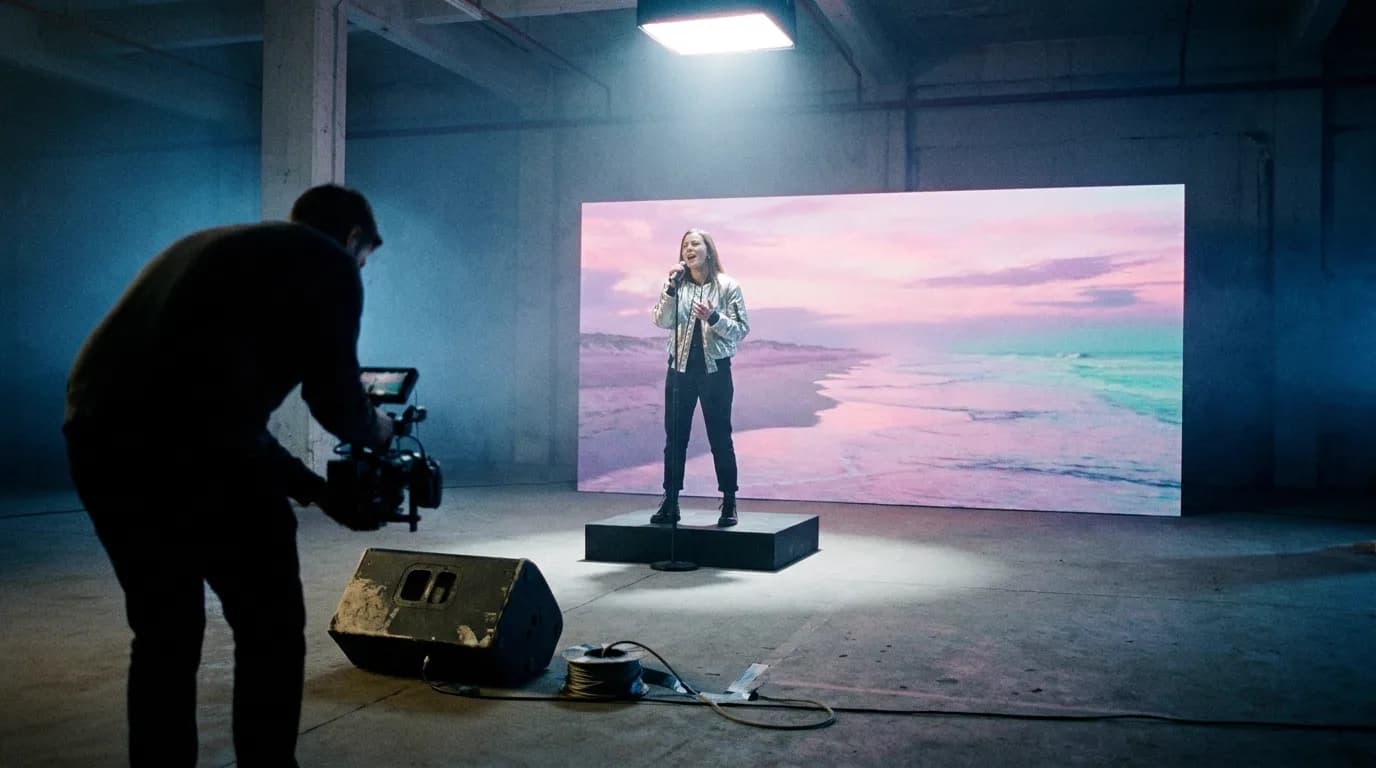
Step 5 - Day-for-night and off-screen action
Move night exteriors to interiors with motivated lighting. Stage violence or spectacle off-screen with sound and reaction, not missing spectacle.
Step 6 - Re-read for tone whiplash
Budget cuts can make the script feel small. Add one anchoring scene with rich character behavior so the piece still feels cinematic in performance.
[YOUTUBE VIDEO: Producer and writer walkthrough rewriting one expensive set piece into a two-location version, comparing dramatic impact before and after constraint mapping.]
Try it free
Try Screenweaver for free on your script
It is free. Import your existing project, get a clearer view of your outline, and regain control of your story structure in minutes.
Start FreeOperational Requirements: Documents, Meetings, and Non-Negotiables
Breakdown export: Deliver a revised script with a simple scene report: cast count per scene, INT/EXT, DAY/NIGHT. Add scene lengths in eighths, the unit the schedule is built in, which a screenplay eighths calculator can pull straight from your page counts. Line producers forgive art if math is honest.
Revision color discipline: Constraint rewrites often coincide with production lock. Use clean revision color workflow so departments know which pages changed.
Director alignment: Some cuts affect visual grammar. If you remove a mirror scene that paid off a motif, replace the motif elsewhere.
Insurance and safety: Stunts, weapons, water work drive cost. Rewrite toward implication.
Union and schedule realities: SAG day counts matter. A rewrite that loops actors across fewer company days is gold.
| Expensive Element | Common Rewrite Strategy |
|---|---|
| Crowd scenes | Radio/TV/news voice, off-screen |
| Multiple cities | One city, varied districts |
| Flashback period | Dialogue memory, one prop |
| Car chase | Static tension, failed start |
| Finale explosion | Power outage, silent aftermath |
Outcome: What a Constraint-Aligned Script Achieves
A successful low-budget rewrite still reads like a movie, not a play with fewer chairs. Producers see shootability: fewer red flags on the breakdown, clearer cast offers, realistic day counts. Directors see performance opportunities instead of impossible geography.
The story often improves because constraint kills ornament. Scenes that survived the cut are the ones that matter.
Why It Matters: Hope Budget vs Design Budget
The old way: Write the maximal version, assume "we will figure it out on the floor," treat producer notes as hostility.
The new way: Draft expansively if you must, then run a dedicated constraint pass that treats money like a formal note. Design the shootable version on purpose.
Hope is not a line item. Intentional limitation is how indie classics get made without apologizing for their size.
Conclusion
Low-budget rewriting is craft, not compromise. Tag cost, rank story ROI, consolidate slugs, protect tone with performance-rich anchors. The goal is not the cheapest script. It is the best film this budget can honestly become.
When you finish the pass, pair your breakdown with managing scene numbers for locked revisions before you send pages to a line producer. Run the numbers first. Then make every cut hurt the budget, not the spine.
Bring your director into the constraint pass early if they are attached. Some visual ideas that look expensive on paper are cheap with one clever blocking choice; others that look small require crane days. A thirty-minute production meeting can save thirty pages of wrong rewriting.
Measuring Success After the Pass
Re-run your cost tags on the revised draft. Compare totals: cast days, location count, night scenes, VFX mentions. Share the delta with producers. A script that drops from fourteen locations to seven with the same plot summary is a script that gets financed faster.
If a producer asks "can we put this back," you should know exactly what each restored element costs in days and dollars. That answer is professionalism.
Keep a constraint changelog when you send revised pages: "Merged scenes 42-44; removed crowd; moved night exterior to day interior kitchen." Producers trust writers who speak line producer language. That trust converts to notes you actually want: performance notes, not panic budget notes.
Final Step
Build your next script with Screenweaver
Move from ideas to production-ready pages faster with timeline-native writing and AI-assisted story flow.
Try Screenweaver