
Horror on the page is not only what you describe. It is what you refuse to describe, where you place silence, how you pace reveals, and how you keep track of what the audience knows versus what characters know. That is logistics as much as poetry.
Software cannot invent dread. It can make dread easier to engineer: consistent slug discipline for location threat, fast search for motif words, stable exports for reads that must feel clean even when the content is not.
Here is why that matters: horror rewrites often chase micro-timing. A line moved three seconds later on screen is a different film in your head; on the page, it is a line moved. Your tool should make that movement cheap so you can explore the uncanny valley of “almost right” without paying a navigation tax.
Dread is a sequence problem. Sequences are a software navigation problem.
Free tool: use the Slugline Formatter to clean up and standardize your scene headings.
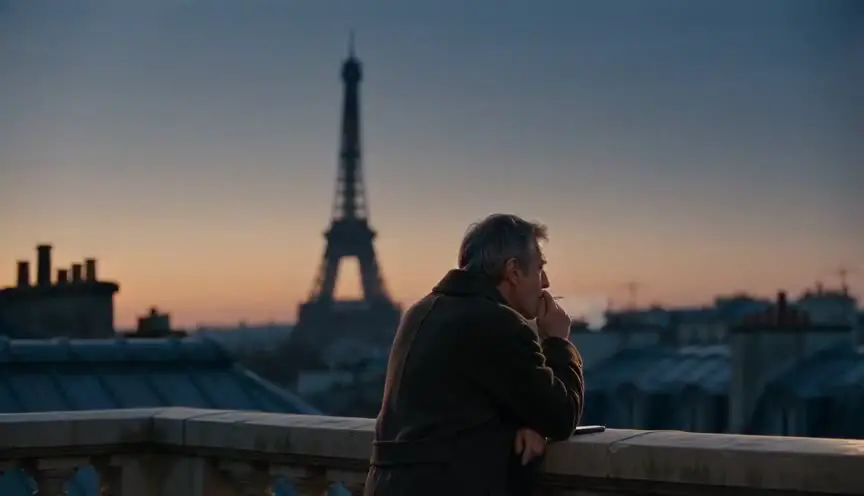
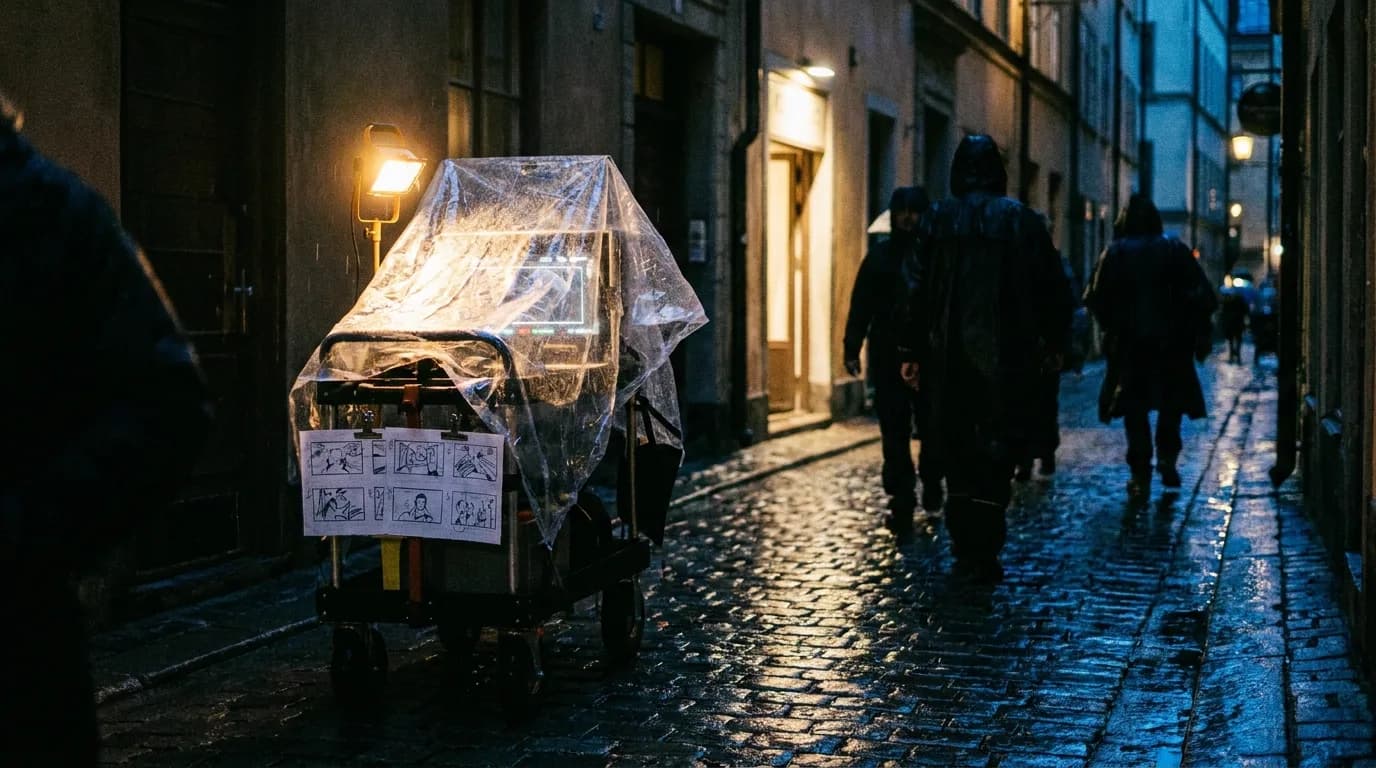
Cinematic workflow frames
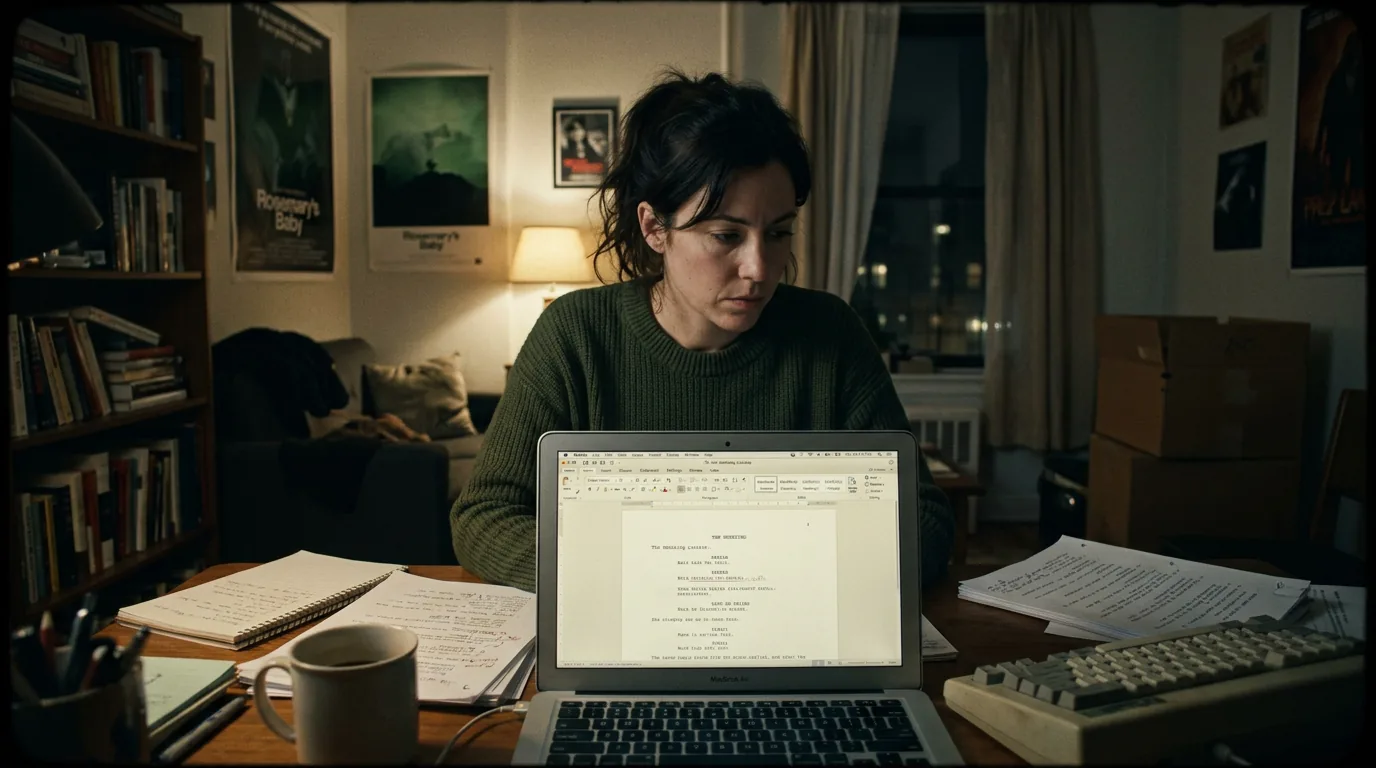
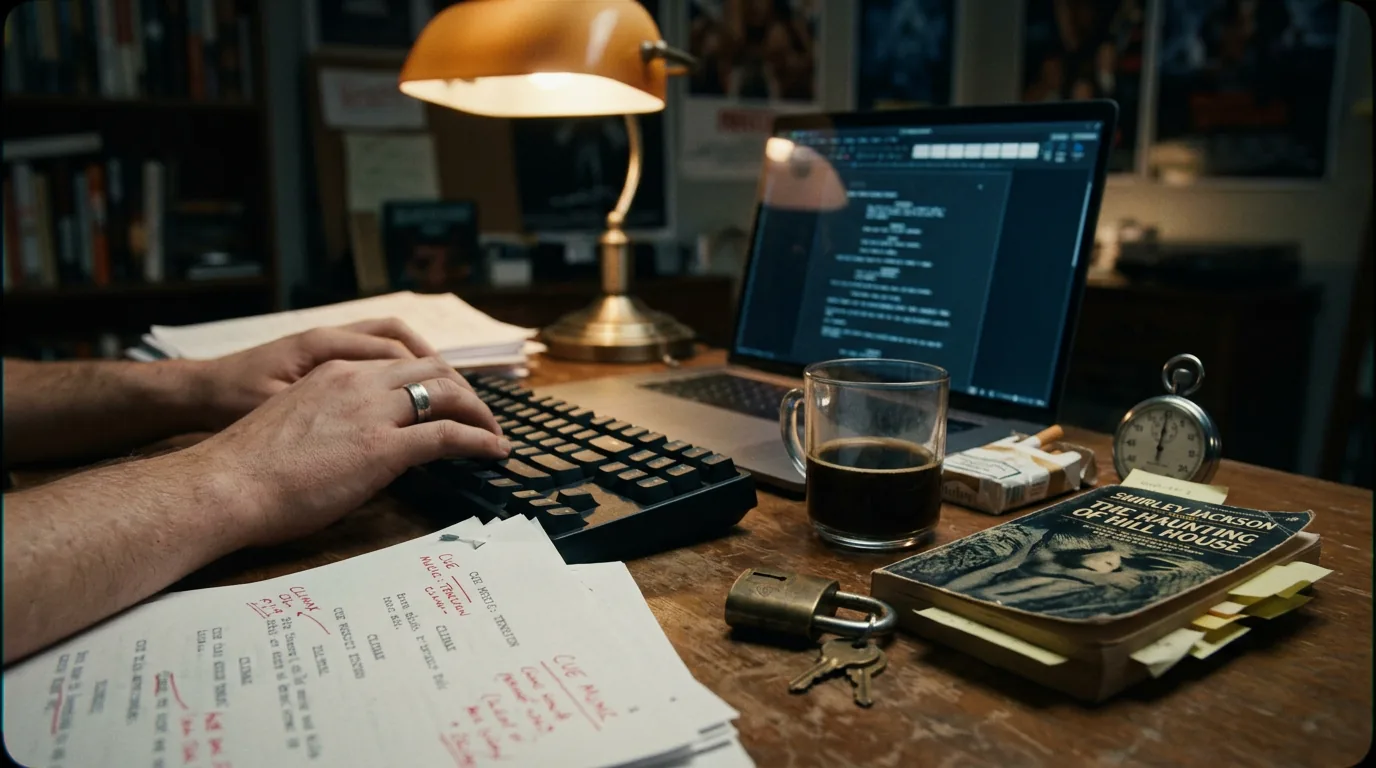
These two visuals work as a pair: the first shows Cinematic workflow still, first angle, 35mm film grain, and the second shifts to Cinematic workflow still, second angle, 35mm film grain - compare them briefly, then move on.
How Horror Differs From “General” Screenwriting Tools
You still need Courier and correct elements. You also need memory: recurring objects, sound motifs, false scares versus real threats, and rules for your monster or mythos.
| Horror Workflow Need | Why It Shows Up | What Helps |
|---|---|---|
| Canon / rules | Mythology coherence | Tags, series bible notes |
| Motif tracking | Subconscious dread | Global search, keyword maps |
| Reveal timing | Information control | Beat-level notes tied to scenes |
| Gore discipline | Avoid accidental excess | Comment discipline, revision passes |
| Cold read clarity | Suspense survives layout | Clean PDF export |
How to Start Testing a Stack for Horror
Step 1 - Draft a five-page sequence with at least two withheld reveals and one intentional silence beat written as action, not parenthetical whispering.
Step 2 - Track an object motif across those pages with search. If search is painful, your motif will rot by page sixty.
Step 3 - Export PDF and read in dim light on a phone. Horror is consumed on phones in bad lighting sometimes. Layout matters.
Step 4 - Simulate a rewrite where you move a reveal earlier. Confirm scene headings and scene numbers still make sense for production-minded readers.
Step 5 - If you have a monster rule set, store it in a pinned note block you cannot accidentally delete.
Step 6 - If collaborating, run a permission test: who can touch mythology notes versus scene text?
Step 7 - Schedule monthly “lore audits” so episode three does not contradict episode one silently.
As discussed in our guide on Chekhov’s gun and tracking setups, horror lives in setup discipline.
Platform Notes: Elevated Horror, Slashers, Supernatural, Psychological
Elevated horror often leans on subtext and ambiguity; your software should support dense marginal notes without turning the script into a novel. Slasher traditions may track body count and set-piece geography explicitly. Supernatural horror needs rule tracking. Psychological horror needs unreliable narration discipline - sometimes scene labeling strategies help you remember what is “real” in draft versus what the protagonist believes.
Operational Reality: Sides, SFX, and Intimacy Coordination
Horror shoots can involve stunts, intimacy, minors, animals, depending on story. Your screenplay software will not replace safety processes, but clean scene breaks and clear revision histories help coordinators trust you. Export discipline is respect.
Outcomes: What You Want After Six Weeks
You can locate any motif phrase in seconds. Your mythos doc matches the script. Your PDFs do not frighten production because of formatting. Your collaborators stop asking which draft is real.
Why It Matters: Old Way vs Improved Way
The old way hides lore in scattered notebooks. The improved way binds lore to scenes. The old way treats jump scares as isolated moments. The improved way treats them as rhythm nodes in a pattern. Software does not create pattern, but it makes pattern visible enough to edit.
Trench Warfare: Horror Writers Get This Wrong
They over-describe the monster early because anxiety craves certainty. Certainty kills mystery.
They use italics like a crutch for dread. Italics are not a genre.
They forget geography and trap readers in impossible spatial logic. Horror needs believable space to break it.
They confuse gore with fear. Gore is a spice; fear is appetite.
They lose track of who knows what when. Information asymmetry is the engine.
They ignore sound. Horror is half audio imagination.
They rewrite tone without rewriting causality. Tone cannot fix broken logic.
They hoard drafts emotionally. Horror drafts are often disturbing; hoarding becomes avoidance.
They skip table reads because scary scenes feel silly aloud. Table reads reveal rhythm lies.
They let collaboration blur mythos authority. Someone must own canon.
If your script’s dread depends on confusion, your file organization cannot depend on confusion too.
For external craft grounding, see <a href="https://www.oscars.org/nicholl/about/screenwriting-resources" rel="nofollow">Nicholl Fellowship screenwriting resources</a>.
[YOUTUBE VIDEO: Horror rewrite pass focusing on information release curve - what the audience learns scene by scene]
Fear Engineering: The Practical Layer Most Writers Skip
A lot of horror advice talks about atmosphere. Atmosphere matters. But atmosphere without control becomes fog. On the page, fear is engineered through controlled information release. Who knows what, when they know it, and how cleanly the reader can track that sequence. Good software will not generate terror for you. It will help you maintain that sequence under rewrite pressure.
Picture a draft where your reveal order changes three times in one week. In one version, the audience learns the house history early. In another, that information lands at midpoint. In a third, you hold it until the climax. If your workflow is loose, old breadcrumbs stay in earlier scenes and spoil tension. If your workflow is disciplined, you can find and adjust every breadcrumb quickly.
This is where horror writing resembles editing more than inspiration. You are cutting and placing emotional cues across time. A search bar, reliable notes, and revision snapshots become creative tools, not admin features.
Dread is born in the gap between suspicion and confirmation. Your software should help you tune that gap precisely.
Scenario: Possession Story With Competing Rule Sets
Sara is writing a possession thriller. Early drafts imply one set of supernatural rules: objects move only near mirrors, voices only appear at night, and physical harm escalates after a warning pattern. Midway through revision, she upgrades stakes and adds daytime manifestations. Great for pace, bad for coherence. Suddenly earlier scenes read like continuity errors.
She solves it by creating a strict rules ledger tied to scene IDs. Every rule has status: active, revised, retired. When a rule changes, she runs a targeted search pass on impacted motifs. What used to be random cleanup becomes an intentional system. The script regains authority because the world behaves consistently, even when characters do not.
Try it free
Try Screenweaver for free on your script
It is free. Import your existing project, get a clearer view of your outline, and regain control of your story structure in minutes.
Start FreeScenario: Slasher Geography Collapse
Another writer builds a slasher around an abandoned resort. Draft one is readable. Draft three adds new kill sequences and chase routes. The geography quietly breaks: characters teleport, doors appear where none existed, and readers lose orientation. Fear drops because confusion is spatial, not emotional.
The fix is painfully simple: maintain a location map note tied to scene headings. If a chase changes, location references are updated in the same pass. Horror needs believable physical logic before it can break that logic for effect. Readers forgive grotesque events. They do not forgive impossible blocking unless impossibility is the point.
Scenario: Psychological Horror and Unreliable Perception
In psychological horror, uncertainty is intentional. But intentional uncertainty needs clear authorship. If even the writer cannot tell which scenes are objective, subjective, or contested memory, the script feels sloppy instead of unsettling.
A robust workflow labels perception mode in internal notes, even if those labels never appear in the final page. During rewrite, you verify that each ambiguity has narrative purpose. If ambiguity does not change character cost or audience interpretation, it may just be noise.
For related craft context, writing dark night of the soul helps map emotional collapse without losing story direction.
Workflow Parameters That Save Horror Drafts
| Parameter | Baseline | Horror Impact |
|---|---|---|
| Rule ledger | One canonical note with versioned updates | Keeps mythos coherent under rewrites |
| Reveal log | Each reveal tracked by scene ID | Prevents accidental spoilers |
| Motif audit cadence | Bi-weekly during drafting | Stops setup/payoff drift |
| Export QA | Read PDF on desktop and phone | Protects rhythm in real reading conditions |
| Sound cue pass | Dedicated pass before polish | Preserves auditory dread architecture |
These are small controls. They produce large stability.
Trench Warfare, Expanded: Failure Modes and Hard Fixes
Many beginners treat monster design as the center of horror. They spend days refining appearance, taxonomy, and symbolism while neglecting sequence design. Then the script feels pretty but inert. The fix is to design fear beats first. Appearance choices should support those beats, not replace them.
Another failure mode is jump-scare inflation. Writers add louder, faster scares when tension is weak. This works once. Then the audience adapts and stops flinching. Better approach: vary dread textures. Use anticipation, silence, moral discomfort, and delayed consequence. Software helps by making beat spacing visible. If every scare sits on predictable intervals, you can see it and reshape it.
There is also the "overwritten action" trap. Writers try to direct camera and emotional response in dense blocks. Horror pacing then suffocates. A cleaner script gives the reader movement and implication. Fear blooms in what the reader completes mentally.
Collaboration introduces another risk. Notes from producers, co-writers, and directors can pull the script in incompatible tonal directions. If note threads are not tied to scenes, changes become contradictory. Keep notes anchored. Resolve conflicts explicitly. Horror tone cannot survive unresolved note clutter.
Writers also underestimate recovery passes after major structural edits. Move one reveal, and ten downstream assumptions may break. Schedule recovery as part of the edit itself. Do not treat it as optional cleanup. Optional cleanup never happens.
If the world rules are loose, every scare feels negotiable. Negotiable fear is weak fear.
Operational Reality: Why Professionals Care
When horror moves toward production, departments need clarity fast. Effects teams need timing cues. Sound departments need intent. Coordinators need clean scene boundaries. Your script is the first integration point. If it is coherent, collaboration accelerates. If it is chaotic, fear becomes expensive in all the wrong ways.
For the handoff side, exporting production PDF and FDX explains how formatting discipline prevents avoidable friction once your draft leaves your desk.
Unique Visual Prompt Blocks
The "Dread Economy": Managing Suspense as a Resource
Suspense is not a feeling; it is a resource you spend over 90 minutes. If you spend it all in the first act, your finale feels like an action movie. If you hoard it too long, the audience gets bored. Professional horror writers manage this "dread economy" by tracking the distance between a question and its answer.
If you introduce a mysterious sound in Scene 12, when do we see the source? If the gap is too long, the audience forgets. If it is too short, there is no tension. Software that allows you to tag and visualize these "suspense loops" helps you find the dead zones in your script. You can see where you have too many open loops (confusion) or too few (boredom).
Horror is the art of the open loop. Your job is to close them at exactly the right speed.
The "Atmosphere vs Action" Balance: Writing the Unseen
Horror on the page is often a battle between atmosphere (the feeling of dread) and action (what actually happens). If you over-write the atmosphere, the script becomes a novel and the pace dies. If you over-write the action, the dread vanishes and it becomes a generic thriller.
Writers manage this by using "atmospheric anchors." These are short, punchy lines of action that imply a mood without describing every shadow. "The air is cold. Too cold." or "Silence, heavy as wet wool." These lines do more work than a paragraph of adjectives because they leave room for the reader’s imagination. Software that allows you to see your "action-to-dialogue ratio" can help you spot where the script is getting too talky or too dense.
Dread is not a description. It is an implication.
Scenario: The "False Sense of Security" Beat
A successful horror script needs moments of relief. If the audience is terrified for 90 minutes straight, they become numb. You need to build "safety pockets" where the characters (and the audience) can catch their breath. This makes the next scare land twice as hard.
By mapping these "safety beats" alongside your "fear beats," you can see the emotional wave of the script. If your safety beats are too long, the tension evaporates. If they are too short, the audience never relaxes enough to be truly surprised. This is the "heartbeat" of horror writing, and it is something you can tune with structural visibility.
Scenario: The "Too Much Light" Revision
A common note in horror development is "we see the monster too much." This usually means the writer used the monster to solve a pacing problem instead of building tension. In a structured rewrite, you can identify every "monster appearance" and ask: does this reveal new information, or is it just a jump scare?
By replacing two appearances with "near-misses" or "auditory clues," you preserve the monster’s power for the finale. This kind of surgical edit is easy when your motifs are tagged. It is a nightmare when you have to scan 100 pages manually.
Diagnostic Passes That Improve Fear Without Adding Noise
When a horror draft feels flat, beginners often add pages. Veterans run diagnostics. One pass checks information asymmetry scene by scene. Another checks motif recurrence. Another checks whether sound-driven beats are represented clearly on page. None of these passes requires new mythology. They require sharper control.
A useful test is the cold-reader test. Give ten pages to someone who has not heard your pitch. Ask three questions: what threat do you believe, what rule do you infer, and what are you afraid will happen next. If answers are vague, the script may be atmospheric but not directional. Horror needs both.
You can also run a contradiction sweep before every major export. Search for key rule terms and verify consistency with current canon. This catches embarrassing continuity errors early, especially after deadline rewrites when attention narrows to immediate notes.
Outcome Benchmarks for Horror Draft Stability
By mid-process, your team should be able to locate every key reveal in under a minute. Rule changes should propagate through affected scenes in one controlled pass. Table-read notes should describe emotional impact, not logistical confusion. If feedback keeps saying "I was lost," return to system integrity before adding new scares.
Professional horror drafts do not feel over-explained. They feel intentional. Intention is visible in what you include and in what you withhold. Good tools simply make that intention maintainable.
Fear thrives on uncertainty for the audience, not uncertainty for the writer.
Final CTA: Choose Memory, Navigation, Export
Pick software that helps you remember what you wrote and navigate it fast. Horror punishes inconsistency more visibly than many genres because fans track patterns like detectives.
Then write the monster’s rules before you break them on purpose - not by accident.
As discussed in our article on elevated horror and metaphor, theme and mechanics must stay in conversation.
Final Step
Build your next script with Screenweaver
Move from ideas to production-ready pages faster with timeline-native writing and AI-assisted story flow.
Try Screenweaver