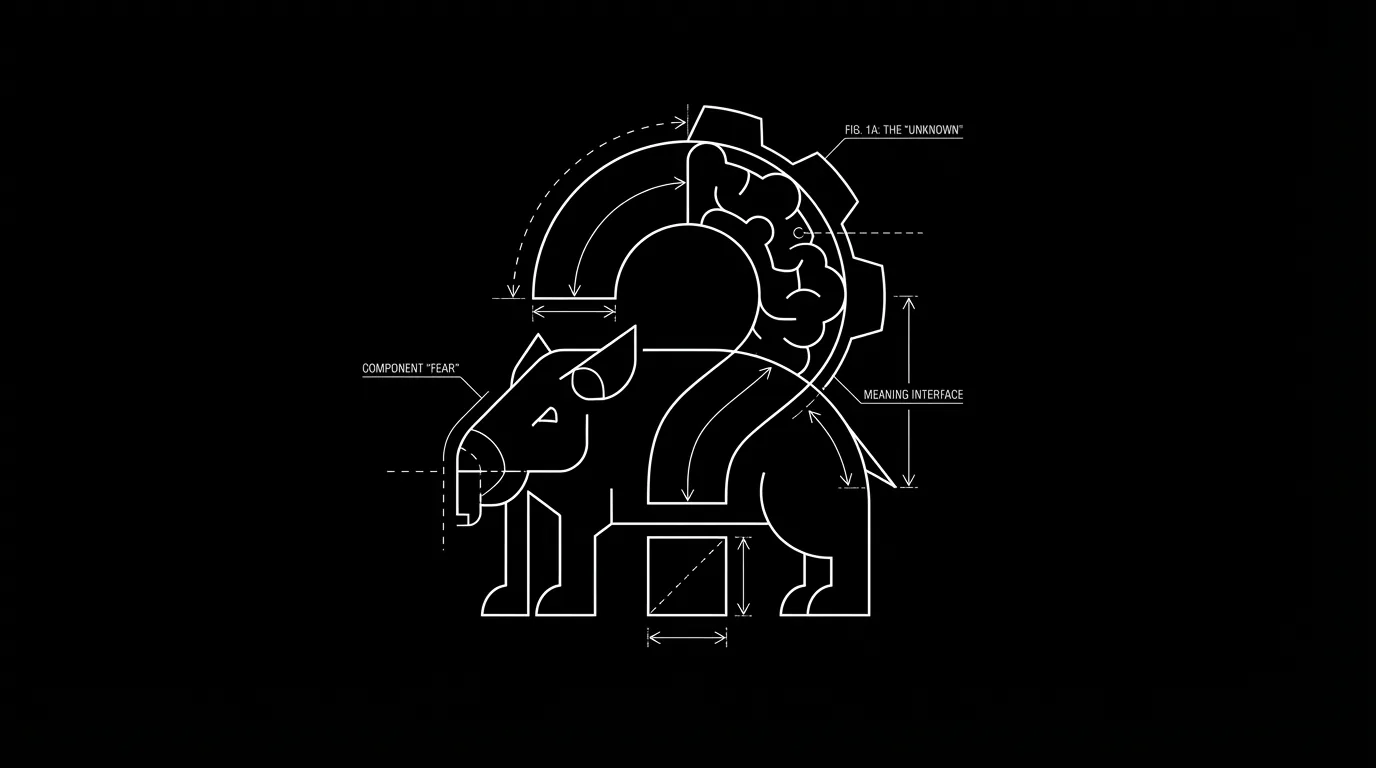
Hero image prompt: Dark mode technical sketch. Solid black background, thin white hand-drawn lines. A single shape that reads as both a monster and a symbol, e.g. a figure that could be grief, or a house that could be inheritance. One image, two possible readings. Minimalist, high-contrast.
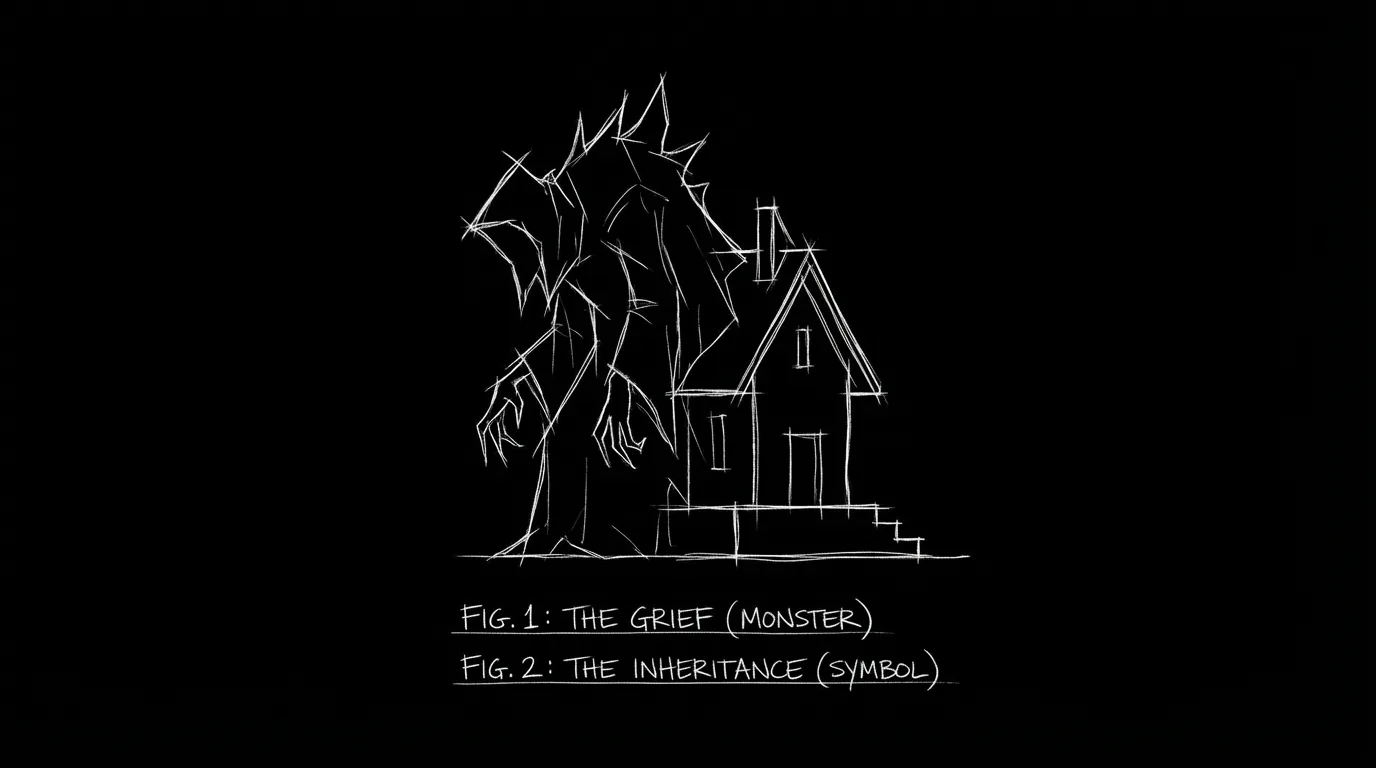
The monster is real. So is the thing it stands for. In Hereditary, the horror is literal, there are bodies, there is a cult, there is an ending that goes where it goes. The horror is also about inheritance. What we pass down. What we can’t control. What happens when grief and guilt take a physical form. That double layer is what people mean when they say “elevated horror.” Not horror that’s better than the rest. Horror that’s doing two jobs at once: scaring you and meaning something. Here’s how to merge metaphor with monsters so the genre carries weight without losing its teeth.
Elevated horror isn’t horror that’s ashamed of being horror. It’s horror that uses the genre’s tools, dread, violation, the supernatural, to say something about the real world. The metaphor has to be baked in, not pasted on.
Think about The Babadook. The creature is real in the world of the film. It’s also depression. The mother is fighting a monster and fighting the weight that won’t let her get out of bed. You can watch it as a straight monster movie. You can watch it as a film about mental health. The two readings don’t cancel each other. They reinforce each other. That’s the goal. The metaphor isn’t a separate layer you add in the last act. It’s there from the first scene. The monster and the meaning share the same body. Our guide on body horror and visceral imagery applies when the metaphor is literally in the body, inheritance, illness, loss made visible. When the metaphor is the monster, the same rule holds: one clear connection, earned over the whole story.
Why Metaphor and Monsters Need Each Other
Pure metaphor without genre can feel like a lecture. “This is a film about grief.” Okay. Where’s the story? Pure genre without metaphor can feel empty. “The monster kills everyone.” Okay. Why do we care? Elevated horror insists that we can have both. The monster gives the metaphor stakes. We’re afraid. We’re invested. The metaphor gives the monster resonance. When it’s over, we’re not just relieved. We’re changed. We’ve felt something about the real world through the genre’s language.
The risk is that the metaphor takes over. The film becomes an allegory. The monster is only a symbol. The audience feels like they’re decoding a message. The best elevated horror keeps the monster dangerous. It can hurt people. It can kill. The metaphor deepens the horror; it doesn’t replace it. So when you write, ask: if I took the metaphorical reading away, would the story still work as horror? If no, you’ve leaned too hard on the meaning. If yes, you’ve got a monster that can carry a metaphor without collapsing into it.
Building the Metaphor Into the Monster
Start with the real-world weight. What is the story about? Grief. Guilt. Inheritance. Trauma. The pressure of being a parent. The fear of losing control. Name it. That’s your metaphor. Then ask: what would that look like if it had a body? What would it do? Where would it live? The monster in Hereditary is tied to a family’s grief and guilt. The monster in The Babadook is tied to a mother’s depression. The monster isn’t a random creature that you then attach meaning to. The meaning comes first. The monster is the meaning, made flesh.
Let the plot serve both. Every major beat should work on two levels. The literal level: something happens in the story. The metaphorical level: something happens to the theme. When the daughter dies in Hereditary, we get a literal death and a literal horror plot. We also get the mother’s guilt, the family’s collapse, the sense that something has been passed down that can’t be taken back. The same event. Two readings. If a beat only works on one level, either deepen it or cut it. For more on how to structure stories that carry double meaning, see theme vs plot, the metaphor is a form of theme, and it has to be built in from the start.
Don’t explain the metaphor. The audience doesn’t need a character to say “the monster is her grief.” They’ll get it. If they don’t, you might need to strengthen the connection between the monster’s behavior and the real-world weight, but you don’t need to spell it out. Trust the audience. The moment you have someone say what the monster “really” is, you’ve reduced it. The monster is both thing and meaning. Let it sit in that tension.
| Step | What to Do |
|---|---|
| Name the real-world weight | Grief, guilt, trauma, etc. That’s your metaphor. |
| Give it a body | What would that weight look like as a creature? What would it do? |
| Plot serves both levels | Every major beat works literally and metaphorically. |
| Don’t explain | No character spells out “the monster is X.” |
Relatable Scenario: The Script Where the Monster Is Random
You’ve got a family drama. You want it to be elevated horror. So you add a monster. But the monster could be any monster. It doesn’t connect to the family’s issue. The metaphor feels pasted on. So you go back. What is the family’s wound? Loss? Secrets? The pressure to be perfect? Now design the monster from that. If the wound is “we never talk about the dead brother,” maybe the monster appears when they don’t talk. Maybe it grows when they lie. The monster’s behavior has to reflect the metaphor. When it does, the horror and the meaning feel like one thing. Our piece on isolated settings and the environment as character fits here: sometimes the “monster” is the place, and the place is the metaphor, the house that is the family’s dysfunction, the hotel that is the father’s addiction.
Try it free
Try Screenweaver for free on your script
It is free. Import your existing project, get a clearer view of your outline, and regain control of your story structure in minutes.
Start FreeRelatable Scenario: The Script That Becomes an Allegory
You’re so committed to the metaphor that the monster stops being scary. It’s clearly “just” depression, or “just” grief. The audience stops feeling the genre. Fix: make the monster dangerous again. It can kill. It can hurt. The metaphorical reading should add to the horror, not replace it. Add a beat where the monster does something that’s frightening on the surface and that also deepens the metaphor. The two layers have to work together. If the metaphor overwhelms the genre, you’ve lost the horror. If the horror overwhelms the metaphor, you’ve lost the depth. Balance is the craft.
The Trench Warfare Section: What Beginners Get Wrong
Adding the metaphor in the last act. The whole script is a straight horror movie. In the final scene, someone says “the monster was her guilt all along.” The audience feels like the metaphor was an afterthought. Fix: plant the metaphor from the first scene. The monster’s first appearance, the family’s first conflict, the location, all of it should support both the literal and the metaphorical reading. The twist isn’t “it was a metaphor.” The metaphor is present from the start.
Making the monster a one-to-one symbol. The monster = grief. Every time we see the monster, we’re seeing grief. That can feel reductive. Fix: let the metaphor be rich. Grief does many things. It hides. It attacks. It isolates. It transforms. The monster can do many things too. The connection doesn’t have to be a single equation. It can be a range of behaviors that all point at the same weight.
Forgetting that the audience came for horror. If the film is mostly drama with a monster in the background, the horror audience will feel underserved. Fix: deliver the genre. Scares. Dread. Consequences. The metaphor raises the stakes; it doesn’t replace them. When the monster strikes, it should hurt. When the ending comes, it should feel like a horror ending, even if it also feels like a thematic resolution.
Using “elevated” to mean “no gore, no fun.” Some writers think elevated horror has to be slow, serious, and bloodless. That’s a style choice, not a rule. Hereditary has some of the most visceral imagery in recent horror. The elevation is in the metaphor, not in holding back. Fix: use the genre’s full toolkit. The metaphor makes it mean more. It doesn’t make it less.
Step-by-Step: Baking In the Metaphor
Before you write, name the metaphor. One sentence. “This is a film about X.” Then list five ways X shows up in real life. How does it hide? How does it attack? How does it transform people? Now give your monster five behaviors that map onto those. The monster doesn’t have to be a perfect allegory. It has to feel like the same weight. When you write each scene, ask: does this work if I’m only watching for the horror? Does it work if I’m only watching for the metaphor? If both answers are yes, you’re in the right zone. For structure that supports this kind of double layer, slow burn pacing often fits, the metaphor has time to build alongside the dread.
One External Resource
For context on the term and the conversation around “elevated horror,” see the Elevated horror entry on Wikipedia. Reference only; not affiliated.
The Perspective
Elevated horror isn’t horror that’s too good for the genre. It’s horror that uses the genre to say something. The monster is real. So is the thing it stands for. When you merge them, when the metaphor is baked into the monster from the first page, the audience gets to be scared and moved at the same time. That’s not a compromise. That’s the form doing what it does best.
Final Step
Build your next script with Screenweaver
Move from ideas to production-ready pages faster with timeline-native writing and AI-assisted story flow.
Try Screenweaver