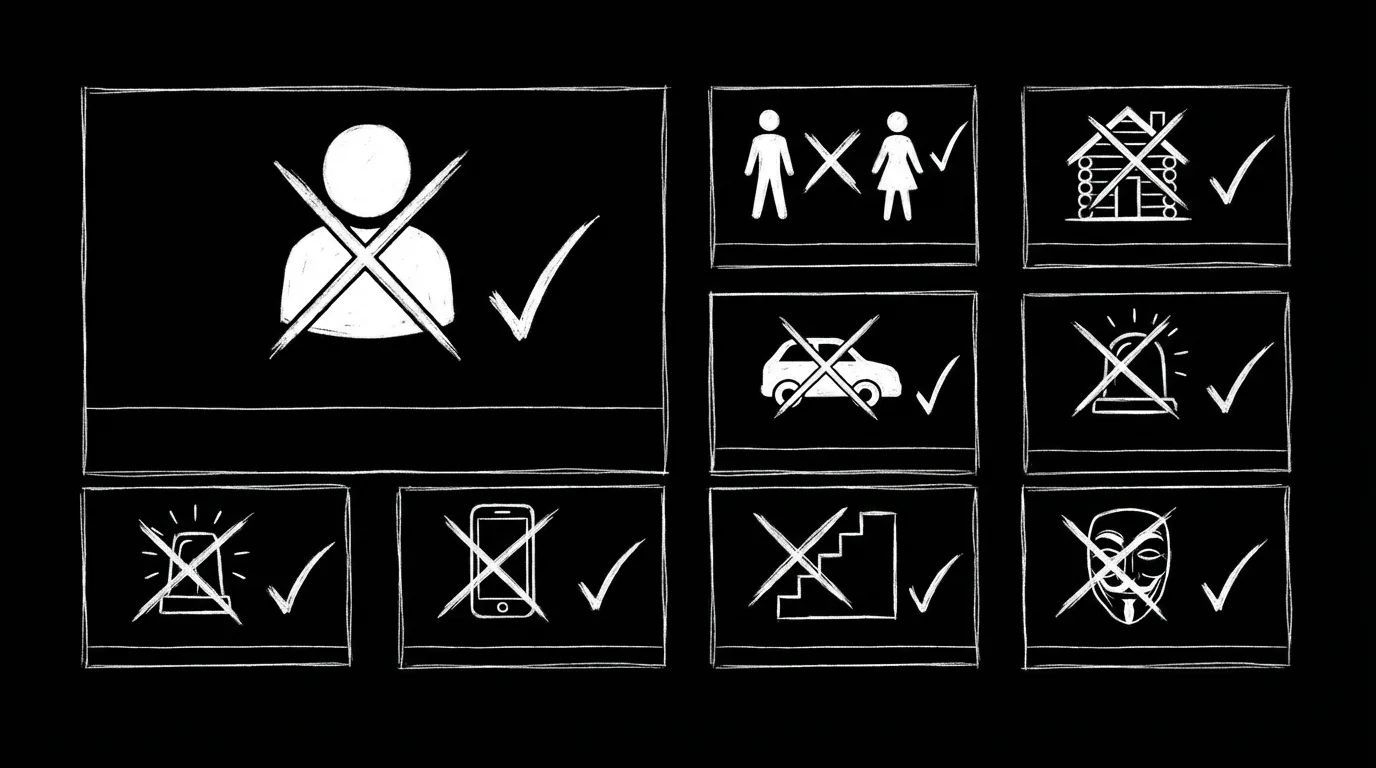
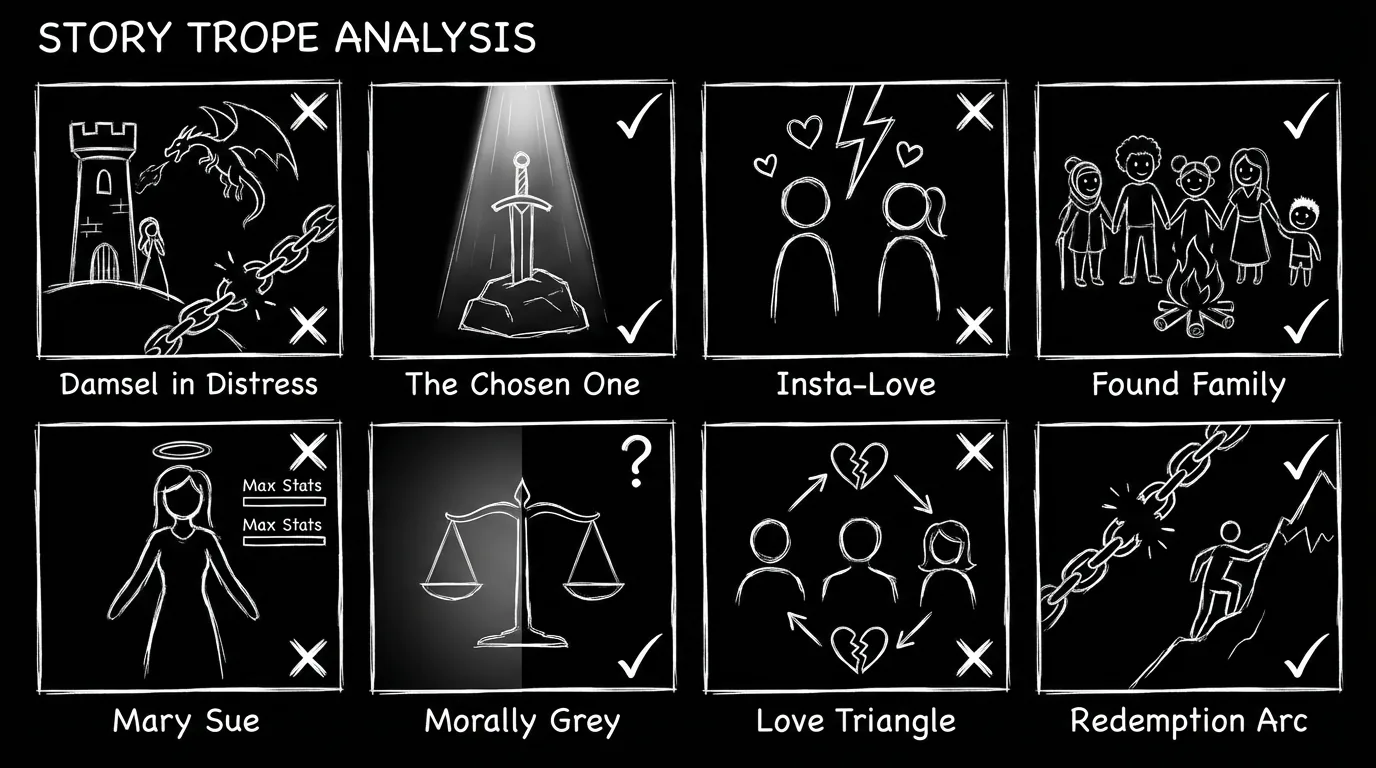
Hero image prompt: Dark mode technical sketch. Solid black background, thin white hand-drawn lines. Eight small panels in a grid, each showing a single horror trope icon (final girl silhouette, split group, abandoned car, etc.) with a red X over classic versions and a checkmark on subverted versions. Minimalist, high-contrast, no neon.
The final girl runs. Again. The group splits up because someone heard a noise. The car won’t start. You’ve seen it. So has every reader, every development exec, every audience member. These beats aren’t wrong because they’re familiar, they’re wrong because they’re unexamined. In 2026, horror that leans on the same tropes without twisting them reads as lazy. Not because audiences are smarter (though they are), but because the genre has already mined those veins. The work now is to know the tropes cold, then break them in ways that feel earned. Here’s how.
The best horror in the next decade won’t abandon the old moves. It will make the audience think they know the move, then change the hand.
This isn’t a list of “don’t ever do this.” It’s a map of where the landmines are and how to step around them, or set them off on purpose. We’ll go through eight of the most overused tropes, why they feel tired, and concrete ways to subvert them so your script feels fresh instead of like a cover of a cover.
The Final Girl (and Why She’s Not Enough)
The final girl is virtuous, often virginal, resourceful, and survives because she “deserves” to. She’s been analyzed to death, literally. Carol J. Clover’s formulation gave the trope its name, and for decades it gave writers a template. The problem in 2026: the template is visible. When your survivor is the one who didn’t drink, didn’t have sex, and made all the “right” choices, the audience can see the machinery. They know she’s going to make it. So the tension isn’t “will she survive?” but “when will the script stop pretending we don’t know?”
Subversion isn’t “kill the final girl.” That’s a twist, not a philosophy. Subversion is giving her a real flaw that the monster or the situation exploits. Maybe she’s not pure, she’s ruthless. Maybe she survives not because she’s good but because she’s willing to sacrifice others. Maybe the “final girl” is actually the one we’ve been told is the villain, and the script reframes the last act so we’re rooting for someone we were trained to fear. The goal is to make survival feel uncertain again. When the person left standing could plausibly be anyone, or no one, the trope stops doing the work for you and starts working for the story.
Think about it this way: in The Descent, the “final girl” isn’t the one who’s morally clean. She’s the one who’s been lying, who’s responsible for the trip, who’s carrying guilt. Her survival is complicated. We’re not sure we want her to win. That’s the kind of friction that makes the trope interesting again.
The Group That Splits Up
They hear a sound. They decide to search the house. Of course they split up. Every horror fan knows what happens next. The trope exists because it’s efficient: isolation equals vulnerability. But when the split is unmotivated, when the characters would have to be idiots to separate, the audience checks out. They’re not scared; they’re annoyed.
The fix isn’t “keep them together.” The fix is giving them a reason to split that they (and we) believe. Maybe they’re looking for a child. Maybe one of them is injured and two go for help. Maybe the building is collapsing and the only way out is two different routes. The split has to feel like the least bad option, not like a script requirement. And then you can subvert further: what if splitting up is the right call, and staying together gets them killed? What if the monster wants them together so it can take them all at once? Flipping the expectation, splitting up saves someone, staying together dooms them, makes the trope work again because the audience can’t rely on the old rule.
Our guide on writing the jump scare applies here: tension lives in the gap between what the audience expects and what you deliver. If they expect “split up = die,” give them a reason to split that they buy, or a consequence that surprises them.
The Car That Won’t Start
The keys are in the ignition. The engine turns over. Nothing. It’s the oldest stall in the book. The problem isn’t the beat itself, it’s that it’s become a joke. When you write “The engine won’t turn over,” the reader has already seen it a hundred times. The beat has no weight.
So either cut it or make it specific. Specificity is the subversion. Maybe the car starts, but the road is blocked. Maybe they don’t have the keys because the killer took them in act one and we forgot. Maybe the car starts and they drive straight into a trap because the monster wanted them in the car. The “we’re trapped” moment has to come from a choice or a detail that’s unique to your story, not from a generic mechanical failure. If the only reason they can’t leave is “the script says so,” the audience feels it.
The Expert Who Explains Everything (Then Dies)
Someone has read the book, found the article, or lived in the town when it happened. They dump the lore. Then they’re dead by the next act. The trope exists to deliver exposition and to raise stakes by killing the person who knew too much. But when the death feels scheduled, the exposition feels like a checklist. The audience knows: this person is here to explain and then leave.
Subvert by making the expert wrong. Or by making the expert the villain. Or by having the expert survive and be useless, they knew the wrong thing. Or kill them before they finish explaining, so the characters (and we) have to act on partial, wrong information. The moment the “expert” isn’t a walking info-dump but a character with their own agenda or limits, the trope stops feeling like a convention and starts serving the story. For more on delivering information without killing pace, see our piece on exposition and the “as you know” trap.
The Cell Phone That Has No Signal
Another stall. Another way to isolate. And again, in 2026, it’s so expected that it barely registers. Unless you make it matter. What if the signal is fine, but the person on the other end is the threat? What if they have signal and call for help, and help arrives and makes everything worse? What if the monster is attracted to the signal, so the phone becomes the thing that gets them found? The “no bars” moment only works if the audience doesn’t see it coming or if the consequence of having no signal (or having signal) is unique to your world.
The Mirror Scare
Character looks in mirror. They look away. They look back. Something’s different. It’s a classic because it plays on the uncanny. But it’s also a cliché. The subversion: don’t do the mirror scare, or do it when the audience has stopped expecting it. Or use the mirror for something else. The reflection is wrong not because something’s behind them but because they are wrong. The monster is in the reflection. The mirror is the only place they’re safe. Flip the function of the image and the trope regains power.
The “It Was All a Dream” (Or Was It?)
Pulling the rug out from under the audience can work. It can also feel like a cheat. The difference is setup. If you’ve planted details that don’t add up, that can add up to “this isn’t real”, then the reveal feels earned. If the dream (or hallucination, or simulation) is there from the start as a possibility the story has been toying with, the audience can re-read the story in their head. If it comes out of nowhere, they feel robbed. So the subversion isn’t “never do dreams.” It’s: make the reality of the world a question the script has been asking all along. For techniques on bending reality without losing the reader, our guide on psychological thrillers and unreliable reality goes deeper.
Try it free
Try Screenweaver for free on your script
It is free. Import your existing project, get a clearer view of your outline, and regain control of your story structure in minutes.
Start FreeThe Monster That’s Actually Human
“The real monster was us.” Sometimes it lands. Often it’s a cop-out. The audience came for a creature or a force; giving them a guy with a knife can feel like a downgrade. The subversion: don’t swap the monster for a human. Layer them. The human is doing the killing, but something is driving them, possession, infection, grief, a system. Or the monster is real, and the human is worse, the human is the one who let it out, who profits from it, who refuses to believe. The “human monster” works when it’s in conversation with the supernatural or the unknown, not when it replaces it for a twist.
| Trope | Why It Feels Tired | Subversion Direction |
|---|---|---|
| Final girl | Survival feels predetermined by “virtue” | Flawed survivor; moral ambiguity; reframe who “deserves” to live |
| Group splits up | Unmotivated; audience sees the trap | Give a reason we believe; or make staying together the mistake |
| Car won’t start | Generic stall; no story-specific weight | Block the road; keys elsewhere; car starts but leads to trap |
| Expert explains then dies | Exposition + scheduled death | Expert wrong, or villain, or dies before finishing |
| No signal | Expected isolation beat | Signal works but help is threat; or signal attracts the threat |
| Mirror scare | Overused jump beat | Wrong thing in mirror; mirror as safe space; skip or delay |
| All a dream | Feels like cheat if unset-up | Plant impossibility; make reality the ongoing question |
| Monster is human | Can feel like downgrade or cop-out | Layer human + other; human enables or profits from the real threat |
Relatable Scenario: The Cabin Script
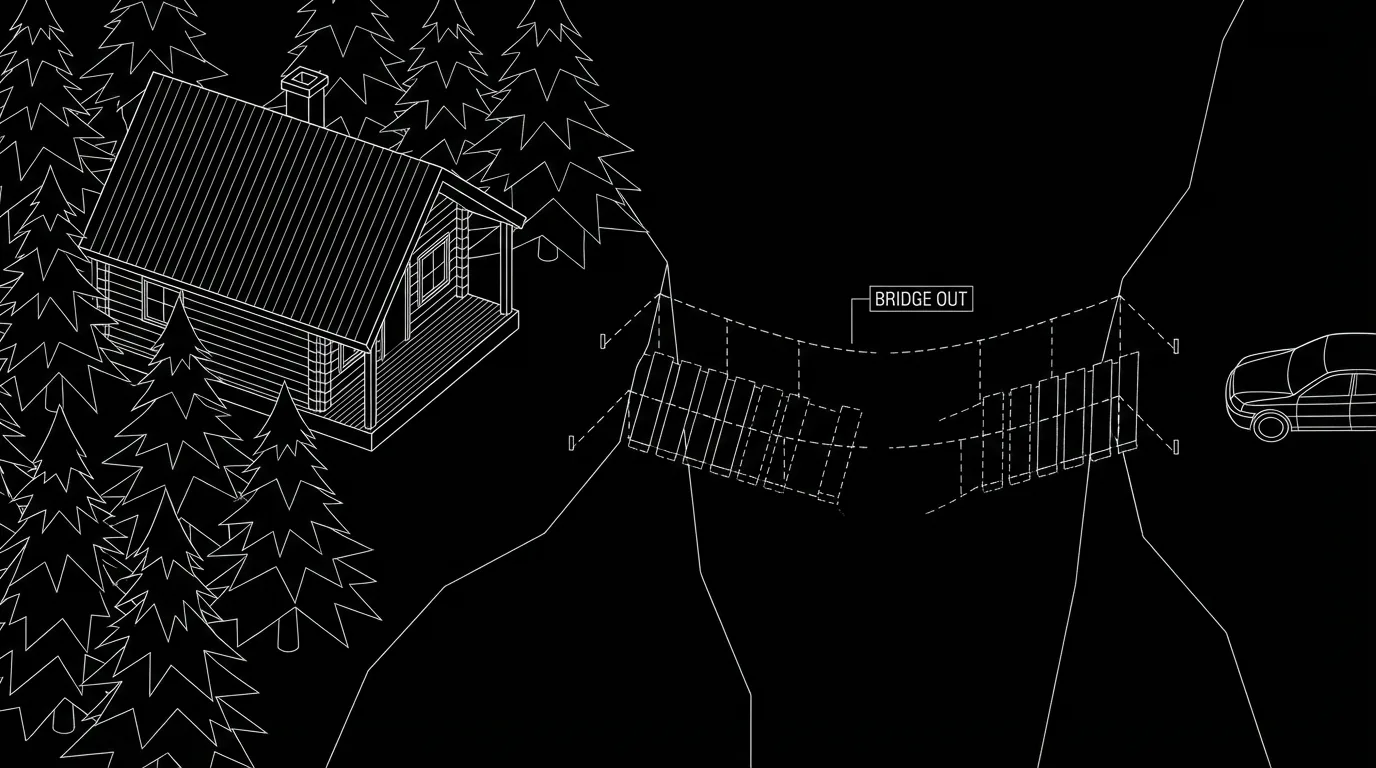
You’re writing a cabin-in-the-woods movie. The group arrives. You need them isolated. So you have the car break down. Then the phones die. Then they split up to find firewood. By page 20 the reader has already predicted the rest of the movie. Now rewrite. The car is fine, but the bridge out was washed away last night, and no one checked. The phones work, they call the ranger, who says he’ll come in the morning, and that delay is the trap. They don’t split up for firewood; they split because one of them is secretly leading the others into the woods for a reason we’ll discover. Same outcome: isolated, vulnerable. Different path: the audience can’t rely on the usual beats. The tropes are still there, but they’re bent.
Relatable Scenario: The Final Girl Who Isn’t
Your protagonist is the one we’re supposed to root for. She’s smart, careful, kind. So she’ll survive. Except you don’t want the audience to be sure. So you give her a secret. She’s the one who invited the group here, she knew something was wrong with the place and came anyway. Or she’s the one who accidentally let the thing in. She’s still the protagonist. We still want her to make it. But we’re not sure she should. The final girl trope is still in play, one survivor, last one standing, but the moral clarity is gone. Survival is no longer a reward. It’s a question.
The Trench Warfare Section: What Beginners Get Wrong
Using subversion as a checklist. Some writers hear “subvert tropes” and run down a list: final girl dies, the car starts, they never split up. The result can feel like a different kind of predictability. Subversion works when it serves the story. If your theme is “trust no one,” maybe they should split up, and the monster isn’t the only threat. If your theme is “guilt survives,” the final girl living with what she did is the point. Match the subversion to the story, not the other way around.
Explaining the subversion. Characters who say “I know what happens in horror movies, so we won’t split up” are not subverting the trope; they’re commenting on it. That can work in meta horror (e.g. Scream), but in straight horror it pulls the audience out. Let the subversion happen in the plot. Let the audience notice that this time it’s different. Don’t have a character announce it.
Breaking the trope so hard the story loses shape. Horror relies on shared expectations. If you remove every familiar beat, you can end up with something that doesn’t feel like horror anymore. The goal is to twist expectations, not to erase them. The audience should still recognize the genre. They should still feel the rhythm of isolation, threat, and confrontation. They just shouldn’t be able to predict every step.
Forgetting that execution beats concept. A “subverted” trope that’s written flat is still flat. A classic trope executed with precision, clear motivation, specific detail, real consequence, can still land. Focus on why the group splits, what exactly happens when the car fails, who the final girl is when she’s left alone. The trope list is a starting point. The script lives in the specifics.
One External Resource
For a concise academic take on the final girl and the slasher formula, see Carol J. Clover’s Men, Women, and Chain Saws (Princeton University Press). We’re not affiliated; the book is a standard reference for genre structure.
The Perspective
The tropes aren’t the enemy. Invisibility is. When the audience can’t see the machinery, when the final girl’s survival feels in doubt, when the split feels inevitable, when the car fails for a reason that’s yours alone, the genre breathes again. Your job in 2026 isn’t to avoid the old moves. It’s to know them so well that you can change the hand at the last second. That’s when the audience stops watching the trope and starts watching the story.
Final Step
Build your next script with Screenweaver
Move from ideas to production-ready pages faster with timeline-native writing and AI-assisted story flow.
Try Screenweaver