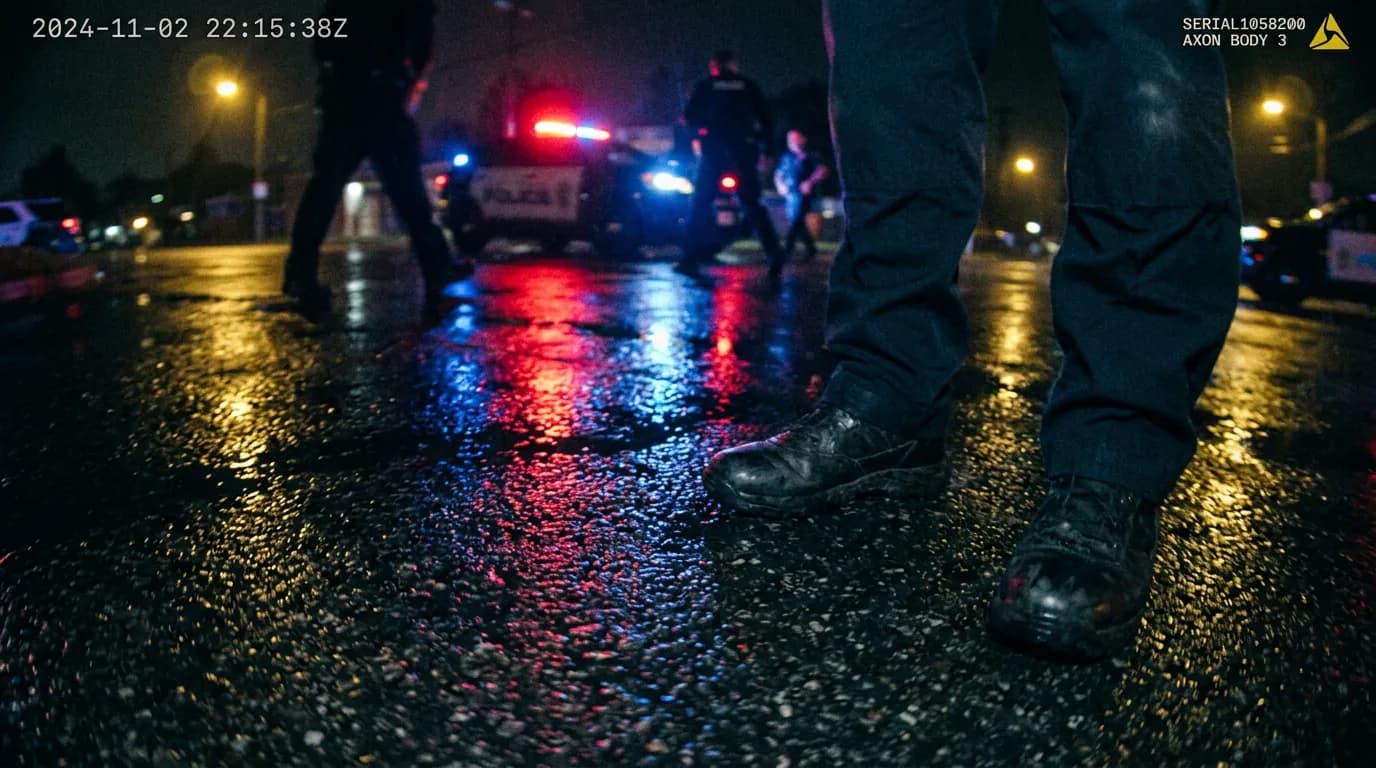

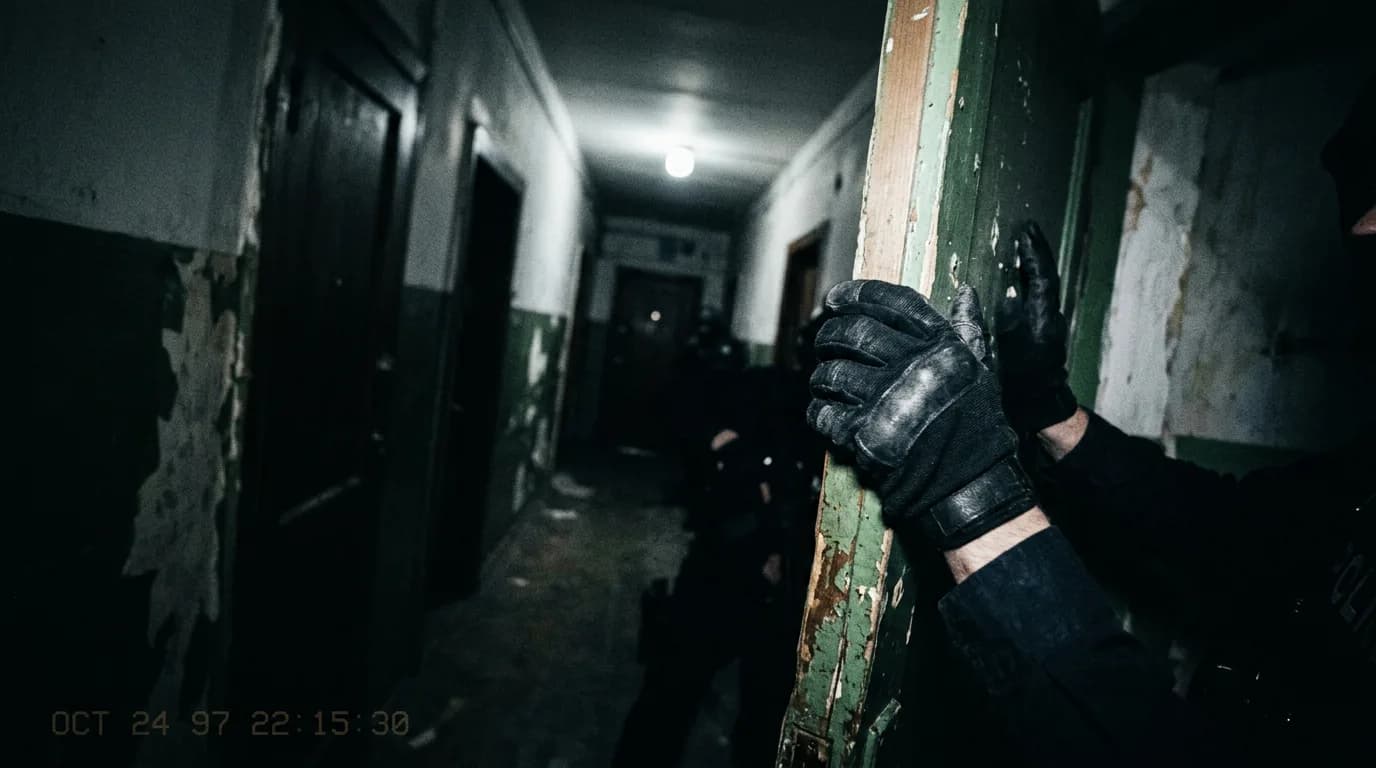
The camera jolts with every breath.
A hand enters frame.
Someone shouts off-axis.
You cannot see everything.
That is the point.
Bodycam scenes are powerful because they create immediacy and evidentiary tension at the same time. They can also become unreadable fast if formatted like generic action prose with a “bodycam” label slapped on top.
Most beginner scripts either over-romanticize bodycam as objective truth or over-technicalize it with metadata clutter. Both mistakes weaken storytelling.
Here’s why that matters: bodycam footage in a screenplay is not just aesthetic flavor. It is perspective architecture with ethical consequences. What the camera captures, misses, distorts, and timestamps can change legal outcomes, character trust, and audience interpretation.
Think about it this way: bodycam scenes are not about seeing everything. They are about what partial seeing does to decisions.
Cinematic workflow frames

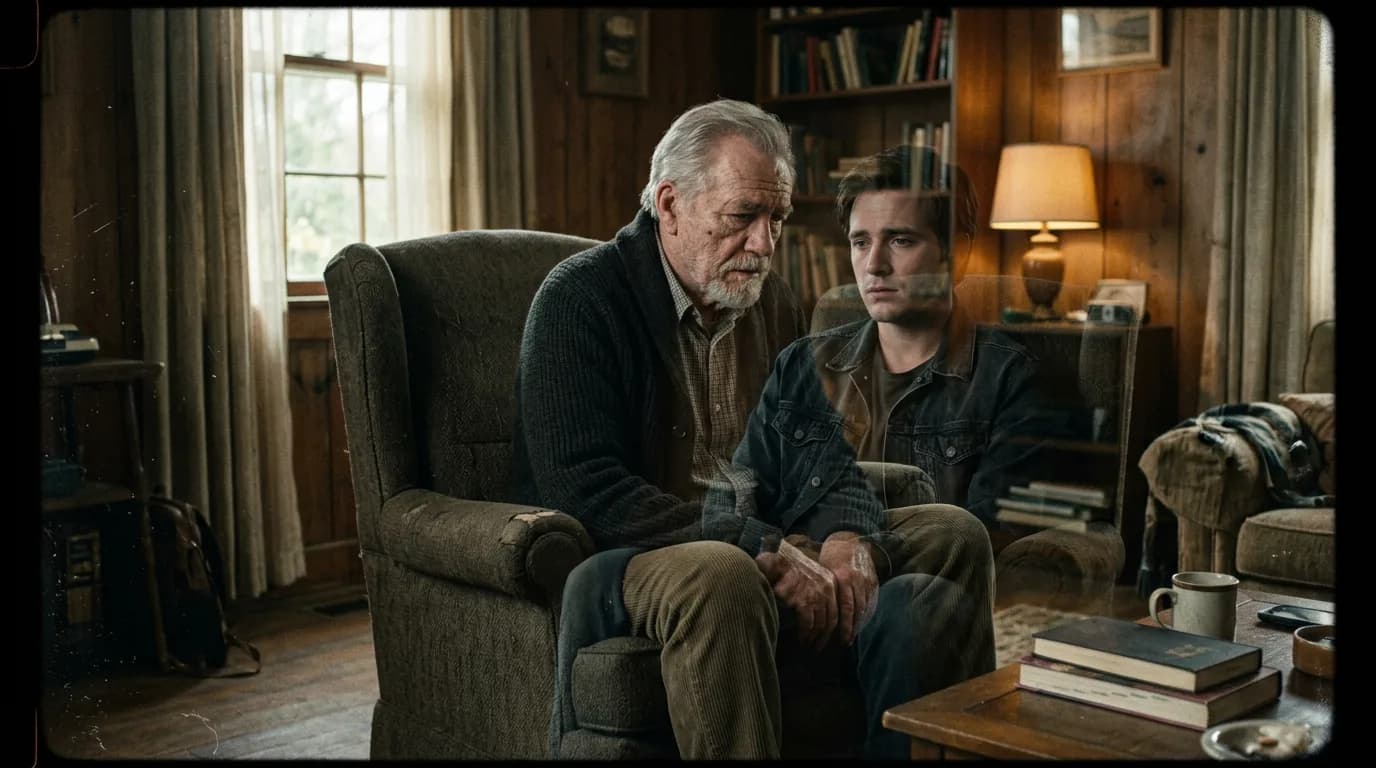
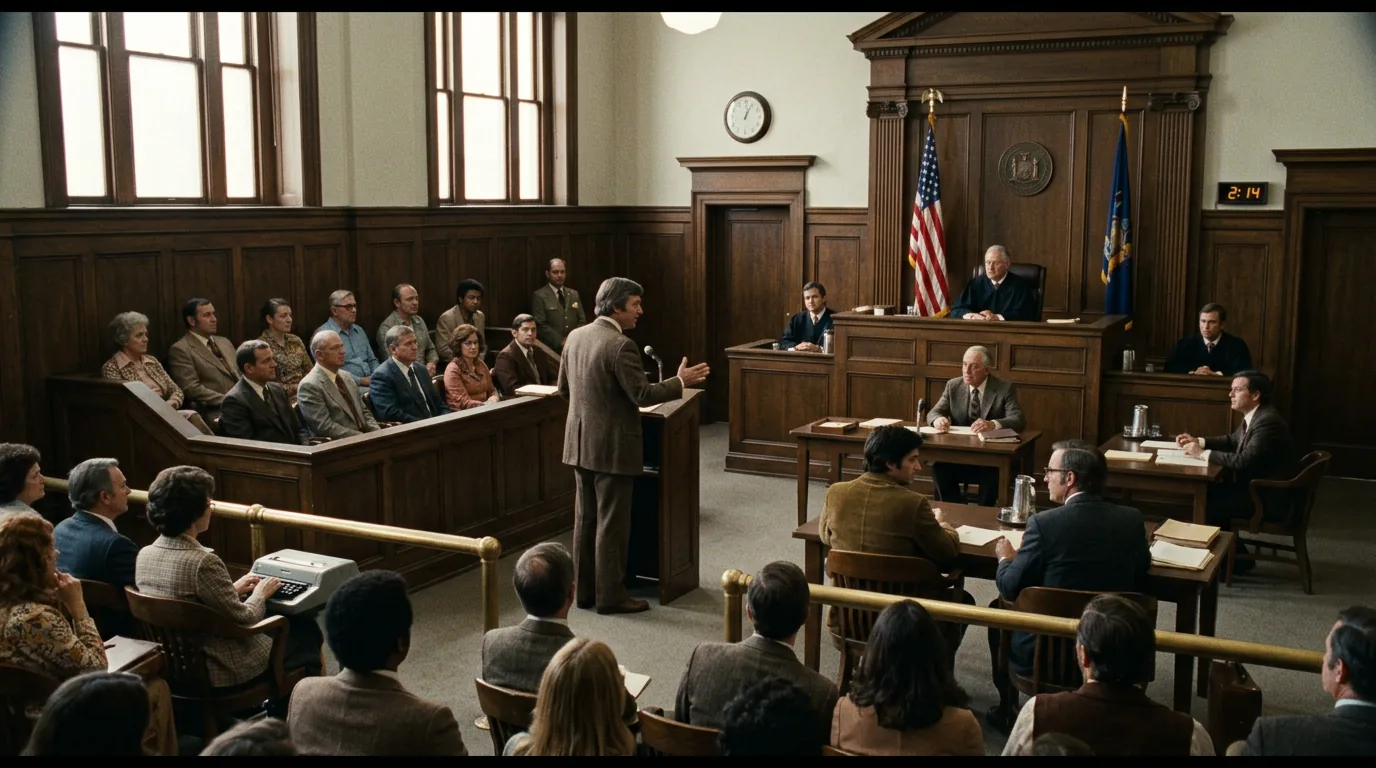
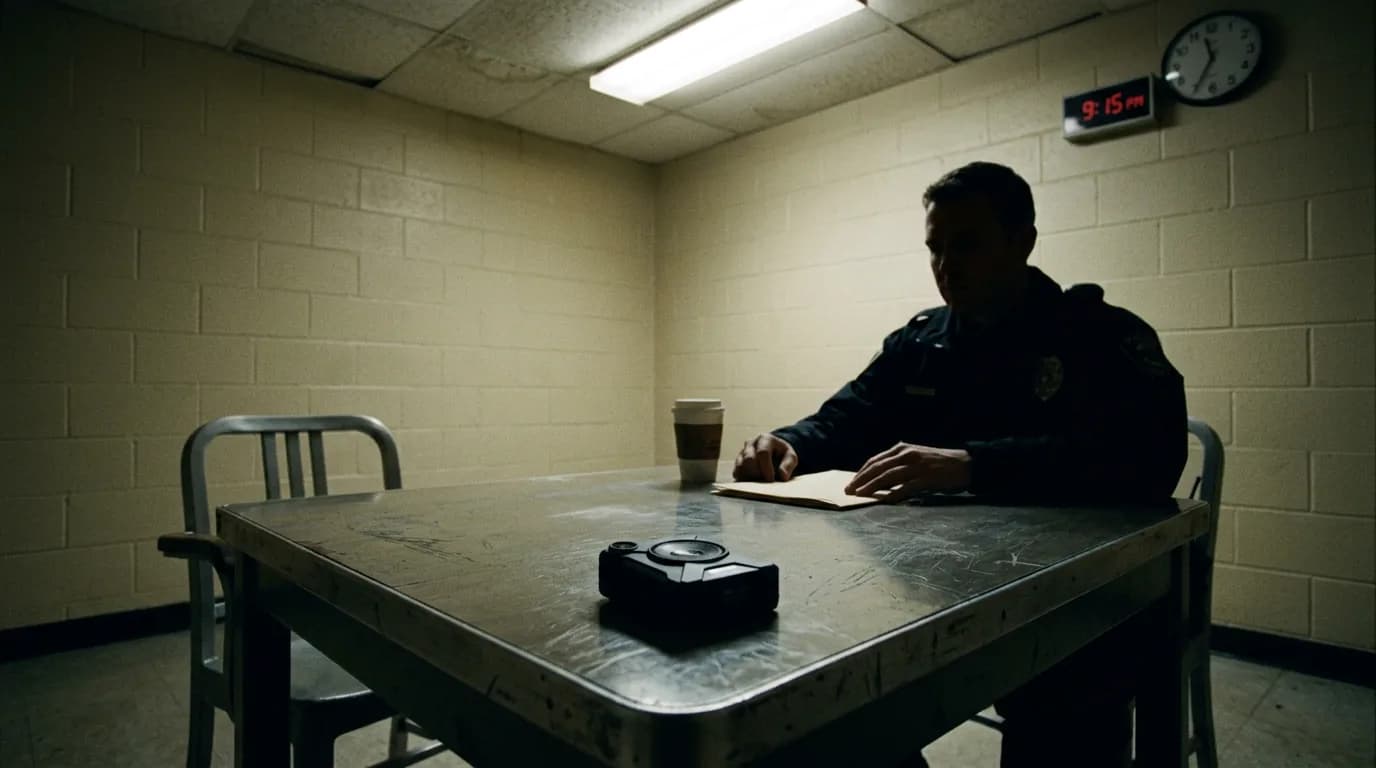
These two visuals work as a pair: the first shows Cinematic workflow still, first angle, 35mm film grain, and the second shifts to Cinematic workflow still, second angle, 35mm film grain - compare them briefly, then move on.
What Bodycam Footage Changes in Narrative Logic
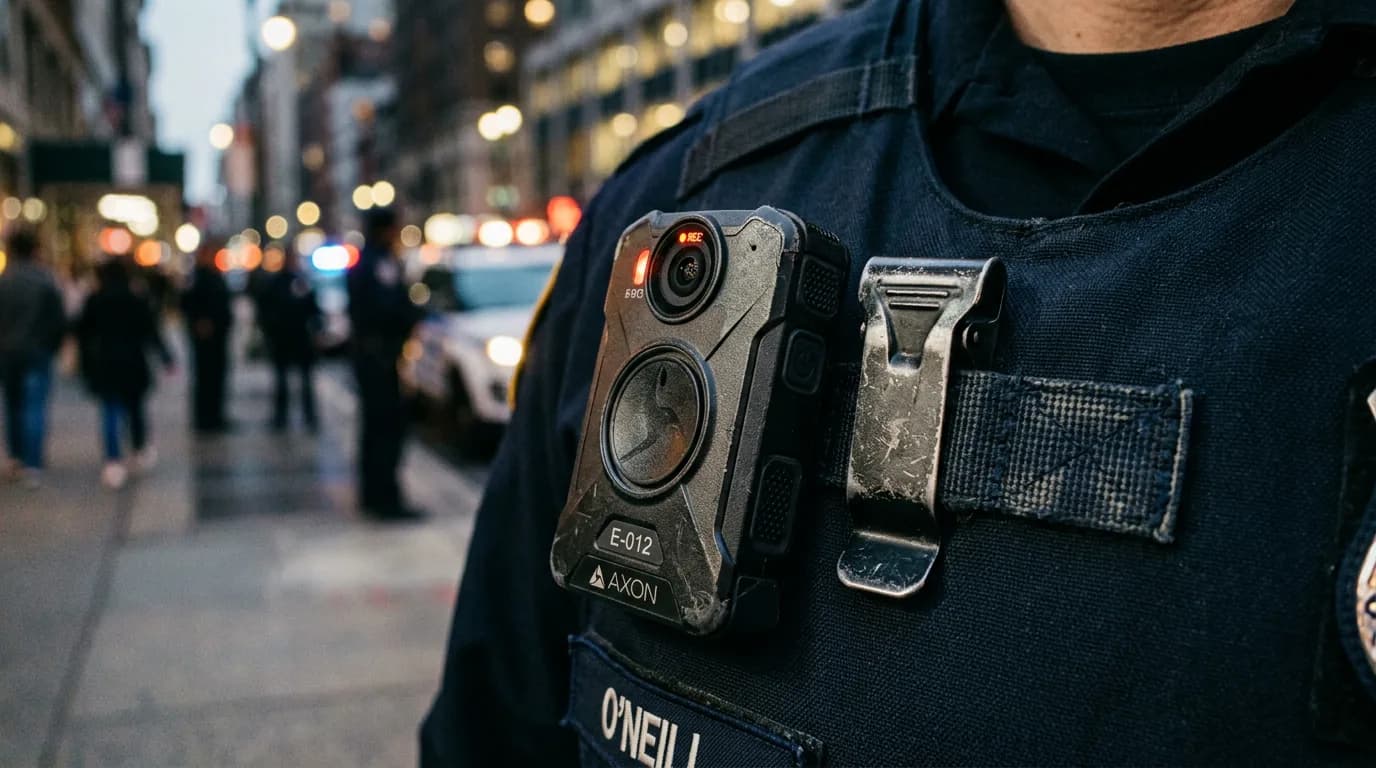
Bodycam perspective introduces constraints and biases:
first-person viewpoint,
motion instability,
audio clipping,
occluded frame edges,
auto-exposure shifts,
time-stamped evidentiary framing,
limited field of view.
These are not technical footnotes.
They are story mechanics.
If your scene ignores them, bodycam device feels decorative.
If your scene uses them intentionally, tension and ambiguity deepen.
Bodycam writing works when viewpoint limits create consequence, not when they are cosmetic realism markers.
Core Formatting Patterns That Work
Pattern 1: Explicit Bodycam Scene Label
BODYCAM FOOTAGE - OFFICER REYES - EXT. ALLEY - NIGHT
Clear and repeatable.
Pattern 2: Live Scene + Bodycam Insert Blocks
Anchor in live scene, then cut to bodycam segments where evidentiary perspective matters.
Pattern 3: Timestamp Markers at Key Beats
Use timestamps only at pivot moments, not every line.
Pattern 4: Source-Specific Action Language
Write what the bodycam can plausibly capture, including misses and distortions.
Comparison Table: Bodycam Integration Approaches
| Approach | Best Use Case | Strength | Risk |
|---|---|---|---|
| Full bodycam-sequence headings | Procedural/high-intensity pursuit | High source clarity | Can feel mechanical if prolonged |
| Inserted bodycam bursts | Narrative films with occasional evidence beats | Preserves pacing variety | Source confusion if not clearly re-anchored |
| Timestamped key pivots | Legal/reliability tension scenes | Precise consequence mapping | Over-tagging clutters page |
| Minimal metadata + perspective detail | Character-first stories | Better emotional readability | Loses evidentiary specificity if too sparse |
Three Beginner Scenarios That Commonly Fail
Scenario 1: The “Objective Camera” Illusion
Writer treats bodycam as neutral truth recorder.
Result: false certainty and shallow conflict.
Fix: include viewpoint limitations and interpretive gaps.
Scenario 2: Metadata Overload
Every beat includes timestamp, signal status, GPS note, battery level.
Result: readability collapse.
Fix: include technical markers only where they alter interpretation.
Scenario 3: No Difference Between Bodycam and Standard Action
Scene reads identical whether bodycam label is present or absent.
Result: device feels pointless.
Fix: rewrite action from constrained first-person capture logic.
Step-by-Step Workflow for Bodycam Scene Writing
Step 1: Define Why Bodycam Matters Here
Is it evidentiary proof, contradiction trigger, character POV pressure, procedural authenticity, or moral ambiguity?
Pick one primary function.
Step 2: Map Capture Limits
What cannot be seen clearly?
What audio drops out?
What happens outside frame?
Design these limits before line-level drafting.
Step 3: Choose Formatting Mode
Full sequence mode for sustained bodycam action.
Insert mode for selective evidence beats.
Avoid random switching.
Step 4: Set Metadata Policy
Choose what appears on page: timestamp, officer ID, location cue.
Keep policy consistent.
Step 5: Write Consequence-Focused Beats
Every key bodycam beat should change belief, tactic, or risk profile.
Step 6: Pair Record with Human Reaction
Bodycam alone is not drama.
Drama happens when someone interprets, misinterprets, or weaponizes footage.
Step 7: Run Perspective Integrity Pass
Read every bodycam action line asking: could this realistically be captured from chest-mounted camera under movement conditions?
If not, adjust.
Body Image: Bodycam Perspective Constraint Map
The Trench Warfare Section: What Beginners Get Wrong and Exact Fixes
Failure 1: Treating Bodycam as Omniscient
Impossible visibility and clarity.
Fix: honor blind spots and motion constraints.
Failure 2: Endless Technical Overlays
Metadata crowds out story movement.
Fix: reserve overlays for interpretation pivots.
Failure 3: No Source Re-Anchor on Mode Switch
Reader loses whether we are in bodycam or standard cinematic view.
Fix: hard source markers at each switch.
Failure 4: Flat Audio Logic
All dialogue heard perfectly despite realistic interference.
Fix: design selective audio clarity and fragment consequences.
Failure 5: No Legal/Strategic Stakes
Footage appears but affects nothing.
Fix: tie footage beats to immediate tactical or legal shifts.
Failure 6: Repetitive Jitter Description
Every line says camera shakes.
Fix: describe only movement details that change meaning.
Failure 7: No Human Context Around Record
Footage floats without character interpretation.
Fix: pair clips with reactions and decisions.
Failure 8: Contradictions Without Intent
Mismatch between bodycam and testimony feels accidental.
Fix: map contradiction purpose explicitly.
Failure 9: Perspective Drift in Rewrite
Bodycam constraints weaken as draft evolves.
Fix: maintain viewpoint integrity pass late in process.
Failure 10: No End-State Change
Scene ends with footage review but no narrative pivot.
Fix: close on altered risk, trust, or strategy.
Bodycam scenes should alter what characters can claim, not just what viewers can see.
Advanced Craft: Evidence, Bias, and Moral Friction
Bodycam is often framed publicly as accountability technology. In drama, it is better treated as contested evidence in human systems.
Officers, lawyers, media, families, and institutions read the same footage differently.
A frame can exonerate one action while obscuring another.
A timestamp can support sequence while hiding motive.
An audio gap can become argument battlefield.
If you write these interpretive conflicts, bodycam scenes gain depth beyond procedural spectacle.
You can structure this with evidence friction beats:
capture,
review,
interpretation split,
strategic action,
public/private consequence.
This sequence keeps legal texture and character stakes intertwined.
Workflow and Revision Discipline
Keep a bodycam ledger during revisions:
source ID,
capture limits,
key captured line/action,
missing information,
interpretation impact,
resulting decision.
Normalize labels (BODYCAM FOOTAGE, REVIEW MONITOR, LIVE BODYCAM) and enforce consistency.
Read bodycam sections alone for evidentiary coherence, then read surrounding scenes for consequence continuity.
For general script pacing references, the <a href="https://www.scriptreaderpro.com/screenplays/" rel="nofollow">Script Reader Pro screenplay library</a> can offer comparison patterns, but your own perspective integrity and consequence mapping should govern format choices.
As discussed in our guide on [screenplay formatting for surveillance camera footage], constrained viewpoint becomes dramatic only when limitation has consequence.
If bodycam material is introduced through legal documents, pair with [how to format a courtroom transcript in a script] to keep record sources distinct.
And when bodycam beats intercut with live tactical action elsewhere, [how to show simultaneous action in two locations in a script] helps preserve time logic.
Try it free
Try Screenweaver for free on your script
It is free. Import your existing project, get a clearer view of your outline, and regain control of your story structure in minutes.
Start FreeBody Image: Evidence Friction Ladder
YouTube Placeholder
Before-and-After Micro Example
Before:
“BODYCAM VIEW
Officer runs. He sees suspect clearly. Suspect says he has a gun. Officer turns and everything happens fast.
Later they watch the footage.”
Vague, overcertain, low consequence clarity.
After:
“BODYCAM FOOTAGE - OFFICER REYES - EXT. SERVICE ALLEY - NIGHT
Timestamp 22:14:07.
Reyes rounds the corner; frame jolts hard.
A figure flashes at the edge of view, hand near waistband.
Audio clips under sirens.
SUSPECT (O.S., FRAGMENTED) -- got a --
Reyes backs into cover.
CUT TO:
INT. INTERNAL AFFAIRS REVIEW ROOM - DAY
Freeze-frame on the suspect’s hand.
Two analysts stare at the same blurry frame and disagree instantly.”
Same premise.
Now source, limits, and consequence are all active.
Ending Perspective: Format the Lens, Expose the Stakes
Bodycam footage in a screenplay is not a shortcut to realism.
It is a precision tool for contested perspective.
Use it to sharpen what can be proven, what remains ambiguous, and who pays for that ambiguity.
Clear source labels.
Selective metadata.
Constrained capture logic.
Immediate interpretive consequence.
When those elements align, bodycam scenes stop being jittery inserts.
They become structural pressure points where law, memory, and narrative control collide.
One deeper craft layer can dramatically improve bodycam scenes: interpretation choreography.
Raw footage is rarely the end of drama. Interpretation is the drama.
Who watches first?
Who controls pause/rewind?
Who narrates what “really happened” over the frame?
Who benefits from ambiguity?
If your script treats review as passive, you lose one of the most powerful conflict zones available in procedural storytelling.
Design bodycam scenes as two linked stages:
capture stage (what was recorded),
contest stage (what record is claimed to mean).
When both stages are active, scenes gain legal, ethical, and emotional complexity.
Another advanced technique is selective frame denial.
Not everything should be visible at first watch.
Key details can live at frame edge, in reflection, in motion blur, or in audio fragment.
But there is a catch: hidden detail must be fair. If reveal depends on information the footage could never plausibly contain, readers feel cheated.
Fairness rules for delayed bodycam reveal:
detail is present in early beat, visibility is low but plausible, later review improves interpretation, new meaning changes strategy.
This structure creates earned surprise.
Practical Drill: Capture vs Claim Matrix
For each critical bodycam beat, create two columns:
what camera objectively captures,
what each stakeholder claims it means.
If columns are identical every time, scene may lack interpretive conflict.
If claims diverge without objective anchor, scene may feel arbitrary.
Balanced divergence is the target.
Practical Drill: Metadata Minimalism Pass
Take one bodycam-heavy sequence and remove 50% of technical overlays.
If clarity improves and stakes remain, keep the leaner draft. If clarity collapses, restore only metadata that directly changes interpretation.
This protects readability while preserving evidentiary logic.
Practical Drill: Audio Fragment Consequence Test
Insert one partial audio line that can be heard two ways.
Then track two competing interpretations across next scene.
If both interpretations produce same behavior, fragment is theatrically interesting but narratively weak. Strengthen consequence split.
Practical Drill: Perspective Integrity Sweep
Run a pass reading only bodycam description lines.
Flag anything impossible for chest-mounted perspective:
perfect facial detail at long distance, stable framing during sprint, clean dialogue under siren overload, omniscient off-axis awareness.
Correcting these keeps immersion credible.
One more valuable pattern is bodycam escalation by institutional layer.
Level 1: officer sees footage.
Level 2: supervisor sees footage.
Level 3: legal team sees footage.
Level 4: media/public sees clipped version.
At each layer, interpretation incentives change. This can power entire subplot arcs and prevent single-scene burnout.
Operationally, maintain a bodycam evidence ledger in revisions:
timestamp anchor, frame limitation, key captured beat, interpretive dispute, decision outcome.
Update this ledger whenever scene order changes. Bodycam logic is fragile under late structural edits, and small sequencing mistakes can create major continuity holes.
Finally, remember that bodycam scenes are strongest when they preserve the humanity of everyone inside the frame. Procedural rigor matters, but so does breath, fear, confusion, hesitation, and moral weight. If your formatting captures limits without flattening people into evidence objects, the scene will carry both tension and empathy.
That balance is where bodycam writing becomes more than technique. It becomes story with accountability.
One final sequence-level strategy makes bodycam material far stronger across a full script: escalation by evidentiary clarity.
Do not make all footage equally legible.
Early footage can be chaotic and ambiguous.
Midpoint footage can appear decisive but remain contested.
Late footage can introduce one high-clarity beat that does not solve everything but forces irreversible action.
This progression preserves suspense while avoiding monotone ambiguity.
If every clip is blurry, audience fatigue sets in.
If every clip is crystal clear, tension collapses into procedural certainty.
Balanced clarity escalation keeps viewers and readers engaged.
Practical Drill: Clarity Curve Audit
Map each bodycam sequence on a simple curve from 1 (high ambiguity) to 5 (high clarity).
Then ask:
Does clarity progression align with plot escalation?
Do major decisions happen at plausible evidence thresholds?
If curve is flat, redesign at least one sequence for contrast.
Practical Drill: Stakeholder Lens Rewrite
Take one key bodycam excerpt and rewrite reaction scene from three perspectives:
field officer, internal investigator, defense counsel.
Keep footage constant.
If all three react similarly, your interpretive texture may be underdeveloped. Divergence creates better conflict.
Practical Drill: Clip Integrity Stress Test
Simulate one realistic technical imperfection:
dropped frames, audio clipping, partial obstruction, camera angle tilt.
Now test whether your scene still communicates core stakes.
If one imperfection destroys comprehension entirely, formatting may be too dependent on perfect capture.
Practical Drill: Chain-of-Custody Beat Check
For scripts where evidence admissibility matters, include at least one concise beat establishing how clip moved from capture to review.
No legal lecture needed. One clear chain beat can prevent later credibility holes.
Another advanced move is moral contrast framing.
Bodycam can reveal that procedural correctness and moral correctness are not always aligned in a given moment. A character may follow protocol and still fail ethically. Or they may violate protocol to protect life. If your script can hold that tension without simplistic resolution, bodycam scenes gain thematic depth beyond “good footage/bad footage” binaries.
From a pacing standpoint, avoid stacking too many review-room scenes back-to-back. Interleave review with field consequences, relationship fallout, public pressure, or legal maneuvering. Bodycam should ripple outward, not remain trapped in monitor rooms.
Operationally, run a final “record delta” pass:
What audience believed before clip,
what clip appears to show,
what interpretation conflict emerges,
what audience believes after conflict.
If delta is zero repeatedly, clip scenes may be redundant. If delta spikes without setup, they may feel manipulative. Controlled deltas create credible suspense.
And if you want one final quality check before sending pages, ask a cold reader to summarize each bodycam sequence in one sentence containing both evidence and consequence. If they can describe what was seen but not why it changed decisions, your scene needs stronger integration.
When they can describe both instantly, you have done the hard part well.
That is where bodycam formatting stops being a technical challenge and becomes a storytelling advantage.
And once that shift happens, every bodycam insert earns its space by changing what people can prove, deny, or survive in public when scrutiny peaks and narratives harden fast in real institutions worldwide today.
Final Step
Build your next script with Screenweaver
Move from ideas to production-ready pages faster with timeline-native writing and AI-assisted story flow.
Try Screenweaver