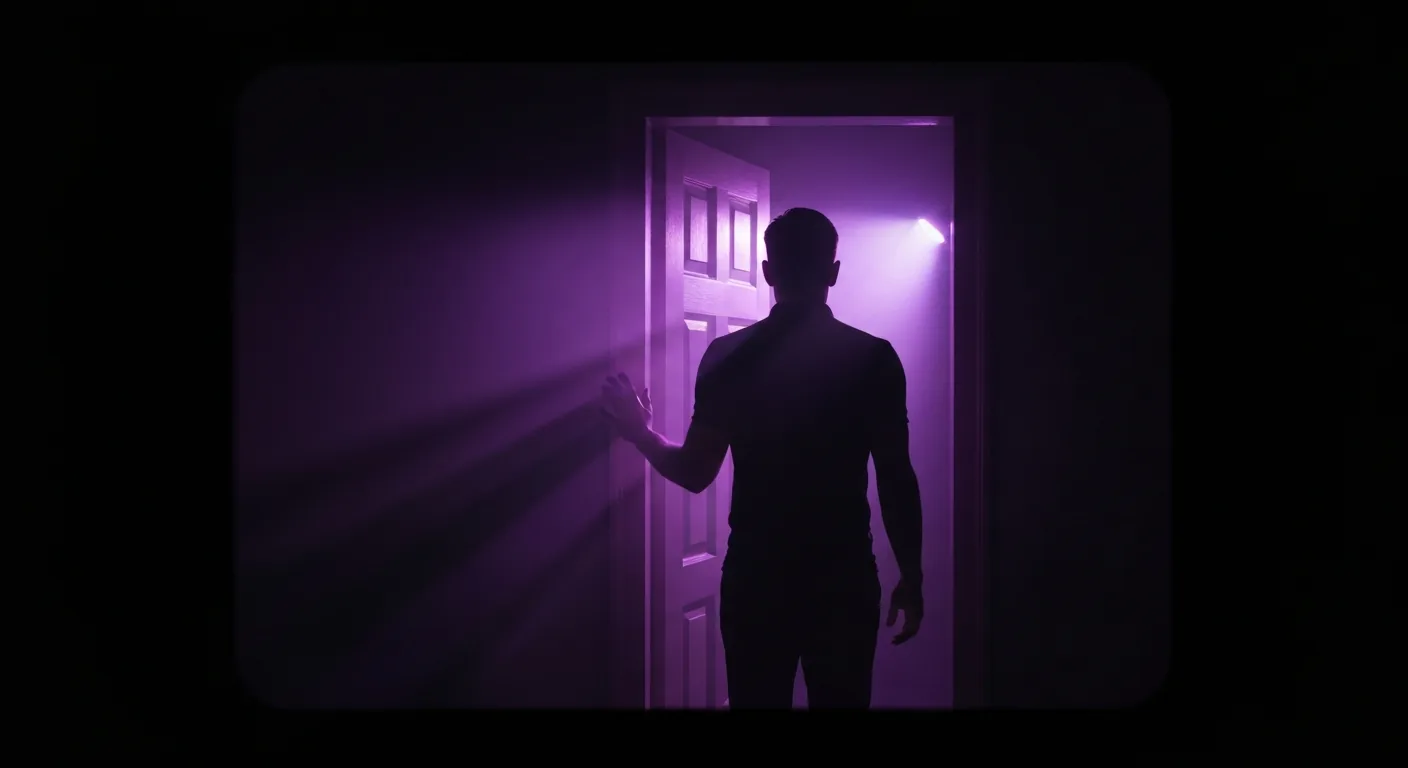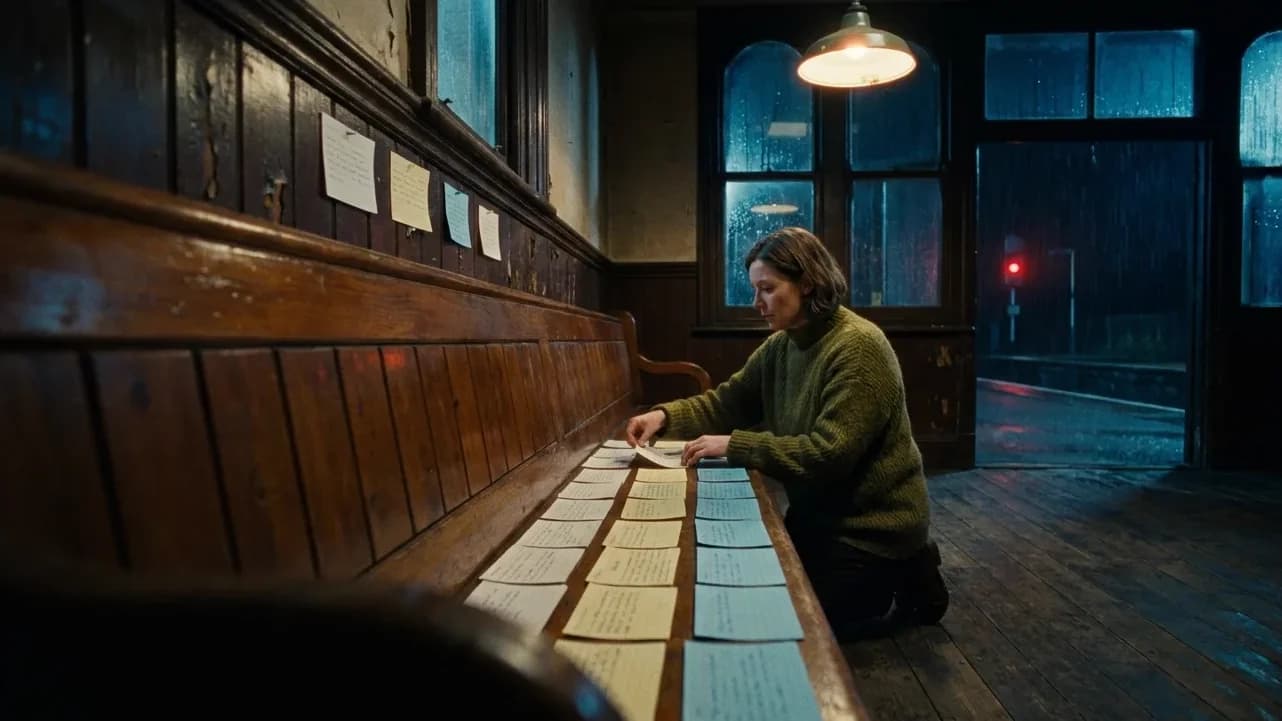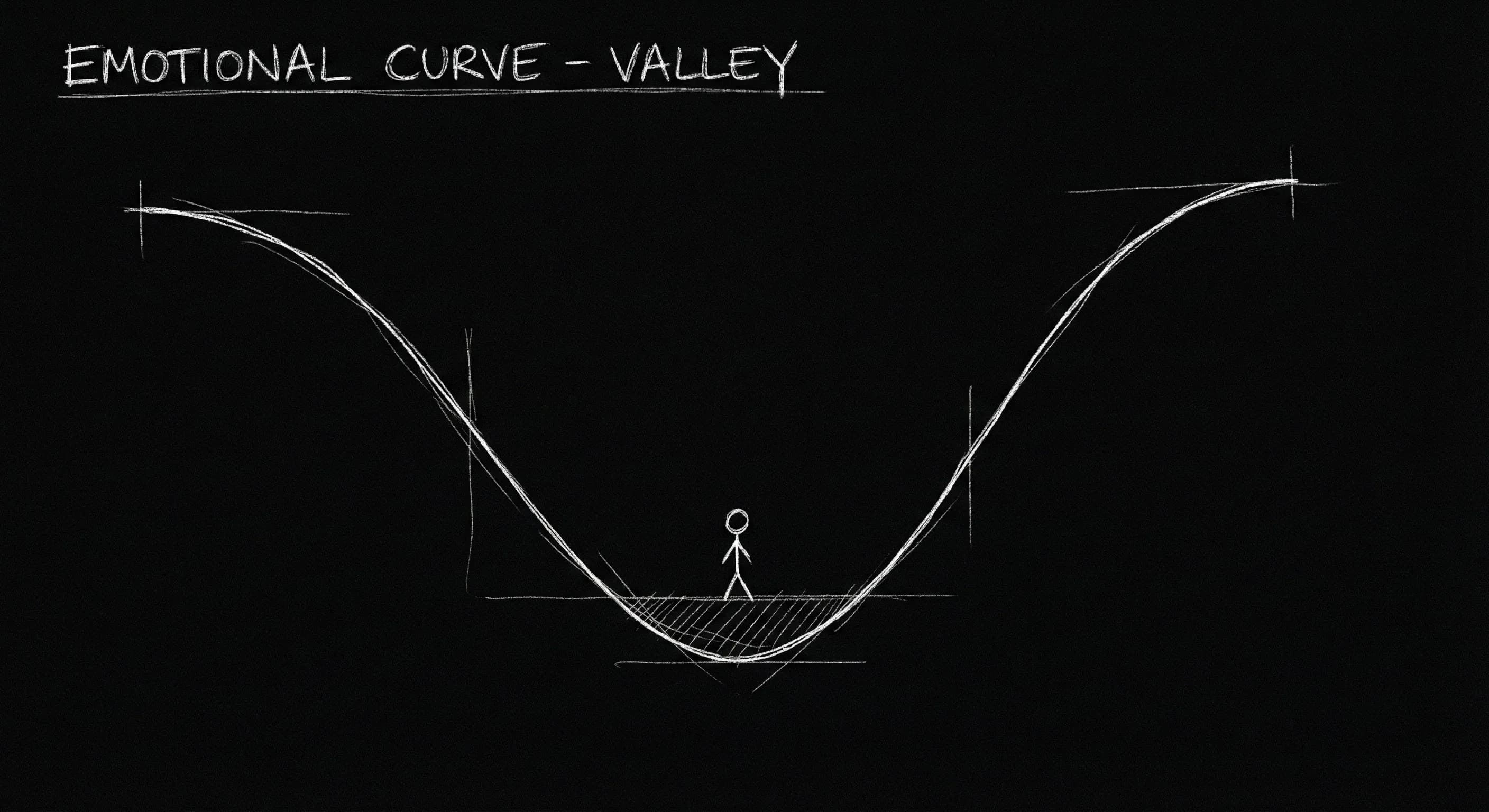

The "all is lost" beat is the lowest point. The plan has failed. The ally is gone. The protagonist is alone, or broken, or out of options. In structure terms it usually lands in the second half of Act Two,after the midpoint, before the rally. Its job is to make the audience feel that the protagonist has lost. Not "things are hard." Lost. So when they get up and choose to continue, that choice means something. The problem is execution. Done badly, the all-is-lost moment feels like melodrama. Overwritten. The character wails. The music swells. The audience rolls their eyes. Done well, it's quiet. Specific. The despair is in the situation and in one or two concrete details,a prop, a line, a silence,not in a paragraph of internal agony. This piece is about how to write that moment so it lands as real despair instead of performance.
The difference between genuine despair and melodrama is often specificity. Melodrama is generic: "Everything is ruined. I've lost it all." Genuine despair is concrete: we see the thing that's gone. The letter. The empty chair. The door closing. We don't need the character to tell us they're devastated. We see the aftermath. We see them alone in a space that used to mean something. We see the one action that reveals the state (they don't answer the phone; they leave the thing behind; they sit in the dark). The writer's job is to show the low through situation and behavior, not to announce it through dialogue or overwrought action lines.
Why the Beat Exists
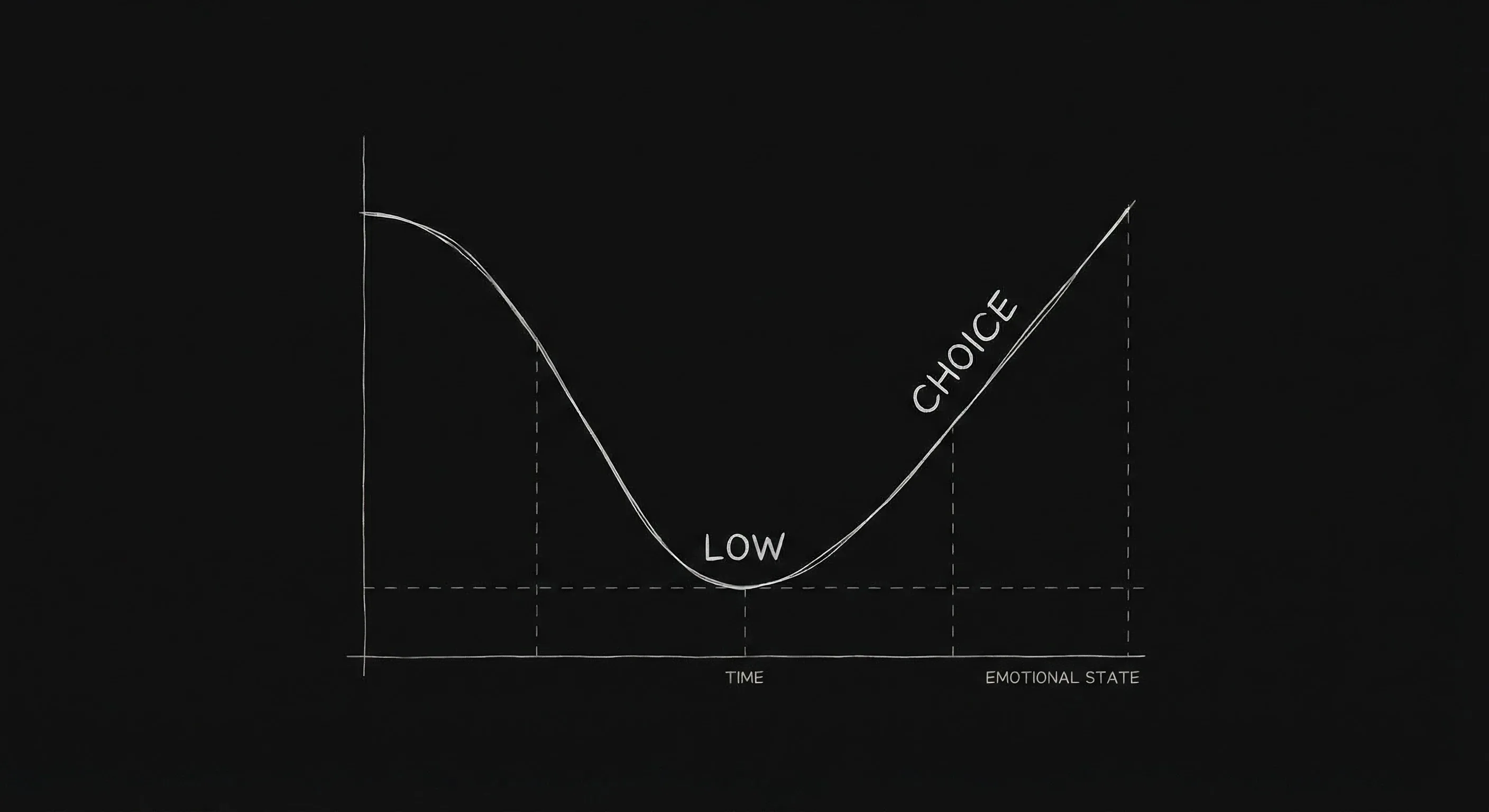
Structurally, the all-is-lost moment does two things. It raises the cost of everything that came before. The protagonist has now lost something real,a person, a chance, a belief. And it makes the rally possible. The character has to hit bottom before they can choose to get up. If the "bottom" isn't low enough, the choice to continue feels cheap. The audience needs to believe that the protagonist could quit. That walking away would be reasonable. When they don't walk away,when they commit to one more try,the audience feels the weight of that commitment. So the all-is-lost moment isn't optional decoration. It's the valley that gives the third act its height. For more on what happens after the low,the turn from reactive to active,see our guide on the midpoint shift; often the shift is the protagonist's response to the all-is-lost moment, or the rally that follows it.
Relatable Scenario: The Heist Gone Wrong
The team has failed. The money is gone. One of them is dead or in custody. The protagonist is in a motel room, alone. Melodrama: they punch the wall, they cry, they say "It's all my fault." Genuine despair: they sit on the bed. The room is silent. We see the second chair,empty. We see them look at their phone. No calls. They put the phone down. They don't call anyone. Maybe they look at a photo. They don't speak. The situation does the work. We know they've lost the team. We know they're not reaching out. We don't need them to say "I've lost everything." We see the empty chair. We see them not answering when the phone finally rings (or answering and saying nothing). The despair is in the specifics: what's missing, what they do (or don't do), what they don't say. For more on structuring the emotional curve of a script, see our piece on writing a "Dark Night of the Soul" that resonates,same beat, same need for restraint.
Relatable Scenario: The Relationship Drama
The relationship has broken. One of them has left. The all-is-lost moment isn't the fight,that was the midpoint or earlier. The all-is-lost is after. The protagonist is in the space they shared. Melodrama: they throw things, they sob, they say "I'll never love again." Genuine despair: they're in the kitchen. They make coffee. One cup. They used to make two. They sit. They don't drink it. Or they go to bed and we see the other side of the bed,empty, untouched. The detail does the work. The character doesn't have to explain. We feel the absence. We feel the habit (one cup, one side of the bed) that no longer has a purpose. That's despair without melodrama. It's anchored in place and object and silence.
The Trench Warfare Section: What Beginners Get Wrong
Telling instead of showing. "Sarah feels like her world has collapsed." "He is overwhelmed by despair." Cut it. Let the situation and the behavior convey it. We see the empty room. We see them not answering. We see the one gesture (dropping the thing, leaving the door open) that implies the rest. If you have to name the emotion, you haven't written the moment.
Too much dialogue. The character doesn't need to say "I've lost everything" or "It's over." In real despair people often don't have the words. Or they say something small. "I don't know." "Okay." "I'm not going to call." One line can do more than a speech. Silence can do more than both. Let the scene breathe. For more on saying less in dialogue, see our guide on dialogue that doesn't sound like exposition,subtext applies to the all-is-lost moment too.
Rushing the beat. You've built to the low. Then you give it one scene,or one page,and move on. The audience hasn't had time to sit in it. Let the moment land. Two or three beats. The character in the space. The silence. The detail. Then the turn (the phone rings, they stand, they make a choice). If you skip the landing, the rally feels unearned.
Making it about performance. Crying, shouting, physical collapse,they can work, but they're easy to overdo. One tear can be more powerful than a breakdown. One quiet "I can't" can be more powerful than a monologue. The audience should feel the despair with the character, not watch the character perform despair. Restraint usually wins.
No concrete loss. "Everything falls apart" is vague. What specifically is lost? The ally. The evidence. The trust. The chance. Name it. Show it. If the audience doesn't know what was lost, they can't feel the weight. The all-is-lost moment needs a specific loss,something the audience has seen the character care about. Then the empty chair, the missing person, or the closed door has meaning.
Try it free
Try Screenweaver for free on your script
It is free. Import your existing project, get a clearer view of your outline, and regain control of your story structure in minutes.
Start FreeComparison: Melodrama vs. Genuine Despair
| Melodrama | Genuine despair |
|---|---|
| Character states the emotion | Situation and behavior convey it |
| Long speeches, tears, collapse | Silence, small actions, one detail |
| Generic ("I've lost everything") | Specific (we see what's gone) |
| Audience watches performance | Audience feels with character |
Use the right column as a checklist. Have you shown the loss? Have you given the moment room? Have you avoided naming the emotion in the action lines? If yes, you're closer to genuine despair. For a structural view of where this beat sits, the 8-sequence approach places the all-is-lost in Sequence 6,the low before the rally in 7 and the climax in 8.
Step-by-Step: Writing the All-Is-Lost Scene
Decide what is lost. One thing. The person, the chance, the proof, the belief. Now decide where the character is. A space that reflects the loss (empty room, wrong side of town, the place they used to share). Now write the scene with no dialogue for the first half. Just action. They enter. They see something (the empty chair, the closed door). They do one or two things (sit, not answer, leave the thing). Then, if you use dialogue, use as little as possible. One line. Or none. Read it back. Cut every line that explains the emotion. Leave only what we see and what we hear. The audience will do the rest. For more on the beat that often precedes this one,the midpoint,see mastering the midpoint: the midpoint raises the stakes; the all-is-lost is when those stakes come due.
The Rally That Follows
The all-is-lost moment isn't the end of the act. It's the bottom. What comes next is the rally. The protagonist chooses to continue. They get up. They make a plan. They reach out. That choice is what the low earns. So don't let the all-is-lost scene run so long that the rally feels tacked on. Give the low its space,then give the rally a clear beat. Often the rally is a single decision: "I'm going back." "I'm going to tell them." "One more time." The audience needs to see that the character could have quit. They didn't. That's the turn. For more on the protagonist's decision to act after being passive, see the midpoint shift,sometimes the shift and the rally are the same moment, or the shift is the psychological version and the rally is the action.
The Perspective
The all-is-lost moment is the valley. It has to be low enough that the audience believes the protagonist could quit. It has to be specific enough that we feel what was lost,and restrained enough that we're not watching melodrama. Show the empty space. Show the one detail. Let silence do the work. Then let the character get up. The rally only means something if the low was real. Write the low with craft, and the rest of the script will stand on it.
Final Step
Build your next script with Screenweaver
Move from ideas to production-ready pages faster with timeline-native writing and AI-assisted story flow.
Try Screenweaver