Script Sides Generator
Free script sides generator, no signup
Paste a script and this free script sides generator pulls the exact scene excerpts you need for an audition or a shoot day, formatted as a proper screenplay PDF. Built for casting directors, ADs, and actors who are tired of copying scenes into a document by hand or creating an account just to export three pages.
Sides are the scenes a production actually hands out: casting sends actors the audition scenes instead of the full script, and ADs pull the day's scenes for the call sheet packet. The tool parses your sluglines and dialogue cues, so you can pick a character and get their speaking scenes selected automatically, or check off scenes by hand.
Everything runs in your browser. Your script is parsed locally and never leaves your device, whether you paste it or load a .fountain or .txt file.
Paste your script above or load a file to see its scenes and characters.
How it works
The tool reads your text line by line using standard screenplay conventions: sluglines starting with INT. or EXT. open a scene, uppercase lines followed by dialogue are character cues, and extensions like (V.O.) or (CONT'D) are stripped when matching a character across scenes. Pick a character and the generator selects exactly the scenes where they speak; switch to scene mode to build a shooting packet by hand. The export follows Hollywood layout: Courier 12 on US Letter, a 1.5 inch left margin, standard dialogue indents, a header block with your label and project, page numbers, and an END OF SCENE separator after each excerpt.
How to make sides for auditions and shoot days
Sides exist because nobody hands out the whole script. Casting distributes audition sides so actors prepare two or three scenes instead of 110 pages, and so an unproduced screenplay does not circulate before the production wants it to. On set, ADs pull shooting sides for the scenes on that day's call sheet, so cast and crew carry five pages instead of a binder. A script sides generator automates the tedious part: finding every scene a character speaks in and reformatting those excerpts as a clean PDF.
The etiquette matters more than the formatting. Actors should receive audition sides 24 to 48 hours before the read, enough time to make choices without memorizing the phone book. Sides keep the scene heading, the action lines that set context, and full dialogue exchanges, not just one character's lines pulled out of context. That is why this casting sides generator exports whole scenes: a reader still needs the other half of the conversation.
Every existing sides tool worth mentioning (StudioBinder, WriterDuet, Actors Access) puts this behind an account, and some behind a paid plan. There is no technical reason for that: parsing sluglines and printing Courier is browser work. This script sides generator is free, needs no signup, and never uploads your script, which also means it is safe for material under NDA. Paste, pick, download the sides from your script as PDF, done.
Who this is for
- Casting directors and CD assistants: pull each role's audition scenes in minutes, add a watermark per recipient, and send actors a clean packet instead of a marked-up full script.
- ADs and production coordinators: generate the day's shooting sides for the call sheet packet by checking off the scheduled scenes in script order.
- Actors and self-tapers: when a production sends the full script and says pick your scenes, build your own actor sides with your cues in bold for faster line runs.
From script to shots,in one place.
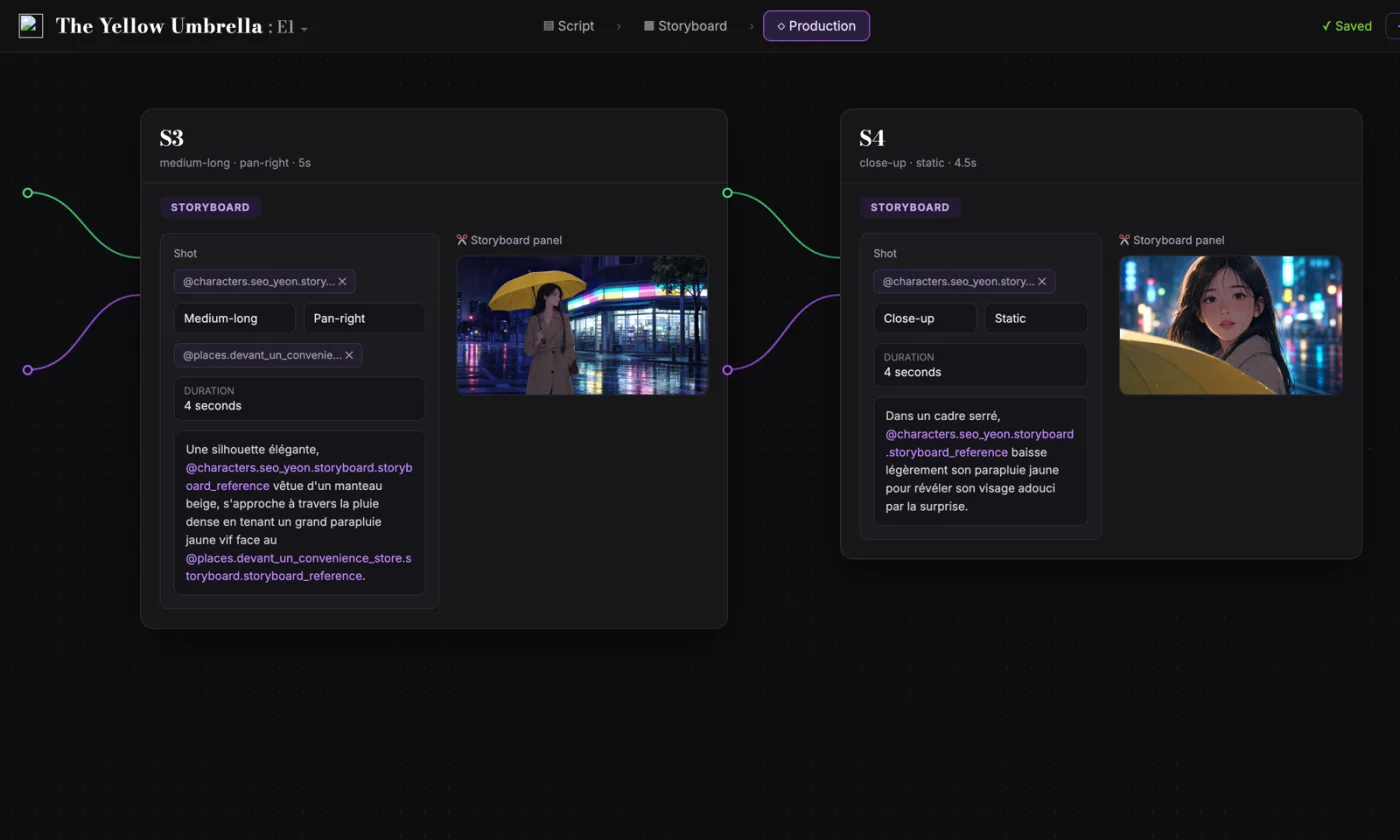
ScreenWeaver turns your screenplay into an automatic shot breakdown, then a storyboard. Characters, locations and references carry from shot to shot.
- $0, does not expire
- PDF and Final Draft export
- Mac, Windows, Linux, iPad
Script Sides Generator: the complete guide
It parses your Fountain or plain screenplay locally, detects scenes and speaking characters, auto-selects a character's scenes or lets you check them off by hand, and exports the excerpts as a standard screenplay PDF with header, optional watermark, and page numbers.
For this workflow, the central problem is clear: pulling a character's scenes out of a script and reformatting them as clean sides is slow manual work, and every existing generator hides it behind an account. Left unresolved, this creates downstream friction and slower decisions. The practical target is properly formatted audition or shooting sides as a Courier 12 PDF, built in the browser in under a minute with no signup.
Limitation to keep in mind: It follows standard slugline and cue conventions, so heavily nonstandard formatting (lowercase headings, cues buried in action) may need cleanup first, and the page count is an estimate, not a Final Draft pagination match.
Advanced workflow: Casting teams generate one watermarked PDF per recipient, naming the reader and date in the footer, so any sides that leak online can be traced to the copy that leaked.
Step-by-Step Workflow
- Paste your script or load a .fountain or .txt file, then confirm the detected scene list matches your draft's sluglines.
- Switch to by-character mode and pick the role: every scene where that character speaks is selected automatically, and you can still uncheck scenes that reveal too much.
- Set the header label (audition sides, shooting sides, or a custom line), the project title, and a watermark naming the recipient and date.
- Check the scene and page summary, export the PDF, and repeat per role or per shoot day, since selections take seconds to change.
Use Cases By Profile
- Casting director: build each role's audition packet from the draft the producers approved, without retyping a line.
- Second AD: pull the scheduled scenes into shooting sides that match the call sheet's scene numbers and order.
- Actor: make personal sides with your own cues in bold to speed up line runs and self-tape setups.
Common Mistakes To Avoid
- Sending an actor only their own lines instead of complete scenes, which strips the context the read depends on.
- Distributing sides the night before a morning audition instead of the standard 24 to 48 hours ahead.
- Skipping the watermark on confidential material, which makes leaked pages impossible to trace.
Professional Best Practices
- For auditions, pick two or three scenes that show different registers of the role, not the three biggest speeches.
- Keep scenes in script order in shooting sides so they match the stripboard and the call sheet's scene column.
- Bold the auditioning character's cues so a nervous reader can find their next line at a glance.
Treat this tool output as a decision support layer, not a replacement for authorship. Great scripts are remembered for specific choices, emotional precision, and clarity of dramatic movement. Tools help by removing noise so your energy can go where it matters: character, conflict, escalation, and payoff. If you review outcomes after each pass and keep an explicit log of accepted changes, your workflow becomes faster and more predictable from draft to draft. That consistency is exactly what professional collaborators value: fewer surprises, clearer rationale, and a script that evolves with intent.
Extended FAQ
How far in advance should actors receive audition sides?
The working standard is 24 to 48 hours before the session. Less than that and prepared reads suffer; much more and the material circulates longer than casting wants. Same-day sides are reserved for cold reads, which test a different skill.
What is the difference between audition sides and shooting sides?
Audition sides are scenes casting selects to test a role, sent to many actors. Shooting sides are the scenes scheduled for one shoot day, pulled by the AD team and distributed with the call sheet so cast and crew work from the same few pages.
How many pages should audition sides be?
Usually 2 to 6 pages covering two or three scenes. Enough to show range, short enough to prepare well in a day or two. Series regular auditions sometimes run longer, but past 10 pages you are asking for a workshop, not a read.
Can I make sides from a Fountain file?
Yes. Load a .fountain file directly or paste the text: the parser reads Fountain sluglines, forced headings, character extensions like (V.O.), and dual dialogue markers. Plain screenplay text pasted from any editor works with the same conventions.
How do ADs pull sides for the call sheet packet?
The second AD takes the scenes on the next day's schedule, extracts them from the latest script revision in shooting order, and prints or sends them with the call sheet. With scene mode, that is a checkbox pass over the schedule and one export.
Should sides include scenes where my character does not speak?
Sometimes. By-character selection finds speaking scenes automatically, but if a silent scene matters to the role (a reveal, a reaction the director cares about), add it manually with its checkbox before exporting.
Frequently asked questions
Sides are the selected scene excerpts a production distributes instead of the full script: the two or three scenes an actor reads at an audition, or the day's scheduled scenes handed out with the call sheet. They keep full scenes intact, including the other characters' lines, so the material still plays in context.
Pick the scenes that show the role's range, usually two or three, keep each scene complete from slugline to last line, and export them in standard screenplay format with a header naming the project and character. This tool does all of that: select the character, adjust the scene checkboxes, and download the PDF.
For auditions, almost always just sides. Productions protect unreleased scripts, and casting wants every actor preparing the same material. Actors typically receive the full script only after being cast, and on some guarded projects only their own scenes even then.
Because sides are a lead magnet: StudioBinder, WriterDuet, and Actors Access all gate sides creation behind signup so they can market their paid platforms to you. Parsing scene headings and printing Courier on Letter paper does not need a server, an account, or your email, so this tool asks for none of them.
No. Parsing, scene selection, and PDF generation all run in your browser with JavaScript. Whether you paste text or load a .fountain or .txt file, the script never leaves your device, which makes the tool safe for scripts under NDA.