
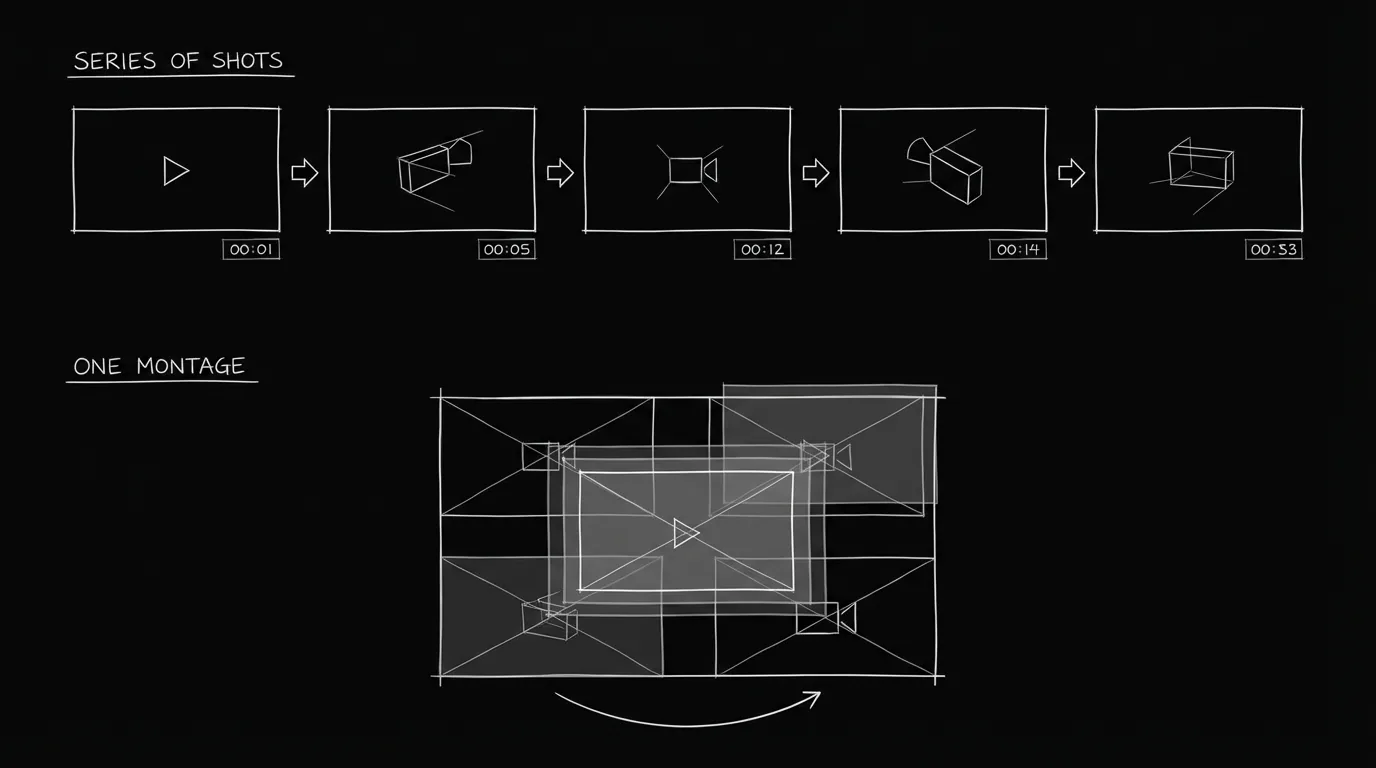
Both give you multiple beats in a short span. But SERIES OF SHOTS and MONTAGE are not the same. A series of shots is a rapid sequence of distinct moments, often same time, different angles or actions. A montage compresses time, we're covering hours, days, or years in a few beats. The format and the purpose differ. Here's how to tell them apart and how to format each.
Series of shots = many moments, often the same scene. Montage = time passing, many scenes or beats in one unit.
Think about it this way. Series of shots: We're in one event (a heist, a fight, a discovery). We cut quickly between shots, different angles, different actions, but we're not jumping days. Montage: We're spanning time. Training. A relationship. A war. The beats are connected by theme or story, not by one continuous event. Our guide on the art of the montage covers when and how to compress time; this piece is about the distinction and the format. For structure, see beat boards.
Free tool: use the Beat Sheet Calculator to map these beats to exact page numbers for your script length.
Series of Shots: Format and Use
Format: "SERIES OF SHOTS" or "SERIES OF SHOTS - [brief label]." Then list the shots, A, B, C, D, each with a short action line. "A - The key turns. B - The safe opens. C - Hands grab the cash. D - The alarm lights up." Use when: One event, many angles or moments. Tension, chaos, or coverage. For action clarity, see fight scenes and car chases.
Montage: Format and Use
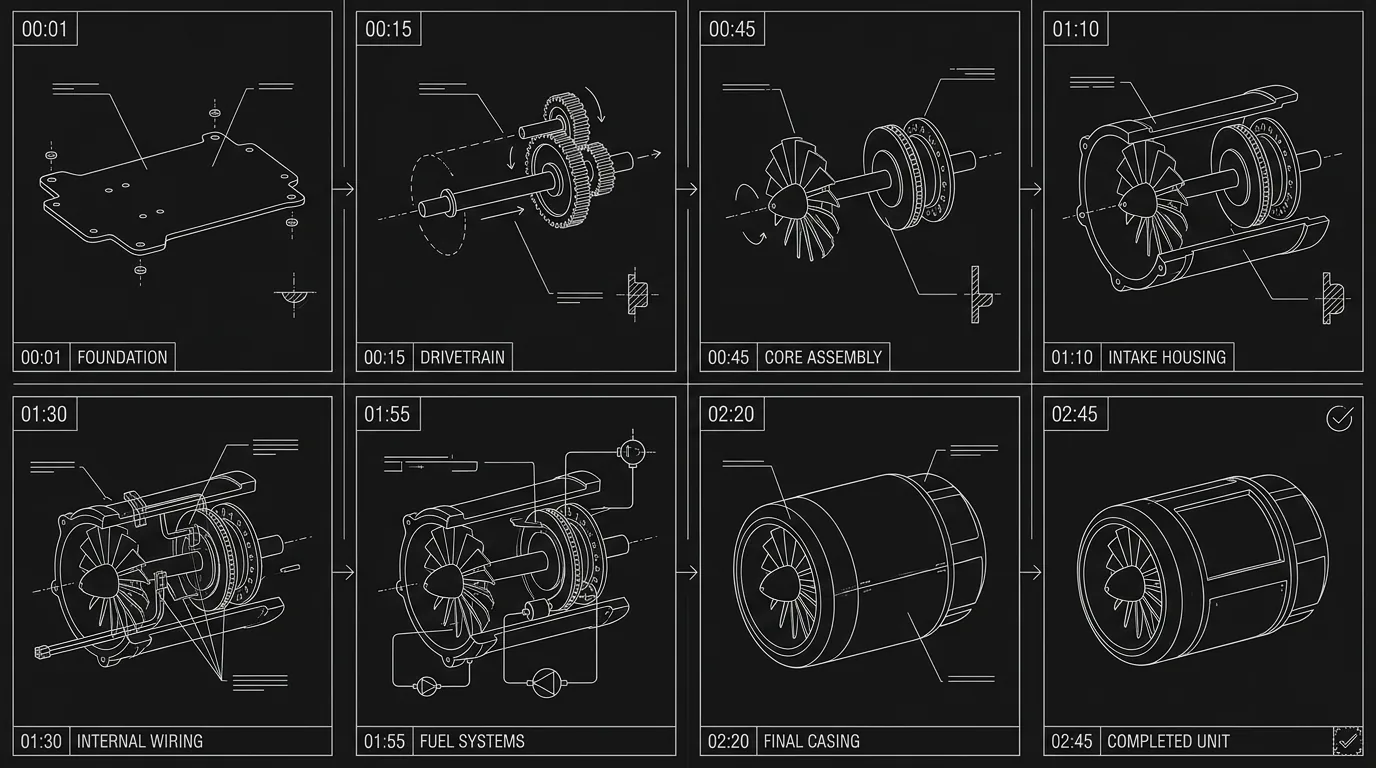
Format: "MONTAGE - [theme or time span]." Then the beats. Each beat can be a mini-slug or an action line. ", She runs. , She lifts. , She runs again. , Race day." Use when: Time is passing. Training, relationship, journey. For montage in depth, see montage and write montage not boring.
Relatable Scenario: The Heist Execution
One job. Many steps. Use: Series of shots. We're in the same event, the heist, cut between actions. For pacing, see micro-pacing.
Relatable Scenario: The Training Arc
Weeks of preparation. Use: Montage. We're compressing time. Beats show progress. For montage structure, see montage.
Try it free
Try Screenweaver for free on your script
It is free. Import your existing project, get a clearer view of your outline, and regain control of your story structure in minutes.
Start FreeThe Trench Warfare Section: What Beginners Get Wrong
Calling it a montage when it's one event. Fix: If we're in one scene or one event, use series of shots. For distinction, see montage.
Calling it a series of shots when time is passing. Fix: If days or more are passing, use montage. For time compression, see montage.
Overlisting. Twenty beats in a series of shots. Fix: Four to eight beats usually enough. For economy, see screenplay format.
Series of Shots vs. Montage at a Glance
| Series of shots | Montage | |
|---|---|---|
| Time | Same event / same span | Time passing (hours, days, years) |
| Purpose | Coverage, tension, chaos | Compression, progress, theme |
| Format | SERIES OF SHOTS - A, B, C... | MONTAGE - beat, beat, beat... |
Step-by-Step: Choosing and Formatting
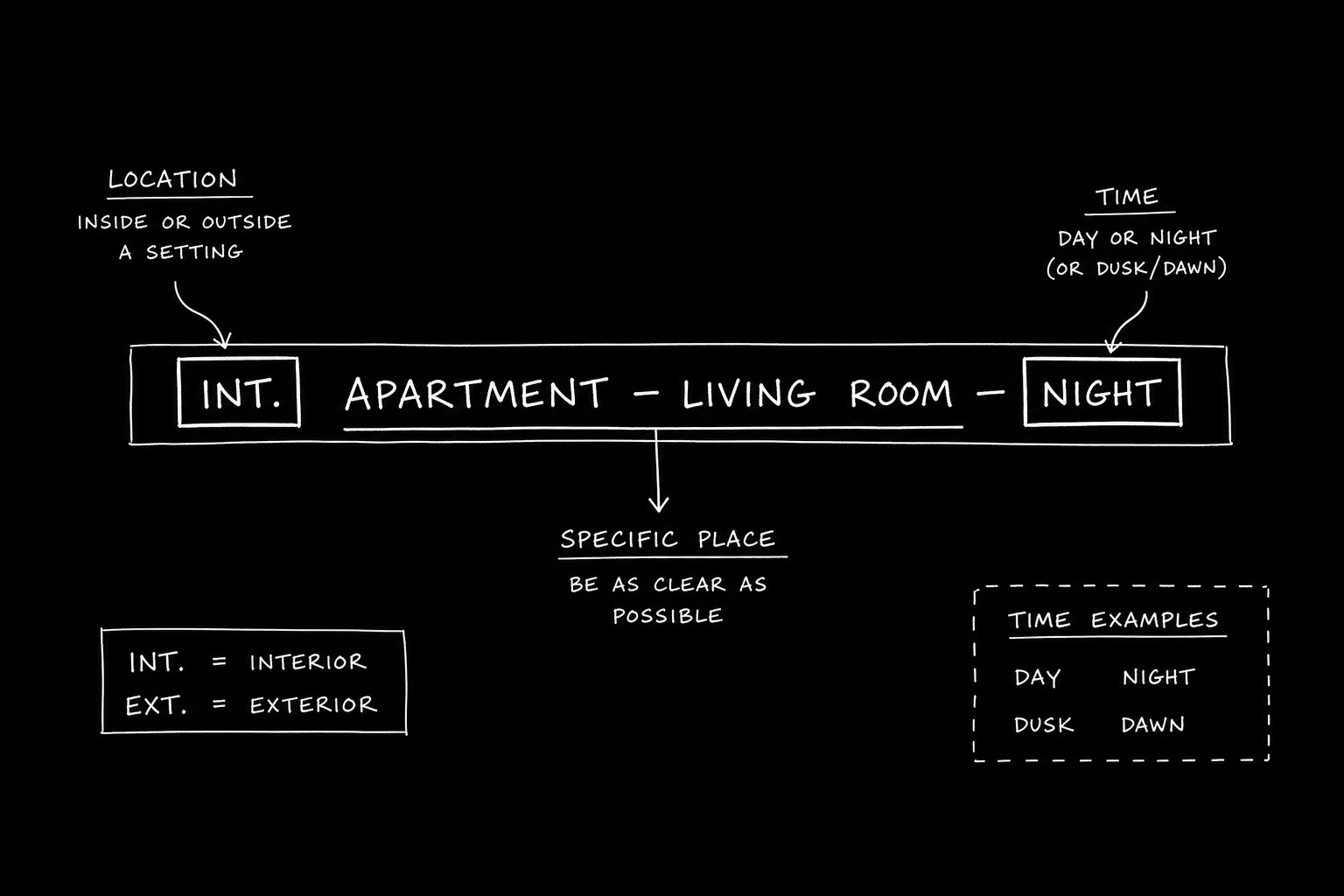
First: Ask, are we in one event or spanning time? Second: One event → series of shots. Time passing → montage. Third: Format with a clear header and short beats. For more, see montage and fight scenes.
The Perspective
Series of shots = one event, many quick beats. Montage = time passing, many beats in one unit. Format each with a clear header and short lines. When you use the right one, the reader and the editor follow. So choose by time. Format clearly. And keep the beats short.
Final Step
Build your next script with Screenweaver
Move from ideas to production-ready pages faster with timeline-native writing and AI-assisted story flow.
Try Screenweaver