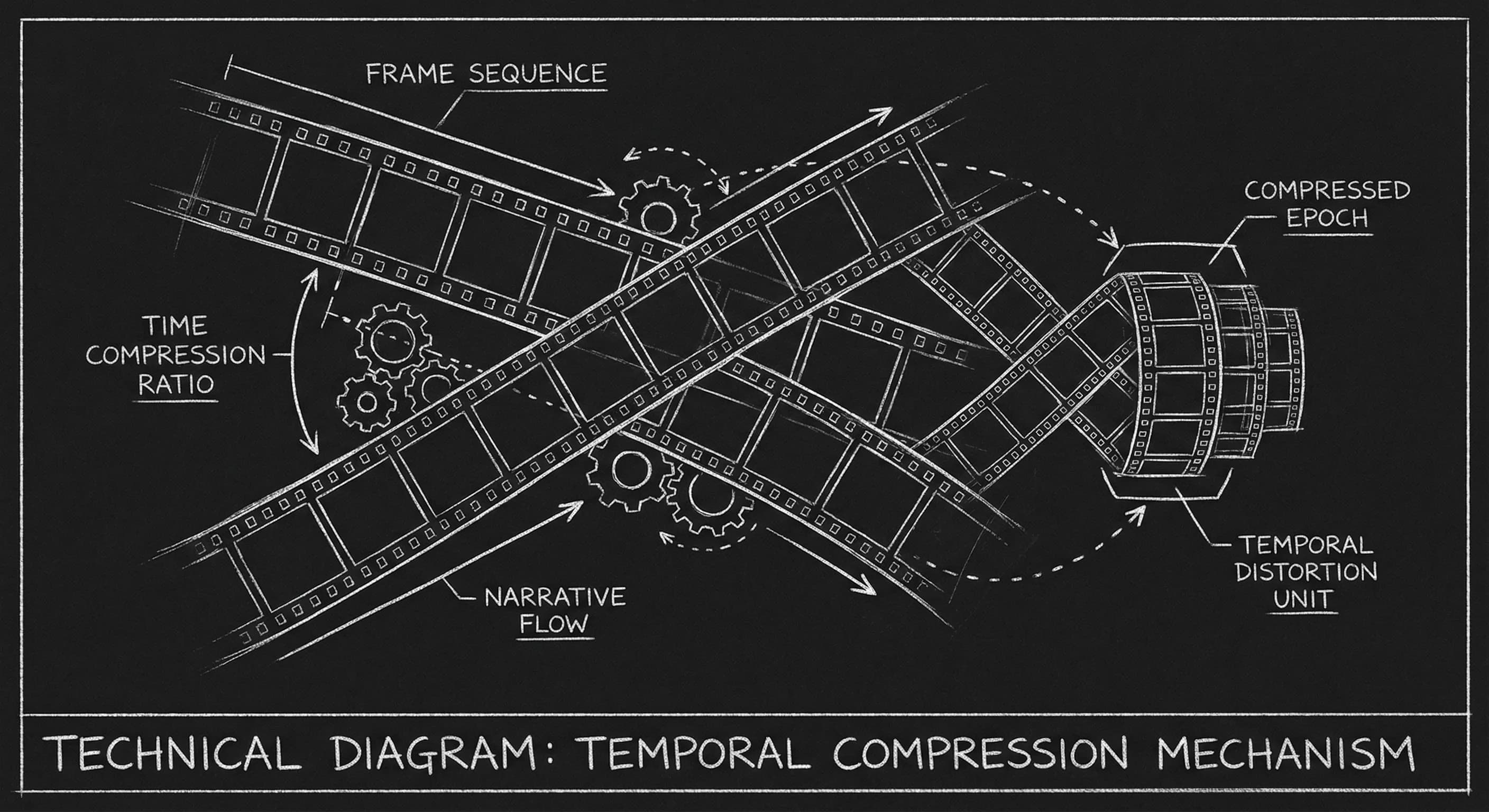

A year passes. A relationship goes from first date to breakup. A soldier trains until he’s ready. You can’t shoot every day. You can’t write every beat. The montage is how you compress time on the page and on the screen. But not all montages do the same job. The training montage builds a skill or a transformation. The passage-of-time montage moves the story forward without dwelling. The difference isn’t just tone,it’s structure. And on the page, the format has to be clear so the reader and the production team know what they’re looking at.
A montage that compresses time without compressing meaning is craft. One that just fills space is a shortcut the audience feels.
Think about it. When a montage works, we feel the time that passed. We feel the relationship that grew or died. We feel the training that turned the character into someone new. When it doesn’t work, we feel the writer skipping. So the question isn’t just “how do I format it?” It’s “when do I use it, and what do I put in it?” Specificity is the answer. Generic images (sunrise, sunset, calendar pages) don’t land. Specific beats,the one fight, the one letter, the one failure,do. Format supports that. You need to show enough to give the editor and the director a shape, without writing a full scene for every shot.
Free tool: use the Slugline Formatter to clean up and standardize your scene headings.
Two Kinds of Montage (And Why the Distinction Matters)
Training (or transformation) montage: The character is getting better at something, or changing. We see a progression,failure to competence, weakness to strength, isolation to connection. The montage has a built-in arc. It often ends on a “ready” moment: the character has arrived at a new state. Rocky running the steps. The hero learning the skill that will save the day. The format usually involves a series of short, vivid beats. Each beat is a moment. We don’t need dialogue in every one. We need images that show change. The risk: cliché. The fix: specificity. What exactly do they do? What’s the one failure? The one breakthrough? Make the progression yours.
Passage-of-time montage: We’re not tracking a single transformation. We’re moving the story forward. A relationship over months. A journey. A war. The montage says “time passed, and here’s what matters.” It can be emotional (the relationship montage) or purely functional (we need to get from Tuesday to the trial). The key is to choose the beats that carry meaning. Don’t just say “six months later.” Show two or three moments that define those six months. The audience will fill the rest. Format: same idea. A series of short beats, often with a super (e.g., “THREE MONTHS LATER”) or implied time jumps between them. Each beat is a mini-scene,one image, one moment, one line of dialogue at most.
| Type | Purpose | Typical arc | Format on page |
|---|---|---|---|
| Training / transformation | Show change or growth | Failure → practice → readiness | Series of short action/dialogue beats under MONTAGE |
| Passage of time | Move story forward | “Time passed; here’s what mattered” | Beats with time stamps or implied jumps |
Both use the same basic formatting tool: the MONTAGE heading and a list of moments. The difference is in what you put in the list. Training montage: the list shows progression. Passage-of-time: the list shows selected moments across a span. As with the 8-sequence approach, each “mini-movie” in your script has a job. The montage’s job is to compress without cheating.
How to Format a Montage on the Page
Industry standard: you use a MONTAGE or MONTAGE SEQUENCE heading. Under it, you list the moments. Each moment can be a short scene heading (e.g., INT. GYM , DAY) or a single line of action. You don’t have to write full scene headings for every beat,you can use brief descriptions. The goal is clarity. The reader should see that we’re in a montage and be able to follow the progression.
Example shape:
MONTAGE , THE TRAINING
, Rocky runs through the streets. Dawn. , In the gym. He hits the bag. His hands bleed. , Adrian watches from the doorway. Says nothing. , The stairs. He falls. Gets up. Runs again. , Fight night. He stands in the ring.
END MONTAGE
You can use “,” or “•” or short slug lines. What matters is that each beat is distinct and that the sequence has a clear end. END MONTAGE or a new full scene heading brings us out. If the montage has dialogue, keep it to one line per beat at most. Montages that turn into full scenes lose the compression. You’re suggesting shots, not writing every one. Give the reader (and the director) the shape. They’ll fill in the rest.
Try it free
Try Screenweaver for free on your script
It is free. Import your existing project, get a clearer view of your outline, and regain control of your story structure in minutes.
Start FreeRelatable Scenario: The Relationship Montage
Your script has a couple. They meet. Then we need to get to the breakup. You could write “Six months pass. They’re happy. Then they’re not.” That’s not a montage; that’s a summary. Or you could write a montage: three or four moments. The first vacation. The first fight. The first time one of them doesn’t come home. The morning one of them packs a bag. We don’t see every day. We see the moments that define the arc. The montage does the work of six months in a page. Format it under MONTAGE, list the beats, end with END MONTAGE or cut to the next full scene. The audience will feel the time. They’ll feel the relationship. Because you gave them specific beats, not a vague “time passed.”
Relatable Scenario: The Heist Prep
The team has to get ready. Skills, gear, intel. You could write a full scene for each,or you could write a training/prep montage. Each beat: one skill, one piece of gear, one failure or success. The montage builds to “we’re ready.” The last beat might be the team assembled, or the blueprints on the table, or the leader saying “Tomorrow.” Format: MONTAGE, list the beats, END MONTAGE. The reader sees the progression. The director sees the shots. You’ve compressed a week (or a month) into one page without losing the sense that work was done.
The Trench Warfare Section: What Beginners Get Wrong
Writing a montage as one long paragraph. “We see him train. Then train more. Then get better. Then win.” The reader can’t tell where one beat ends and the next begins. The production team doesn’t know how many shots you’re imagining. Fix: Break the montage into distinct beats. One line or one short block per beat. Use the format so the montage is parseable.
Filling the montage with generic images. Sunrises. Sunsets. Calendar pages. Clocks. The audience has seen it a thousand times. Fix: Choose specific, story-specific moments. What does this character do? What’s this relationship’s version of “getting closer” or “falling apart”? The more specific, the more the montage earns its place.
Making the montage too long. You’ve written two pages of montage beats. It feels like a second act. Fix: A montage usually works best when it’s tight,five to fifteen beats, depending on the moment. If you need more, ask whether some of it should be full scenes. Montages compress. They don’t replace the need for scenes when the story needs to breathe.
Using a montage to avoid writing the hard part. The relationship is complex, so you montage over it. The training is the story, but you don’t want to write it, so you summarize. Fix: Use montage when time is the point (we need to move forward) or when the progression is clear (failure to readiness). Don’t use it to skip the emotional or narrative work. If the audience needs to feel the relationship or the training, give them enough beats to feel it.
Forgetting to end the montage. We’re in the montage, then suddenly we’re in a full scene with no transition. The reader is lost. Fix: Use END MONTAGE or a full scene heading (INT. LOCATION , DAY) to signal that we’re back in normal scene time. The transition matters for the read and for the breakdown.
Step-by-Step: Building a Montage
Decide the montage’s job. Is it transformation (training, growth) or passage of time (relationship, journey)? List the minimum number of moments that tell that story. For transformation: failure, practice, setback, breakthrough, readiness (or your version). For passage of time: three to five moments that define the period. Write each moment as one to three lines. No full scenes. Suggest the image or the action. Put them under a MONTAGE heading. Add END MONTAGE. Read it. Does it feel like time passed? Does it feel like change? If it feels like a list of random shots, add a throughline,one recurring element (the same location, the same object, the same character) that ties the beats together.
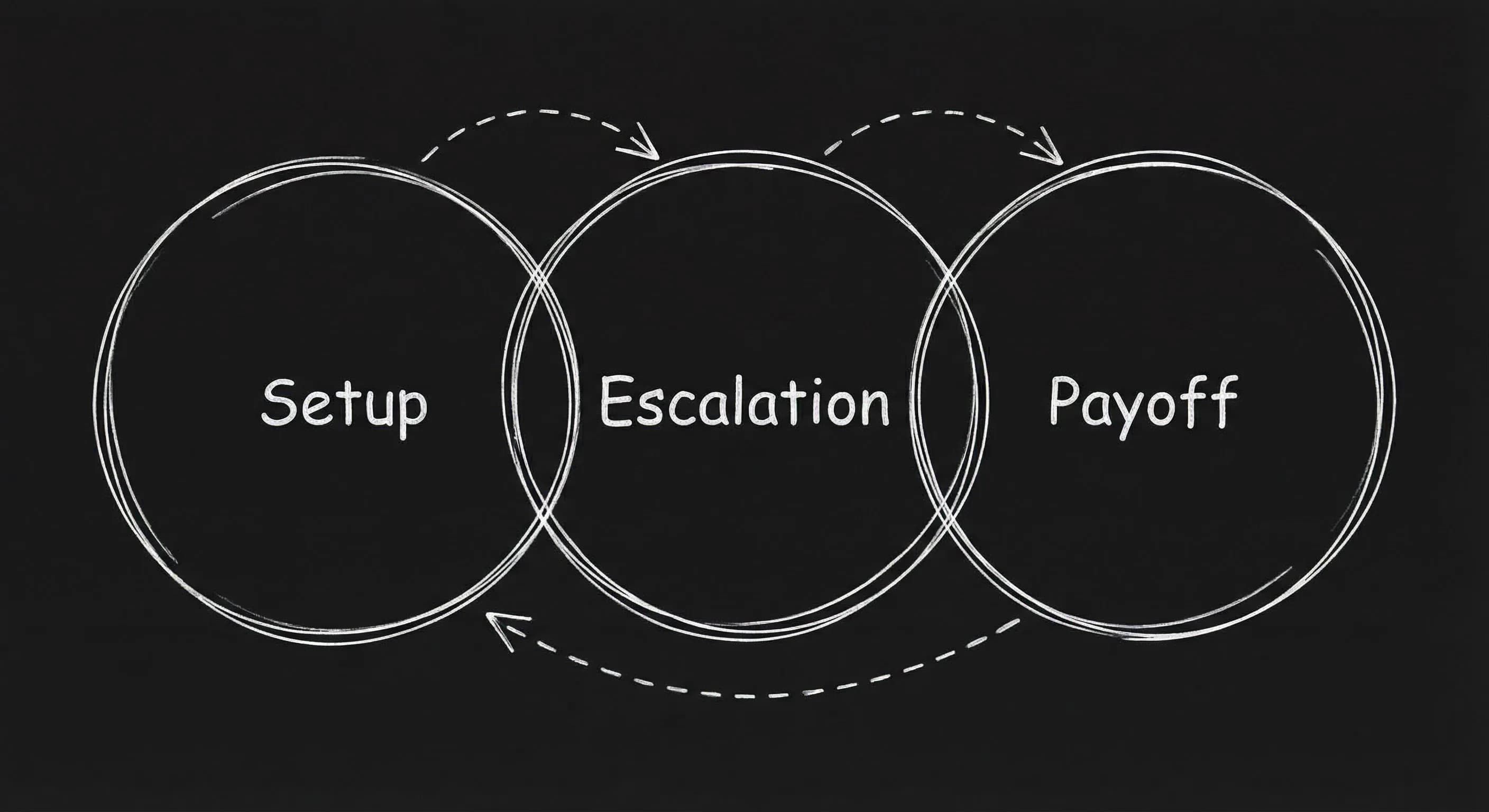
[YOUTUBE VIDEO: Examples of training montage vs passage-of-time montage from well-known films, with script format on screen,how the same formatting tool serves two different narrative jobs.]
When Not to Use a Montage
Don’t use a montage when the moment needs to be a scene. If the first fight in the relationship is the inciting incident for the second act, write the fight. Don’t compress it into one beat. Don’t use a montage when the audience needs to sit with the character,grief, decision, revelation. Montages move. Scenes hold. Choose based on what the story needs. And don’t use a montage because you’re tired of writing. Use it because compression is the right tool for that stretch of the story. Our guide on pacing and scene entry is about cutting the fat within scenes; the montage is about cutting the fat across time. Both are tools. Use the right one.
The Perspective
The montage is the script’s way of saying: we’re not showing every second, we’re showing the seconds that matter. Format it so the reader sees the shape. Fill it with beats that are specific enough to feel real. When you do that, the audience won’t feel cheated. They’ll feel the time that passed,and the change that came with it.
Final Step
Build your next script with Screenweaver
Move from ideas to production-ready pages faster with timeline-native writing and AI-assisted story flow.
Try Screenweaver