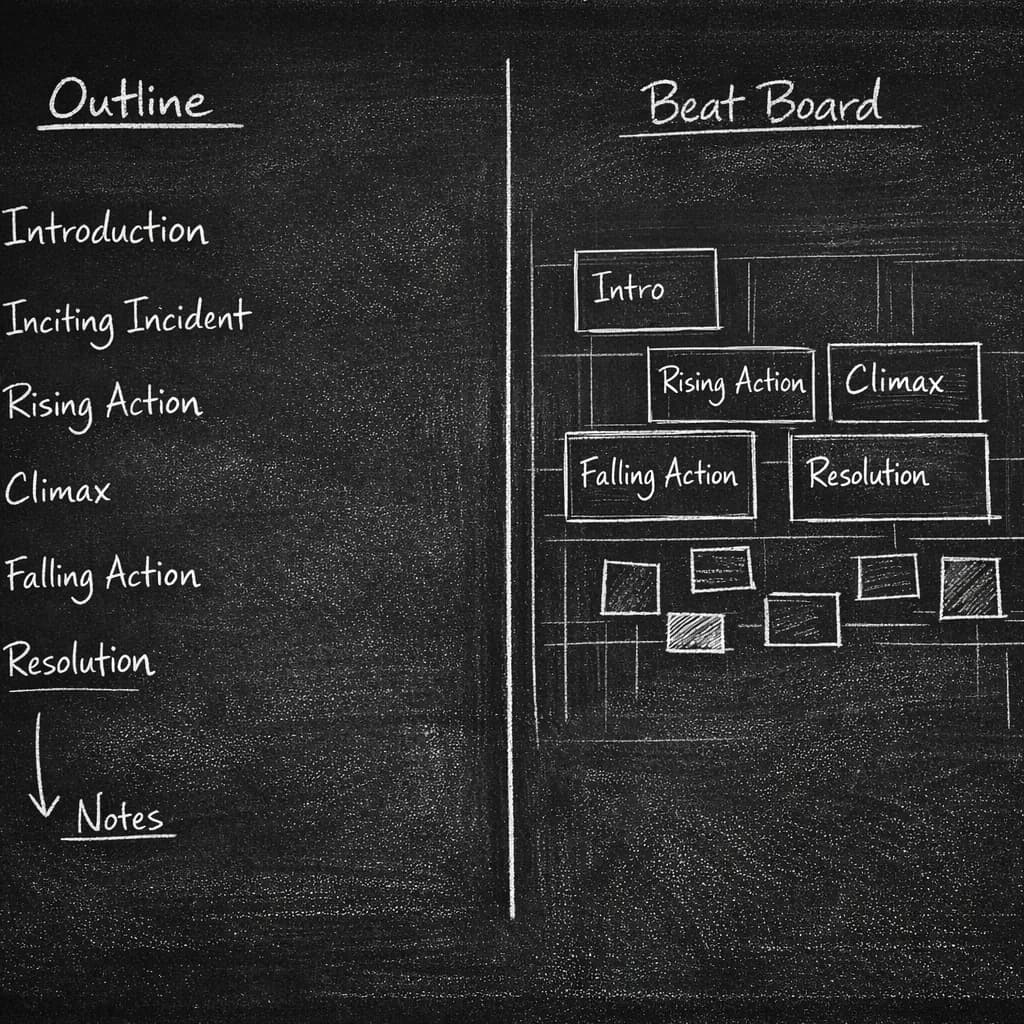

You have a story in your head. You could write a linear outline,Act 1, Act 2, Act 3, bullet points in order. Or you could put the same beats on cards and move them around. Beat boards (and tools that support them, like Celtx’s story planning features) let you see the story as a map instead of a list. Scenes can be reordered. Gaps show up. So do overloaded sections. The outline is the same information in a different form. The difference is how you think. Some writers need the list. Some need the board. And some need both,outline for logic, board for shape.
The outline answers “what happens in order?” The beat board answers “what’s the shape of the thing?”
Think about it. When you write an outline, you go top to bottom. Scene 1, Scene 2, Scene 3. It’s hard to see the whole at a glance. When you use a beat board, you see all the cards at once. You see which act is crowded. You see where there’s a hole. You see the rhythm,short scenes here, long sequences there. You can drag a beat from the middle to the beginning and instantly see how the story changes. That’s not just organization. It’s a different way of planning. For visual thinkers, the board can unlock structure in a way the outline doesn’t. For others, the outline is faster and clearer. The point is to know which tool fits your process,and when to use each.
Free tool: use the Beat Sheet Calculator to map these beats to exact page numbers for your script length.
What a Beat Board Actually Is
A beat board is a visual representation of your story’s beats. Each beat (a scene, a sequence, or a key moment) is a card or a block. The cards are arranged in order,left to right, top to bottom,so you see the sequence at a glance. You can move cards. You can add or remove them. You can color-code by storyline, character, or act. The board doesn’t replace the script. It’s a layer above: the skeleton you see before you write the flesh. Tools like Celtx offer beat boards or similar planning views; so do other screenwriting apps. The principle is the same: visualize the story before you write it.
An outline is the same information in list form. Scene 1: X happens. Scene 2: Y happens. It’s linear. It’s fast to write and easy to read in sequence. It doesn’t give you the same “map” view. You can’t as easily see “Act 2 is twice as long as Act 1” or “I have no beats between the midpoint and the crisis.” So the outline is great for logic and order. The beat board is great for shape and balance. A worked example of the list version, one line per scene, is in how to outline a screenplay.
Beat Board vs. Outline: When to Use Which
| Need | Better tool | Why |
|---|---|---|
| See the whole story at once | Beat board | Cards/blocks show length and distribution |
| Reorder beats quickly | Beat board | Drag and drop; instant view of new order |
| Write a clear sequence for a partner | Outline | Linear list is easy to read and edit |
| Track multiple storylines | Beat board | Color or column by thread; see overlap |
| Speed of first pass | Outline | Faster to type a list than to make cards |
| Spot a sagging middle | Beat board | Visual gap or cluster is obvious |
Neither is “right.” They’re different entry points. Some writers start with a beat board, then translate to an outline before writing. Some start with an outline, then put it on a board to check balance. Some stay in one or the other. The key is to use the tool that helps you see the problems before you’re 60 pages in. As discussed in our guide on the death of the static outline, the real advance is when the outline and the script stay in sync,one object, two views. The beat board is one way to build that first view. The outline is another. You can use both.
Relatable Scenario: The Sagging Middle
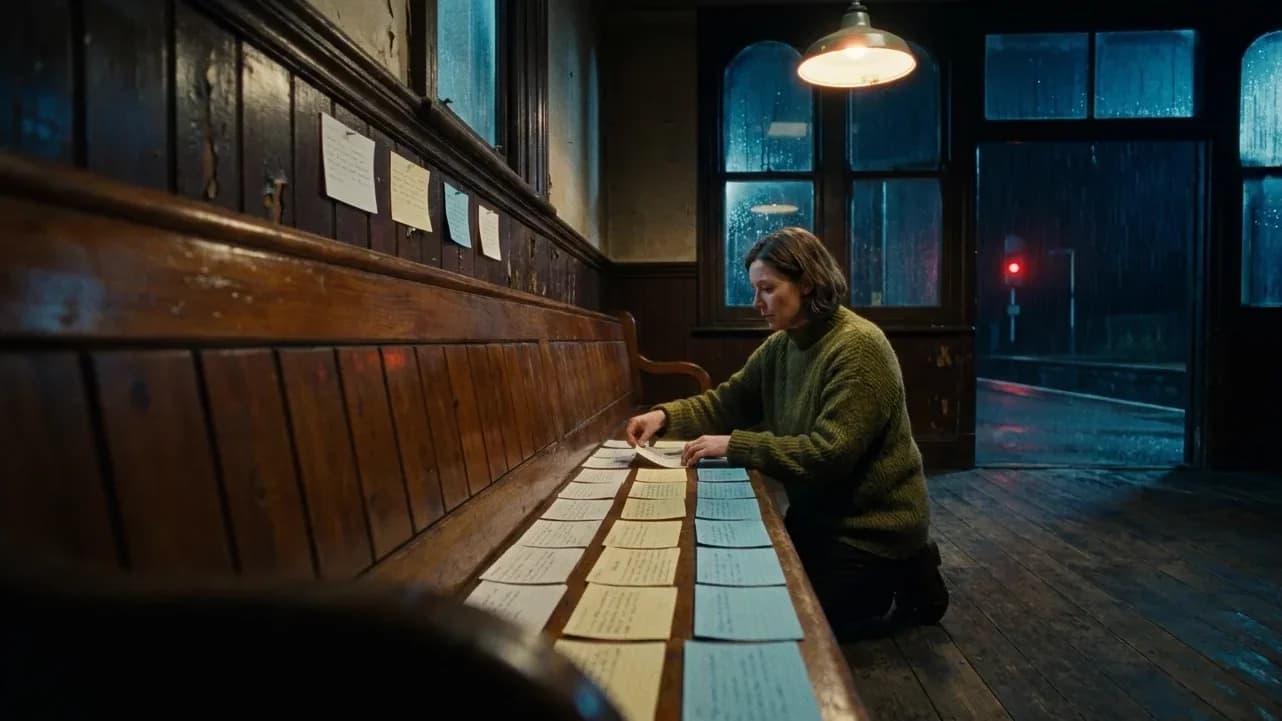
You’ve outlined Act 2. On paper it looks fine,scene after scene. But when you put the beats on a board, you see it: the middle is a long stretch with no major turn. Six cards in a row that all “advance the plot” but don’t change the direction. On the outline you might not notice. On the board the flat line is visible. So you add a beat. Or you move a beat from later. Or you cut two beats and replace them with one that does more work. The board didn’t write the fix. It showed you where the problem was. That’s the value of visualization.
Try it free
Try Screenweaver for free on your script
It is free. Import your existing project, get a clearer view of your outline, and regain control of your story structure in minutes.
Start FreeRelatable Scenario: The Multi-Thread Pilot
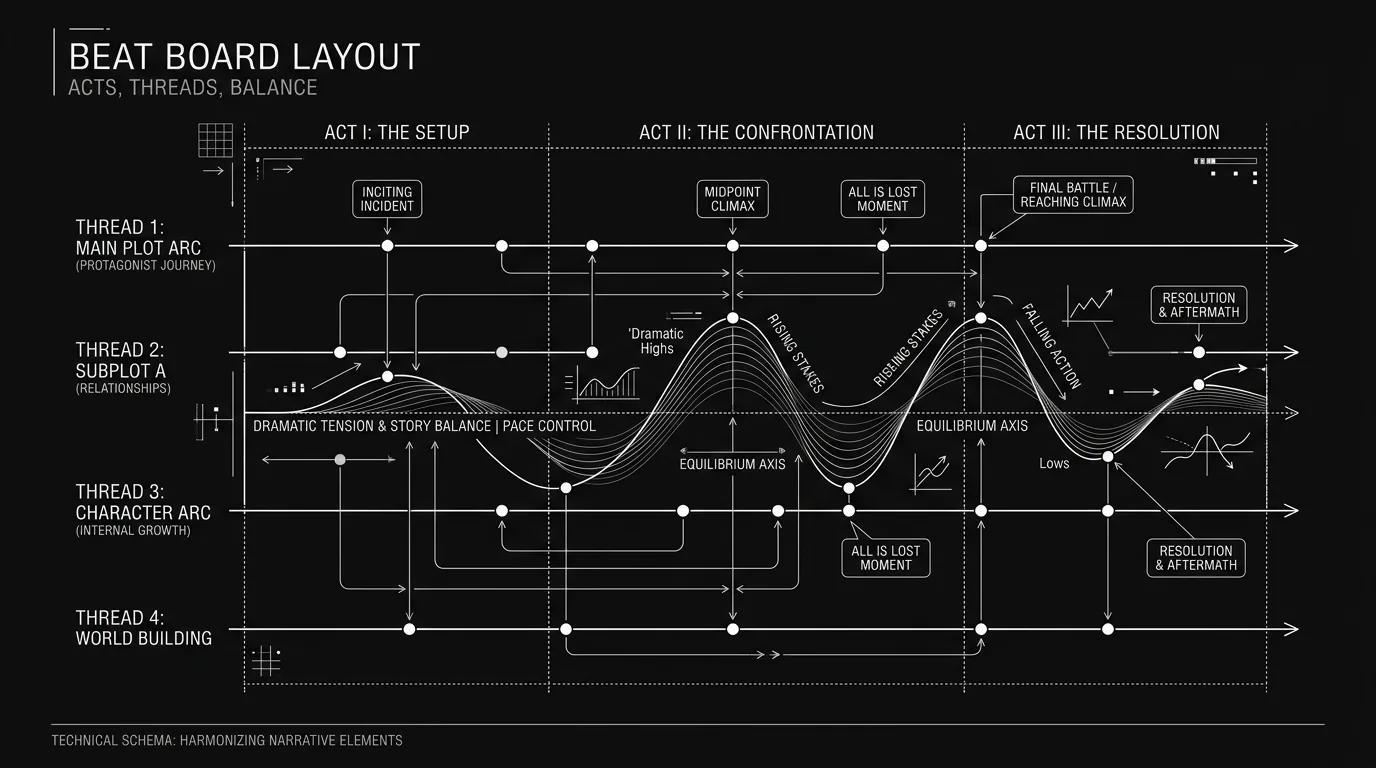
Your pilot has an A-plot, a B-plot, and a character thread. In an outline you list everything in order. On a beat board you can put each thread in a row or a color. You see where the A-plot dominates and the B-plot disappears. You see where two threads collide (or should). You see if one thread has no beats in Act 2. The outline tells you what happens when. The board tells you how the threads balance. For a pilot or a complex episode, that balance is the difference between “it works” and “something feels off.” The board makes “off” visible.
The Trench Warfare Section: What Beginners Get Wrong
Treating the beat board as busywork. You make pretty cards but you don’t use them. You don’t move anything. You don’t ask “what’s wrong with this shape?” Fix: Use the board to diagnose. Where’s the gap? Where’s the clutter? Where does the story feel thin? If you’re not asking those questions, the board is just decoration. Make it a working tool.
Putting too much on each card. Each card is a paragraph. You can’t see the shape anymore,you’re reading mini-essays. Fix: One card, one beat. A few words. “Detective finds the clue.” “Confrontation with the boss.” The board is for structure, not for full scene description. Save the detail for the outline or the script.
Not translating board to script. You have a great board. Then you open a blank script and start writing from memory. The board and the script drift apart. Fix: Use the board as the source of truth. When you write, follow the board. Or use a tool that keeps board and script linked,when you move a card, the script (or outline) updates. That’s the bi-directional ideal.
Using only an outline and never checking shape. Your outline is 80 beats. You don’t realize that 50 of them are in Act 2 until you’re writing and the script feels endless. Fix: At least once, put the outline on a board (or a simple timeline). Look at the distribution. Is Act 2 twice as long as Act 1 and 3? Is there a hole? The outline gives you order. The visual gives you proportion. Use both.
Over-relying on the board for logic. The board shows order but not cause. You move a card and the sequence looks better,but now the motivation for the next beat is broken. Fix: The board is for shape. The outline (or a pass of logic) is for “does this follow?” After you move beats on the board, check that the story still makes sense. Cause and effect matter. The board doesn’t replace thinking.
Step-by-Step: Building a Beat Board from Scratch
List your key beats. One line each. “Inciting incident.” “Meet the mentor.” “First failure.” “Midpoint twist.” “All is lost.” “Climax.” Put each on a card (physical or digital). Arrange them in order. Look at the board. Where’s the gap? Where are there too many beats in a row? Add or remove cards until the shape feels right. If you have multiple threads, color-code or separate rows. Check balance. Then translate to an outline if you like,or go straight to the script, using the board as your map. When you’re stuck, come back to the board. Move a card. See what changes. The board is your structure. The script is what you write from it. Our guide on the 8-sequence approach gives you a default shape; the beat board is where you can see that shape (or another one) before you write.
When the Outline Is Enough
If you think in sequence and you don’t need to see the story at a glance, an outline may be enough. If your story is simple,one thread, clear acts,you might not need a board. The outline is faster. Use it. The beat board is for when you need to see shape, balance, or multiple threads. It’s for when reordering is part of your process. Choose the tool that fits. The goal is the same: know your story before you write 110 pages. Whether that’s a list or a map is up to you.
The Perspective
Beat boards and outlines are two ways to hold the same thing: the order and shape of your story. The outline is the list. The beat board is the map. Some writers need the list. Some need the map. Some need both,list to get it down, map to see what’s wrong. Use the one (or both) that lets you see the story before you’re lost in the script. That’s the point. Not the tool. The clarity.
Final Step
Build your next script with Screenweaver
Move from ideas to production-ready pages faster with timeline-native writing and AI-assisted story flow.
Try Screenweaver