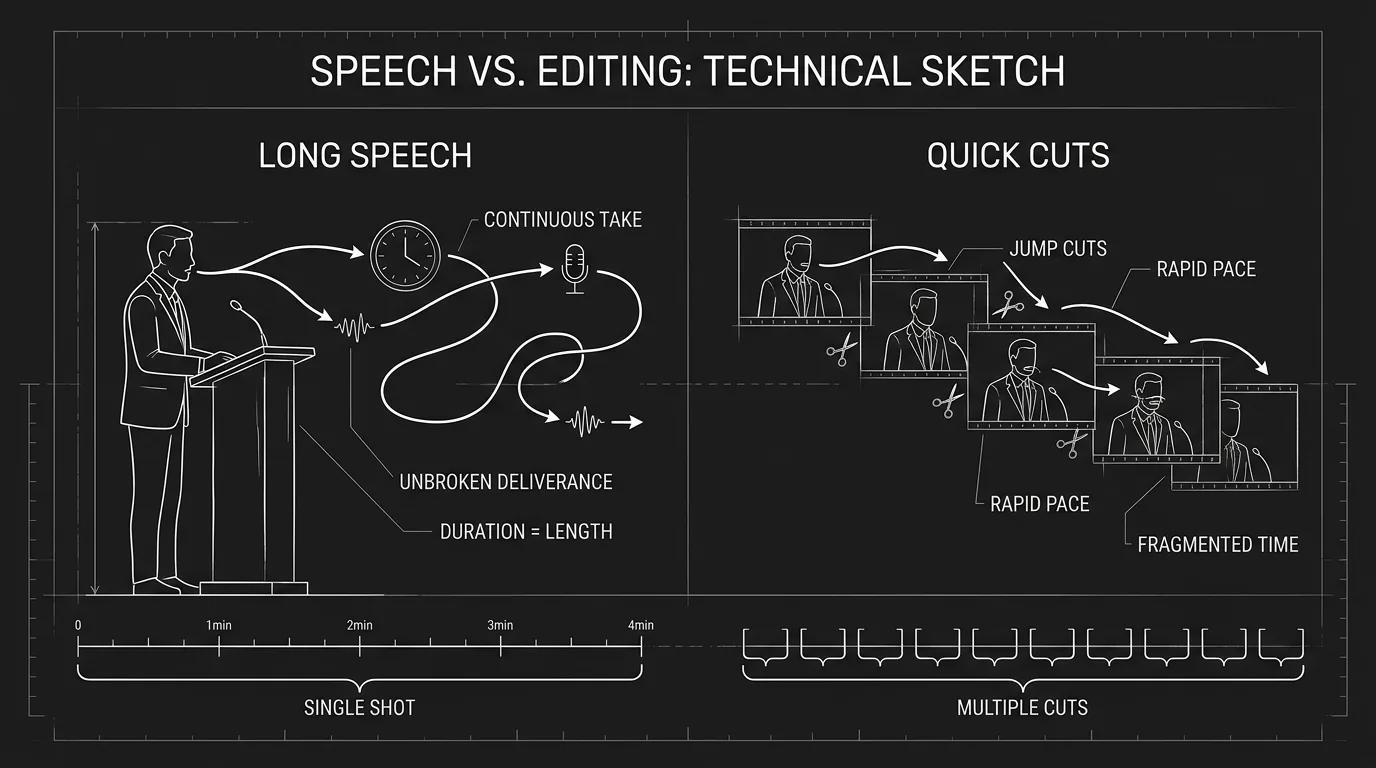

Pacing is faster. Cuts are quicker. Attention is shorter. So is the monologue dead? Not quite. But it's on probation. A long speech works when it earns the time, when the audience wants to hear it, when the character has the authority to hold the room, and when the moment can't be broken into dialogue or action without losing something. When it doesn't earn it, the monologue feels like a pause in the story. Here's when to use long speeches and how to make them land in a fast-cut world.
The monologue isn't dead. The unearned monologue is. If the audience would rather cut away, you don't have a speech, you have a problem.
Think about it this way. In older film and TV, long speeches were more common. The camera stayed. The actor had the frame. Now we're used to rhythm: scene, cut, scene, cut. A monologue is a choice to stay. The audience has to want to stay. That means the speech has to do something dialogue can't, reveal character in a rush, land a theme, or pay off a buildup. It has to come from a character we're willing to listen to for that long. And it has to feel like a moment, not a lecture. Our guide on dialogue and exposition is about keeping meaning without spelling it out; monologues are the exception, sometimes you need the character to say the thing at length. This piece is about when that exception is justified. For subtext when you're not doing a monologue, see subtext.
When a Monologue Works (And When It Doesn't)
Works: The character has earned the right to hold the floor. They've been quiet. They've been building. Now they speak and we're ready. Works: The speech does something, reveals a secret, reframes the story, or states the theme in a way that lands because it's concentrated. Works: The moment demands it, a eulogy, a confession, a verdict. The situation is built for one voice. Works: The audience wants to hear it. We've been waiting for this character to say the thing. The monologue is the payoff.
Doesn't work: The speech is exposition. We're being filled in. That could be dialogue or action. Doesn't work: The character hasn't earned it. They're just the one the writer chose to dump the speech on. Doesn't work: The speech is generic, could be in any script. No character, no situation. Doesn't work: The pace of the rest of the script is so fast that the monologue feels like a stop. We're not in a rhythm that accepts it. For hiding exposition in conflict, see exposition dump: if the long speech is mostly info, break it up or hide it in conflict instead.
Relatable Scenario: The Courtroom Speech
The lawyer's closing argument. The defendant's allocution. The witness who finally tells the whole story. The situation is built for a long speech. The room is listening. The audience is primed. The monologue works because the format (courtroom) and the buildup (trial) have earned it. On the page, you still need to make the speech specific, to this case, this character, this theme. If it could be any closing argument, cut it down or sharpen it. For writing jargon and procedure, see realistic jargon: even in a monologue, authenticity helps.
Relatable Scenario: The Confession That Could Be a Scene
Two people. One has to confess. You've written a two-page monologue. The other character just listens. Ask: Could this be a scene? Back and forth. Questions. Interruptions. Sometimes the confession is stronger when it's broken, when the listener reacts, when the confessor has to keep going because the other person isn't letting them off the hook. Try cutting the monologue into dialogue. If the scene gains tension and clarity, use dialogue. If the power is in the unbroken flow, the character finally saying it all, keep the monologue. For subtext in confessions, see subtext.
Relatable Scenario: The "Theme" Speech at the End
The character states what the story is about. It's the message. The risk is that it feels tacked on, the writer speaking, not the character. Fix: The speech has to be in character. The words, the rhythm, the logic have to fit who's speaking. And it has to feel earned, we've been through the story, and now this character is the one who can say it. If the speech could be moved to the start of the script and nothing would change, it's not earned. If it only makes sense after what we've seen, it can work. For theme and plot, see theme vs plot.
The Trench Warfare Section: What Beginners Get Wrong
Using the monologue for exposition. The character explains the backstory, the plan, or the world. Fix: Break it up. Give the other character questions. Hide the info in conflict. Or cut the speech and show the information in action. Monologues are for character and moment, not for filling the audience in. See exposition dump.
No buildup. The character launches into a long speech out of nowhere. We're not ready to listen. Fix: Earn it. Earlier scenes should make us want to hear this. The character should have been holding back, or the situation should have been building. The monologue is the release.
Generic language. The speech could be in any movie. It's full of "we all know" and "in the end" and "that's just how it is." Fix: Make it specific. This character. This situation. Their vocabulary. Their logic. Their wound. When the speech could only come from this person in this moment, it lands.
Ignoring the listener. Someone is in the room. They never react. They're a prop. Fix: Even if they don't speak, give them reactions in action lines. A look. A shift. The monologue is happening to someone. Show that it lands, or doesn't.
Making every big moment a monologue. The climax is a speech. The emotional peak is a speech. It gets predictable. Fix: Vary. Sometimes the big moment is silence. Sometimes it's one line. Sometimes it's action. Reserve the monologue for when only a long speech will do. For silence, see writing silence.
Try it free
Try Screenweaver for free on your script
It is free. Import your existing project, get a clearer view of your outline, and regain control of your story structure in minutes.
Start FreeMonologue: When to Use vs. When to Cut or Convert
| Use monologue | Convert or cut |
|---|---|
| Situation built for one voice (eulogy, verdict, closing argument) | Exposition that could be dialogue or action |
| Character has earned the floor; we've been waiting | Character hasn't earned it; we're not ready to listen |
| Speech does one clear thing (reveal, reframe, state theme) | Speech is generic or could be in any script |
| Pace of the script can hold a pause for the speech | Rest of script is so fast the speech feels like a stop |
When in doubt, try the scene as dialogue first. If the monologue version is clearly stronger, keep it. If not, cut or convert.
Step-by-Step: Writing a Monologue That Earns Its Time
First: Ask if this has to be a monologue. Could it be a scene? If yes, try the scene. Second: If it stays a monologue, earn it. What has happened earlier that makes us want to hear this now? Third: Make the speech specific. This character's words. This situation. No generic wisdom. Fourth: Give the listener reactions in action lines, even if they don't speak. Fifth: Keep it as short as it can be and still do its job. Trim every sentence that doesn't need to be there. Sixth: Read it out loud. If you want to skip ahead, the audience will too. Cut or tighten. For dialogue that avoids exposition, see writing dialogue. For when silence is stronger, see writing silence.

The 2026 Pacing Question
Audiences are used to fast cuts and short beats. That doesn't mean the monologue is obsolete. It means the bar is higher. The speech has to justify its length. It has to feel like an event, something we've been building to. When it does, the contrast with the rest of the pace can make it stand out. When it doesn't, it feels like the script stopped. So use long speeches when they're earned, specific, and doing work dialogue can't. Otherwise, break them up or cut them. The monologue isn't dead. The unearned one is.
The Perspective
Use a monologue when the situation earns it, the character has earned the floor, and the speech does something only a long speech can do. Don't use it for exposition, use dialogue or action. Make the language specific. Give the listener reactions. Keep it as short as it can be. In 2026 the monologue is a choice, not a default. When it earns its time, it still lands. When it doesn't, it's a pause the audience wants to skip. So earn it. Then write it.
Final Step
Build your next script with Screenweaver
Move from ideas to production-ready pages faster with timeline-native writing and AI-assisted story flow.
Try Screenweaver