Mockumentaries live in the gap between fiction and reportage. Characters speak to someone off-camera. Crews "capture" moments that were written. The mockumentary screenplay format must make that dual reality obvious on the page, or readers assume they are watching a standard dramatic scene with odd dialogue tags.
Talking heads are not filler. They are confession booths, comic engines, and exposition knives. Format them with the same precision you would give a heist or a chase.
In a mockumentary, the camera is a character even when it has no dialogue. The page should show where the lens is allowed to be.
How It Works: The Interview as a Formal Unit
Treat interviews as repeatable units with three layers:
- Production frame: Where we are, who is on camera, what kind of interview this is (sit-down, walk-and-talk, ambush).
- Performance layer: What the subject wants the camera to believe.
- Story layer: What the scene actually reveals to the audience.
Standard screenplay scenes hide the apparatus. Mockumentaries reveal it selectively. Your format choices signal tone: deadpan office comedy, true-crime parody, relationship collapse captured late at night.
Platform and Use-Case Sections
Single-Camera Mockumentary Series
Series like workplace comedies rely on interview cutaways that reframe what we just saw. On the page, tag these as INTERVIEW or TALKING HEAD segments with a clear return to narrative scenes. Keep interview answers shorter than you think. Editors will cut over B-roll; the script should still read cleanly without that B-roll.
If an interview references action we have not written yet, flag time: (LATER IN INTERVIEW) or (REFERRING TO SCENE 12) in development drafts. Remove parenthetical clutter in production drafts if your team uses scene numbers.
Feature Mockumentaries: Structural Spine
Feature-length mock docs often use interviews as spine, with set pieces as flashpoints. You may alternate INT. INTERVIEW SETUP - DAY blocks with EXT. EVENT - DAY sequences. Consider a table of interview subjects at the front of your show bible or outline so tone stays consistent.
Cross-reference flashbacks and dream transitions if interviews trigger memory segments. Mockumentaries frequently blur present testimony with past reenactment. Label reenactments explicitly: REENACTMENT - NOT INTERVIEW.
Hybrid Drama with Documentary Interludes
Some dramas drop interview segments without full mockumentary grammar. If you use one interview in an otherwise traditional script, format it distinctly so the reader does not think you forgot slug lines. One odd block reads as mistake. A pattern reads as style.
Step-by-Step: Formatting Talking Heads Cleanly
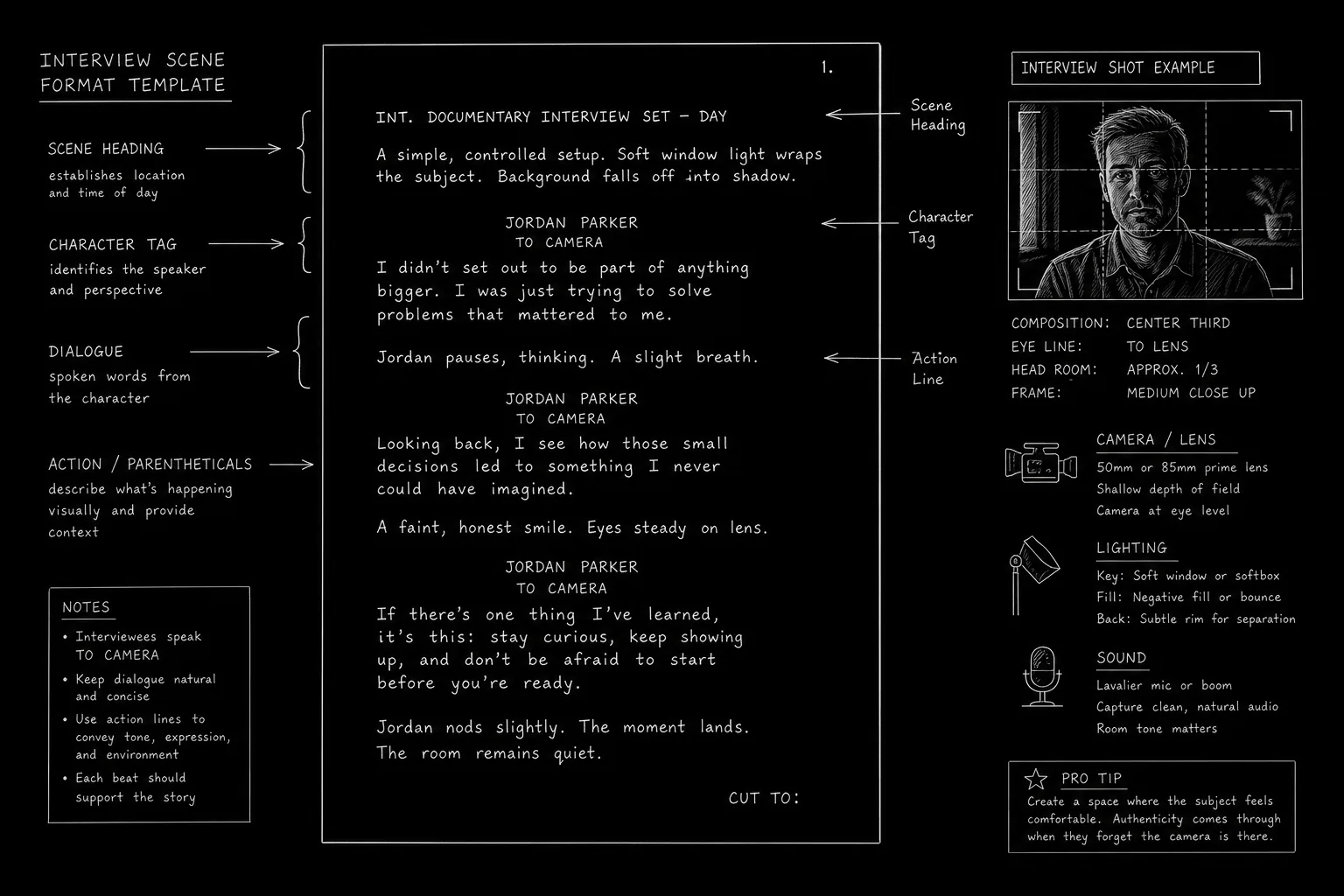
Step 1: Create a standard interview slug. Example: INT. CONFERENCE ROOM - INTERVIEW SETUP - DAY. Reuse it. Consistency trains the reader.
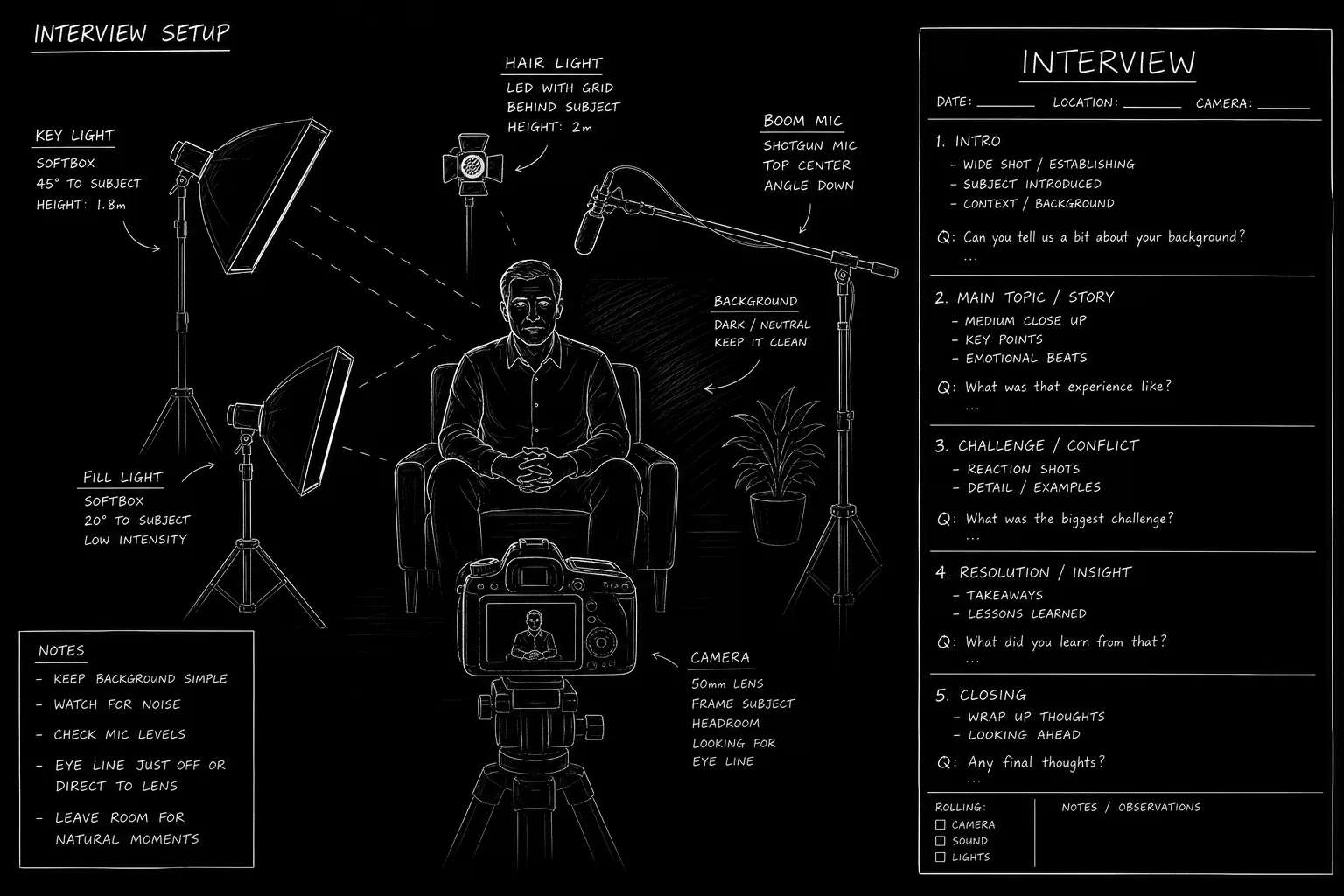
Step 2: Establish the crew presence once per location. "Handheld camera. Boom mic visible. FLORAL ARRANGEMENT forced into frame." One line. Do not re-describe the crew every return.
Step 3: Tag the subject. MARCO (INTERVIEW) or MARCO (TO CAMERA) on first line, then MARCO if clear.
Step 4: Write questions only when they matter. If the interviewer is off-camera and generic, use (INTERVIEWER O.S.) sparingly. Many scenes work with subject answers alone.
Step 5: Break on lies and tells. Action lines between dialogue lines carry mockumentary gold: subject adjusts tie, laughs too long, looks to producer off-camera.
Step 6: Exit the interview with intent. END INTERVIEW or cut to scene. If we stay in the same room but leave interview mode, say so: The crew cuts. Marco slumps, no longer performing.
Operational Section: Tags, Ethics, and Production Details
TO CAMERA vs V.O. TO CAMERA means the subject addresses the documentary crew in-scene. V.O. often means narration laid over footage. Pick one grammar and stay consistent. Mixing without reason confuses audio departments.
B-roll and cutaways. You may note (POSSIBLE B-ROLL: warehouse floor) as optional texture. Do not overload. Three suggested cutaways per interview is plenty.
Overlapping crew dialogue. If producers speak off-camera, tag PRODUCER (O.S.). Keep crew lines minimal unless crew is comic chorus.
Confessional tone markers. Use subtext in action, not quotation marks around "honest" answers. Let performance read through behavior.
Legal and sensitivity. Mockumentaries satirize institutions easily. If characters reference real brands or public figures, clearance may matter in production. The page can use placeholders in early drafts.
Interview length. One strong page beats three repetitive pages. If the subject circles, show one circle, then cut.
| Format element | Purpose | Common mistake |
|---|---|---|
| INTERVIEW slug | Signals apparatus | burying interview in normal scene |
| TO CAMERA tag | Clarifies address | using V.O. for on-set testimony |
| Crew line | Establishes tone | re-explaining camera every beat |
| END INTERVIEW | Mode shift | hard cut with no clarity |
Try it free
Try Screenweaver for free on your script
It is free. Import your existing project, get a clearer view of your outline, and regain control of your story structure in minutes.
Start FreeOutcome and Results: What Good Formatting Achieves
Clean mockumentary formatting produces:
- Instant genre read. The reader knows the rules of the world by page three.
- Editable interview modules. Post teams can lift talking heads without breaking surrounding scenes.
- Performance clarity. Actors know when they are "on" for the documentary within the fiction.
- Pacing control. Interviews become punctuation, not speed bumps.
Test outcomes with a table read. Read interview segments straight through. If they feel like monologues, add interviewer pressure or contradictory B-roll notes in action lines.
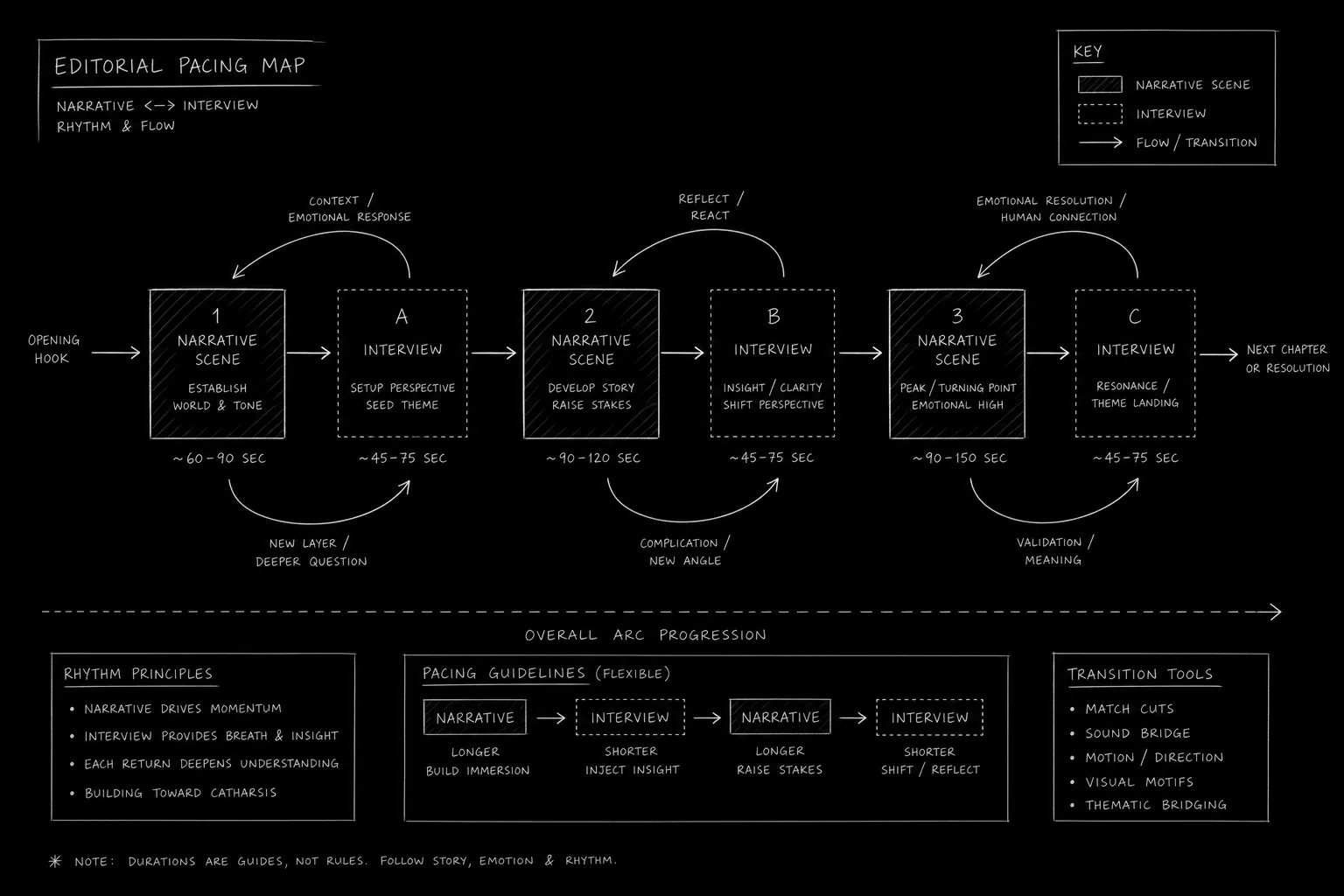
Relatable Scenarios: Three Interview Types That Work
The corrective interview. We saw Marco humiliate an intern in the narrative scene. In interview, Marco insists he is "big on mentorship." The gap is the joke or the tragedy. Format with straight delivery. No wink in the slug line.
The late-night unravel. Same conference room, worse lighting. Subject's tie is loose. Answers get shorter, truer. Note the production shift in one action line: "Ring light off. Only desk lamp." Readers understand the mode change.
The ambush return. Subject thought filming ended. Camera still rolls. Producer asks one last question from off-camera. Use PRODUCER (O.S.) and keep the subject's micro-tells in action lines: eyes to lens, then away.
Each scenario uses the same interview template but different pressure. That repeatability is what makes mockumentary formatting worth learning.
Beginner Mistakes to Fix on the Page
Mistake 1: Interview scenes that read like therapy monologues. Fix with shorter answers and sharper interviewer interruptions, even off-camera.
Mistake 2: Forgetting to reset mode. After interview, characters should move differently in the world. Note when performance ends.
Mistake 3: Identical slug lines for different locations. INTERVIEW SETUP in conference room and parking lot should specify location so production does not assume one set.
Mistake 4: Explaining jokes in action lines. Let contradiction between interview and narrative do the work.
Why It Matters: Old Way vs New Way
The old way: Writers pasted dialogue into normal scenes and hoped readers imagined a camera. Interview segments ballooned with Q&A transcription. Crew appeared and vanished. The script read like a half-converted transcript.
The new way: Writers build interview templates, tag performance mode, and use white space to show lies. The apparatus is part of the pleasure. Format becomes tone.
This parallels spec vs shooting script thinking: you are designing a viewing experience, not listing shots. Mockumentary format is how you keep that experience legible before a frame is shot.
Final CTA and Conclusion
Open your mockumentary draft and color every talking head. If the formatting is inconsistent, readers will blame the writer, not the genre. Standardize your interview slug, your subject tag, and your exit line.
Then ask of each interview: what does the camera learn that the scene alone could not show? Cut interviews that only repeat. Keep interviews that reframe.
Format the lens as carefully as you format the dialogue. The mockumentary voice lives in that gap.
Final Step
Build your next script with Screenweaver
Move from ideas to production-ready pages faster with timeline-native writing and AI-assisted story flow.
Try Screenweaver