Kostenloser Drehbuch-Konverter
FDX-in-PDF-Konverter
Final-Draft-Dateien öffnen ohne Final Draft
Wandeln Sie eine Final-Draft-Datei (.fdx) direkt im Browser in ein korrekt formatiertes Drehbuch-PDF um. Datei ablegen, Seitenvorschau prüfen, PDF herunterladen. Keine Final-Draft-Lizenz, keine Anmeldung, kein Upload: Ihr Drehbuch verlässt Ihren Computer nie.
- Privat: Ihr Drehbuch verlässt diesen Browser-Tab nie.
- Kostenlos, ohne Anmeldung, ohne Wasserzeichen.
- Branchenübliches Layout bleibt: Szenenüberschriften, Figurennamen, Dialog, (MORE) und (CONT'D).
FDX-Datei hier ablegen
Final Draft, Fountain, PDF, Word, Fade In, Highland, Celtx, WriterDuet, Trelby oder reiner Text. Jedes Format lässt sich in jedes Zielformat umwandeln.
Privat von Grund auf: Die Umwandlung läuft in diesem Tab, nichts wird hochgeladen.
So funktioniert es
Eine .fdx-Datei ist XML: Jeder Absatz trägt einen Typ (Scene Heading, Action, Character, Parenthetical, Dialogue, Transition, Shot) und seinen Text, aufgeteilt in Abschnitte, wo sich die Formatierung ändert. Der Konverter liest diese Typen, fette, kursive und unterstrichene Passagen, Szenennummern, erzwungene Seitenumbrüche, Doppeldialoge und die Titelseite. Dann setzt er das Drehbuch auf das Standardblatt: Courier 12 Punkt, US Letter oder A4, linker Rand 1,5 Zoll, Dialog bei 2,5 Zoll, Figurennamen bei 3,7 Zoll, Übergänge rechtsbündig, Seitenzahlen oben rechts ab Seite 2. Dialoge über einen Seitenumbruch bekommen (MORE) und (CONT'D), und eine Szenenüberschrift steht nie allein unten auf einer Seite.
Jedes Drehbuchformat, in beide Richtungen
Jedes Format aus der linken Spalte lässt sich in PDF, Final Draft, Fountain, Word oder reinen Text umwandeln. Apps, für die es hier kein Schreibformat gibt, öffnen alle FDX oder Fountain.
| Format | Lesen | Schreiben |
|---|---|---|
| Final Draft (.fdx) | ||
| Fountain (.fountain) | ||
| Word (.docx) | ||
| Fade In (.fadein) | FDX verwenden, das öffnet die App | |
| Highland (.highland) | Fountain verwenden, das öffnet die App | |
| Celtx (.celtx) | FDX verwenden, das öffnet die App | |
| WriterDuet (.wdz, .json) | FDX verwenden, das öffnet die App | |
| Trelby (.trelby) | FDX verwenden, das öffnet die App | |
| Text (.txt) |
FDX in PDF umwandeln ohne Final Draft
Die typische Lage: Ein Co-Autor, eine Produzentin oder ein Wettbewerb schickt Ihnen eine .fdx-Datei, und Sie haben kein Final Draft. Zum Lesen oder Weitergeben brauchen Sie es auch nicht. Ein Final-Draft-zu-PDF-Konverter erledigt das, was Sie eigentlich wollen: ein sauberes, druckbares PDF, das so aussieht, wie der Autor es formatiert hat. Dieser hier ist kostenlos, ohne Konto und ohne Wasserzeichen.
Allgemeine Dokumentkonverter scheitern an dieser Aufgabe auf eine bestimmte Weise. FDX speichert die Rolle jeder Zeile in einem Type-Attribut, und das Layout (Bundsteg, Dialogspalte, Position der Figurennamen) entsteht nur, wenn der Konverter diese Rollen anwendet. Werkzeuge, die die Datei als beliebiges XML oder Rich Text behandeln, liefern eine linksbündige Courier-Wand, die kein Leser ernst nimmt. Dieser Konverter wendet die Rollen an, also liest sich das PDF wie ein Ausdruck aus Final Draft.
Dazu kommt der Datenschutz. Die meisten Seiten, die Final-Draft-Dateien online umwandeln, verlangen, dass Sie das Drehbuch auf ihren Server hochladen. Bei einem unverfilmten Drehbuch ist das ein echtes Risiko, und ein unnötiges: FDX ist XML, Ihr Browser kann es also lokal lesen. Diese Seite dient als FDX-Viewer und als FDX-zu-PDF-Export, und nichts verlässt Ihren Rechner.
Wer ihn nutzt
- Autoren, die eine .fdx bekommen haben: die Final-Draft-Datei eines Partners öffnen, die Formatierung prüfen und ein teilbares PDF erstellen, ohne die Software zu kaufen.
- Einreichungen bei Wettbewerben und Stipendien: die meisten Wettbewerbe wollen ein PDF. Wandeln Sie Ihre finale .fdx um und behalten Sie das Standardlayout, das Leser erwarten.
- Produzenten und Lektoren: auf jedem Computer eine druckbare Fassung bekommen, auch dort, wo keine Drehbuchsoftware installiert werden darf.
Schluss mit Rändern.Die Formatierung ist eingebaut.
ScreenWeaver formatiert nach Branchenstandard und exportiert als PDF und Final Draft (.fdx). Kostenlos, mit unbegrenzten Seiten.
- 0 $, ohne Ablaufdatum
- Export als PDF und Final Draft
- Mac, Windows, Linux, iPad
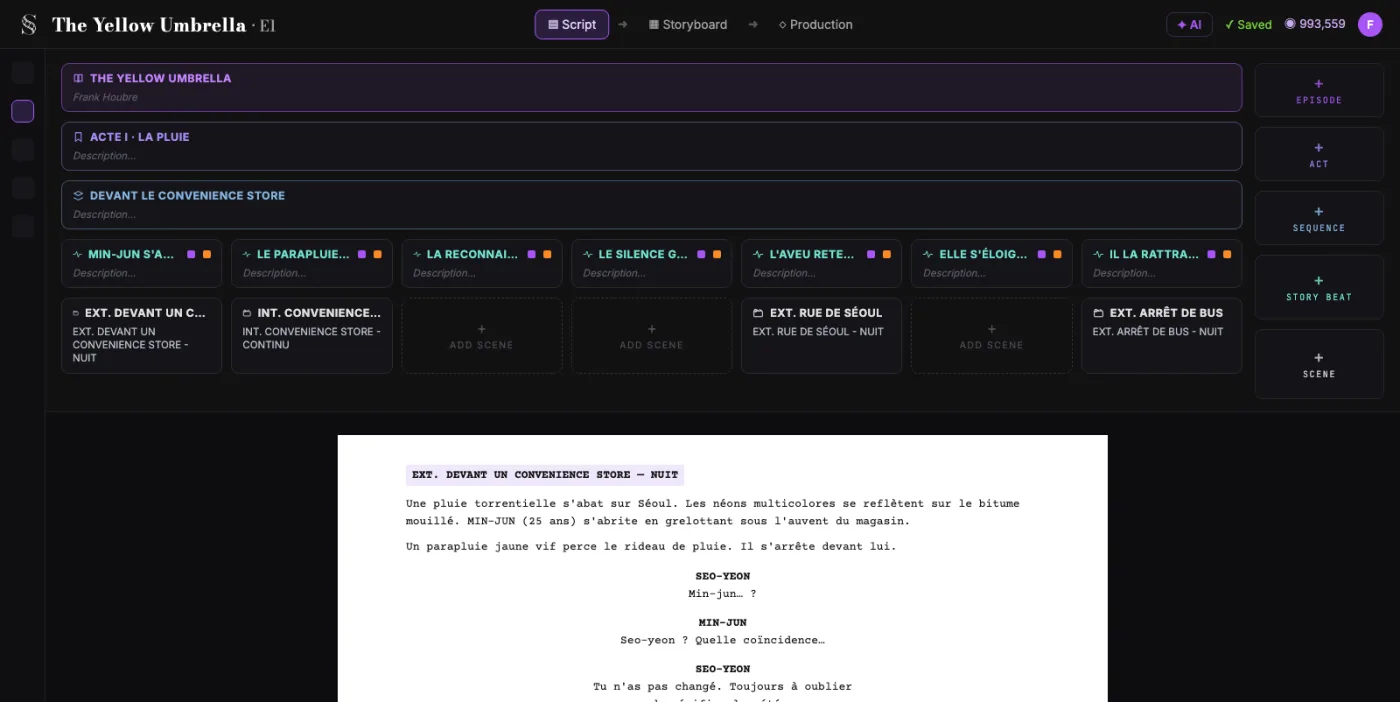
FDX-in-PDF-Konverter: der komplette Leitfaden
Er liest die .fdx lokal (Elementtypen, fett, kursiv und unterstrichen, Szenennummern, Doppeldialog, Seitenumbrüche, Titelseite) und setzt sie auf das Branchenblatt: Courier 12 Punkt, linker Rand 1,5 Zoll, Dialog bei 2,5 Zoll, Figurennamen bei 3,7 Zoll, Übergänge rechtsbündig, Seitenzahlen oben rechts, (MORE) und (CONT'D) bei geteilten Dialogen.
Bei dieser Arbeit liegt das Kernproblem offen: eine .fdx-Datei nützt niemandem ohne Final Draft, und allgemeine Konverter zerstören die Drehbuchformatierung, weil sie die im XML gespeicherten Elementtypen ignorieren. Bleibt es ungelöst, erzeugt es Reibung weiter unten in der Kette und langsamere Entscheidungen. Das praktische Ziel ist ein korrekt umbrochenes, einreichungsfertiges Drehbuch-PDF, im Browser erstellt, ohne Final-Draft-Lizenz und ohne Upload.
Grenze, die Sie im Kopf behalten sollten: Er wandelt zum Lesen, Drucken und Einreichen um: Änderungsfarben, Drehbuchnotizen sowie Kopfzeilen oder Wasserzeichen aus Final Draft werden nicht übernommen, und Seitenumbrüche können auf manchen Seiten um ein oder zwei Zeilen von Final Draft abweichen.
Fortgeschrittener Einsatz: Teams, die Fassungen austauschen, halten die .fdx als bearbeitbare Masterdatei und erstellen bei jedem Meilenstein ein Lese-PDF. Sie vergleichen die Seitenzahlen zwischen den Versionen, um Formatierungsabweichungen vor einer Einreichungsfrist zu erkennen.
Schritt für Schritt
- Die .fdx im Konverter ablegen oder ihr XML einfügen, wenn die Datei nur in einer E-Mail-Vorschau ankam.
- Erkannten Titel, Szenen, Figuren und Seitenzahl prüfen.
- US Letter oder A4, Titelseite und Szenennummern wählen.
- Die Seitenvorschau durchsehen und das PDF herunterladen.
Anwendungsfälle nach Rolle
- Autor: die Final-Draft-Datei eines Partners öffnen und ein sauberes, teilbares PDF erstellen, ohne die Software zu kaufen.
- Wettbewerbsteilnehmer: die finale .fdx in das PDF mit Standardlayout umwandeln, das jeder große Wettbewerb verlangt.
- Produzent oder Lektor: auf jedem Computer eine druckbare Fassung bekommen, ohne dass das Drehbuch den Browser verlässt.
Häufige Fehler
- Eine .fdx durch einen allgemeinen Dokumentkonverter schicken und die linksbündige Textwand versenden, die dabei herauskommt.
- Ein unverfilmtes Drehbuch auf eine unbekannte Konverter-Seite hochladen, obwohl der Browser das XML lokal lesen kann.
- Annehmen, dass die Seitenzahl des PDFs exakt der von Final Draft entspricht, und sie ungeprüft in ein Formular übertragen.
Bewährte Praxis im Beruf
- Halten Sie die .fdx als bearbeitbare Masterdatei. Das PDF ist ein Lieferformat.
- Nehmen Sie A4 nur, wenn der Empfänger auf A4 druckt: Die meisten Wettbewerbe und Leser in den USA erwarten US Letter.
- Lässt sich eine Datei nicht öffnen, prüfen Sie, ob es wirklich eine .fdx ist und keine .fdr aus Final Draft 7 oder älter.
Behandeln Sie die Ausgabe dieses Werkzeugs als Entscheidungshilfe, nicht als Ersatz für das Schreiben. Ein starkes Drehbuch bleibt wegen seiner konkreten Entscheidungen, seiner emotionalen Genauigkeit und der Klarheit seiner dramatischen Bewegung im Gedächtnis. Werkzeuge nehmen das Rauschen weg, damit Ihre Energie dorthin geht, wo sie zählt: Figur, Konflikt, Steigerung, Auszahlung. Wenn Sie nach jedem Durchgang die Ergebnisse prüfen und die angenommenen Änderungen protokollieren, wird Ihre Arbeitsweise von Fassung zu Fassung schneller und berechenbarer. Genau das schätzen professionelle Partner: weniger Überraschungen, klarere Begründungen und ein Buch, das sich mit Absicht weiterentwickelt.
Ausführliche Fragen
Kann ich eine FDX-Datei ohne Final Draft öffnen?
Ja. Eine .fdx-Datei ist XML, dieser Konverter liest sie also in Ihrem Browser und zeigt jede Seite in der Vorschau. Laden Sie das PDF herunter, um es zu lesen, zu drucken oder zu teilen, oder wandeln Sie es in Fountain oder Word um, um es in einer anderen App zu bearbeiten.
Sieht das PDF aus wie aus Final Draft?
Es nutzt dasselbe Branchenlayout: Courier 12 Punkt, die Standardränder und Einzüge, Seitenzahlen oben rechts, (MORE) und (CONT'D) bei Dialogen über einen Seitenumbruch. Der Umbruch kann auf manchen Seiten um eine Zeile abweichen, so wie zwischen zwei beliebigen Drehbuch-Apps.
Was ist eine FDX-Datei?
Das native Dokumentformat von Final Draft. Technisch ist es reines XML: Absätze, markiert mit Elementtypen wie Scene Heading, Character und Dialogue. Deshalb kann ein Konverter, der diese Markierungen beachtet, das Layout originalgetreu wieder aufbauen.
Wird mein Drehbuch hochgeladen?
Nein. Die .fdx wird in Ihrem Browser-Tab gelesen und das PDF dort erstellt. Nichts wird an einen Server geschickt.
Kann ich eine alte .fdr-Datei umwandeln?
Nein. Das .fdr-Format von Final Draft 7 und älter ist ein geschlossenes Binärformat. Öffnen Sie die Datei in einem aktuellen Final Draft und speichern Sie sie als .fdx, oder exportieren Sie ein PDF und wandeln Sie dieses um.