Wortwiederholungs-Finder
Wiederholungsprüfung · Echo-Finder für Drehbücher
Alle Schreibenden haben Lieblingswörter, die sie unbemerkt wiederholen: dasselbe Verb, dasselbe Substantiv oder dasselbe Adjektiv, das in einer Szene immer wiederkehrt.
Fügen Sie unten den Text Ihrer Szene ein. Das Tool ignoriert Funktionswörter (der, die, und, aber und so weiter) und hebt Inhaltswörter (Verben, Substantive, Adjektive) hervor, die mehr als dreimal dicht beieinander vorkommen, damit Sie Echos erkennen und Ihre Wortwahl variieren können.
Läuft vollständig in Ihrem Browser. Ein kleines Skript zählt die Worthäufigkeit und den Abstand zwischen den Vorkommen; markiert werden nur Wörter, die mindestens viermal auftauchen und bei denen mindestens zwei Vorkommen weniger als 50 Wörter auseinanderliegen.
So funktioniert es
Der Algorithmus zerlegt Ihren Text in Wörter und filtert Stoppwörter heraus (Artikel, Konjunktionen, Pronomen, gängige Hilfsverben). Für jedes übrige Wort merkt er sich alle Positionen. Ein Wort gilt als Echo, wenn es mindestens viermal vorkommt und mindestens zwei dieser Vorkommen weniger als 50 Wörter auseinanderliegen. Die Hervorhebung passiert in Ihrem Browser, es werden keine Daten an einen Server gesendet.
Die Länge steht.Jetzt kommt das Drehbuch.
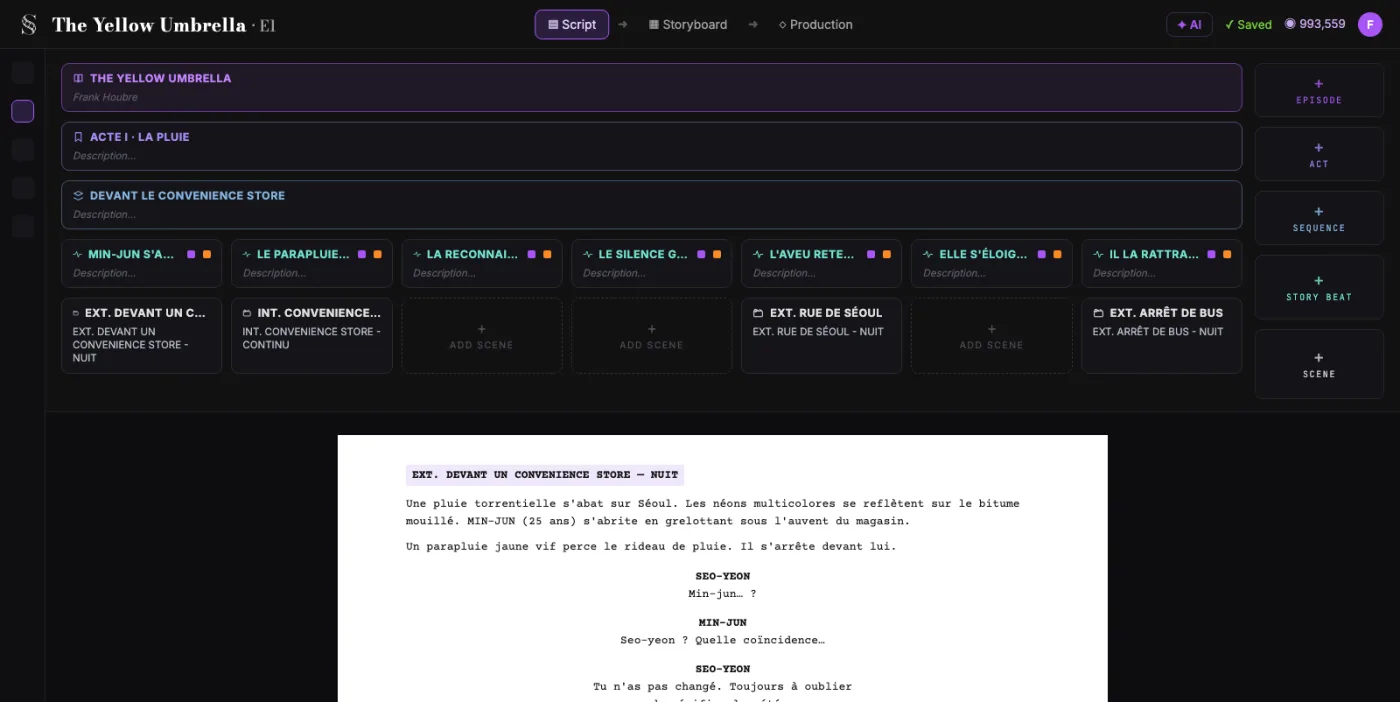
Schreib das ganze Drehbuch in ScreenWeaver, im Branchenstandard formatiert und ohne Seitenlimit. Der Screenwriter-Plan ist kostenlos und läuft nie ab.
- 0 $, ohne Ablaufdatum
- Export als PDF und Final Draft
- Mac, Windows, Linux, iPad
Wortwiederholungs-Finder: der komplette Leitfaden
Es findet starke Wörter, die zu dicht beieinander wiederkehren, damit der Text gewollt wirkt statt wiederholt.
Bei dieser Arbeit liegt das Kernproblem offen: unbemerkte Wortwiederholungen lassen den Text flach, gehetzt oder ungewollt komisch wirken. Bleibt es ungelöst, erzeugt es Reibung weiter unten in der Kette und langsamere Entscheidungen. Das praktische Ziel ist eine klarere sprachliche Textur, mehr Abwechslung im Satz und weniger zufällige Doppelungen.
Grenze, die Sie im Kopf behalten sollten: Es unterscheidet nicht von allein jede poetische Wiederaufnahme vom Zufallsecho, das menschliche Urteil bleibt nötig.
Fortgeschrittener Einsatz: Lassen Sie die Prüfung nach strukturellen Überarbeitungen laufen: verschobene Szenen doppeln oft unbemerkt Verben und Gefühlsbegriffe.
Schritt für Schritt
- Analysieren Sie eine Sequenz nach der anderen und sehen Sie sich die Häufungen wiederkehrender Inhaltswörter an.
- Entscheiden Sie für jede Wiederholung, ob sie gewolltes Motiv oder unbeabsichtigtes Echo ist.
- Ersetzen oder formulieren Sie nur die wertlosen Wiederholungen um, die Klarheit oder Ton schwächen.
- Machen Sie einen letzten Durchgang, um nach den Ersetzungen die Einheit der Stimme zu prüfen.
Anwendungsfälle nach Rolle
- Autor: eigene Sprachmarotten säubern, bevor Seiten rausgehen.
- Lektorat: die Politur der Wortwahl beschleunigen.
- Writers Room: den Ton über mehrere Beteiligte hinweg angleichen.
Häufige Fehler
- Jede Wiederholung tilgen, auch die gewollten rhetorischen Effekte.
- Wörter durch schwächere Synonyme ersetzen, nur um Abwechslung zu haben.
- Nahe beieinanderliegende Echos übersehen, die die Wirkung einer Zeile schwächen.
Bewährte Praxis im Beruf
- Schützen Sie gewollte Motive und kürzen Sie nur die zufälligen Wiederholungen.
- Nehmen Sie sich zuerst die häufigsten Verben und Adjektive vor.
- Lesen Sie überarbeitete Passagen laut, dann hören Sie die Eintönigkeit.
Behandeln Sie die Ausgabe dieses Werkzeugs als Entscheidungshilfe, nicht als Ersatz für das Schreiben. Ein starkes Drehbuch bleibt wegen seiner konkreten Entscheidungen, seiner emotionalen Genauigkeit und der Klarheit seiner dramatischen Bewegung im Gedächtnis. Werkzeuge nehmen das Rauschen weg, damit Ihre Energie dorthin geht, wo sie zählt: Figur, Konflikt, Steigerung, Auszahlung. Wenn Sie nach jedem Durchgang die Ergebnisse prüfen und die angenommenen Änderungen protokollieren, wird Ihre Arbeitsweise von Fassung zu Fassung schneller und berechenbarer. Genau das schätzen professionelle Partner: weniger Überraschungen, klarere Begründungen und ein Buch, das sich mit Absicht weiterentwickelt.
Ausführliche Fragen
Muss jede Wiederholung raus?
Nein. Gewollte Motive und rhetorische Echos bleiben. Weg soll nur die wertlose, zufällige Wiederholung.
Welche Wörter zuerst?
Häufige Verben, Adjektive und Gefühlsbegriffe, die die Stimme flach machen, wenn sie wiederkehren.
Kann die Bereinigung versehentlich den Ton verändern?
Ja, wenn die Ersetzungen unbedacht sind. Prüfen Sie die neue Wortwahl immer gegen Figurenstimme und Genreton.
Wie oft sollte ich das laufen lassen?
In späten Überarbeitungsphasen und nach großen strukturellen Eingriffen, die Sprachmuster doppeln.
Taugt das für einen reinen Dialogdurchgang?
Sehr. Beim Umschreiben von Dialog schleichen sich wiederholte Formulierungen besonders leicht ein.
Was ist die beste Schlussprüfung?
Die überarbeiteten Seiten laut lesen, um Rhythmus, Genauigkeit und gewollte Wiederaufnahme zu prüfen.