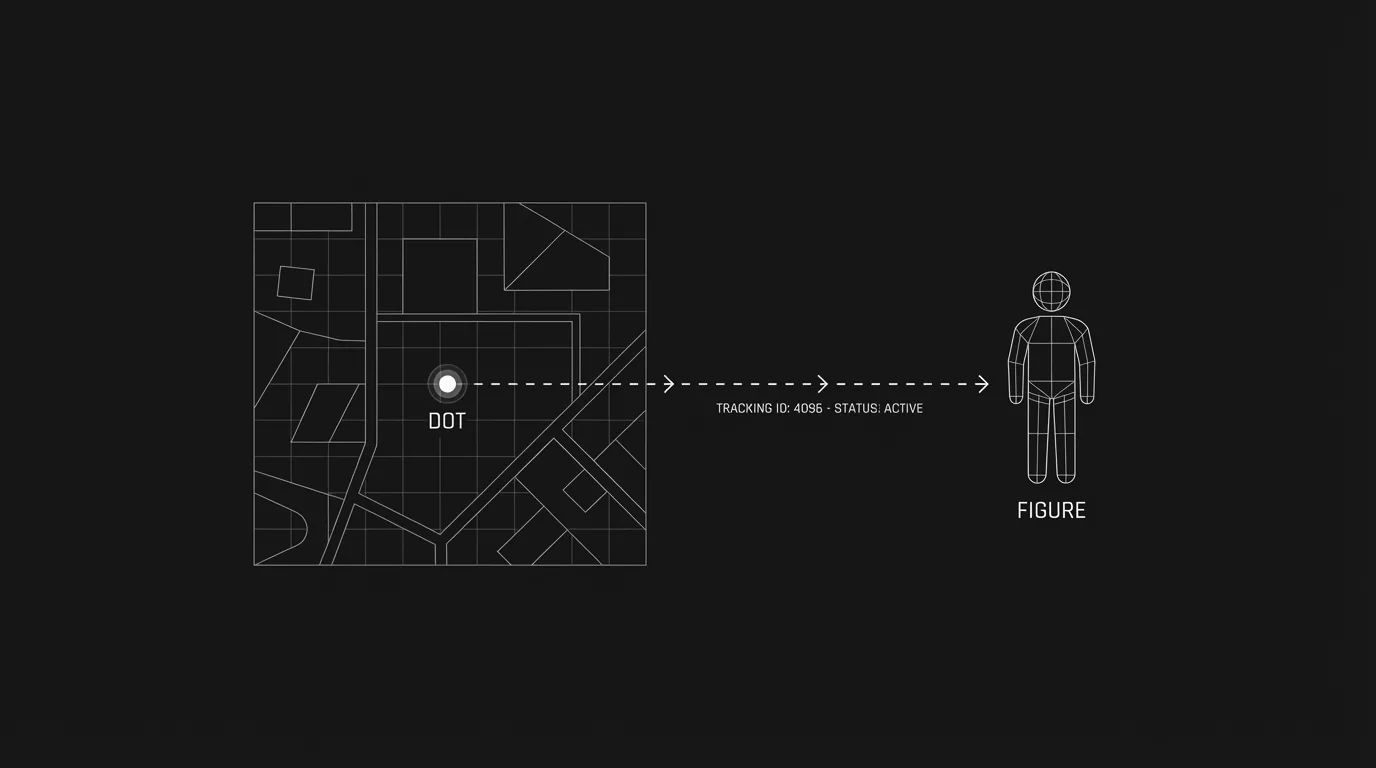
Hero image prompt: Dark mode technical sketch. Solid black background, thin white hand-drawn lines. A smartphone screen with a map, a dot moving, and a single figure in a room, suggestion of tracking. No neon. Minimalist, high-contrast. The sense of being watched through the device.
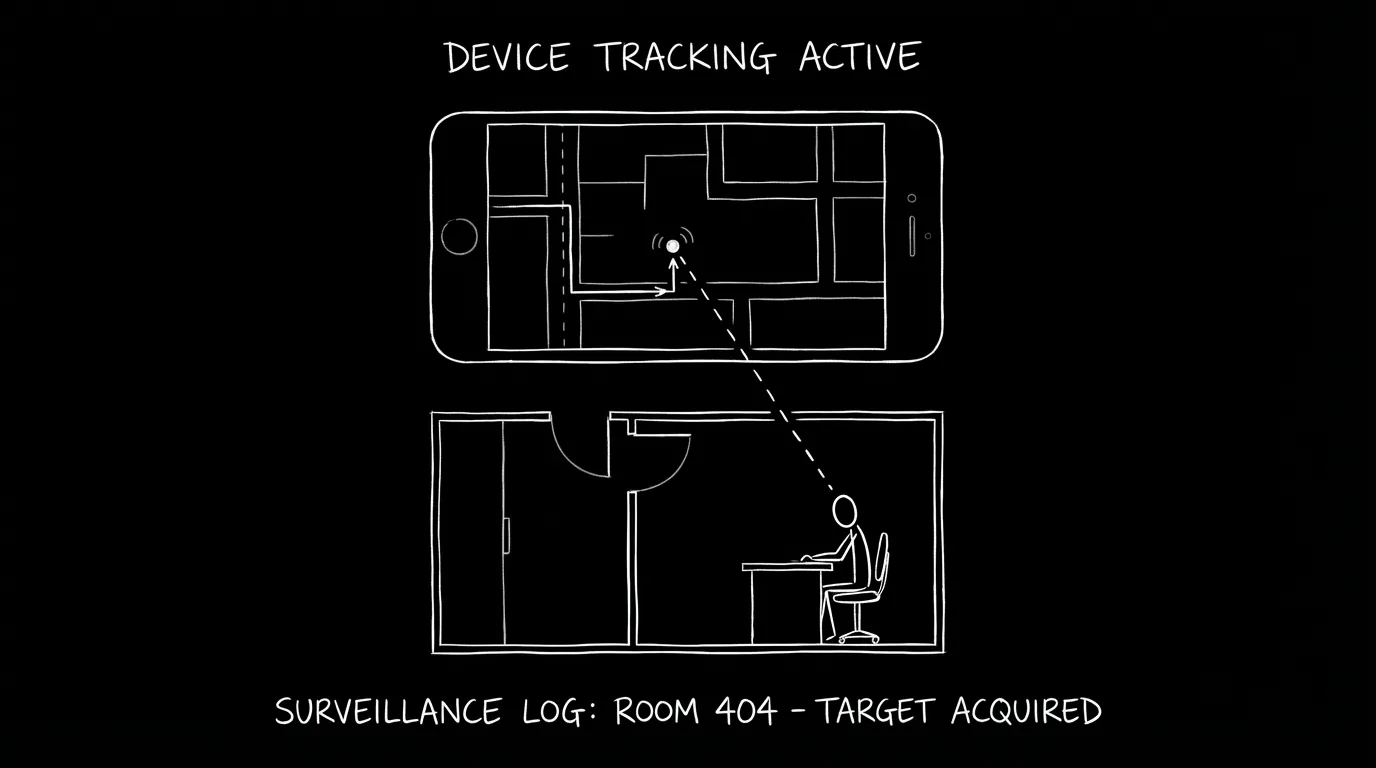
She checks her phone. There’s an alert. “AirTag detected near you.” She doesn’t have an AirTag. Someone else does. The stalker thriller has always been about the violation of safety, home, routine, the sense that you’re alone. Now the violation can come through the devices we carry. Location sharing. Cameras in the doorbell. The app that knows where you are. The genre isn’t new. The tools are. Here’s how to use technology as a dramatic engine without turning your script into a PSA.
The best tech in a stalker thriller isn’t there to teach the audience about privacy. It’s there to create a problem that feels inevitable. The character didn’t do something stupid. They did something normal. And the normal thing became the trap.
Think about Searching or Missing. The story happens on screens. The stalker might be in the same room, or on the other side of the world. The fear is that the technology we trust can be turned against us. That’s the update. The classic stalker thriller had the killer outside the window. The modern one has the killer in the pocket. The victim might not know they’re being watched. They might not know how long it’s been going on. The technology creates a new kind of dread: the sense that you’ve been exposed without knowing it. Our guide on formatting social media and screens in scripts applies when the threat lives on the phone or the laptop. The way you write the interface can become the way we feel the threat.
Why Technology Changes the Stalker Thriller
The old stalker thriller had limits. The stalker had to be physically near, or they had to send something, a letter, a photo, that took time. Now the stalker can be anywhere. They can watch in real time. They can know where the victim is without following them. That changes the logic of the story. The victim can’t just “go somewhere safe.” Safe might not exist. The victim might not know they’re being tracked until it’s too late. The technology also creates new ways to plant evidence, mislead, and gaslight. “You’re paranoid. No one’s watching you.” But the audience has seen the tracker. We know they’re wrong. The gap between what the character believes and what we know is where the tension lives.
The risk is that the tech feels like a gimmick. “Let’s do a thriller about AirTags.” Okay. What’s the story? The tech has to serve the story. It has to create a problem that only this technology could create. If you could tell the same story with a guy in a car following the victim, you might not need the tech. The tech should make the threat different. Harder to detect. Harder to escape. Closer than the victim thinks. When the tech does that, the genre feels updated. When it doesn’t, it feels like set dressing.
Using Tech as the Engine, Not the Message
Make the tech normal. The character isn’t a fool for having an Instagram account or for using Find My Friends. They’re living the way most people live. The horror is that the normal behavior is what makes them vulnerable. That’s scarier than “she shouldn’t have posted that.” The audience uses these tools too. When the trap is something they could fall into, the fear is personal. So the character’s relationship to the tech should feel relatable. They’re not reckless. They’re ordinary. And the ordinary is enough.
Let the tech create specific beats. The stalker thriller needs moments when the threat becomes visible. The tech can deliver those. The notification. The wrong location on the map. The camera that blinks when it shouldn’t. The message that arrives at the exact wrong time. Each beat should be something only this technology could do. That way the tech isn’t decorative. It’s structural. For more on how to write tension that builds through small violations, see slow burn pacing, the tech can be the source of those small violations.
Avoid the lecture. The script shouldn’t stop so a character can explain why we should care about privacy. The story should show the cost. When the victim realizes they’ve been watched, we feel it. We don’t need a speech about data. The message is in the stakes. If the stakes are clear, the audience will draw their own conclusions. If you have a character spell it out, you’ve broken the spell of the thriller.
| Principle | What It Does |
|---|---|
| Tech is normal | Victim isn’t stupid; they’re like us. The trap is in ordinary behavior. |
| Tech creates specific beats | Notifications, wrong locations, cameras, each beat only this tech could do. |
| No lecture | Show the cost; don’t pause to explain privacy or safety. |
| Tech makes the threat different | Harder to detect, harder to escape than “guy in a car.” |
Relatable Scenario: The Script That Feels Like a Warning Label
You’re writing a thriller about a woman who’s being tracked. Every few scenes, someone says “you have to be careful with these apps” or “this is why I never share my location.” The audience feels like they’re in a seminar. So you cut the dialogue. You keep the story. She finds the AirTag. She doesn’t give a speech about it. She’s scared. She tries to get away. The tech is the problem. The characters don’t have to explain why it’s a problem. The problem is that she can’t get away. When the tech drives the plot and the emotion, the “message” takes care of itself. Our piece on formatting text messages and apps can help you put the tech on the page in a way that reads clearly without turning into instruction.
Try it free
Try Screenweaver for free on your script
It is free. Import your existing project, get a clearer view of your outline, and regain control of your story structure in minutes.
Start FreeRelatable Scenario: The Stalker Who Could Be Anyone
You’ve got great tech beats. The victim gets a notification. The map shows a dot. But the stalker is a generic “bad guy.” He could be using a telescope from across the street. The tech doesn’t change who he is or what he wants. So you go back. What does this technology let him do that he couldn’t do before? He can know where she is without following. He can know when she’s alone. He can make her think she’s safe when she’s not. The stalker’s methods have to be tied to the tech. When they are, the villain feels of the moment. The threat feels like it could happen to the audience. That’s when the genre update works.
The Trench Warfare Section: What Beginners Get Wrong
Making the victim naive. She accepts every friend request. She shares her location with everyone. The audience thinks she’s asking for it. Fix: make her behavior normal. She does what we do. The trap is that the tech can be abused even when we use it the way we’re told to. The horror is in the abuse, not in the use.
Using tech that’s already outdated. You’re writing about a specific app or device. By the time the script is read, it might feel old. Fix: focus on behaviors, not brands. “A location tracker she didn’t put there” is enough. You can suggest AirTag or Tile without making the plot depend on a specific product. The behavior, being tracked without knowing, is what matters.
Forgetting the human stakes. The script is so focused on the tech that we lose the character. Why does the stalker want her? What does she stand to lose? Fix: the tech is the method. The stakes are still human. Fear. Loss. Survival. The tech makes the threat possible; it doesn’t replace the need for a real villain and a real victim we care about. For more on building stakes that feel real, see the “all is lost” moment, the tech can be the thing that makes that moment possible.
Resolving the threat by “turning off the phone.” If the solution is that she stops using technology and everything’s fine, the script feels like a moral fable. Fix: the stalker is a person. The tech is a tool. The resolution has to involve confronting the threat, the person, not just disabling the tool. The tech can be part of how she fights back. It doesn’t have to be the only thing she has to escape.
Step-by-Step: Building the Tech Into the Plot
List the tech you want to use. One to three elements. Location sharing. Doorbell camera. Spyware. Then ask: what can the stalker do with each that they couldn’t do without it? List three to five beats. Those beats become the spine of your second act. The victim discovers they’re being watched. The victim tries to get away but the stalker always knows where they are. The victim tries to use the tech against the stalker. Each beat should be specific to the tech. Then make sure the stalker has a motive and the victim has something to lose. The tech is the engine. The human stakes are the fuel. For structure that supports this kind of escalation, the Fichtean curve for thrillers fits: each discovery, each failed escape, can be a crisis that raises the stakes.
One External Resource
For a short overview of how stalking has been treated in film and how technology has changed the threat, see Stalking in popular culture on Wikipedia. Reference only; not affiliated.
The Perspective
The stalker thriller has always been about the violation of the everyday. Now the everyday includes the device in your pocket. Use that. Make the tech the thing that makes the threat possible, and make the victim someone who did nothing wrong. When the audience recognizes their own behavior in the character’s, the fear gets under the skin. That’s the update. Not a new genre. A new way in.
Final Step
Build your next script with Screenweaver
Move from ideas to production-ready pages faster with timeline-native writing and AI-assisted story flow.
Try Screenweaver