
The draft is done. You've read it until the words blur. Your friends say it's great. You still have that itch: what if there's a hole? What if the villain's motive doesn't hold? What if the timeline is broken and you've been staring at it so long you can't see it? You need someone to argue with, not to praise, but to poke. An LLM can't replace a sharp reader. It can play a role: the skeptic. Feed it your plot, your rules, your timeline. Ask it to find contradictions, unmotivated turns, and gaps. Then you decide what's a real flaw and what's noise.
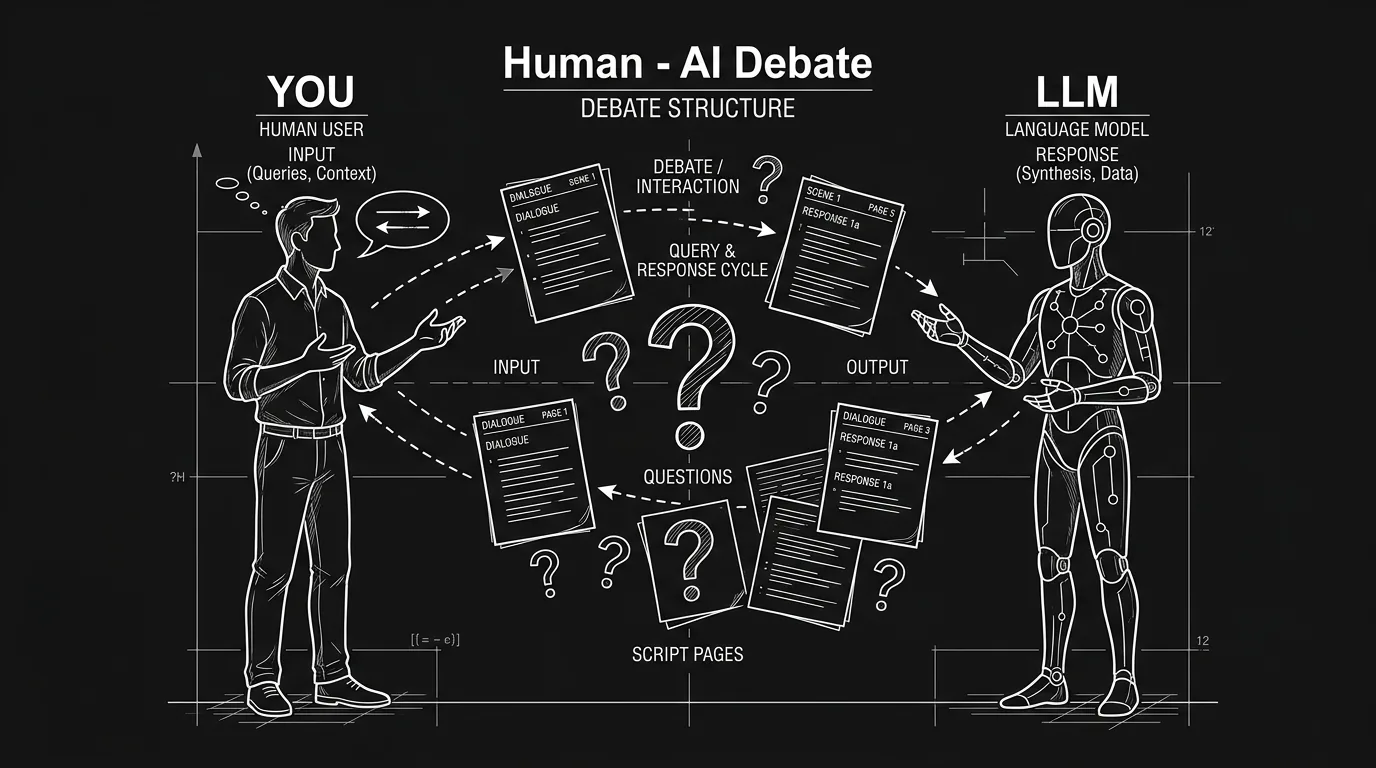
The goal isn't to let the machine rewrite your story. It's to simulate the questions a development exec or a smart audience member will ask, before they're in the room.
Think about it this way. When you pitch in a room, someone will say "but why doesn't she just leave?" or "when did he have time to do that?" You can wait for that moment, or you can create it in advance. An LLM sparring partner doesn't have taste. It has consistency-checking. It can hold your story up against the logic you've given it and report where the logic breaks. Your job is to feed it the right information and then interpret its objections. Some will be wrong (the model missed a line of dialogue). Some will be right (you did forget to plant the key). The value is in the list of challenges. You answer them, one by one, and the script gets tighter.
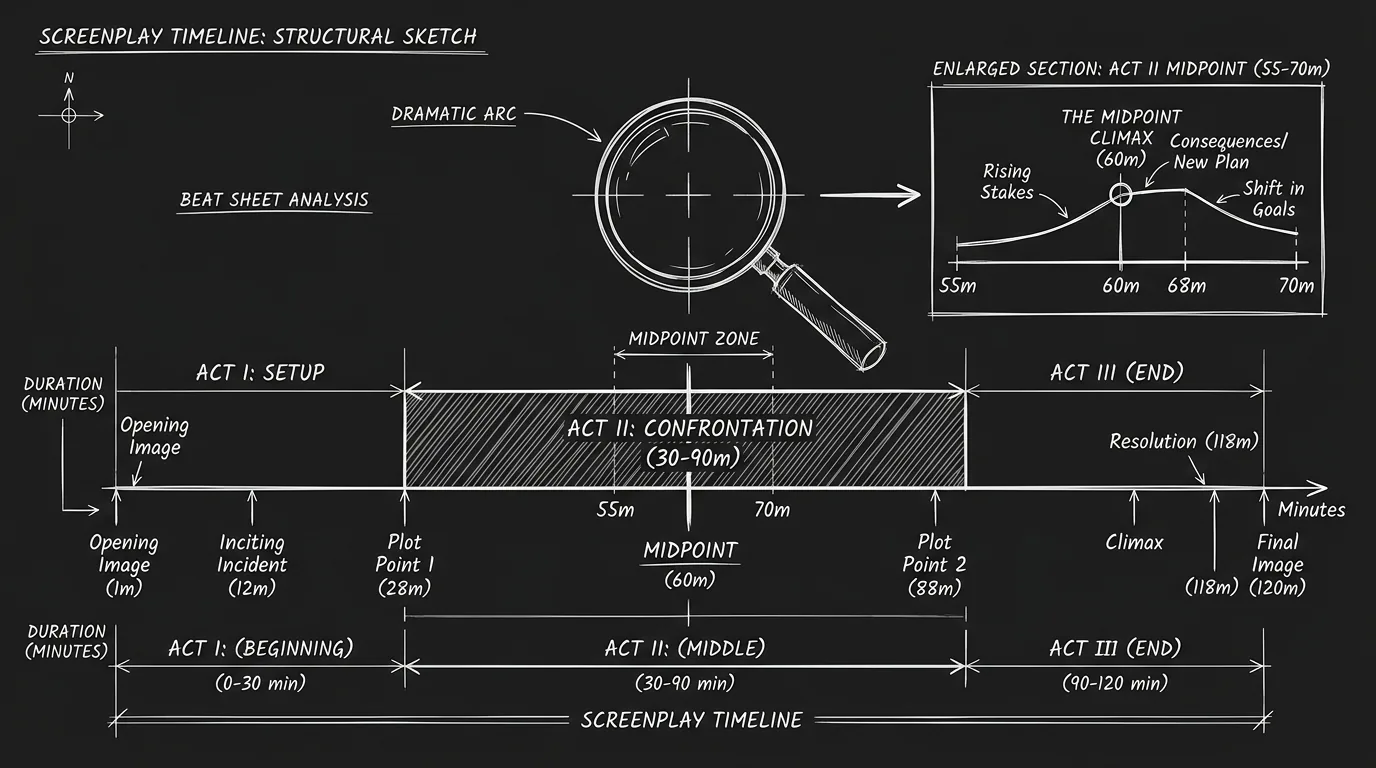
Free tool: use the Beat Sheet Calculator to map these beats to exact page numbers for your script length.
Cinematic workflow frames

These two visuals work as a pair: the first shows Cinematic workflow still, first angle, 35mm film grain, and the second shifts to Cinematic workflow still, second angle, 35mm film grain - compare them briefly, then move on.

Why "Sparring Partner" and Not "Editor"
An editor suggests changes. A sparring partner raises objections. You're not asking the LLM to fix the script. You're asking it to attack the script, within the rules you set. Those rules matter. If you say "the protagonist cannot use violence," the LLM can flag every scene where violence might be implied or where the audience might ask "why didn't she fight?" If you say "the timeline is 72 hours," it can flag every reference to time and check for contradictions. The more you specify the constraints of your world and plot, the more targeted the stress test becomes. Vague input gets vague output. Tight input gets a list of specific "what about…?" questions.
Here's why that matters. Writers often can't see their own plot holes because they're inside the logic. They know why the character didn't leave, they have a reason in their head that never made it to the page. The LLM only has the page (and whatever you paste). So when it says "it's unclear why she stays," you're forced to check: did I put that on the page? If not, you've found a hole. If you did and the model missed it, you've at least confirmed the line exists and maybe you'll sharpen it.
The Workflow: Setting Up the Sparring Session
Step 1: Prepare the material the LLM will see. At minimum: a clear summary of the plot (beat by beat or scene by scene), the main character goals and constraints, and any rules (time limits, world rules, genre conventions). Optionally: key dialogue or scene excerpts where you're unsure. Don't dump the whole script and say "find plot holes." The model will miss things or hallucinate. Give it structure. A one-page beat sheet plus a list of "rules of this story" is often enough for a first pass.
Step 2: Define the sparring role in the prompt. "You are a skeptical reader. Your job is to find plot holes, unmotivated character decisions, timeline errors, and logical contradictions. Do not suggest fixes. Only list questions and potential problems. Assume the reader has only what's on the page." That instruction set keeps the model in attack mode, not fix mode. You want questions, not rewrites.
Step 3: Run multiple passes with different angles. Pass one: "Check the timeline. List every time reference and flag contradictions." Pass two: "For each major character decision, ask: is the motivation clear from what we've seen?" Pass three: "List every character who has information. For each, ask: how do they know this? Is it shown or assumed?" Breaking the stress test into dimensions (time, motivation, information) yields clearer, actionable lists.
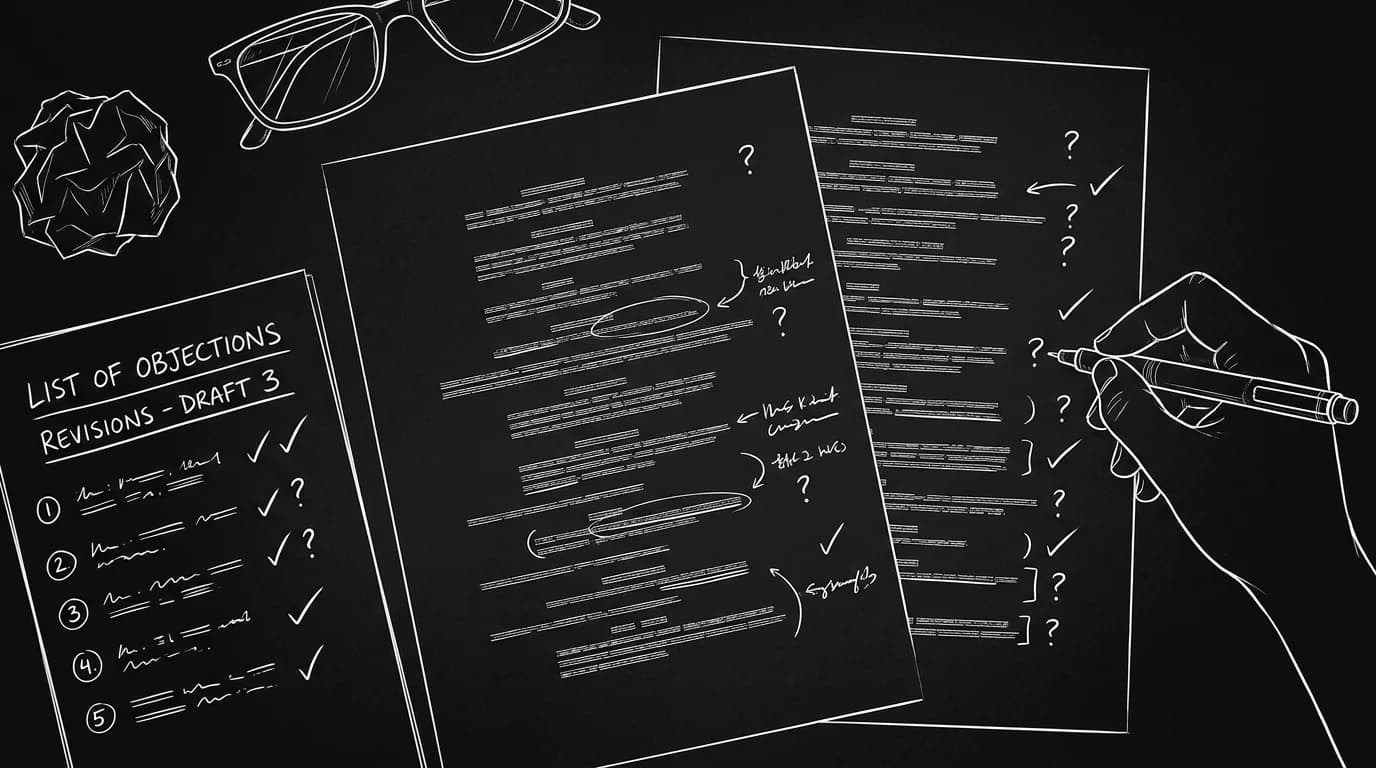
Step 4: Triage the output. The LLM will sometimes be wrong. It might say "we never see why he trusts her" when you have a scene that does that. It might invent a contradiction because it misread. So you don't accept every item. You use each item as a prompt to re-read your script. If the objection holds, fix it. If it doesn't, you've at least verified the script can withstand that question. Triage is human work.
Step 5: Optionally, argue back. Paste the model's objection and ask: "Here's my reasoning: [quote from script or explain]. Does this resolve the objection, or is there still a gap?" The model can play devil's advocate again. You're not asking it to be right. You're asking it to keep pressure-testing until you're confident.
| You provide | LLM returns | You do |
|---|---|---|
| Beat sheet + story rules | List of potential plot holes, contradictions, unmotivated turns | Triage: fix real holes, ignore false positives |
| Timeline + key events | Timeline consistency check, "when did X happen?" questions | Verify or correct timeline on the page |
| Character goals + constraints | "Why would she…?" / "How does he know…?" | Add or sharpen motivation and exposition |
| Key dialogue excerpts | Questions about logic or missing steps | Decide: add a line, cut a beat, or leave as is |
For more on keeping story logic clear from outline to script, structure and beat sheets help. For when the machine overreaches, the limits of AI on subtext and nuance is a useful read.
Try it free
Try Screenweaver for free on your script
It is free. Import your existing project, get a clearer view of your outline, and regain control of your story structure in minutes.
Start FreeRelatable Scenario: The Timeline That Doesn't Add Up
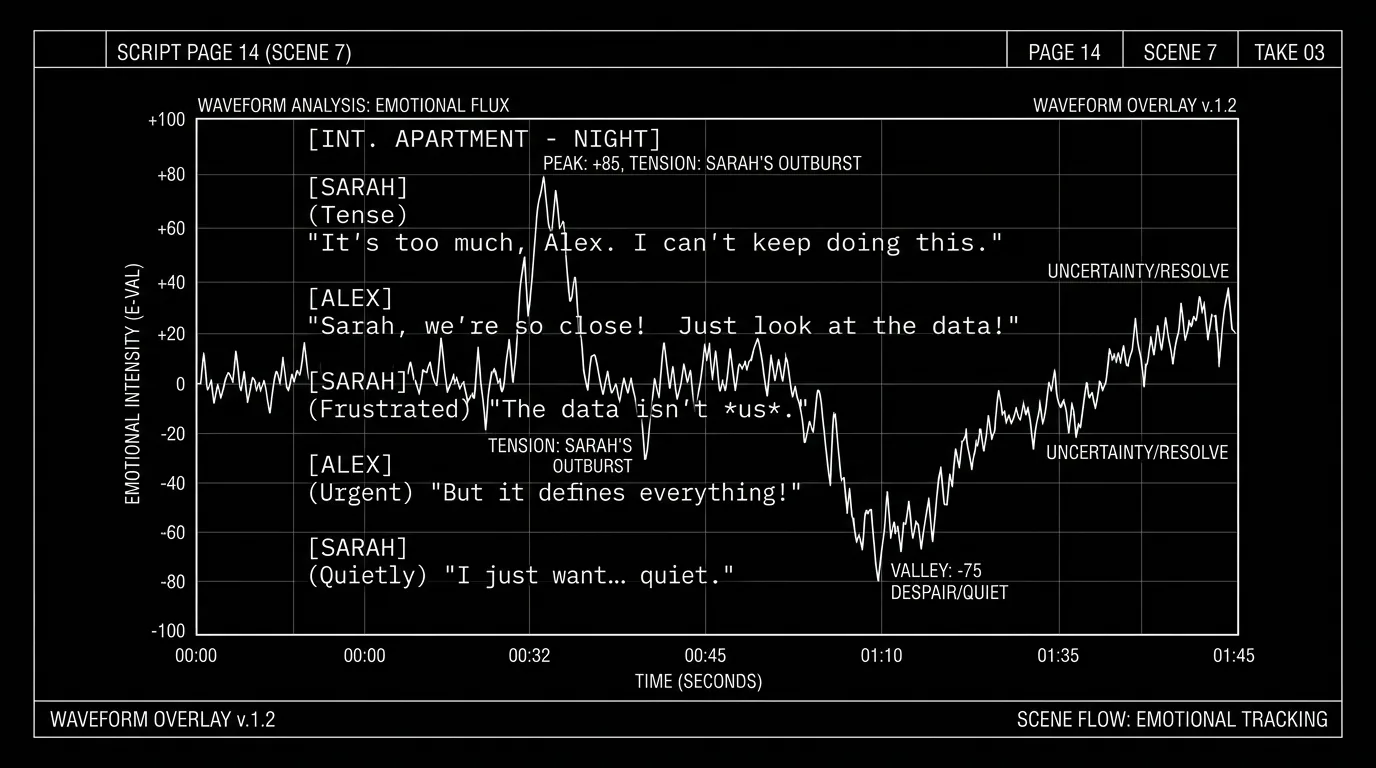
Your script spans a week. You've written it out of order. When you read it straight through, you're not sure if Day 3 and Day 5 line up. You paste a timeline: "Monday: X. Tuesday: Y. Wednesday: Z…" and add "These events must be in this order; no character can be in two places at once." You ask the LLM: "Check for contradictions. Flag any event that would require more time than available, or any character appearing in two locations without explanation." The model returns: "On Wednesday you have the meeting at 9 a.m. and the flight at 10 a.m. Same city? If not, how does he make the flight?" You look at your script. You never specified. You add a line or shift a scene. The sparring partner didn't fix the script. It pointed at the gap.
Relatable Scenario: The Villain Whose Motive Feels Thin
You've written the antagonist as ruthless but not random. A reader asks "why does he care about the protagonist at all?" You paste the villain's backstory and his key scenes. You ask the LLM: "Assume a skeptical viewer. List every major decision this character makes. For each, ask: is the motivation clear from what we've seen, or are we inferring?" The list includes: "Decision to spare the protagonist in Act 2, motivation unclear. We see him violent elsewhere; why not here?" You realize you had a reason (he needs the protagonist alive for the ritual) but it's only in your outline, not in the scene. You add one line of dialogue or a beat that makes the constraint clear. The sparring partner surfaced the question. You answered it on the page.
Relatable Scenario: The Twist That Doesn't Land
Your third-act twist depends on the audience not knowing that the ally was in the city in Act 1. You ask the LLM: "List every place and time we see this character before the twist. Could a careful viewer infer they were in [city] earlier?" The model lists three scenes and says: "In scene 12 she mentions 'when I was here last year.' If that's the same city, the twist may be undercut." You check. It's the same city. You change the line to something vaguer or set the earlier reference elsewhere. The sparring partner doesn't know story. It knows consistency. You use that to close the hole.
What Beginners Get Wrong: The Trench Warfare Section
Asking "are there plot holes?" with no structure. The model will either give generic advice ("make sure motivations are clear") or invent problems. The fix: give the plot in a structured form (beats, timeline, rules) and ask for specific checks. "List every character decision that might seem unmotivated" is better than "find plot holes."
Treating every objection as a real hole. The LLM will sometimes misread or assume something that's actually on the page. The fix: triage. For each item, open the script and verify. If the script already answers the question, you might still sharpen the line; if not, fix it. Don't assume the machine is always right.
Skipping the "rules of the story" in the prompt. If you don't tell the model "the protagonist can't leave because of X," it might flag "why doesn't she leave?" as a hole. The fix: include a short list of story rules and world constraints. "In this story: no one can leave the building; the killer is one of five people; the timeline is 24 hours." Then the sparring partner can check against those rules instead of generic logic.
Pasting the full script and expecting deep analysis. Context limits mean the model might summarize or miss details. The fix: for a first pass, use a beat sheet or scene list. For targeted checks, paste only the relevant scenes (e.g. all timeline references, or all villain POV scenes). You get more precise objections.
Asking the LLM to fix the holes. Once the model suggests solutions, you're in rewrite-by-committee mode. The fix: keep the prompt to "list problems and questions only. Do not suggest fixes." You decide how to fix. The sparring partner's job is to surface, not to solve.
Only running one pass. One pass might catch timeline issues but miss motivation gaps. The fix: run separate passes for timeline, character motivation, information flow, and world rules. Each pass has a clear question. You combine the lists and triage once.
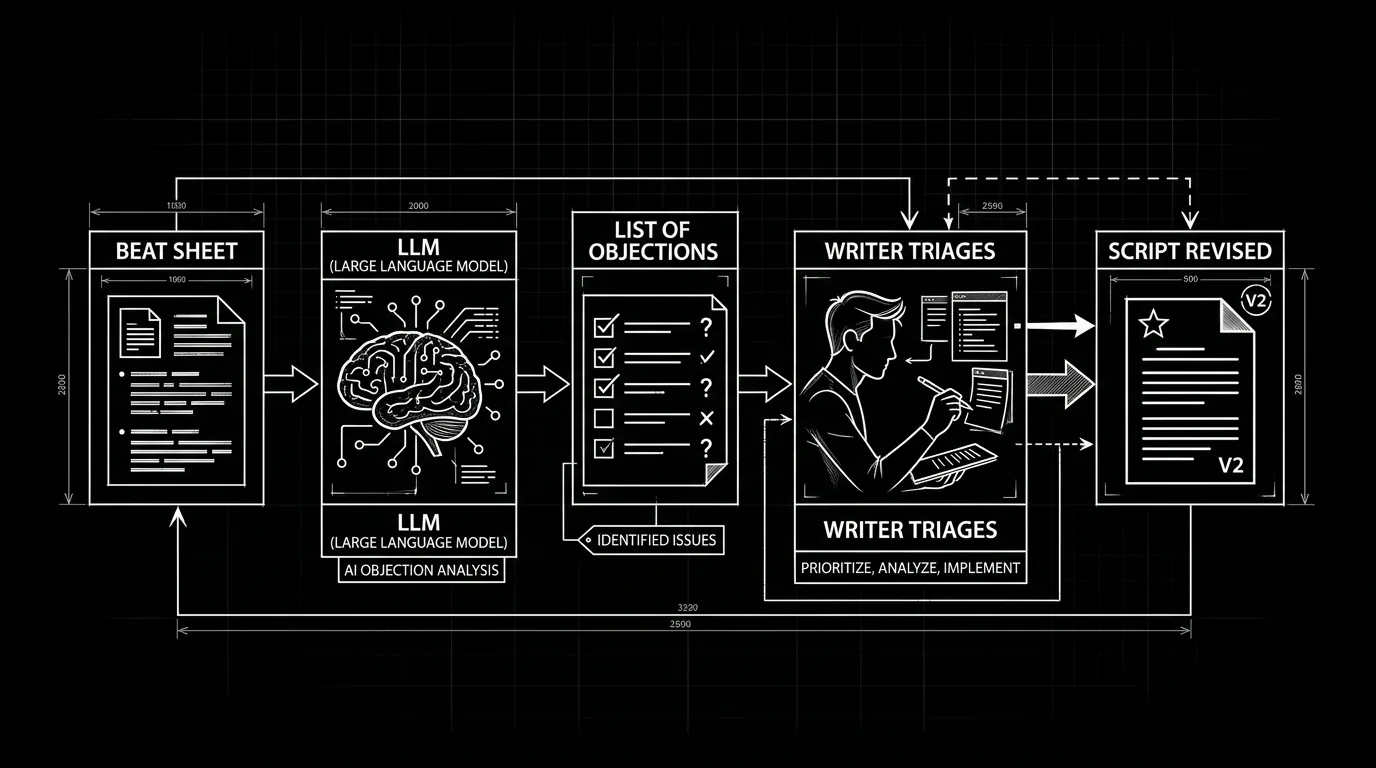
Software and parameters. Use any chat-style LLM with a large enough context window for your beat sheet and rules (and optionally key scenes). In the system or first message, set the role: "You are a skeptical reader. Your only job is to find plot holes, contradictions, and unmotivated decisions. Output a numbered list. Do not suggest fixes." Temperature: 0.3–0.5 so the model stays focused and doesn't wander. For more on prompting for structure and logic, prompt engineering for screenwriters covers role and task design.
One External Reference
Writers Guild of America resources on story and development are one place to see how the industry talks about logic and consistency in pitches. The WGA website offers context on professional standards; your sparring session is a private way to meet a similar bar before the room.
The Perspective
An LLM sparring partner doesn't replace a smart reader. It multiplies the number of "but what about…?" questions you can run before you hand the script off. Use it to stress-test timeline, motivation, and information. Give it structure; triage its output. The holes it finds are yours to fix, or to reject with confidence because you've already checked.
Final Step
Build your next script with Screenweaver
Move from ideas to production-ready pages faster with timeline-native writing and AI-assisted story flow.
Try Screenweaver