The ScreenWeaver Blog
Deep dives into modern screenwriting, visual storytelling, and how AI is reshaping the creative process.
Categories

Writing for Animation vs. Live Action: Key Differences
They share the same grammar. But the process of writing for each, and the possibilities each medium offers, diverge in ways that matter.

How to Copyright Your Screenplay (Protect Your IP)
Copyright attaches automatically when you create. But registration with the U.S. Copyright Office gives you real leverage. Here's how it works and how to register.

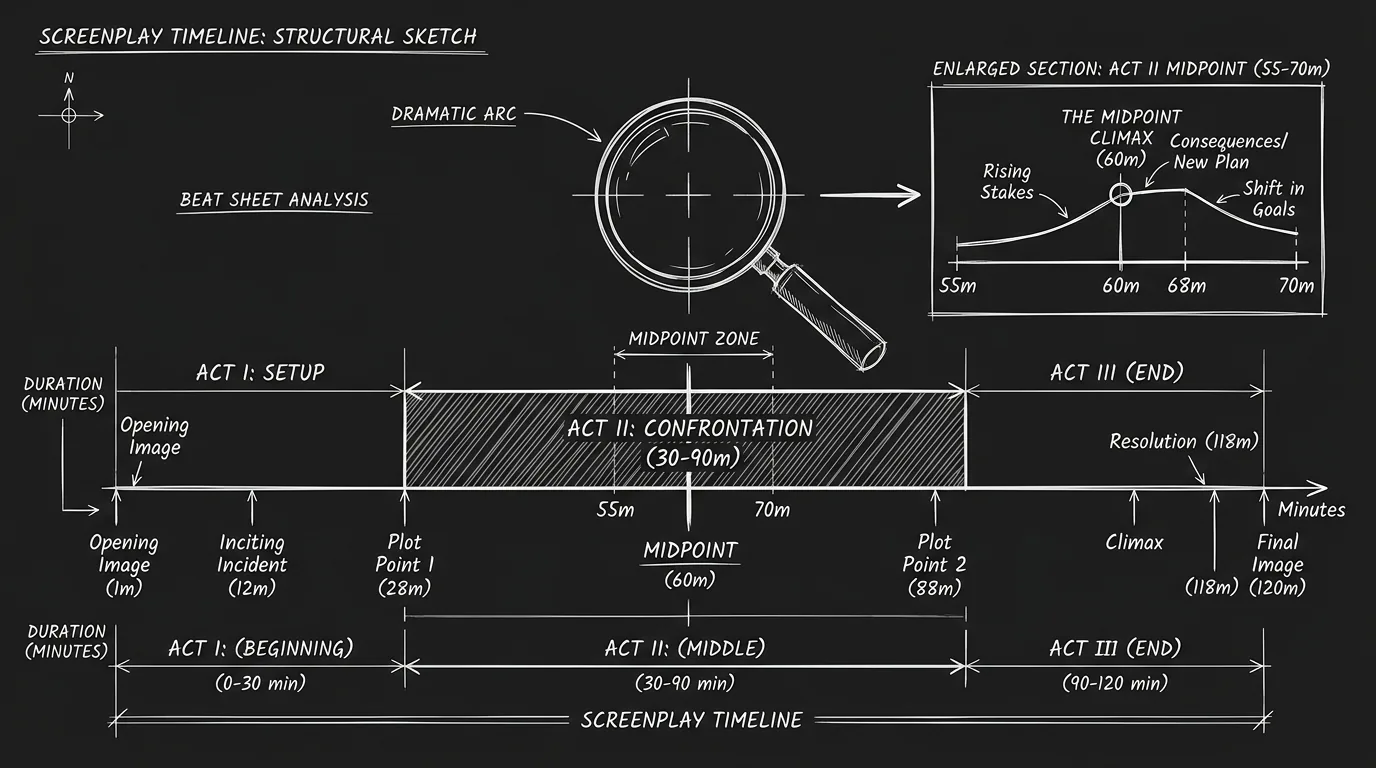
The "Save the Cat" Beat Sheet Calculator: Does It Work?
Blake Snyder's beat sheet promises a formula. The calculator gives you exact page numbers. It works for the stories it was designed for,and fails for the rest. Here's the difference.

How to Write a "Bottle Episode" on a Budget
One room. A handful of characters. No expensive set pieces. The constraint becomes the engine. Some of the most memorable TV episodes are bottle episodes.

Understanding "Subtext" in Film Noir
Noir lives in the gap between what's spoken and what's felt. How the masters did it,and how you can use subtext in any genre.

How to Write Comedy: Timing on the Page
Comedy is timing. On the page you can't control the pause,but you can create the architecture of the joke. Setup, beat, punch. The rhythm encoded in the words.

Formatting A Phone Call in a Script (Intercut vs. One Side)
Your character picks up the phone. The reader is already confused. Phone calls have a grammar. Here's how to format one-side vs intercut so the page stays clear.

How to Outline a 60-Minute TV Drama Pilot
The pilot is where you prove it in fifty-five pages. Build the spine: act breaks, emotional turns, and the one question the audience has to want answered.