
You have one logline. The contest wants three. The producer asked for "a few angles." The coverage reader will only ever see one sentence. That sentence has to do everything: character, stakes, twist, tone. Staring at the same 25 words for an hour doesn't make them better. It makes you blind to what's wrong. Here's the tension: you need volume and speed without losing the thing that makes the idea yours. You need 50 variations in the time it takes to make coffee, not so you can submit all 50, but so you can see your idea from 50 angles and pick the three that actually sell.
The goal isn't to replace your judgment. It's to give your judgment something to judge. Fifty options in three minutes turns the bottleneck from "I can't think of another way to say it" into "which of these is true to the script?"
This works because loglines are constrained. They have a shape: protagonist, want or need, obstacle, stakes, sometimes a twist or irony. An engine that knows that shape can rephrase, recenter, and reframe without inventing a new story. You stay in control of the premise. The machine stays in control of the combinatorics. Your job is to feed it one solid version and a clear set of instructions, then sift the output for the handful that sharpen rather than flatten the idea.
Cinematic workflow frames
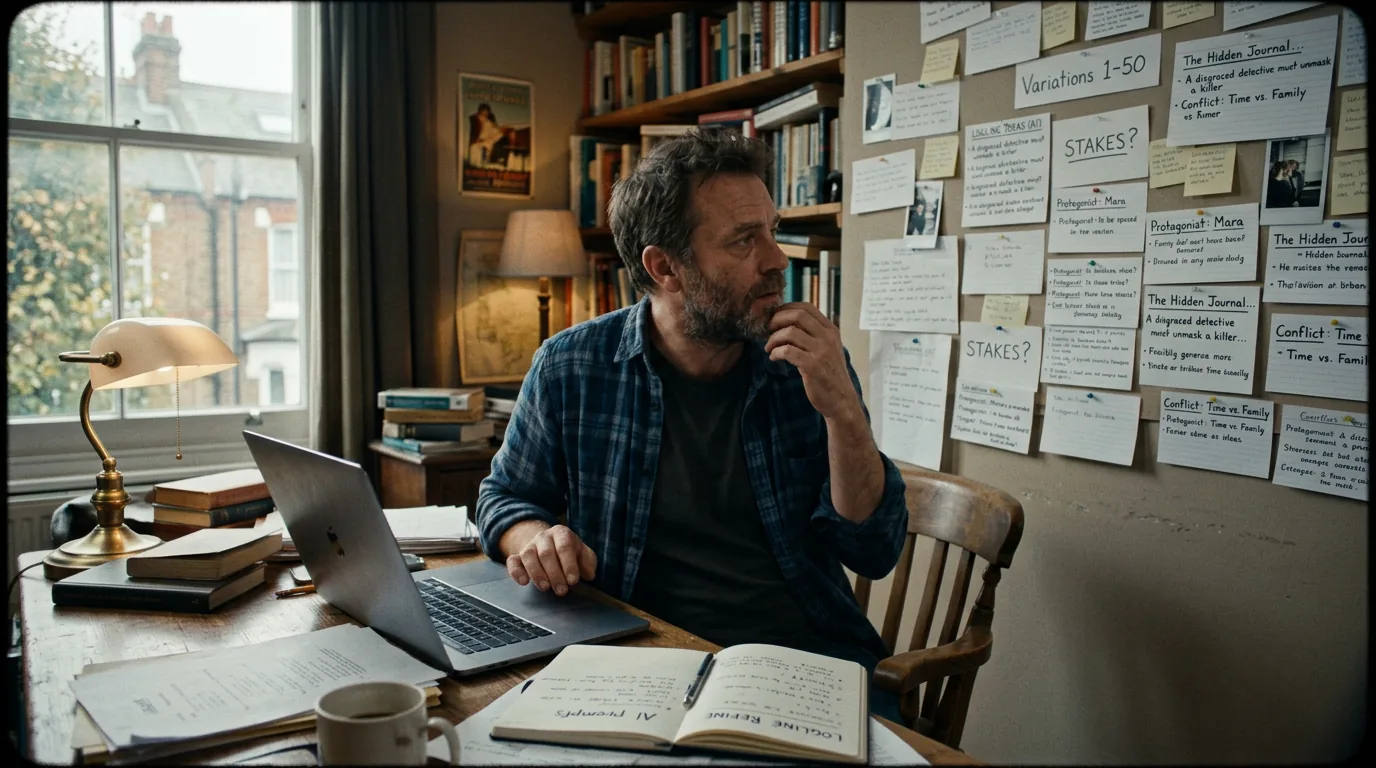
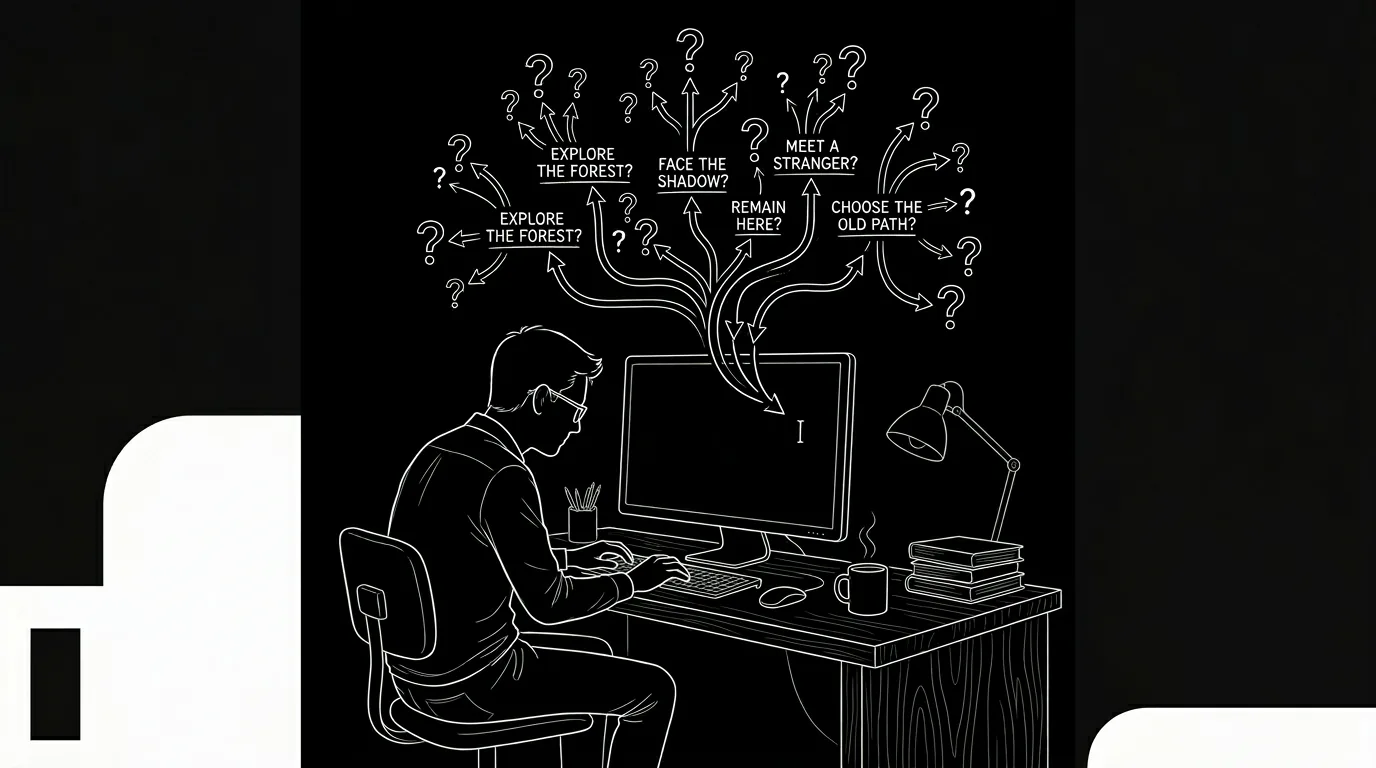
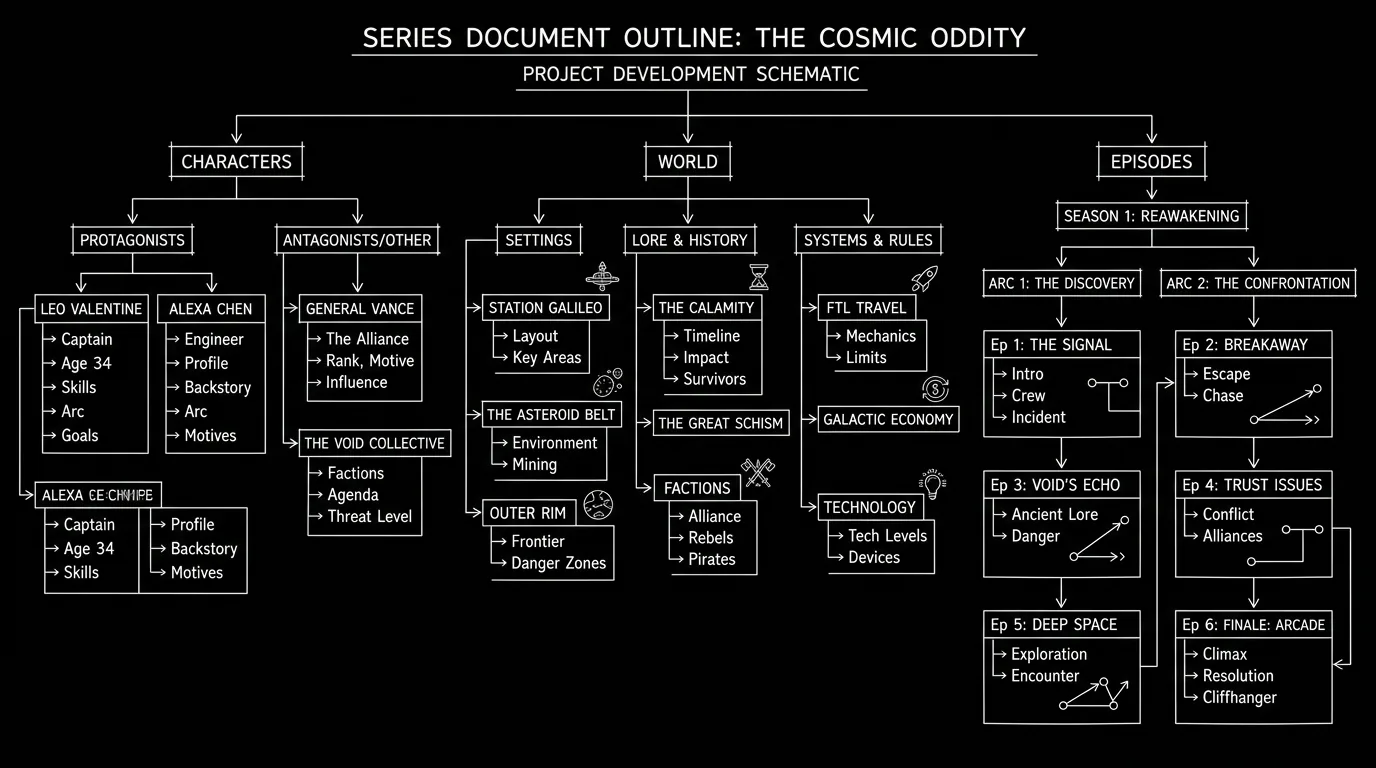
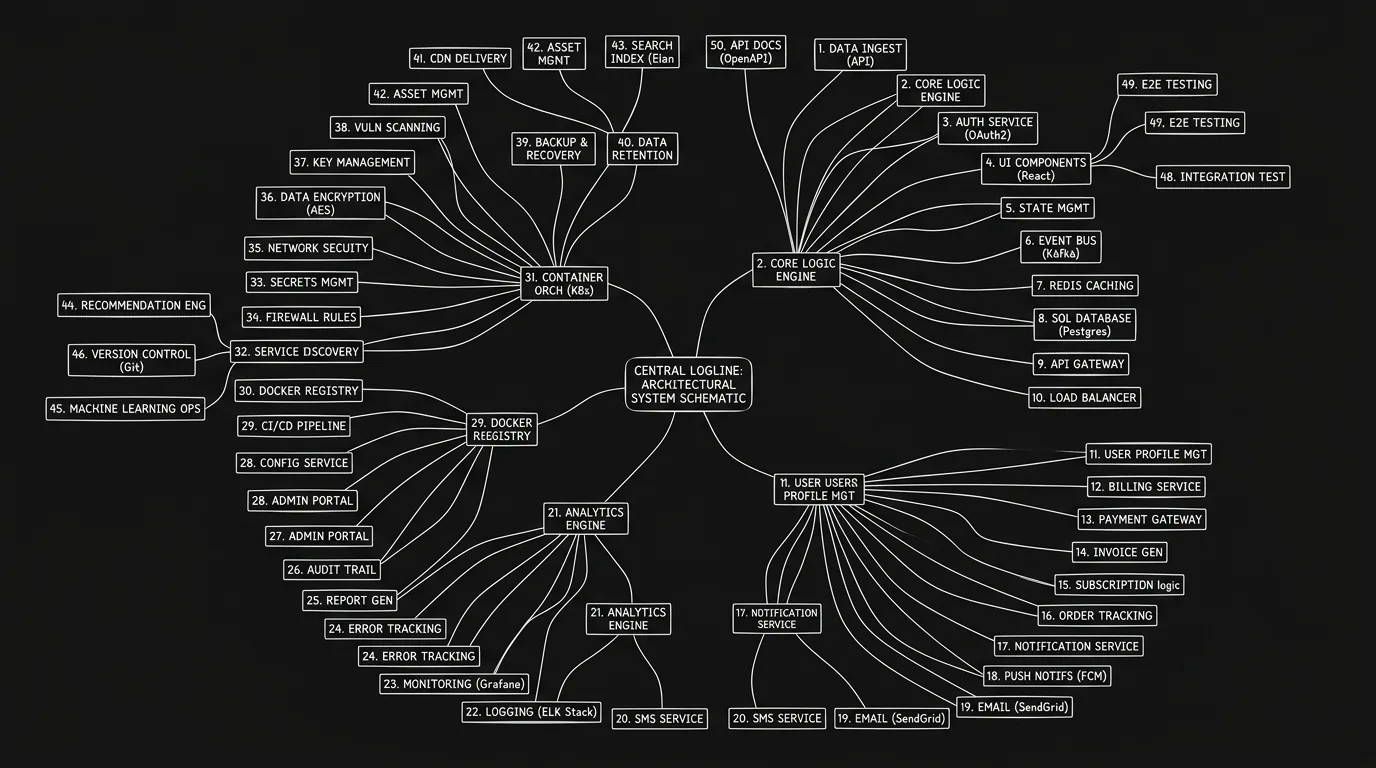
These two visuals work as a pair: the first shows Cinematic workflow still, first angle, 35mm film grain, and the second shifts to Cinematic workflow still, second angle, 35mm film grain - compare them briefly, then move on.
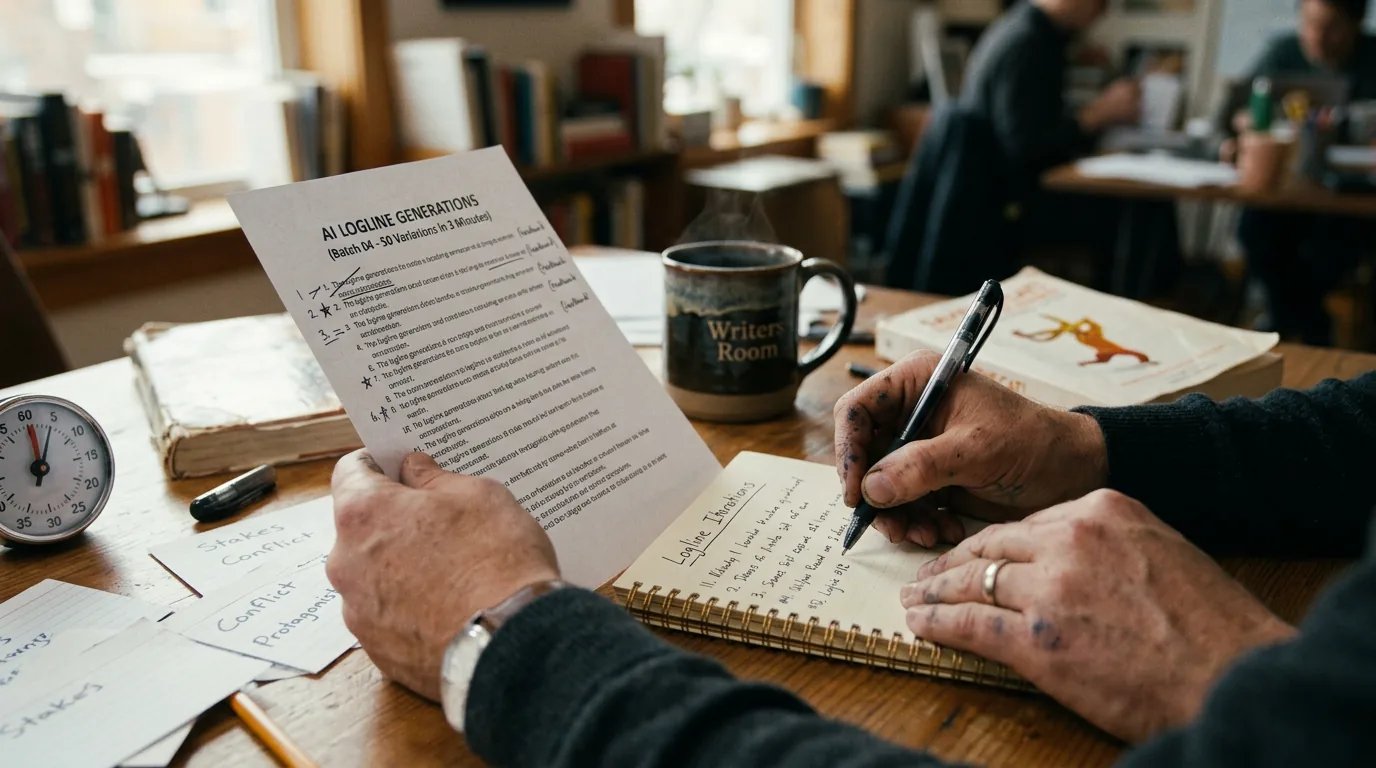
Why Fifty, and Why Three Minutes?
Nobody needs 50 loglines in a pitch document. You need options. When you have one logline, you have one bet. When you have 50, you have a spread. Some will emphasize the romance. Some the heist. Some the moral cost. You're not writing 50 scripts; you're stress-testing one idea against 50 ways of being read. The reader who only ever sees one sentence will infer tone, genre, and stakes from that sentence. If your only version leans "thriller," but the script is really a character study with a thriller backdrop, you've mis-sold it. Fifty variations surface the versions that match the script you wrote, or reveal that your premise is fuzzy and you need to fix the story, not the tagline.
Three minutes is the ceiling because the process should be batch, then choose. If it takes an hour, you're either over-editing the prompt or under-constraining the output. The workflow below is built so that prompt design happens once, and the actual generation is a single run (or two) with copy-paste and a timer. The value is in the sift: reading 50 one-liners and noticing which three make you think "that's the movie."
But there's a catch. The three minutes assumes you've already got one solid logline. If you don't, the first step is to write that one, by hand or with a single, focused prompt, before you scale to 50. Skipping that step is the fastest way to get 50 variations of something that wasn't ready to vary yet.
The Exact Workflow: From One Logline to Fifty in One Session
Step 1: Lock the source logline. Don't feed the engine a paragraph or a pitch. Feed it one clean logline: 25–35 words, protagonist + situation + stakes. If you don't have that yet, write it once by hand. This is the only non-negotiable input. Everything else is instruction.
Step 2: Define the axes of variation. Tell the engine what to change. "Vary the opening" (start with the protagonist, the world, or the inciting incident). "Vary the emphasis" (character vs. plot vs. tone). "Vary the tone" (lean thriller, lean drama, lean dark comedy). "Vary the hook" (what's the one thing that makes this idea different?). You're not asking for random rewrites. You're asking for structured rewrites along dimensions you care about. In practice, a single prompt can request 10 variations that emphasize character, 10 that emphasize plot, 10 that emphasize the twist, 10 that are more genre-specific, and 10 that are "high concept" or "elevator pitch" style. That's 50.
Step 3: Set hard constraints in the prompt. Specify length (e.g. "one sentence, under 35 words"). Specify format ("logline only, no preamble or numbering unless listing"). Specify what must stay: "The protagonist is X. The central conflict is Y. Do not change the ending." Without those guardrails, you'll get 50 loglines that drift away from your script. With them, you get 50 ways of saying the same story.
Step 4: One prompt, one paste, one output. Put the source logline in a block quote or clearly labeled section. Below it, paste the full instruction: "Generate 50 logline variations. Constraints: [length], [must-keep elements]. Vary: [axes]. Output: numbered list, logline only." Use a model with a large context window so the full list comes back in one response. If the tool caps output length, split into two prompts (e.g. "variations 1–25" and "variations 26–50") with the same rules. Start the timer when you hit send. You're aiming for under three minutes including the time to read the first screen of results.
Step 5: Sift, don't edit. Don't try to "fix" all 50. Scan for the 3–5 that are closest to the script you wrote. Flag the ones that accidentally reveal a better angle (e.g. a variation that highlights the B-plot might be stronger than your A-plot version). Drop the rest. Your final set is human-selected, not machine-selected. The machine's job was to generate. Yours is to choose.
Here's why that matters. The first time you run this, you might find that variation 12 and variation 41 are both strong but in different ways, one nails the hook, the other nails the emotional core. You're not obliged to pick one. You can steal the opening from 12 and the closing beat from 41 and hand-merge them into a final logline. The 50 are raw material. Your job is to mine them, then close the loop with a sentence you'd be willing to put on the title page.
| Phase | What you do | What the engine does |
|---|---|---|
| Input | One locked logline + axes of variation + constraints | Receives clear instructions |
| Generate | One (or two) prompts, paste, send | Produces 50 one-sentence variations |
| Sift | Read, compare, pick 3–5 finalists | Nothing, you're in charge |
| Final | Optional: one more pass to merge or polish the winners | Optional: "tighten these three to 28 words" |
As discussed in our guide on crafting and testing loglines, the best logline is the one that survives a reader's five-second test. Generating 50 variations is a way to run that test 50 times before you send. If you want a deterministic alternative without external AI calls, use the Logline Workshop and the Screenplay Outline Builder to validate concept clarity.
Try it free
Try Screenweaver for free on your script
It is free. Import your existing project, get a clearer view of your outline, and regain control of your story structure in minutes.
Start FreeRelatable Scenario: The Contest That Wants Three Loglines
You're submitting to a contest that asks for a single logline on the form, but also allows a "optional alternate loglines" field. You've only ever had one. You paste your logline into a chat interface with: "Give me 20 alternate loglines for this. Same story, same ending. Vary: opening (character vs. world vs. incident), emphasis (emotional vs. plot), and tone (darker vs. lighter). One sentence each, under 35 words. Output numbered." You get 20. Two of them make the romance subplot feel central instead of secondary; one of those is closer to how you actually wrote the script. You use that as your primary and your original as alternate. Total time: under three minutes. You didn't write 20 loglines. You discovered that your strongest sell might be the B-plot angle.
Relatable Scenario: The Producer Who Says "Give Me a Few Angles"
A producer likes the script but wants to see "how we'd position it" for different buyers. You need the same story framed as a thriller pitch, a character-drama pitch, and a high-concept hook. You take your one logline and run three targeted prompts: "Same story. Rewrite as a pure thriller logline." "Same story. Rewrite as a character-driven drama logline." "Same story. Rewrite as a one-line high-concept hook." You get three distinct flavors. You don't send all 50. You send those three, with a one-line note under each ("Thriller angle," "Character angle," "Elevator pitch"). The producer sees that you understand how to position the project. The three minutes you spent generating gave you the vocabulary to have that conversation.
Relatable Scenario: The Coverage Reader Who Only Sees One Sentence
Coverage often starts with a single logline. The reader uses it to set expectations. If your logline says "thriller" but the script is slow-burn and internal, the reader will mark "pacing issues" because the logline promised something else. Generating 50 variations forces you to see your idea as others will. One variation might read "tense and propulsive"; another "quiet and psychological." If the second is closer to the script, that's the logline you should submit. The exercise isn't to please an algorithm. It's to align the one sentence the industry sees with the 110 pages you wrote.
Think about it this way: the coverage reader has a stack of scripts. They skim the logline, then decide how carefully to read. A logline that undersells the script gets a skim. One that oversells it gets a "didn't deliver" note. The 50-variation run is a way to audition how your idea will be read before it lands on that stack. For more on how structure supports that alignment, see beat sheets and outline tools that keep your premise clear from outline to logline.
What Beginners Get Wrong: The Trench Warfare Section
Asking for "50 different loglines" with no structure. The engine will either repeat itself (same idea, synonyms) or drift (variation 23 is about a different movie). The fix: define axes. "Vary the opening. Vary the emphasis. Vary the tone." Give the model dimensions to explore. Without dimensions, you get noise.
Using a single sentence as the only input. "Here's my logline. Give me 50 more." That's too thin. The engine doesn't know what's sacred (your ending, your protagonist's flaw) and what's flexible (whether you lead with the world or the character). The fix: add 2–3 bullet constraints. "Do not change the ending. The protagonist must remain a reluctant hero. Keep the central irony." Now the variations stay on rails.
Accepting the first batch as final. The first 50 are raw material. Many will be clunky, generic, or off-tone. The fix: treat the run as a discovery pass. Scan for the 3–5 that surprise you in a good way. Those are the ones you polish. The rest are discarded. Speed matters for generation; slowness matters for selection.
Picking a tool that can't output 50 at once. Some interfaces truncate after 300 words. You get 15 loglines and have to prompt again, and again, and the "three minutes" becomes 15. The fix: use a model or interface that allows long outputs, or split explicitly ("Give me 25 variations" twice with the same prompt). Know your tool's limits before you start the timer.
Varying the story instead of the phrasing. You wanted 50 ways to say it. You got 50 premises that drift from your script (different villain, different twist). The fix: lock the story in the prompt. "Same protagonist, same conflict, same resolution. Only the wording and emphasis change." If the model keeps inventing, your constraint block wasn't strong enough. Add a line: "Do not add new plot elements or change the ending."
Skipping the sift. The temptation is to take variation 1 and call it done. The value is in comparing. The fix: read all 50 (or at least skim). The best version is often in the middle of the list, not the top. Selection is the step that makes the exercise worth it.
Using the same prompt for every project. A thriller and a rom-com need different axes. "Vary the tone" for a horror script might mean leaning into dread vs. leaning into irony; for a comedy it might mean sarcastic vs. warm. The fix: each script gets a quick pass to name what actually varies in this idea. Is it the protagonist's flaw? The antagonist's motive? The genre blend? Put that in the prompt. Generic prompts produce generic spreads.
Forgetting that the source logline might be wrong. If you feed a muddy logline into the engine, you get 50 muddy variations. The exercise can reveal that your one sentence doesn't yet have a clear protagonist, obstacle, or stakes. The fix: if every variation feels off, the problem might be the source. Write a new single logline by hand (or with one focused prompt: "Turn this paragraph into one 30-word logline with protagonist, conflict, stakes"). Then run the 50 variations again. The machine amplifies what you give it. Give it something sharp.
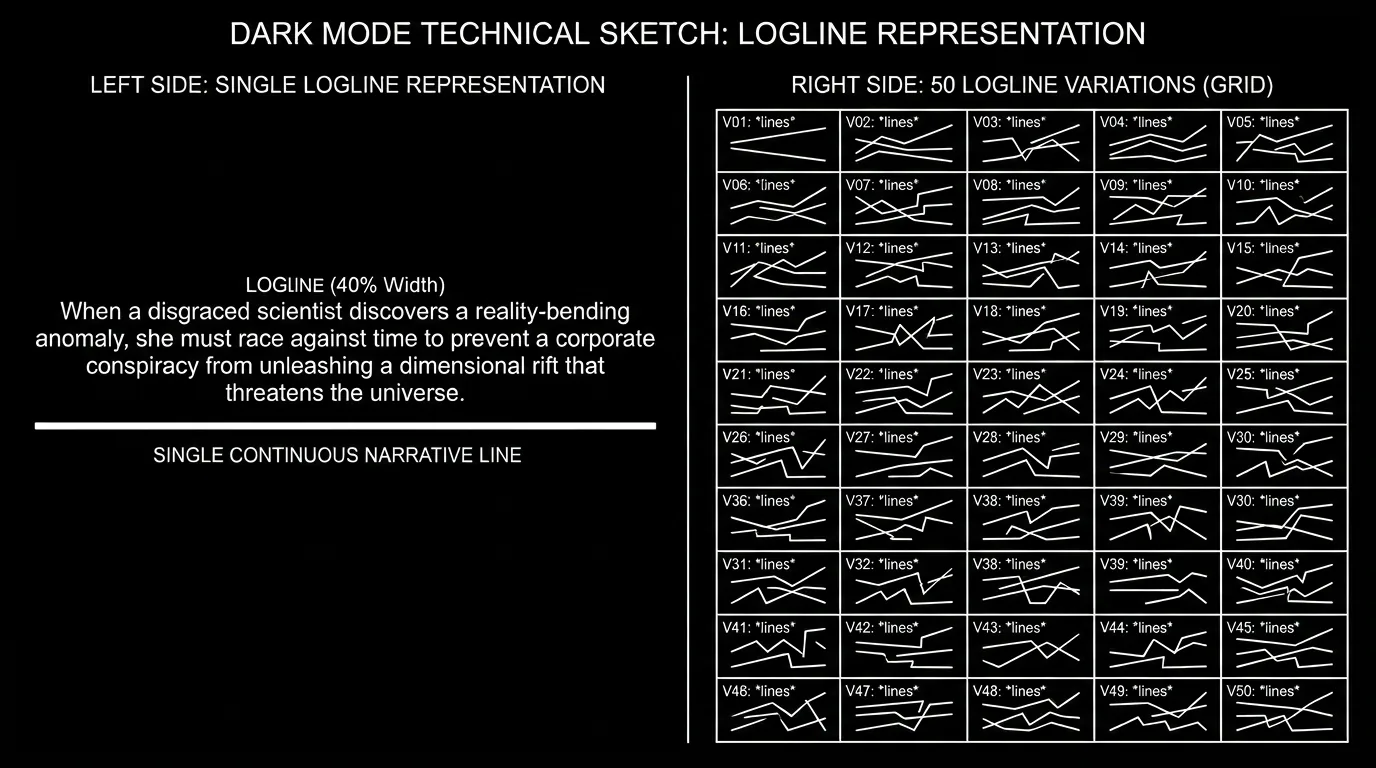
Software and parameters that actually work. Use any chat-style LLM with a large context window (e.g. ChatGPT, Claude, or an API-backed tool). In the prompt, use a clear structure: a block with "Source logline:" and your sentence, then "Task:", then "Constraints:", then "Output format:". If the model supports system instructions, put the constraints there ("You are a logline specialist. Output only loglines, no commentary."). Temperature: 0.7–0.9 is fine; you want variation, not randomness. One run. If you need 50 and the tool stops at 30, add "Continue from 31 to 50" in a follow-up with the same constraints. For deeper prompt design, prompt engineering for screenwriters covers role, task, and format in more detail.
One External Reference
When in doubt about what "counts" as your own work in a professional context, guild and studio policies apply. The WGA’s position on AI is the authoritative source for what’s allowed in covered work; logline generation for your own pitch materials is typically a different context than script authorship, but it’s worth knowing where the line is.
The Perspective
Fifty loglines in three minutes doesn’t mean you’re outsourcing your voice. It means you’re outsourcing the combinatorics. The idea was always yours. The sentence that sells it might be hiding in variation 37. Your job is to run the engine, then choose, and to know the difference between the two. Once you do, the next contest, pitch, or coverage read will see the version you meant to show. That’s the only metric that counts.
Final Step
Build your next script with Screenweaver
Move from ideas to production-ready pages faster with timeline-native writing and AI-assisted story flow.
Try Screenweaver