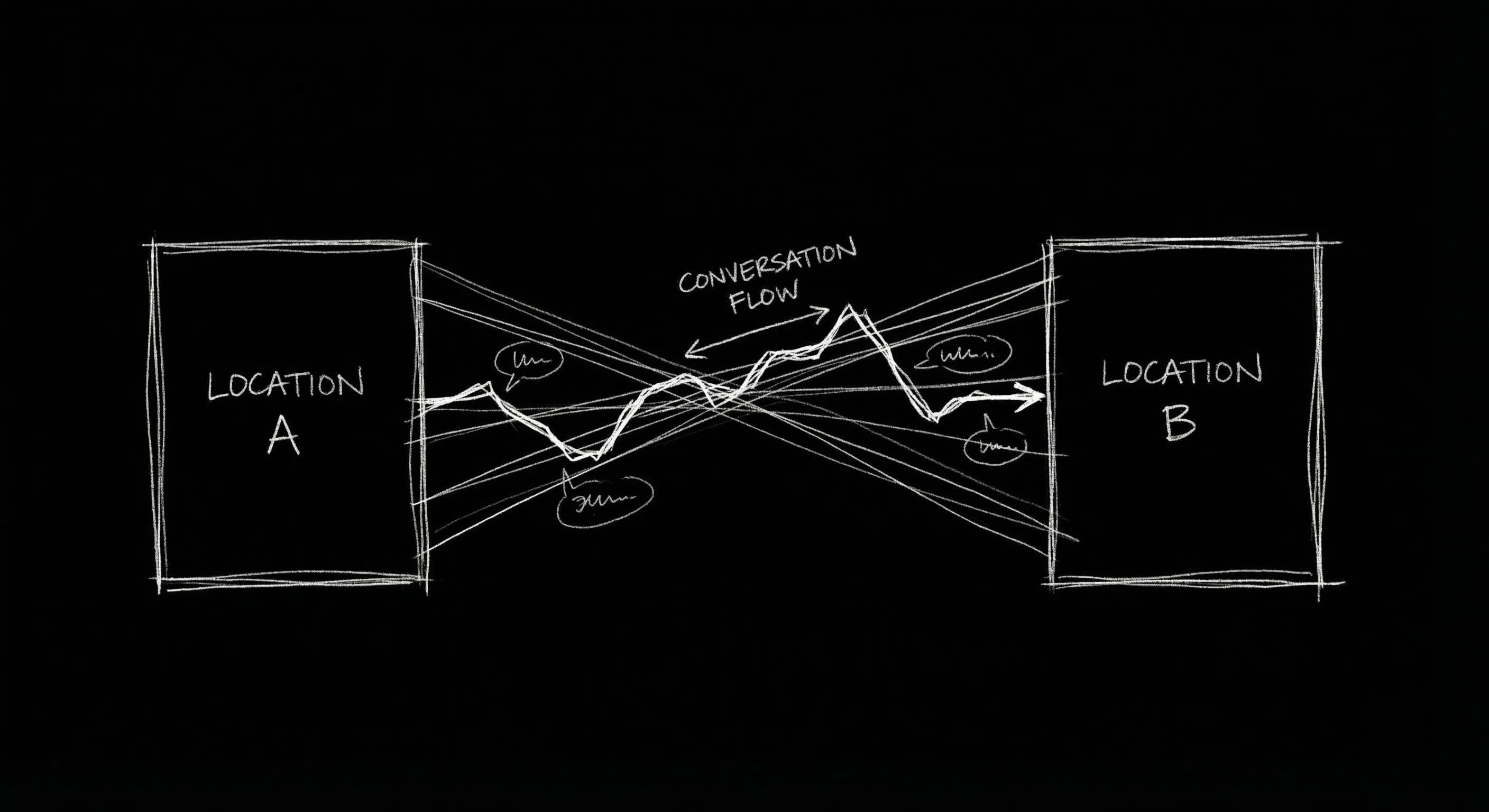

Two people. Two places. One line. Intercutting is the technique of cutting between two (or more) simultaneous actions so the audience experiences them as one. When it’s a phone call, we see both faces. We watch both reactions. The tension lives in the cut,who we’re on when the line lands, how long we stay, when we switch. High-tension phone calls aren’t just dialogue. They’re a duel in two locations. You have to format them so the reader sees the duel. And you have to write them so the cut is part of the drama.
In an intercut, the cut is a beat. Who we look at, and when, is part of the story.
Think about the phone calls that stick. The threat. The breakup. The deal falling apart. The confession. We’re not just hearing words. We’re watching two people in two rooms, each with something to lose. The writer who masters intercutting doesn’t just put dialogue on the page. They put the rhythm of the scene on the page,when we’re with one character, when we’re with the other, and how that rhythm builds or releases tension. Our guide on formatting phone calls covers the basics of intercut vs one-side. This goes deeper: how to make the intercut earn its tension.
Free tool: use the Slugline Formatter to clean up and standardize your scene headings.
Why Intercut for Tension
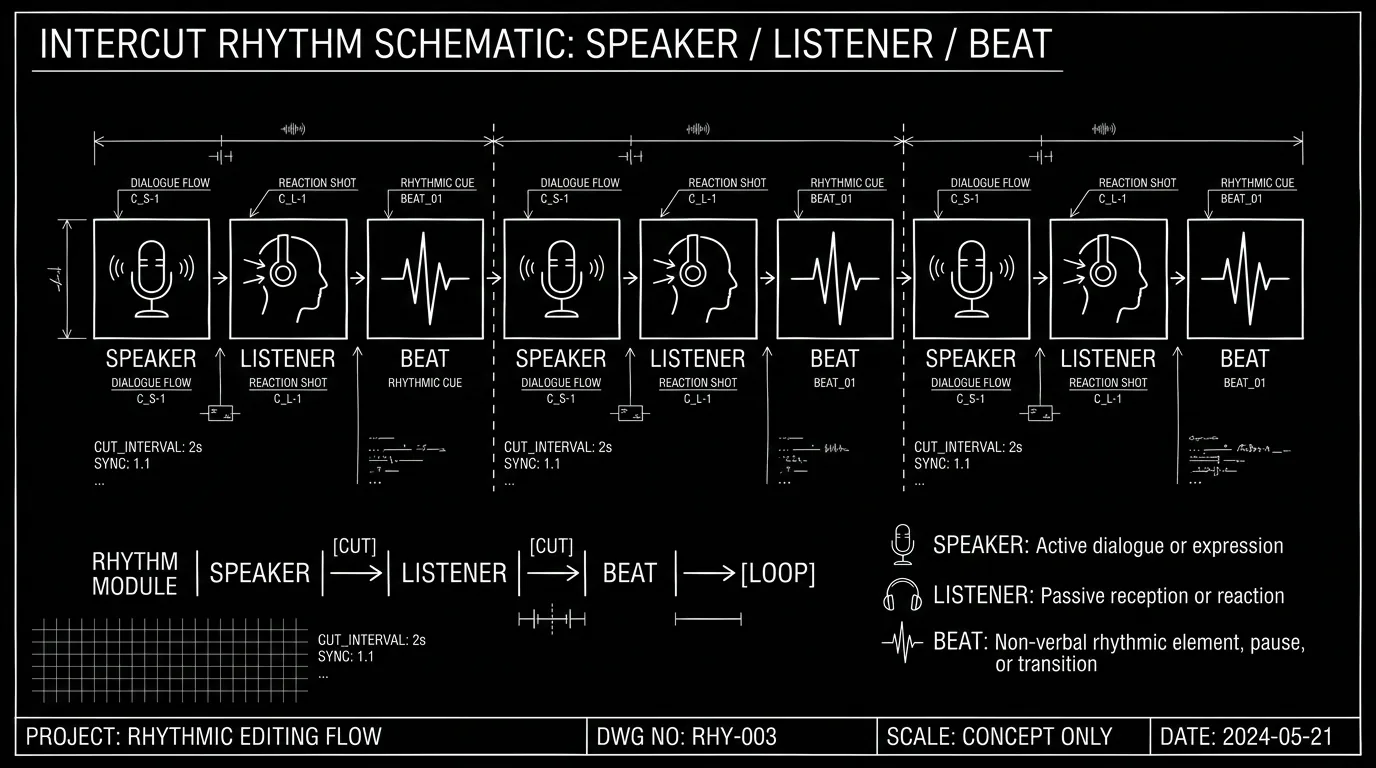
When we stay with one character (one-side), we get their reaction. We don’t see the other person’s face when they say the thing that changes everything. That can be powerful,mystery, isolation. But when both reactions matter,when the scene is a negotiation, a confrontation, or a revelation that lands on two people,one-side limits you. Intercutting gives you both faces. You can hold on the speaker. You can cut to the listener before they respond. You can hold on silence. You can cut away at the exact moment the line lands. The tension is in the timing. On the page, you suggest that timing with the order of the beats: whose dialogue comes next, whose action we see, and when you break to the other location.
So a high-tension intercut isn’t just “they talk, we cut back and forth.” It’s “we cut at the moment that maximizes the impact of the line or the silence.” Sometimes that means we see the speaker deliver the line, then cut to the listener’s face. Sometimes we’re on the listener while the line is delivered (we hear it, we see them take it). The script can indicate preference with action lines: “We hold on Sarah’s face as his voice fills the room.” Or by the placement of the cut: dialogue from A, then a short action beat for B, then B’s response. The reader (and the director) follows the rhythm you set.
Format Refresher: Intercut on the Page
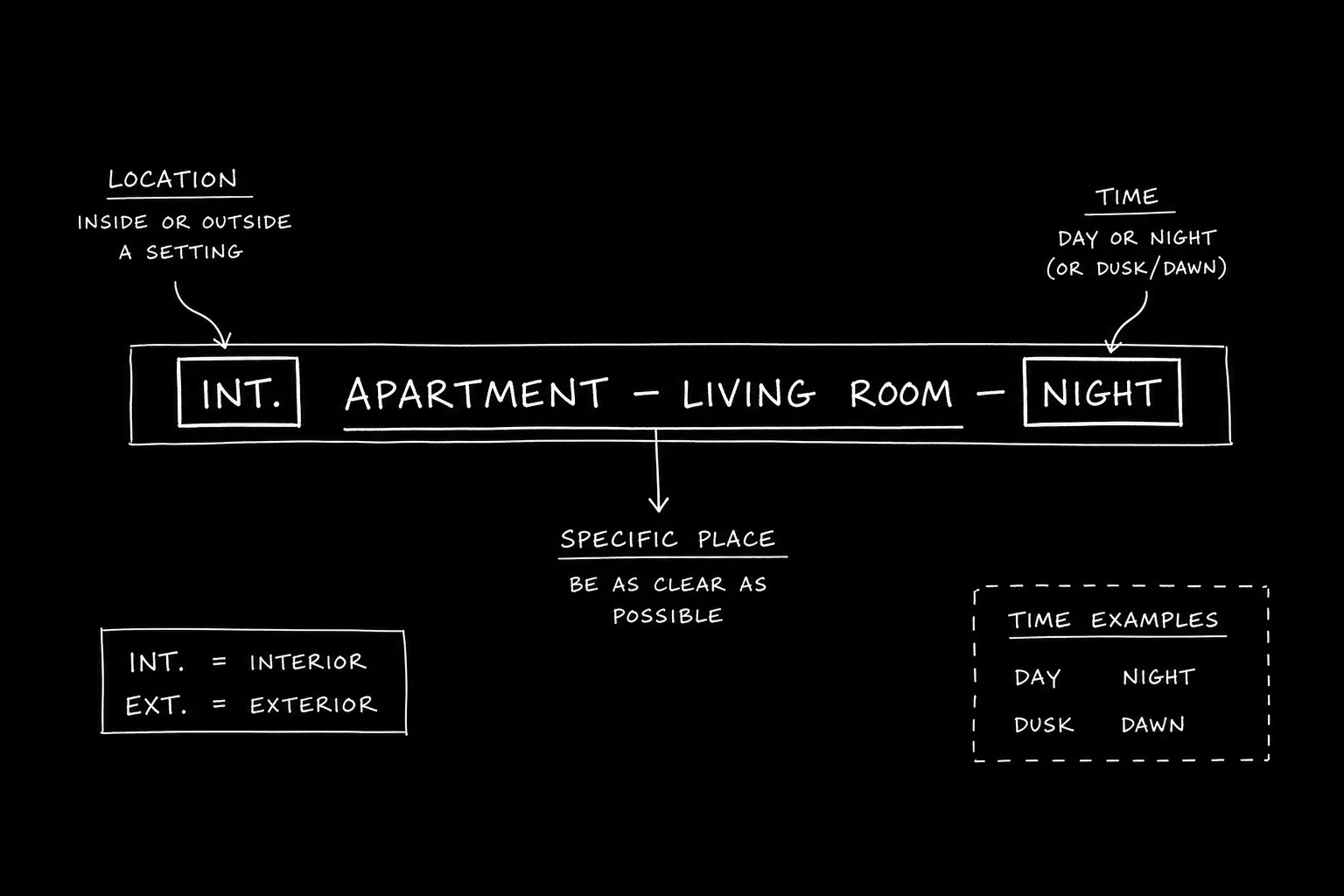
You establish both locations with scene headings. Then you use INTERCUT or INTERCUT BETWEEN [LOCATION A] AND [LOCATION B]. After that, you don’t repeat full slug lines every time you switch. You use character names and dialogue, with optional (ON PHONE) or action lines under each. When the call ends, you can write END INTERCUT and continue in one location, or simply continue with a new full scene heading. The key for tension: use action lines to suggest when we’re on whom. “Sarah goes still.” “James sets the phone down. Doesn’t hang up.” Those beats tell the reader where the camera is and what we’re watching. The dialogue does the rest.
A Practical Comparison
| Choice | Effect |
|---|---|
| Cut to listener before the line | We see the blow land on their face |
| Cut to listener after the line | We see the reaction; the line hangs in the air |
| Hold on speaker for the whole line | We watch them deliver it; we imagine the other side |
| Short action beat between lines | Pause; the silence is a beat |
| Cut on the hang-up | The click is the period on the scene |
There’s no single “right” pattern. The right pattern is the one that makes this scene land. For a threat, you might want to see the person receiving it. For a confession, you might want to see the person speaking,or the person hearing it, depending on whose moment it is. As with dialogue and subtext, what’s not said matters. In an intercut, what we see when it’s not said matters just as much.
Relatable Scenario: The Breakup Call
She’s in their apartment. He’s in a hotel room. They’re on the phone. If you intercut, we see her face when she says “I can’t do this anymore.” We see his face when he goes quiet. We see her waiting. We see him put his head in his hands. We see her when he says “Okay.” The tension is in the cuts. Do we stay on her when she says it, or do we cut to him so we see the words hit? Do we stay on him for the long pause, or do we cut to her, alone in the apartment, holding the phone? Each choice changes what the audience feels. On the page, you make those choices by the order of dialogue and action. “She says it. Beat. We’re on him. He doesn’t speak. She: Hello? Still there? He: Yeah. Okay.” The reader sees the rhythm. The director sees where to put the camera.
Try it free
Try Screenweaver for free on your script
It is free. Import your existing project, get a clearer view of your outline, and regain control of your story structure in minutes.
Start FreeRelatable Scenario: The Negotiation
Two people. Different cities. A deal on the line. Every line is a probe. If we only hear them,one-side,we’re guessing at the other person’s tells. With intercut, we see the smirk when one lowballs. We see the pause when the other considers. We see the moment one of them breaks. The scene is a duel. We need both duelists. Format: INTERCUT. Then dialogue and short action beats. “Maya leans back. Says nothing.” “,David (on phone) David: So? Maya: I need to think about it. David: You don’t have time. We stay on Maya. She hangs up.” The last beat,who we’re on when the call ends,is a choice. Here we stay with her. We see her make the move. The tension pays off on her face.
The Trench Warfare Section: What Beginners Get Wrong
Intercutting when one-side would do. Not every phone call needs both faces. If the scene is about one person receiving news,and the other person’s reaction doesn’t change anything,one-side is leaner and can be more powerful. Fix: Use intercut when both reactions drive the scene. When the power dynamic, the negotiation, or the mutual revelation is the point. Otherwise stay with one character and let the other be a voice.
Writing both sides as full scenes every time. INT. KITCHEN. Full action. Dialogue. INT. CAR. Full action. Dialogue. Repeat. The script bloats. The reader gets whiplash. Fix: One INTERCUT heading, then character names and dialogue. Use full scene headings only when we leave the call (e.g., someone hangs up and we stay in one location).
No rhythm in the cuts. The dialogue alternates mechanically. A speaks, B speaks, A speaks. There’s no pause, no hold, no moment where we stay on one face too long. Fix: Add action beats. “She doesn’t answer.” “We hold on him.” “Silence.” The beat between lines is where tension lives. Use the page to suggest it.
Forgetting who has the power. In a tense call, who hangs up first, who speaks last, who we’re on when the line lands,all of that signals power. If you don’t think about it, the scene can feel flat. Fix: Decide who “wins” the scene (or if it’s a draw). Use the last cut and the last line to land that. We stay on the person who made the move, or we cut away from the person who lost. The reader should feel who had the upper hand.
Overdirecting. “We cut to Sarah. We cut back to James.” You don’t need to say “we cut” every time. INTERCUT implies it. Fix: Use character names and dialogue. Use action lines only when the timing of the cut matters (“Hold on Sarah’s face for a beat after he hangs up”). Let the format do the work.
Step-by-Step: Writing a High-Tension Intercut
Establish both locations. Write INTERCUT , [LOCATION A] / [LOCATION B]. List the beats of the conversation. For each beat, decide: whose face do we see when this line is delivered? Whose face do we see when this line is received? Write the dialogue in order, with action lines that place us. “James: It’s over. We’re on Sarah. She doesn’t move. Sarah: What? James: You heard me. We’re on James. He’s already putting the phone down.” When the call ends, decide: do we stay in one location or cut to the other? Write END INTERCUT and the continuation, or a new scene heading. Read it aloud. Does the tension build? Do the cuts feel intentional? If it reads flat, add one or two action beats that hold on a face or a silence.
When to Use One-Side Instead
Use one-side when the scene is about one person’s reaction,the other is a voice, a threat, or a catalyst. Use one-side when you want to hide the other person (mystery, fear). Use one-side when the script is long and you need to save space. Intercut when both faces earn their screen time and when the tension is in the exchange. Our phone call formatting guide has the full comparison. Here, the takeaway is: high-tension intercutting is a craft of rhythm. Put the rhythm on the page. Then the scene will crackle.
The Perspective
A high-tension phone call on the page isn’t just two people talking. It’s two people in two rooms, and the cut between them is part of the script. Format it cleanly. Use action beats to suggest when we’re on whom. Write so the last line and the last cut land. When you do that, the reader,and the audience,will feel the duel.
Final Step
Build your next script with Screenweaver
Move from ideas to production-ready pages faster with timeline-native writing and AI-assisted story flow.
Try Screenweaver