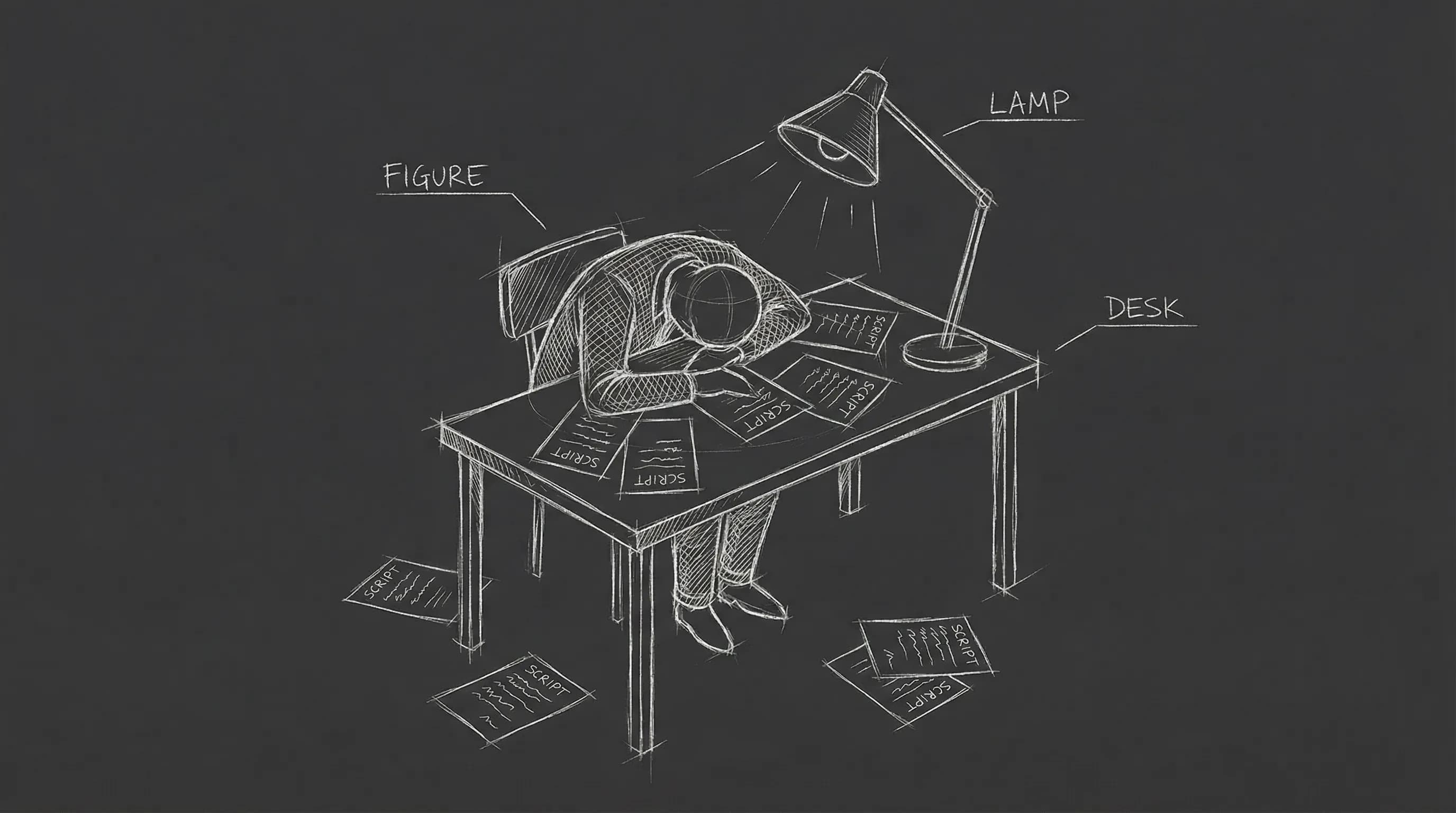
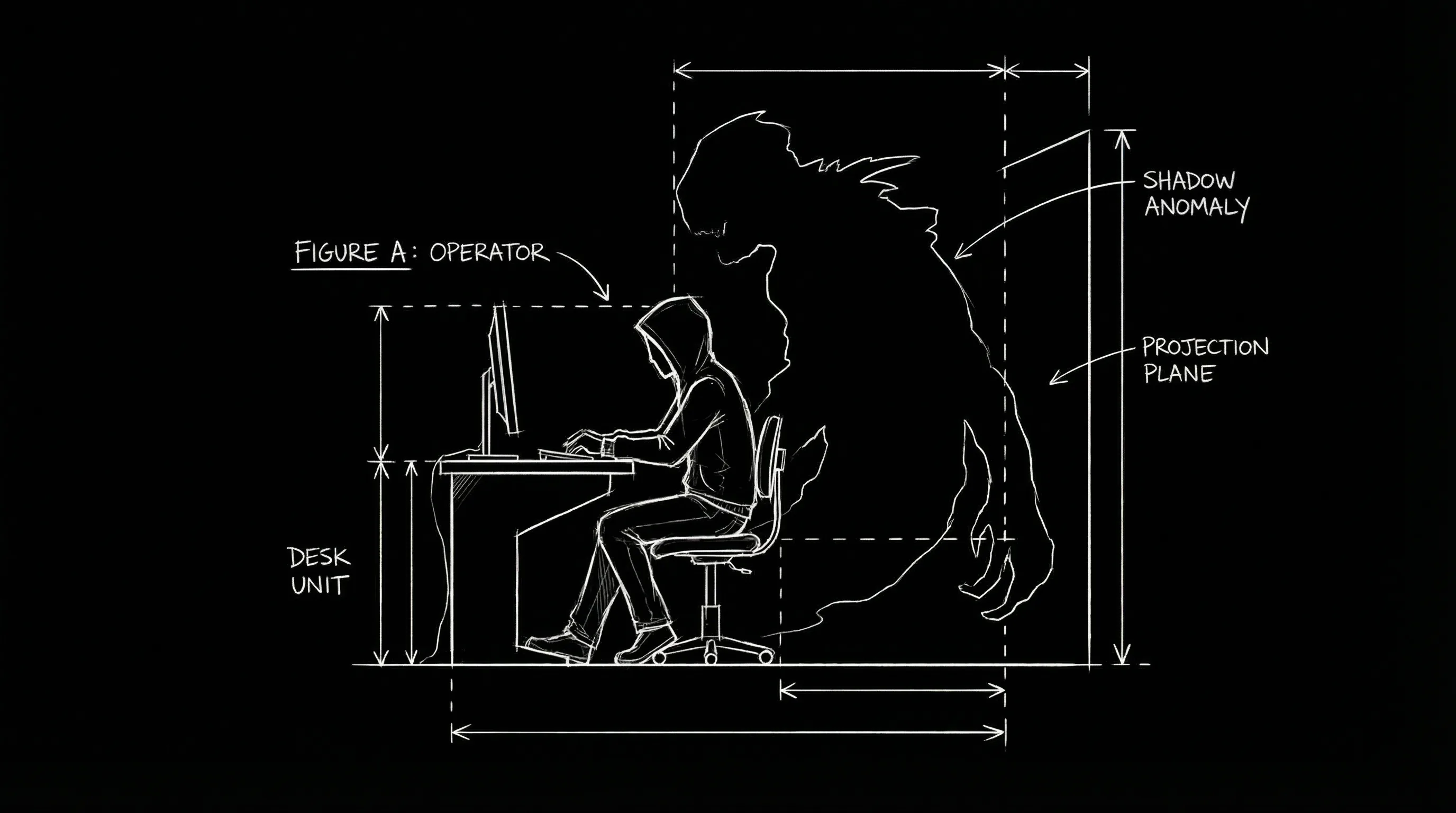
You're in a room. Or you're reading a pass from a producer. Or you've just sold something. For a moment it feels good. Then the voice: they'll find out. You got lucky. The next one will expose you. Everyone here is smarter. You're one meeting away from being revealed as a fraud. That feeling has a name. It's imposter syndrome. And it's not a sign that you don't belong. It's a sign that you're doing something that matters to you. This piece isn't about fixing it once and for all. It's about normalizing it. Understanding why writers are especially vulnerable. And learning to work alongside the voice instead of letting it run the show.
Why Writers Feel It More
Writers work in the subjective. There's no score. No clear finish line. One reader loves your script; the next one passes. You can't point to a metric and say "see, I'm good." You have a pile of drafts, some wins, some rejections, and a lot of uncertainty. That uncertainty is fertile ground for the imposter. The brain hates ambiguity. So it fills the gap with a story: you're not good enough, you've been faking it, your success was a fluke. The story feels true because it's simple. But it's not data. It's anxiety dressed up as insight. Every writer you admire has had the same feeling. They've had days when they thought they'd never work again. They've compared their behind-the-scenes to your highlight reel. The difference isn't that they don't feel like frauds. It's that they've learned to write anyway. For more on the daily habits that keep writers going, see writing routines of famous screenwriters, structure doesn't eliminate doubt, but it gives you something to do when doubt is loud.
The difference isn't that they don't feel like frauds. It's that they've learned to write anyway.
The "Note Behind the Note" You Tell Yourself
When you get a pass or a criticism, the imposter doesn't hear "this draft didn't work for us." It hears "you're not good enough." When you get a win, it doesn't hear "we liked your work." It hears "they made a mistake." That's the note behind the note. The imposter is always translating feedback into a verdict on your worth. Real feedback is about the work. This scene. This draft. This pitch. It's not a verdict on your entire talent or your right to be in the room. Learning to take notes without crumbling is partly about separating "this didn't work" from "I don't belong." The imposter wants to collapse them. Don't give it that. Notes are information. They're not a ruling on your identity.
Relatable Scenarios
Scenario one. You get staffed. First day in the room you're sure everyone can tell you don't belong. They're tossing around references and structure terms. You're nodding. You're taking notes. You're afraid to pitch. When you do pitch, your idea gets shot down. The voice says: see? You're not supposed to be here. What you don't see: the other writers have had ideas shot down too. The room is a filter. Not every idea lands. The fact that you're in the room means someone thought you could contribute. The voice is not giving you data. It's giving you fear. The fix isn't to never get shot down. It's to pitch again. To treat the room as a place where ideas get tried, not where you get judged as a person.
Scenario two. You sold a script. Or you won a contest. For a day you're elated. Then the voice: they made a mistake. The next script will be worse. They'll realize. You start the next project with one eye on the door. You second-guess every beat. You're not writing anymore; you're performing "being a writer" while waiting for the other shoe to drop. The antidote is boring but real. You had a win. It happened. You didn't fake the script. They read it. They bought it. The next script might be harder. The next script might not sell. That's the job. It's not proof that you're a fraud. It's proof that the job is uncertain. Separate "this business is unpredictable" from "I am inadequate." The first is true. The second is a story you're telling yourself.
Scenario three. You haven't sold anything yet. You haven't been staffed. The imposter says: you're not a real writer. Real writers have credits. You have a pile of drafts and a lot of no's. Here's the thing. The imposter says the same thing to writers who have credits. "You got lucky." "That was a fluke." The goal isn't to reach a point where you never feel like a fraud. The goal is to stop letting that feeling decide whether you write. You're a writer if you write. The rest is noise. For more on keeping going when the going is slow, time management for part-time writers can help, the habit of showing up matters more than the external validation.
What Makes It Worse
Comparing your full reality to someone else's highlight reel. You see their credits. Their room. Their deal. You don't see their rejections, their rewrites, their years of near-misses. You're comparing your behind-the-scenes to their public face. Stop. Compare yourself to who you were a year ago. Are you writing more? Learning more? Getting better feedback? That's the comparison that matters.
Isolating. When you're in your head, the voice gets a monopoly. Talk to other writers. Not to brag or complain, to normalize. You'll hear that they have the same doubts. That they've been passed on. That they don't know if the next thing will work. You're not the only one. The imposter narrative depends on the idea that you're uniquely unqualified. Evidence to the contrary weakens it. Finding community as a long-distance screenwriter is one way to get that evidence, other people in the same boat.
Treating every note as proof. You get notes. Some are right. Some are taste. Some are wrong. If you treat every criticism as confirmation that you're not good enough, you're letting the imposter run the show. Notes are information. They're not a verdict on your worth. Learn to evaluate them. Keep what helps. Let go of what doesn't.
| When the imposter says... | Reframe |
|---|---|
| "You got lucky" | "I did the work. They responded. Luck is part of every career." |
| "They'll find out" | "Find out what? That I'm still learning? Everyone is." |
| "You're not a real writer" | "I write. That's the definition. Credits are outcomes, not identity." |
| "The next one will fail" | "Maybe. The next one is a separate project. I'll write it anyway." |
Try it free
Try Screenweaver for free on your script
It is free. Import your existing project, get a clearer view of your outline, and regain control of your story structure in minutes.
Start FreeWhat Helps (Without Pretending It Disappears)
Name it. When the voice says "you don't belong," say back: "That's imposter syndrome. It's a feeling, not a fact." Naming it creates distance. The feeling might still be there. It doesn't get to make the decisions.
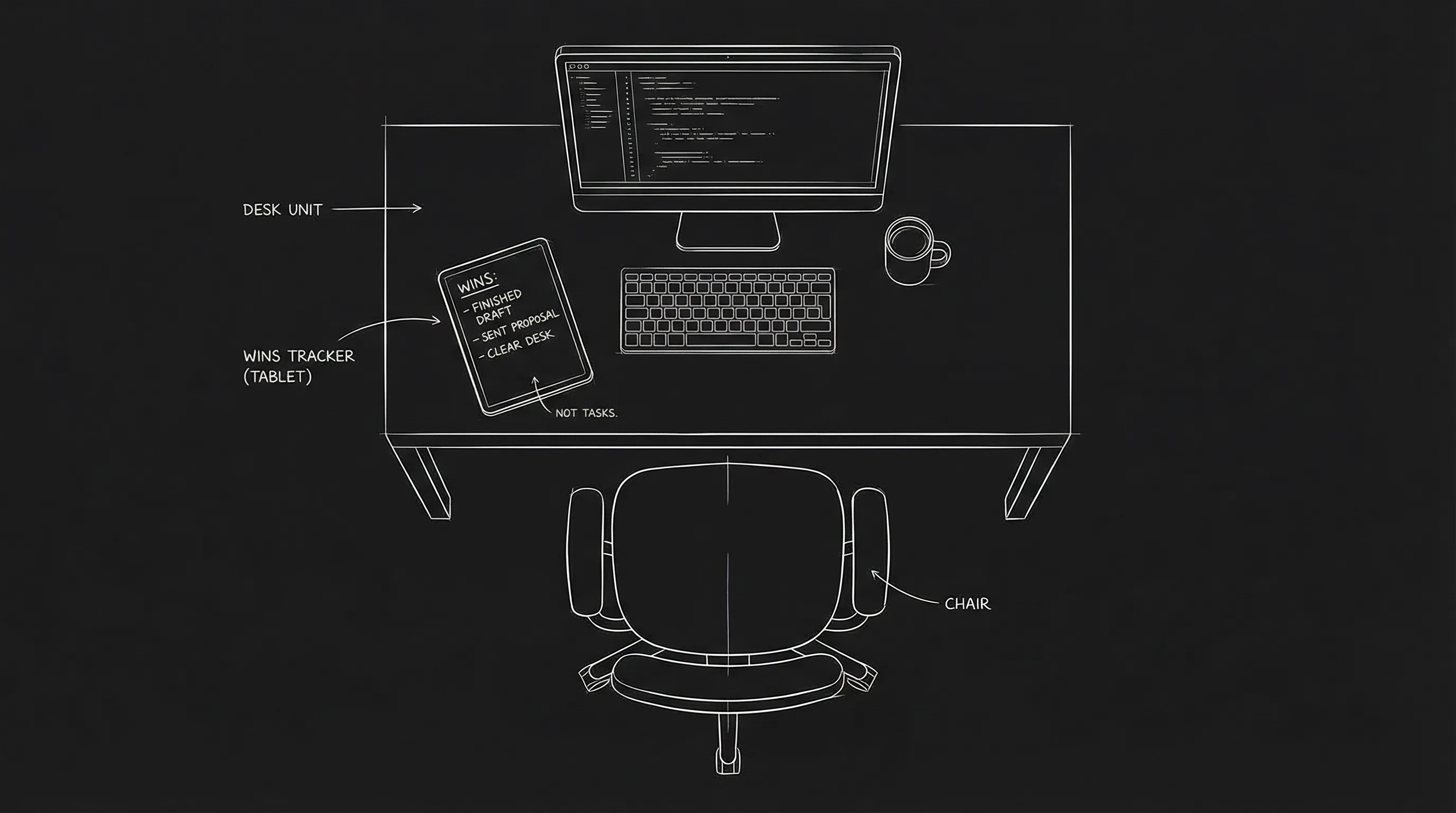
Keep a record. When you get a win, a positive note, a request to read more, a sale, a staff job, write it down. When the imposter is loud, open the list. You're not making it up. The evidence is there. The brain is bad at balance. Give it a file to read.
Ship the work. The imposter loves the draft that never leaves your desk. "It's not ready." "One more pass." "They'll see I'm not good enough." The only way to win that game is to send it. Let the world respond. Rejection will happen. So will acceptance. Both are data. Hiding is not data. It's just fear.
Separate the work from the worth. You are not your last script. You are not your last note. You are not your credits. You're a person who writes. Some things you write will be good. Some will be bad. You can get better. The imposter wants to tie your entire identity to the outcome. Don't give it that.
You're a writer if you write. The rest is noise.
When It's Not Just Nerves
Sometimes the feeling doesn't lift. You're not just doubting yourself; you're unable to enjoy wins, or you're avoiding writing altogether, or the voice is so loud it's affecting your sleep or your relationships. That may be more than imposter syndrome. It may be anxiety or depression. There's no shame in that. Writers carry a lot. Getting help, therapy, medication, or both, is not a sign that you're weak. It's a sign that you're taking the job of being a human seriously. The goal is to write from a place that's not constantly under attack from the inside. If you can't get there on your own, get support. And if you're burned out rather than anxious, signs you need a break from your script may be more relevant, rest is part of the job too.
One External Anchor
Research on imposter phenomenon (often credited to Clance and Imes) shows it's common in high-achieving people and in fields where evaluation is subjective, exactly the conditions writers work in. Knowing it's studied and named can reduce the sense that you're uniquely broken. (<a href="https://www.ncbi.nlm.nih.gov/pmc/articles/PMC5360841/" rel="nofollow">Imposter phenomenon, NIH/PMC</a>.)
The Perspective
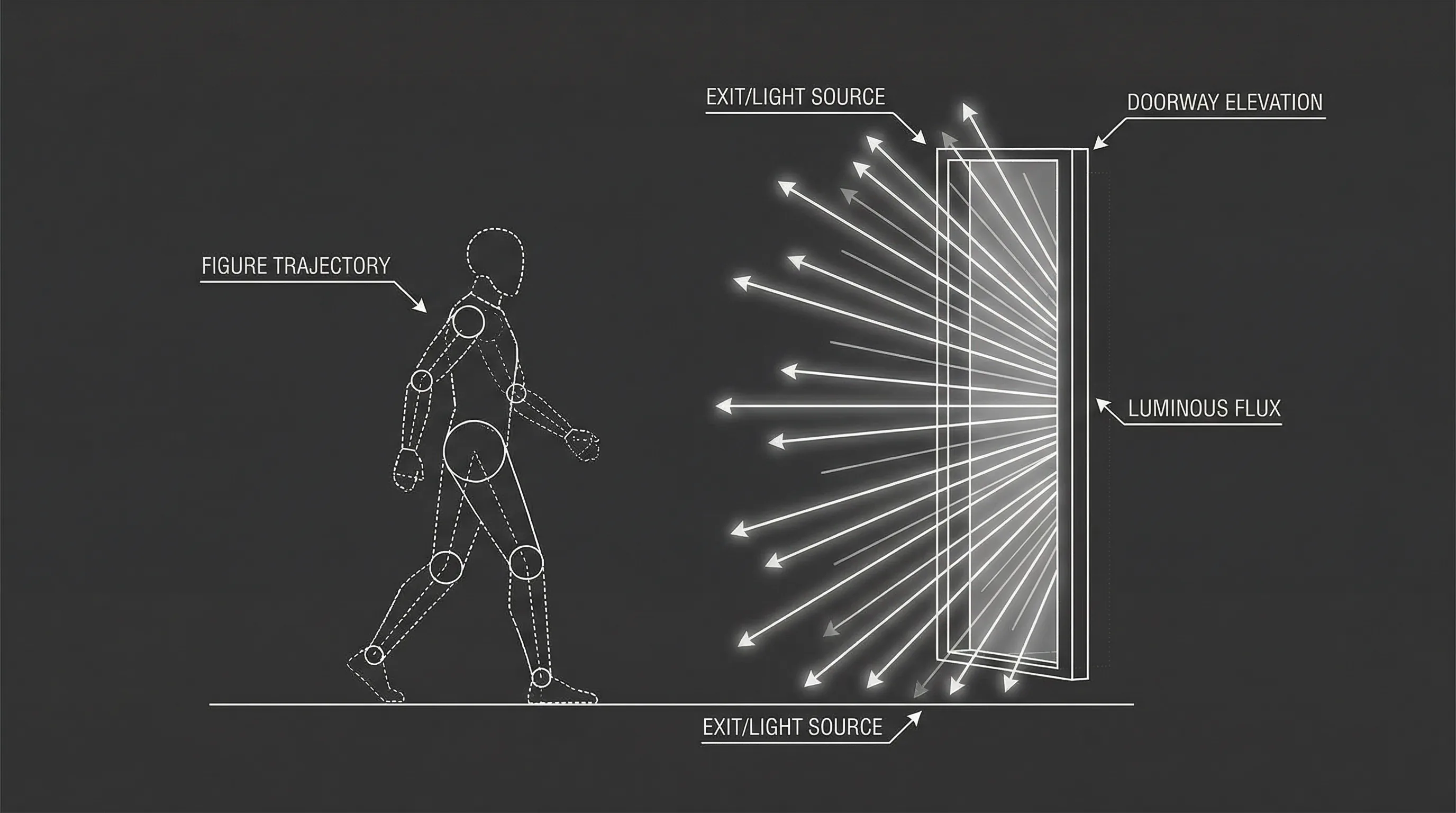
Imposter syndrome is the voice that says your success is a fluke and your failure is the truth. It's common. It's loud. It's not the truth. You don't have to believe you're the best writer in the room. You have to believe you have a right to be in the room. You earn that by showing up, by writing, by sending the work, and by treating the voice as a passenger, not the driver. Keep the wheel. Keep writing. And when you're in the room or in the draft, remember: notes are about the work, not about whether you belong.
Final Step
Build your next script with Screenweaver
Move from ideas to production-ready pages faster with timeline-native writing and AI-assisted story flow.
Try Screenweaver