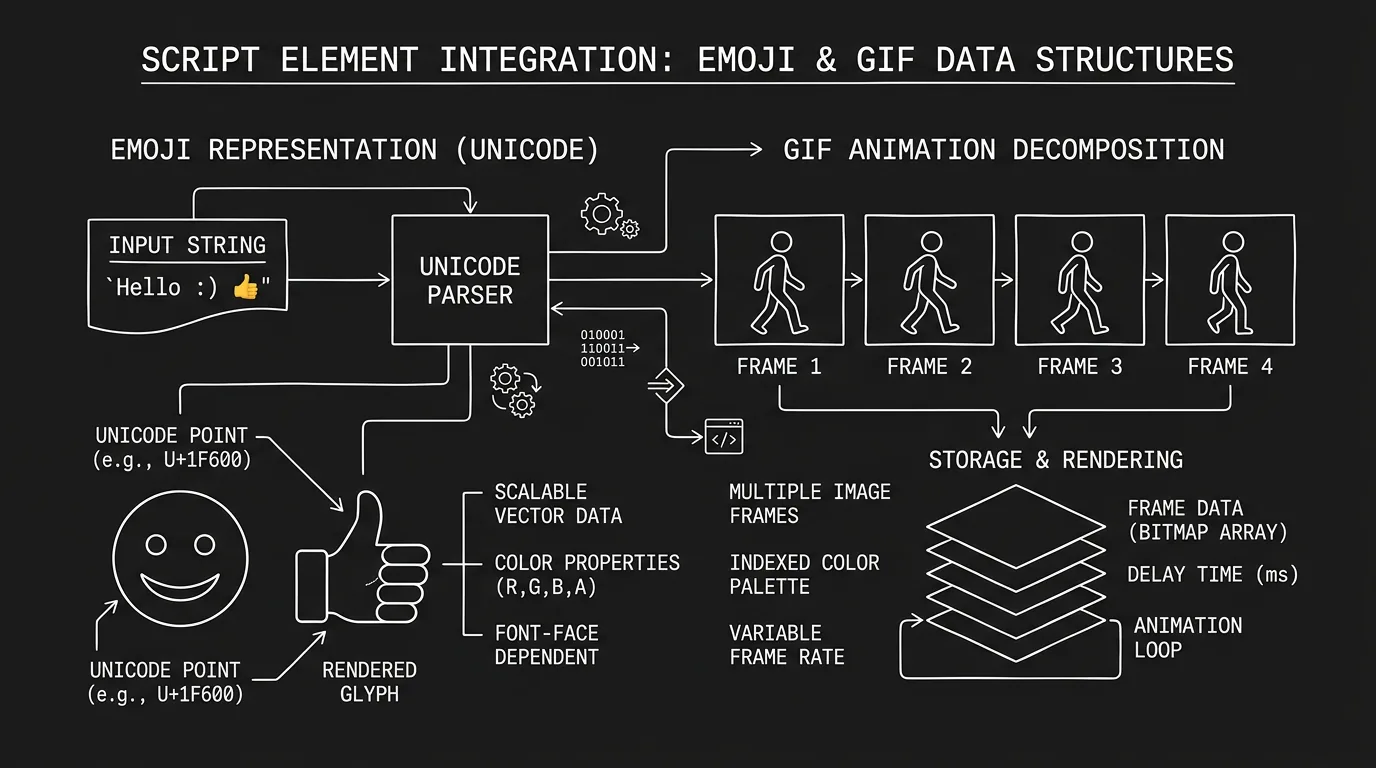

They send a thumbs-up. A heart. A GIF of a cat. Emojis and GIFs are part of how people communicate on screen, and in scripts they have to be readable and producible. You're not drawing the emoji; you're naming it or describing it so the reader knows what we see and production can source or build it. Here's how to put them in action lines (and in dialogue-style text blocks) without breaking the flow.
Name the emoji or describe the GIF. The reader should see it; production should be able to find or create it.
Think about it this way. In the film we might see the actual emoji (in a text bubble) or a GIF (in a chat or social feed). On the page you have two jobs: identify what we see and keep the read smooth. Spelling out the emoji (e.g. "😊" as "smiling face") or describing the GIF ("GIF of a cat slapping the keyboard") does both. Our guide on formatting text messages covers where the message goes; this piece is about the emoji/GIF inside the message or the action. For on-screen text in general, see chyrons.
Emojis in Action Lines
Option A: Name it. "She sends a thumbs-up emoji." "He replies with the crying-laughing face." The reader gets the meaning; production can use a standard asset or design to match. Option B: Symbol + note. Some writers use the actual symbol: "She sends 👍." Then in a production note or style guide you might specify "emoji as per platform." In the script itself, naming is often clearer for a fast read. When it matters: Tone. A thumbs-up is different from a heart. A skull (💀) might mean "dead" or "I'm dead" (laughing). If the meaning matters for the story, the name or a short note makes it clear. For subtext in minimal dialogue, see subtext, the emoji can do the work.
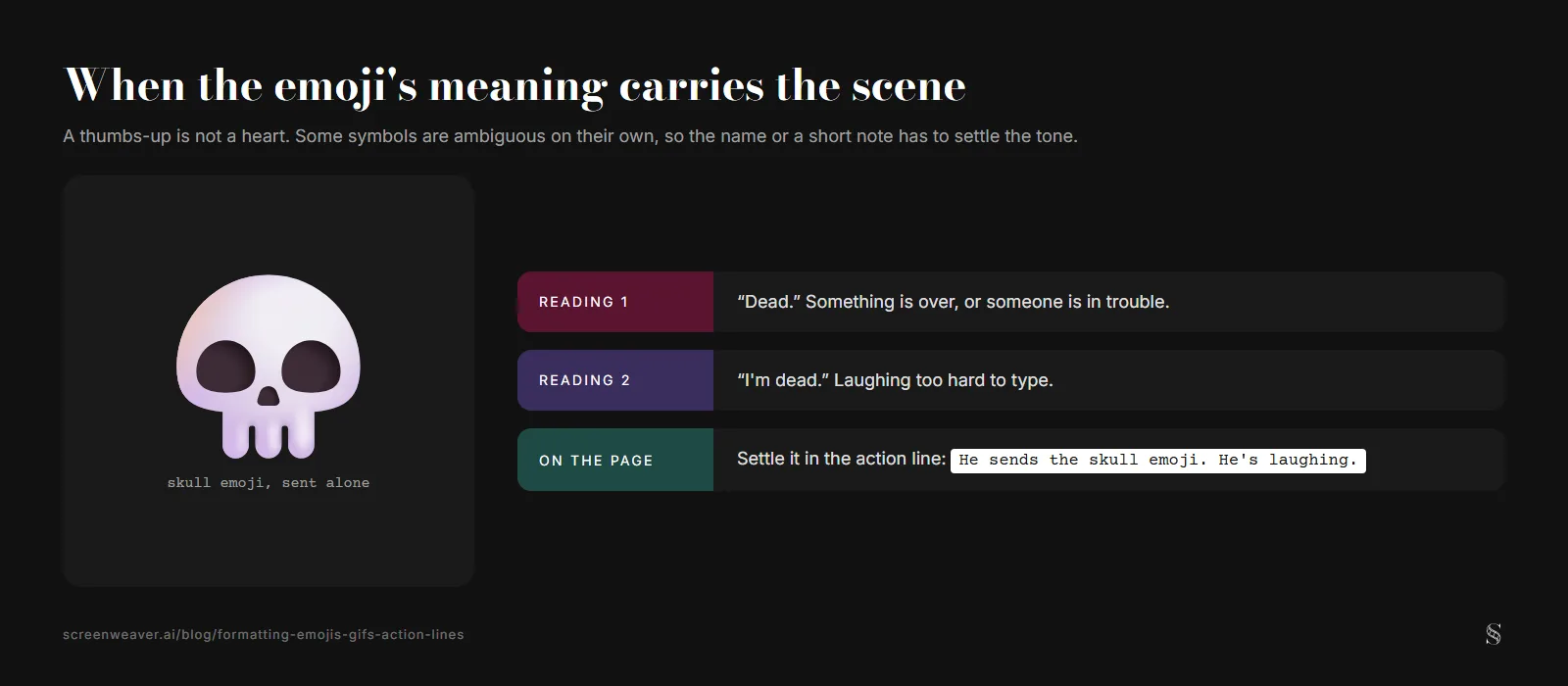
Same symbol, two readings: the name or a short note in the action line decides which one the reader gets.
Emojis in Dialogue-Style Text Blocks
When the text is formatted as dialogue (CHARACTER (TEXT): "Message"), you can include the emoji in the line. Option A: "She texts back: Okay 👍" (name in action) or "Okay [thumbs-up emoji]." Option B: "Okay 👍" if your software and production accept it. Consistency matters: pick one approach for the script. For text format, see format text messages.
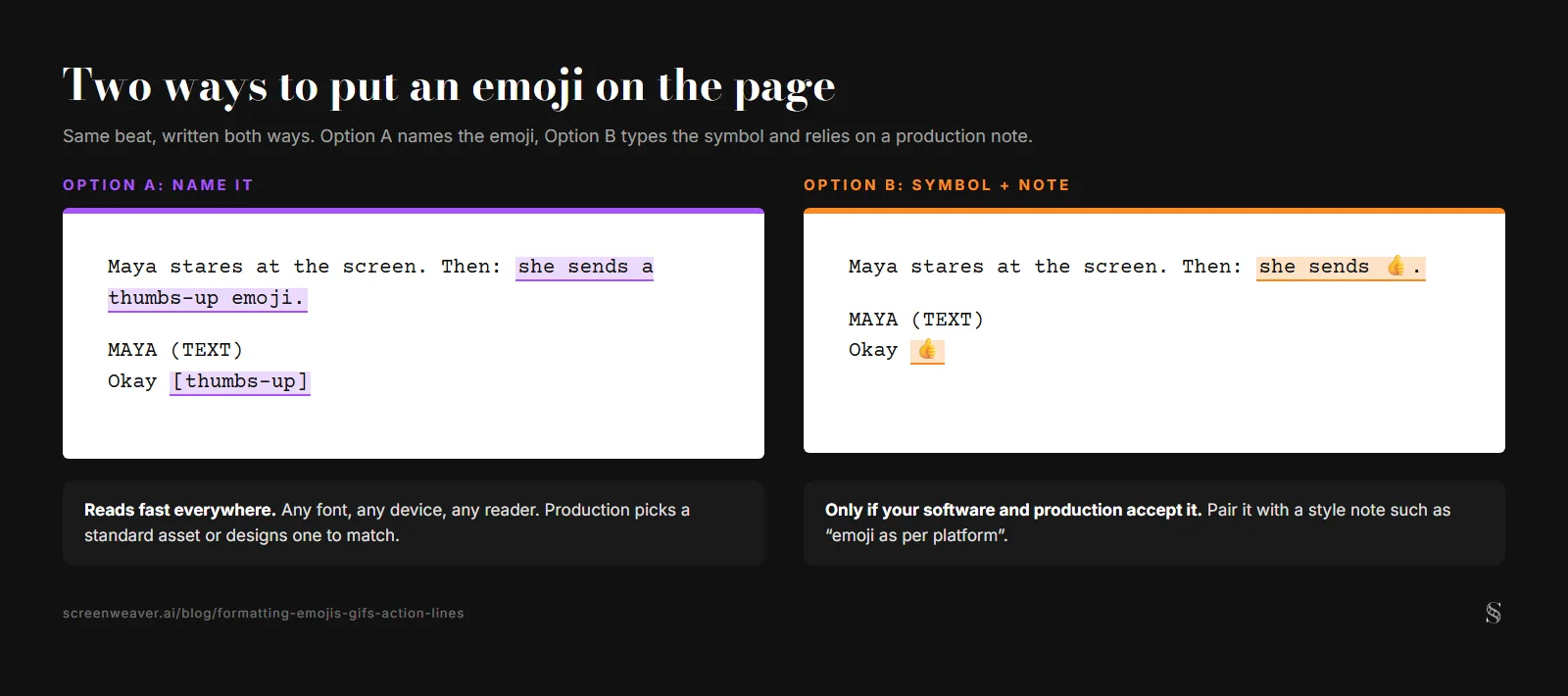
The same beat written both ways. Whichever you choose, use it on every page.
GIFs in Action Lines
We don't see the GIF on the page, we read a description. "He sends a GIF of a cat slapping a keyboard." "She replies with the 'This is fine' dog." "A GIF: someone nodding slowly." Production will source or license the GIF (or create a substitute). Your job is to make the content and tone clear. If the specific GIF is a joke or a reference, name it if it's well-known; otherwise describe the action or the punchline. For social media formatting where GIFs appear in feeds, see social media.
Relatable Scenario: The Message That's Only an Emoji
They don't type. They send a single emoji. Format: Action or dialogue line. "She sends the eye-roll emoji." Or in dialogue block: "(sends eye-roll emoji)." The beat is clear. For reaction and silence, see writing silence.
Relatable Scenario: The GIF That Says It All
One character sends a GIF instead of words. Format: Describe the GIF. "He sends a GIF: [describe, e.g. someone slowly backing away, or the 'surprise' face]. She watches it. Doesn't reply." The reaction sells the beat. For subtext, see subtext.
The Trench Warfare Section: What Beginners Get Wrong
Overusing symbols. Every line has 😂❤️👍. The script is hard to read on some devices and in some fonts. Fix: Name the emoji in action or in brackets in dialogue. "She sends a heart emoji."
Vague GIF description. "He sends a funny GIF." Fix: Describe the content or the beat. "GIF of a person nodding slowly." "The 'This is fine' dog in the burning room." Production needs to know what to use. For clarity, see screenplay format.
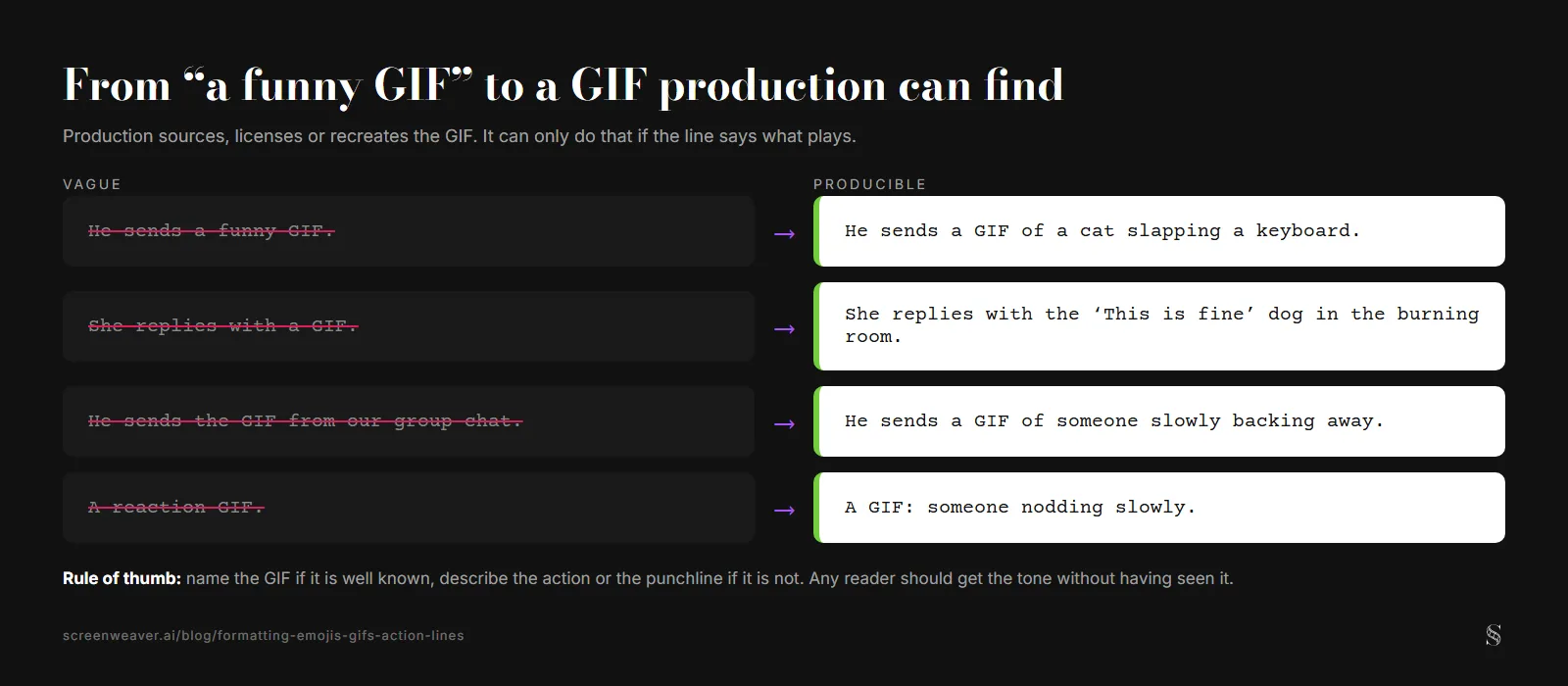
Vague GIF lines and their producible rewrites, using the examples from this guide.
Emoji as substitute for story. The scene is just emojis. Fix: Use emojis and GIFs as beats, reaction, tone, subtext, not as filler. For dialogue and subtext, see subtext.
Inconsistent format. Sometimes named, sometimes symbol, sometimes ignored. Fix: Pick one (e.g. always name in action, or always "[emoji name]" in dialogue) and stay consistent. For format, see screenplay format.
Forgetting the reader. The in-joke GIF only you know. Fix: Describe so any reader gets the tone. "A GIF of someone slowly backing away" works even if you had a specific one in mind. For readability, see micro-pacing.
Try it free
Try Screenweaver for free on your script
It is free. Import your existing project, get a clearer view of your outline, and regain control of your story structure in minutes.
Start FreeEmoji and GIF in Scripts: Quick Reference
| Element | In action | In dialogue-style text |
|---|---|---|
| Emoji | "She sends a thumbs-up emoji." | "Okay [thumbs-up]." or "Okay 👍" (if consistent) |
| GIF | "He sends a GIF: [description]." | N/A (GIF is usually action/insert) |
Describe so the reader and production get it.
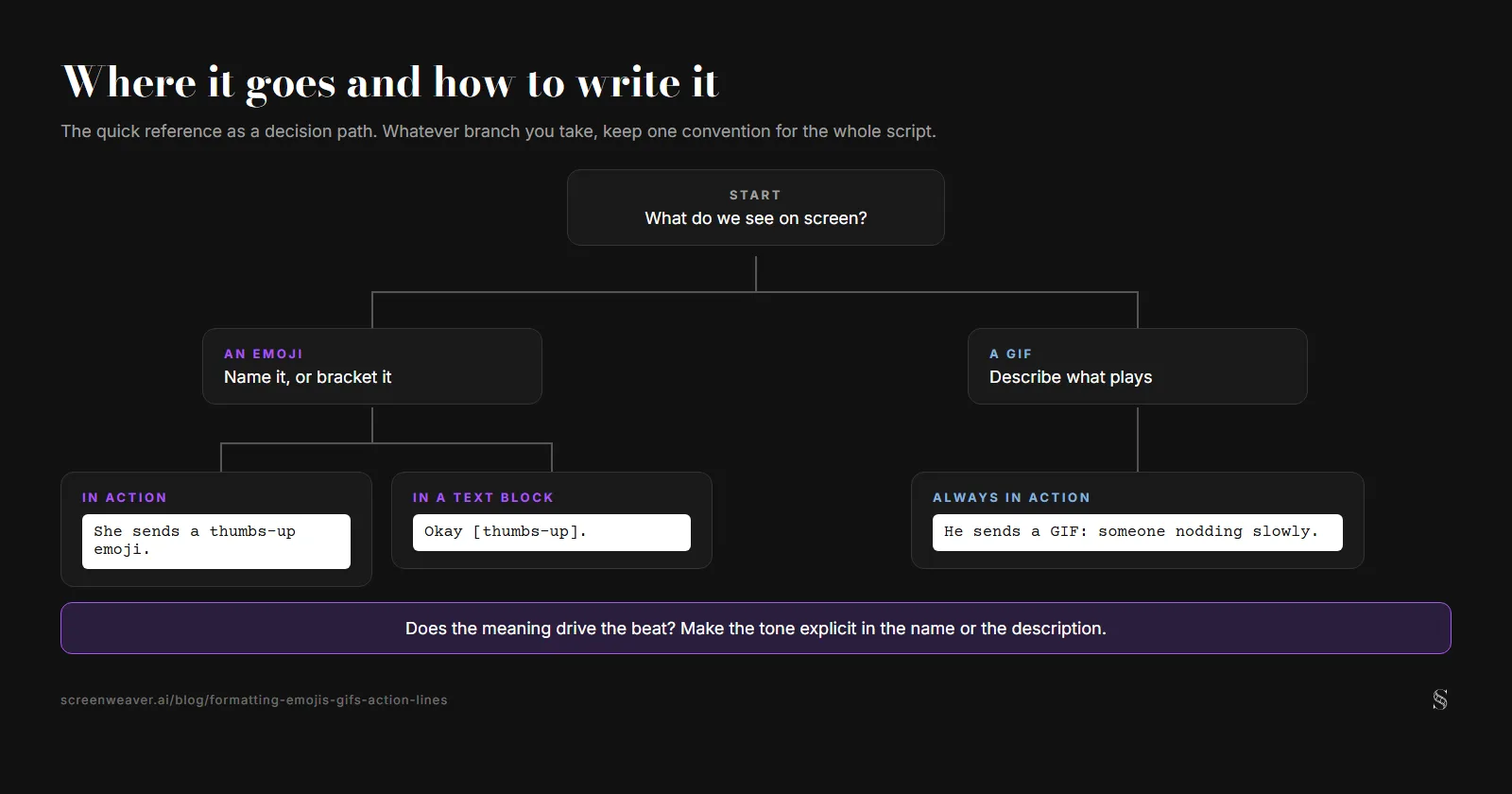
The quick reference as a decision path.
Step-by-Step: Adding Emoji or GIF to a Beat
First: Decide what we see (which emoji, which kind of GIF). Second: In action, name the emoji or describe the GIF. Third: If the message is in dialogue form, add the emoji in brackets or name it after the line. Fourth: Keep one convention for the script. Fifth: If the meaning (tone, subtext) matters, make it clear in the name or description. For more on text and on-screen content, see format text messages and chyrons.
The Perspective
Put emojis and GIFs on the page by naming the emoji and describing the GIF. Keep the read smooth and the meaning clear. Don't rely on symbols if they hurt readability. When the reader and production know what we see, the format works. So name it. Describe it. And keep it consistent.
Final Step
Build your next script with Screenweaver
Move from ideas to production-ready pages faster with timeline-native writing and AI-assisted story flow.
Try Screenweaver