Hero image prompt: Dark mode technical sketch. Solid black background, thin white hand-drawn lines. Two figures pulling apart, or one walking away. A gap between them. No reunion yet. The low point. Minimalist, high-contrast.
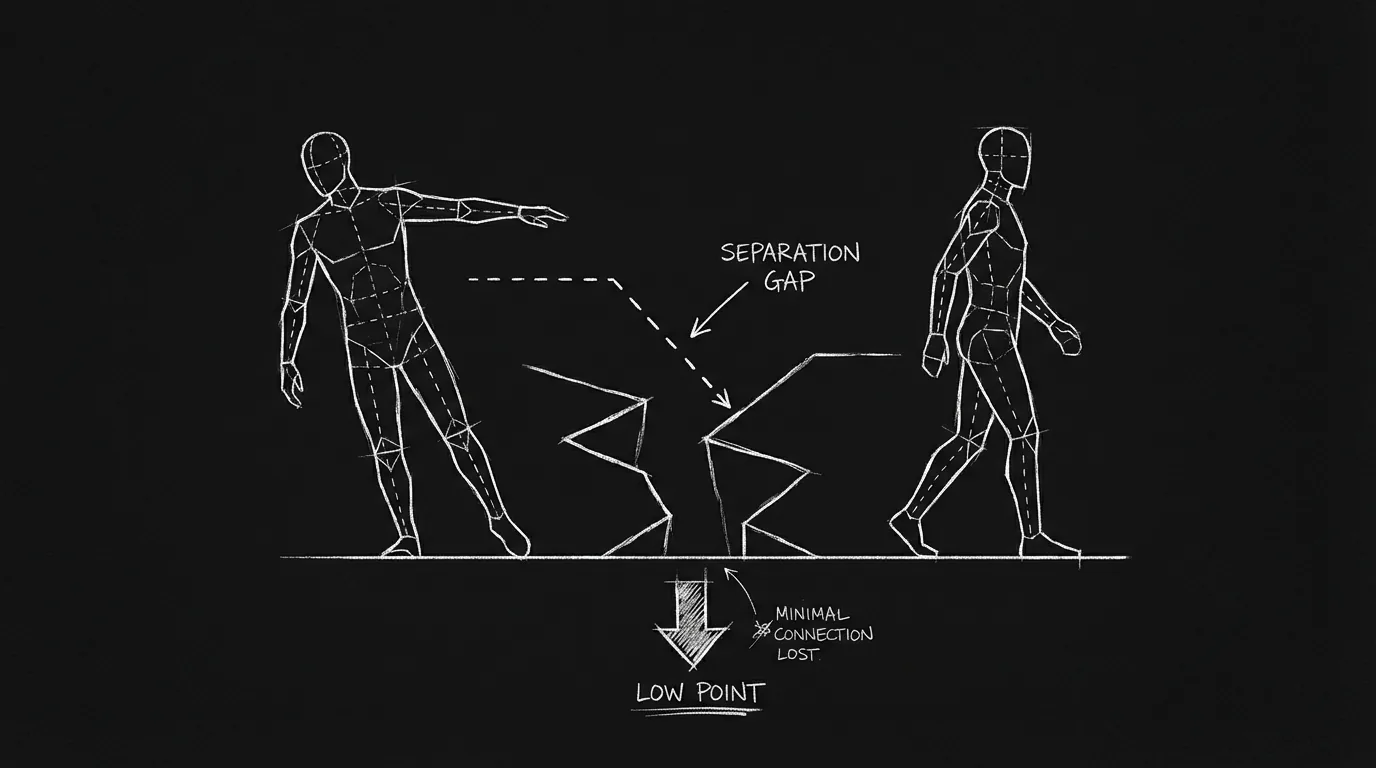
They’ve had the fight. One of them said the thing they can’t take back. Or the obstacle won, family, distance, fear. Now they’re apart. The audience has to believe they might not get back together. If the break-up feels like a bump in the road, the reunion will feel cheap. The “all is lost” in romance is the moment when the relationship looks dead. Your job is to make it hurt, and to make the obstacle real enough that getting back together will mean something. Here’s how to write a break-up that earns the make-up.
The break-up isn’t a misunderstanding. It’s a consequence. Something had to give. Someone had to choose, or fail to choose. When the audience understands why they’re apart, they’ll care when they find their way back.
Think about The Big Sick. The break-up isn’t “we had a fight.” It’s “you don’t understand what my family needs, and I can’t ask you to.” The obstacle is cultural, personal, real. When they get back together, it’s because something has changed, in him, in the situation, in what they’re willing to risk. The break-up had weight. So the reunion has weight. Compare that to a script where they split because she heard half a phone call and thought he was cheating. That’s a misunderstanding. Five minutes of conversation could fix it. The audience will wonder why they didn’t just talk. So the “all is lost” in romance has to be built on something that conversation can’t easily fix. Our guide on the “all is lost” moment in general storytelling applies: the moment has to feel like genuine despair, not manufactured drama. In romance, that means the break-up has to come from character and obstacle, not from a plot device.
Why the Break-Up Has to Hurt
The rom-com promises a happy ending. The audience knows the couple will get back together. So the only way to create tension is to make them doubt it. The break-up is when that doubt is highest. If the break-up is trivial, the audience never doubted. They were just waiting for the misunderstanding to clear. If the break-up is real, if it comes from a choice, a sacrifice, a flaw, or an obstacle that won’t budge, then the audience doesn’t know how they’ll get back. They want them to. They’re not sure they can. That’s the tension. The reunion, when it comes, has to feel earned. They didn’t just apologize. They changed. They chose. They risked something. The break-up created the space for that change. So the break-up has to be big enough to require it.
Building an Obstacle That Can’t Be Fixed With One Conversation
The obstacle is external and real. Family. Culture. Career. Geography. The thing standing between them isn’t a feeling. It’s a fact. They’re from different worlds and the families don’t approve. One of them has to move for work. The obstacle doesn’t go away because they talk. It goes away (or they find a way around it) because one or both of them make a hard choice. The break-up is the moment when the obstacle wins. They give up. They walk away. They choose something else. The reunion is when they choose each other despite the obstacle, or when the obstacle has shifted enough that the choice is possible. For more on building conflict that feels credible, see rivalry and professional conflict, the same principle of “real obstacle” applies to romance.
The obstacle is internal. Fear. Baggage. The belief that they don’t deserve love. One of them (or both) has a wound that the relationship has exposed. The break-up is the moment when the wound wins. They run. They push the other away. They sabotage. The reunion is when they’ve done the work, when they’ve faced the wound and are willing to try again. The break-up had to happen for that work to happen. So the obstacle isn’t “we had a fight.” It’s “I’m too afraid to let you in,” or “I don’t know how to be in a relationship,” or “I keep choosing safety over you.” Our piece on trauma and backstory without clichés applies: the wound has to be specific and earned.
The obstacle is the relationship itself. They want different things. One wants marriage, one doesn’t. One wants kids, one doesn’t. One is ready to commit, one isn’t. The break-up is the moment when they admit the gap. They’re not wrong for each other in a vague way. They’re wrong for each other in a specific way. The reunion only works if one or both have changed, or if they’ve found a way to bridge the gap. If they get back together without addressing the thing that broke them, the audience won’t believe it. So the reunion has to show that the obstacle has been faced. Not necessarily solved. Faced. For more on character change, see want vs need and the character engine.
| Type of Obstacle | Break-Up Feels Like | Reunion Requires |
|---|---|---|
| External (family, career, distance) | They give up; the obstacle wins | A choice; sacrifice; or obstacle shifts |
| Internal (fear, wound, baggage) | They run; they push away | Facing the wound; willingness to try again |
| Relationship (want different things) | They admit the gap | Change or a way to bridge the gap |
Relatable Scenario: The Script Where They Just Need to Talk
You’ve written the break-up. They’re apart because she thought he was with his ex. He wasn’t. So all they need is one conversation and they’re back together. The audience will feel cheated. Fix: give the break-up a real cause. Maybe the ex was a symptom, the real issue is that she doesn’t trust, or he doesn’t communicate. Maybe the break-up isn’t about the ex at all. Maybe it’s about the thing they’ve been avoiding. The fight over the ex is the trigger. The cause is deeper. When the reunion comes, they’re not just clearing up a mistake. They’re addressing the thing that made the mistake possible. That’s when the break-up earns the make-up. Our guide on the modern rom-com structure puts the break-up at beat five and the dark night at beat six, the break-up creates the space for the dark night. If the break-up is trivial, the dark night has nothing to work with.
Try it free
Try Screenweaver for free on your script
It is free. Import your existing project, get a clearer view of your outline, and regain control of your story structure in minutes.
Start FreeRelatable Scenario: The Reunion That Comes Too Easy
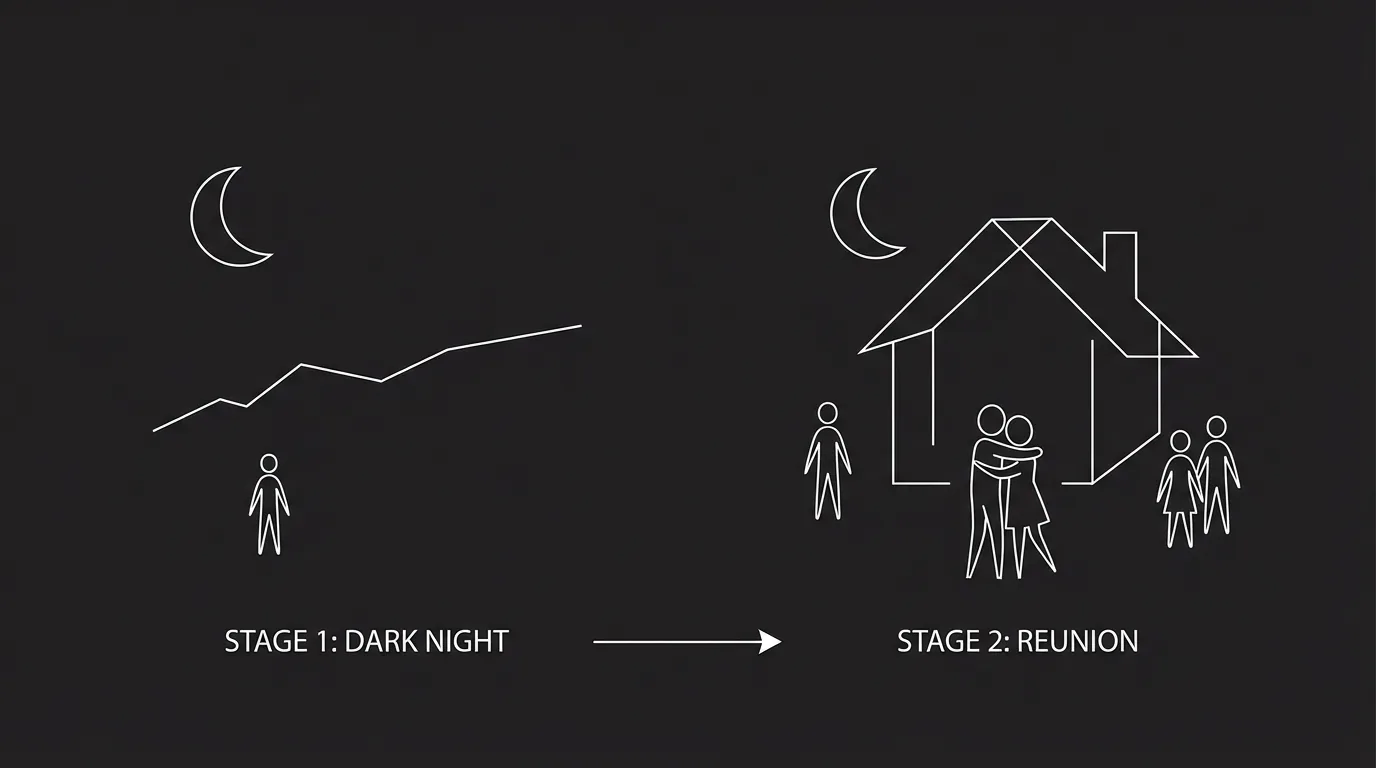
They’re apart. He shows up. He says “I love you.” She takes him back. The audience didn’t feel the cost. Fix: the reunion has to cost something. He has to choose her over something else, his job, his family’s approval, his safety. She has to choose to trust again. One or both have to prove they’ve changed. The proof can be a gesture. It can be a line. It has to be there. If the reunion is just “we missed each other,” the break-up didn’t matter. The reunion should feel like the result of the dark night, the moment when they’ve learned something and are willing to act on it. For more on the grand gesture and the reunion beat, see the modern rom-com structure.
The Trench Warfare Section: What Beginners Get Wrong
Using a misunderstanding as the break-up. She overheard half a conversation. He saw her with someone else and didn’t ask. Fix: the break-up has to be something that conversation can’t fix in one scene. If it can, it’s not an “all is lost.” It’s a delay. Give the break-up a cause that requires growth or choice to overcome.
Making the obstacle vague. “They’re from different worlds.” What worlds? What’s the specific pressure? Fix: name it. Culture. Class. Family expectation. Career. The more specific the obstacle, the more real the break-up and the more satisfying the reunion when they find a way.
Skipping the dark night. They break up. They get back together. We never see what they learned. Fix: after the break-up, we need at least a beat where one or both face themselves. What was their part? What do they have to change? The reunion has to feel like a result of that moment. Without it, the get-back-together feels unearned.
Letting the reunion undercut the break-up. They get back together in a way that suggests the break-up didn’t matter. “We were always going to find our way back.” If that’s true, why did we spend 20 minutes on the break-up? Fix: the reunion has to feel like a turn. They’re different. The situation is different. Something had to give for them to get here. The audience should feel that the break-up was necessary for the reunion to mean something.
Step-by-Step: Making the Break-Up Earn the Make-Up
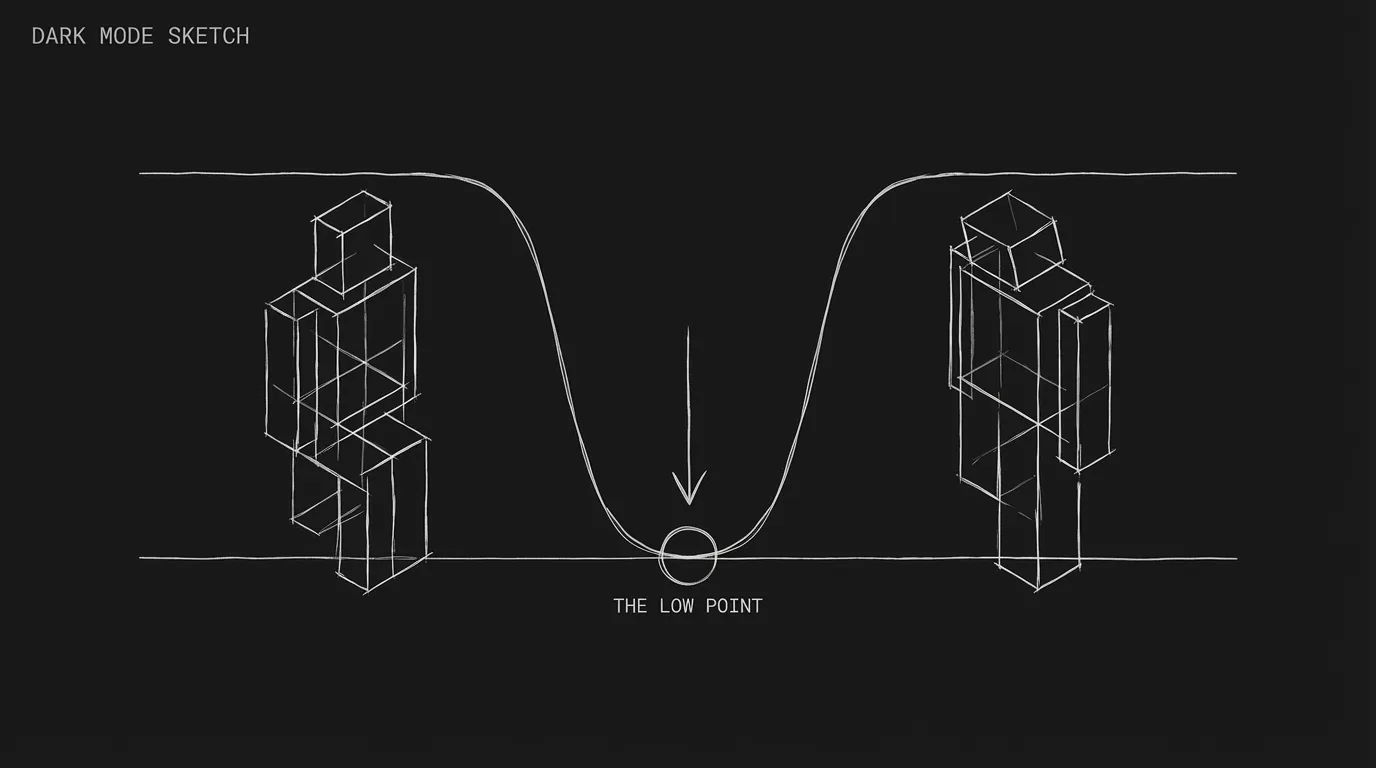
Before you write the break-up, name the obstacle. One sentence. What’s standing between them? Then ask: can that obstacle be fixed with one conversation? If yes, deepen it. Make it about more than a misunderstanding. Then write the break-up. What’s the moment when they give up or walk away? What’s said? What’s not said? After the break-up, write the dark night. What does each of them realize? What do they have to change? Then write the reunion. How do they show they’ve changed? What’s the cost of coming back? If the reunion doesn’t require something from them, a choice, a risk, a proof, add it. The break-up creates the need. The reunion fulfills it. For the full beat map, see the modern rom-com structure.
One External Resource
For a concise overview of romantic conflict and structure in film, see Romantic comedy film on Wikipedia. Reference only; not affiliated.
The Perspective
The “all is lost” in romance isn’t about making the audience sad. It’s about making the reunion matter. When the break-up comes from a real obstacle and a real choice, the audience believes they might not get back together. When they do, the audience feels the cost. That’s the contract. Hurt them enough that the healing means something. Then let them find their way back.
Final Step
Build your next script with Screenweaver
Move from ideas to production-ready pages faster with timeline-native writing and AI-assisted story flow.
Try Screenweaver