
Act Two is where scripts go to die. Not at the start,we have momentum from the break into two. Not at the end,we’re racing to the climax. The corpse pile is in the middle. The midpoint is the hinge that either holds the second act together or lets it sag. Get it wrong, and the whole film feels long. Get it right, and the audience forgets they’re sitting in the dark.
The midpoint does two jobs. It raises the stakes and it shifts the direction of the story. It’s often described as a “false victory” or a “false defeat”: the protagonist thinks they’ve won or lost, but the real game has just changed. This piece is about why that beat is so hard to write, how to use it without breaking your plot, and how to see it clearly when you’re deep in the draft.
Why the Midpoint Is the Hardest Beat
By the time you reach page 55 or 60, you’ve been in Act Two for a while. The protagonist is pursuing the goal. Obstacles have appeared. The audience has settled in. The danger is repetition. More of the same,another chase, another argument, another setback,doesn’t move the story. It just fills pages. The midpoint exists to break that pattern. It has to feel like a turn, not another step.
That’s easier said than done. In early drafts, writers often have a strong opening and a strong ending. The middle is a bridge made of “and then.” The midpoint forces you to answer: what actually changes here? Not just what happens, but what shifts in the world, in the protagonist’s understanding, or in the audience’s sense of the stakes?
The midpoint isn’t a scene. It’s a pivot. After it, the story should feel like it’s playing a different game,same characters, same conflict, but new rules or new stakes.
False Victory and False Defeat
The two classic midpoint types are the false victory and the false defeat. In a false victory, the protagonist gets what they thought they wanted. They win the battle, get the girl, find the clue. For a moment, it looks like the story might be over. Then the floor drops. The win was a trap, or the prize was the wrong one, or the cost was too high. The second half of Act Two is about dealing with that revelation.
In a false defeat, the protagonist suffers a major loss. They’re captured, betrayed, or stripped of the thing that was keeping them in the fight. All seems lost. But that loss is what forces the change that will let them prevail in Act Three. The defeat isn’t the end; it’s the catalyst for the final push.
Not every script fits neatly into one box. Some midpoints are revelations: the protagonist learns something that reframes everything. Some are reversals of alliance or power. The useful question is: after this moment, is the protagonist operating under a new set of assumptions or constraints? If yes, you’ve got a midpoint. If no, you may have a strong scene that belongs somewhere else.
| Type | What Happens | Effect on Act 2B |
|---|---|---|
| False Victory | Protagonist achieves a goal; it backfires or proves hollow | Stakes rise; new obstacle or moral cost |
| False Defeat | Major loss; protagonist seems broken or out of options | Forces change; sets up rally and Act 3 |
| Revelation | New information that reframes the conflict | Protagonist pursues different strategy or goal |
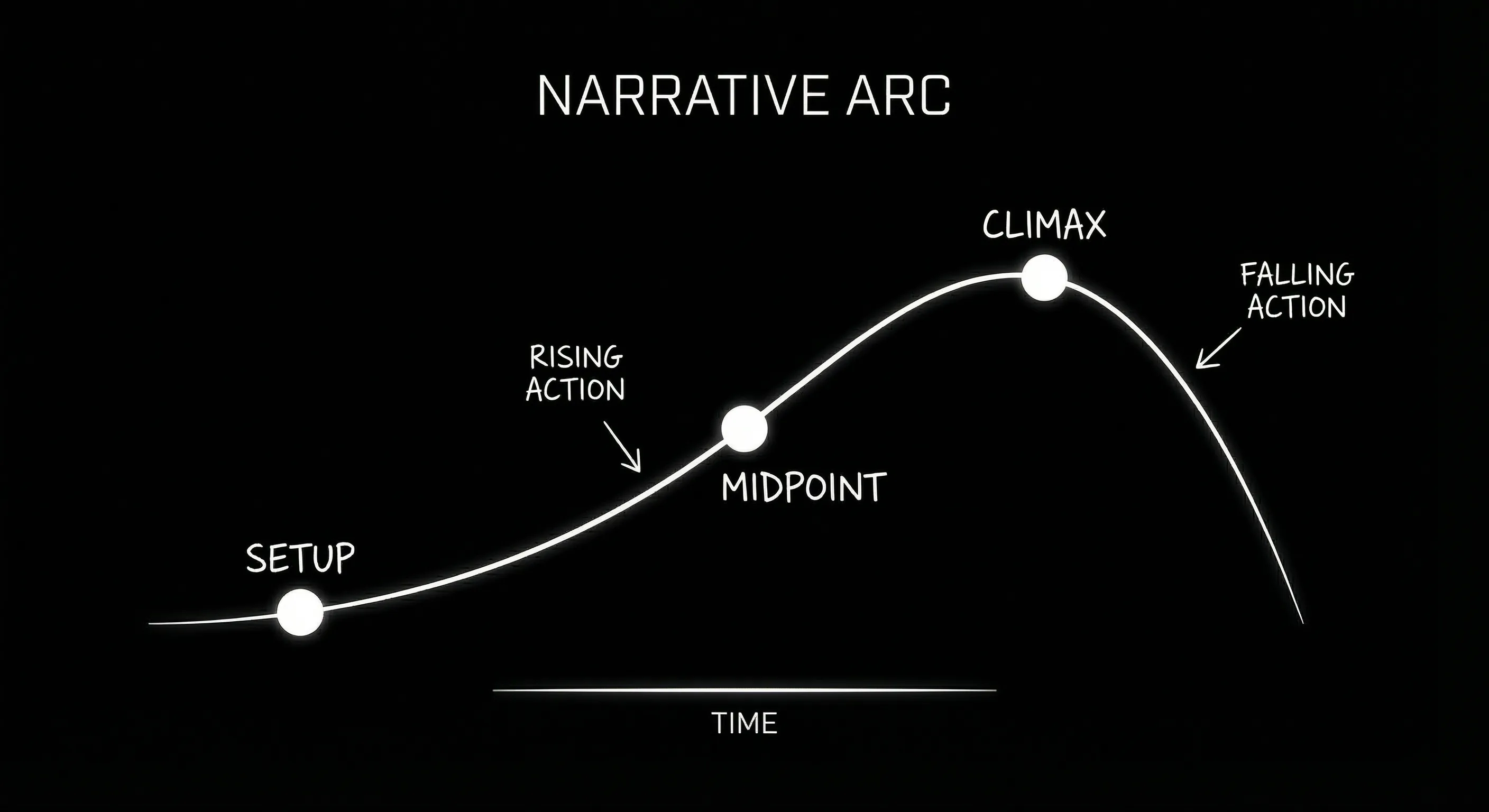
The midpoint as pivot: false victory (peak) or false defeat (trough).
Pacing Around the Midpoint
Even when you know you need a false victory or false defeat, placement and density matter. If the midpoint lands too early, Act 2B stretches forever. Too late, and Act 2A feels bloated. In a 110-page script, the midpoint usually sits between pages 55 and 65. That’s not a rule so much as a balance. The audience has spent enough time in the “first half” of the middle to need a shift; they have enough time left for the consequences to play out.
Tools that analyze pacing can help. When the story is laid out on a timeline,acts, sequences, beats,you can see how much material sits before and after the midpoint. If 2A is twice as long as 2B, or the reverse, the rhythm may feel off. ScreenWeaver’s Architect view is built for this: it treats the script and the structure as one object. You see where the midpoint falls in the timeline and how the scenes around it are distributed. That visibility makes it easier to compress or expand without losing the beat. For a broader view of how acts and beats fit together, our three-act structure guide walks through setup, confrontation, and resolution with the midpoint in mind.
Midpoints That Work
In The Godfather, Michael’s murder of Sollozzo and McCluskey in the restaurant is often cited as a midpoint. It’s a false victory in a dark sense: he’s proven himself to the family and crossed a line he can’t uncross. The second half of the film is about the cost of that choice. In Alien, the midpoint might be the discovery that the creature has left the body,the threat is no longer contained. The second half is hunt and survival. In both cases, something fundamental changes. The story doesn’t just continue; it deepens.
In romantic comedies, the midpoint is often the “false victory” of the couple getting together,only for a misunderstanding or external pressure to tear them apart. The second half is the repair. In thrillers, the midpoint might be the revelation of who the real enemy is, or the moment the protagonist loses their ally. The pattern holds across genres: the midpoint is the moment the script stops coasting and starts climbing,or falling,toward the climax.
Ask yourself: if I cut the script in half at the midpoint, would each half feel like a different phase of the same story? If both halves feel the same, the midpoint isn’t doing its job.
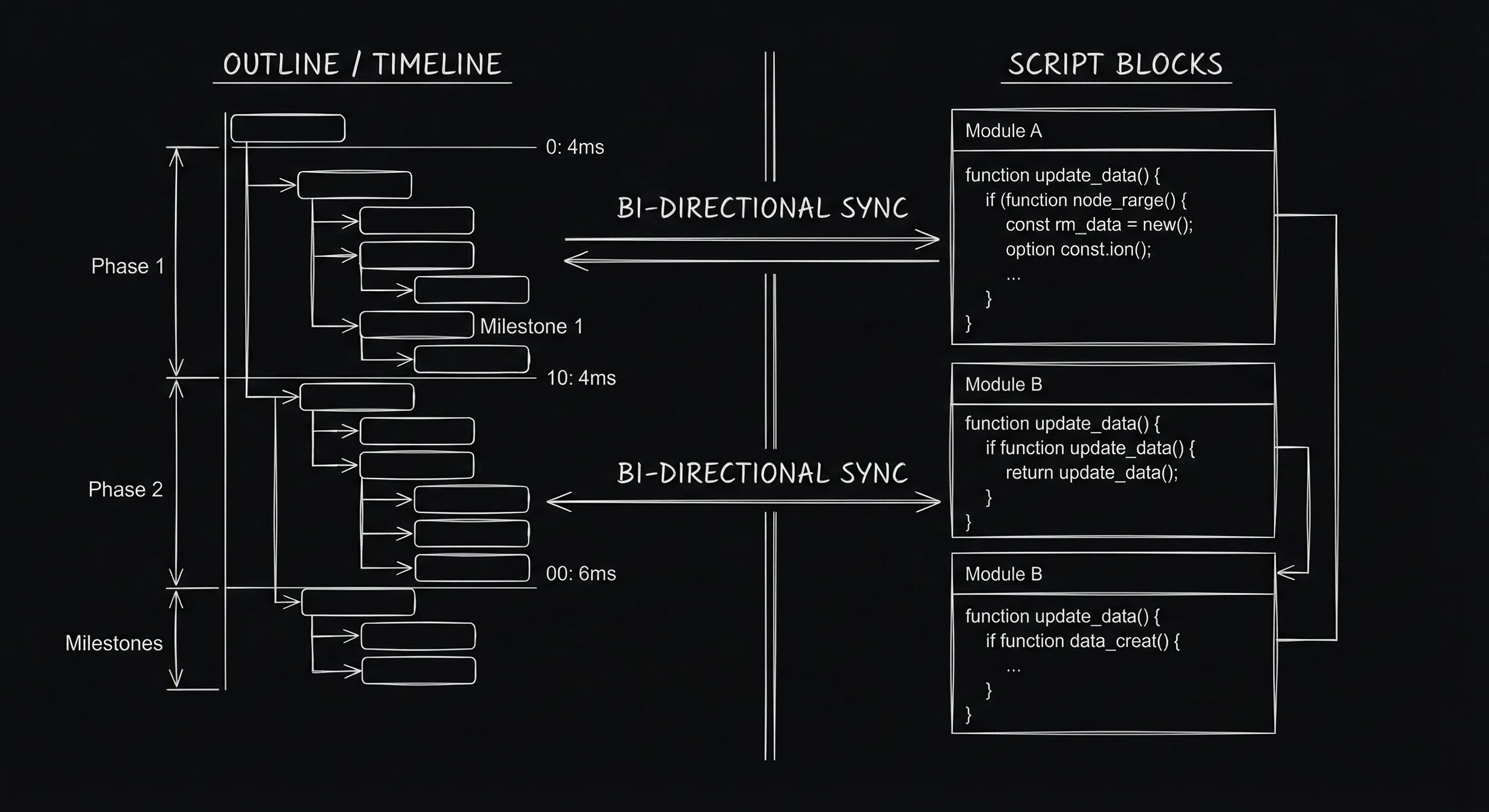
The Architect view shows pacing around the midpoint so 2A and 2B stay balanced.
How the Architect Analyzes Pacing
When you’re deep in a draft, it’s easy to lose sight of where the midpoint sits. You might have written 20 pages of strong scenes in Act 2A and not noticed that the midpoint has drifted to page 70. Or you might have a sharp midpoint on page 55 but only 15 pages of material before the “all is lost” beat, so Act 2B feels rushed. Pacing problems are structural. They’re hard to feel when you’re reading scene by scene. They’re easy to see when the story is laid out on a timeline.
ScreenWeaver’s Architect view is built for this. It doesn’t just show you a list of scenes. It shows you how those scenes distribute across acts and around the midpoint. You can label the midpoint beat explicitly. You can see how much script sits in 2A versus 2B. If the balance is off, you can move blocks,and because the timeline is bound to the script, the script reflows. You’re not guessing whether the midpoint “feels” right. You’re looking at the architecture and adjusting it. For writers who think in structure, that visibility is the difference between a middle that works and a middle that sags.
Raising Stakes Without Breaking the Plot
The temptation at the midpoint is to go big: a twist, a death, a betrayal. Big can work. But big can also feel unearned or random. The best midpoints feel inevitable once they’ve happened. They grow out of what’s already been set up. The protagonist’s earlier choices or the antagonist’s plan should make the midpoint feel like a consequence, not a surprise for its own sake.
Another trap is piling too much on one scene. The midpoint can be a sequence,a few scenes that build to the turn,rather than a single moment. What matters is that by the end of that sequence, the audience and the protagonist are in a new emotional or tactical place.
For scripts that lean on the “dark night of the soul” later in Act Two, the midpoint and that low point should feel distinct. The midpoint is a turn; the dark night is often the lowest emotional beat before the final push. Our guide on writing a dark night of the soul that resonates goes deeper on that beat and how it differs from the midpoint.
The Sharp Takeaway
The midpoint is the pivot that keeps Act Two from sagging. It should change the game: false victory, false defeat, or revelation. It should land around the middle of the script, with enough story on either side to let the turn breathe. And it should feel earned,a consequence of what’s come before, not a random shock. When you can see it on the map and feel it on the page, the rest of the script has a spine. When it’s missing or fuzzy, the middle will feel long no matter how good your scenes are.
Final Step
Build your next script with Screenweaver
Move from ideas to production-ready pages faster with timeline-native writing and AI-assisted story flow.
Try Screenweaver