The scene is stuck. You've tried the obvious moves. The safe ones. The ones that fit the outline. Nothing lands. So you try the opposite: ask for bad ideas. "Give me 10 bad ways this scene could go." "10 clichéd resolutions." "10 choices the character could make that would feel wrong." The list will be full of things you'd never use. That's the point. One of them will be wrong in a way that's right, too bold, too dark, or too silly, and that wrongness will show you the move you were avoiding. The gold isn't in the list. It's in the crack that opens when you give yourself permission to consider the "bad" option.
The prompt isn't "give me good ideas." It's "give me ideas I can reject, so I can see what I've been avoiding."
Here's the tension. Writers get stuck because they're censoring. They know what "good" looks like and they keep trying variations of it. When you ask for bad ideas, you're not asking the machine to write the scene. You're asking it to expand the range. Some of the "bad" ideas will be genuinely bad. Some will be bad in a useful way: they're the idea you didn't let yourself have. "The character could lie to their best friend." You'd ruled that out. Now it's on the list. You read it and think: what if they did? Not the full bad version, your version of that move. The list gave you permission. The machine didn't write the scene. It showed you the door you'd closed.
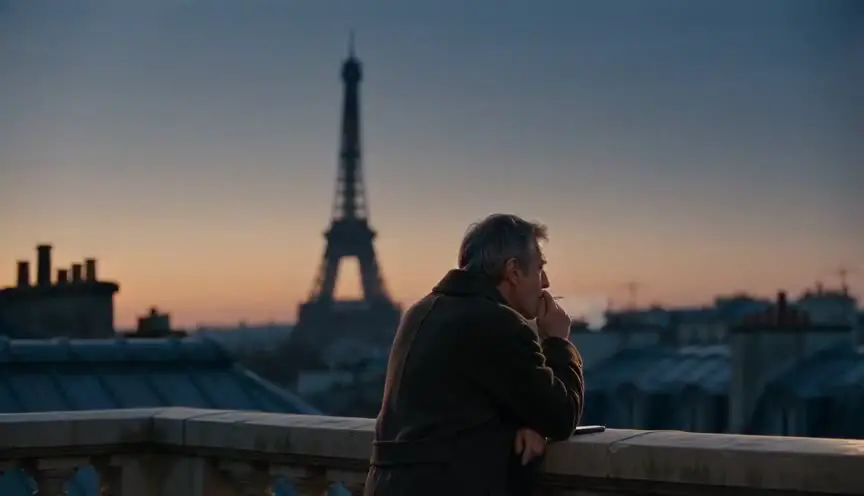
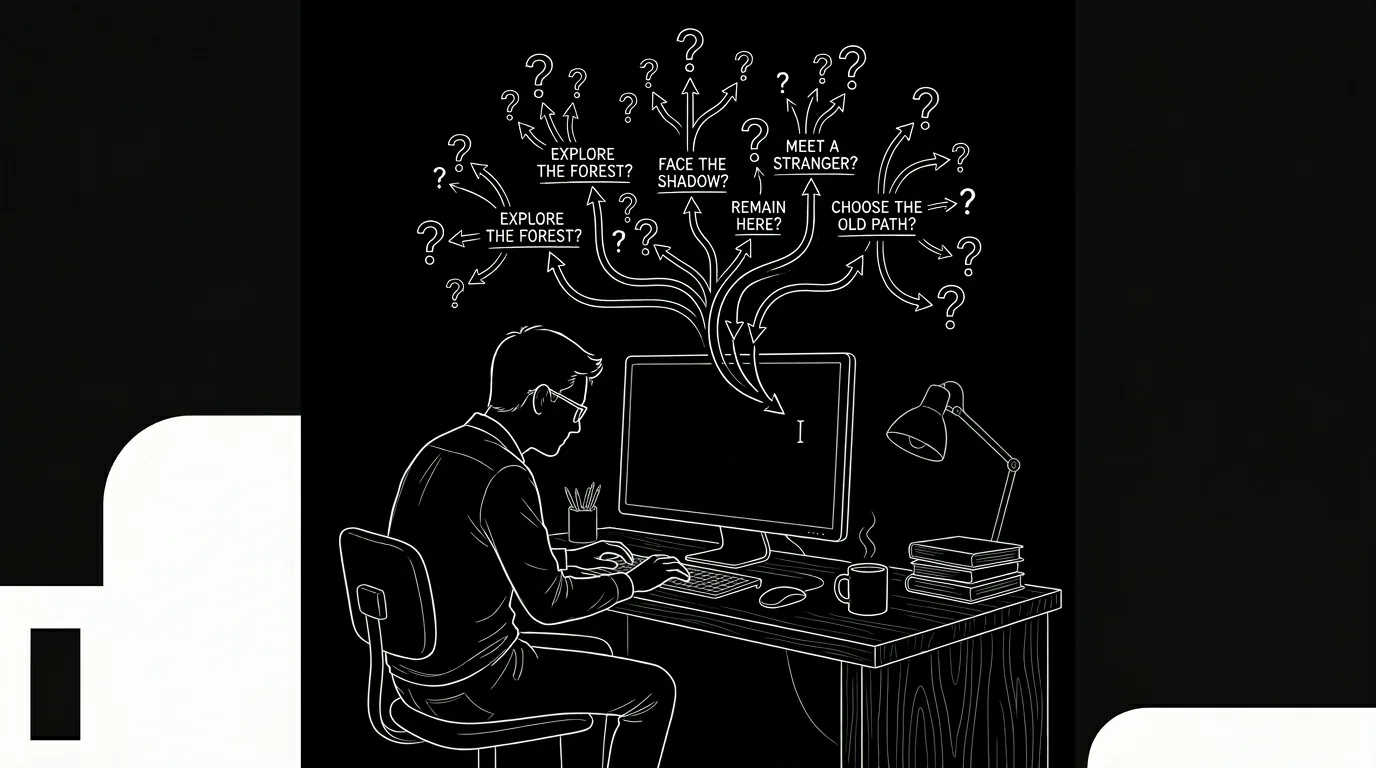
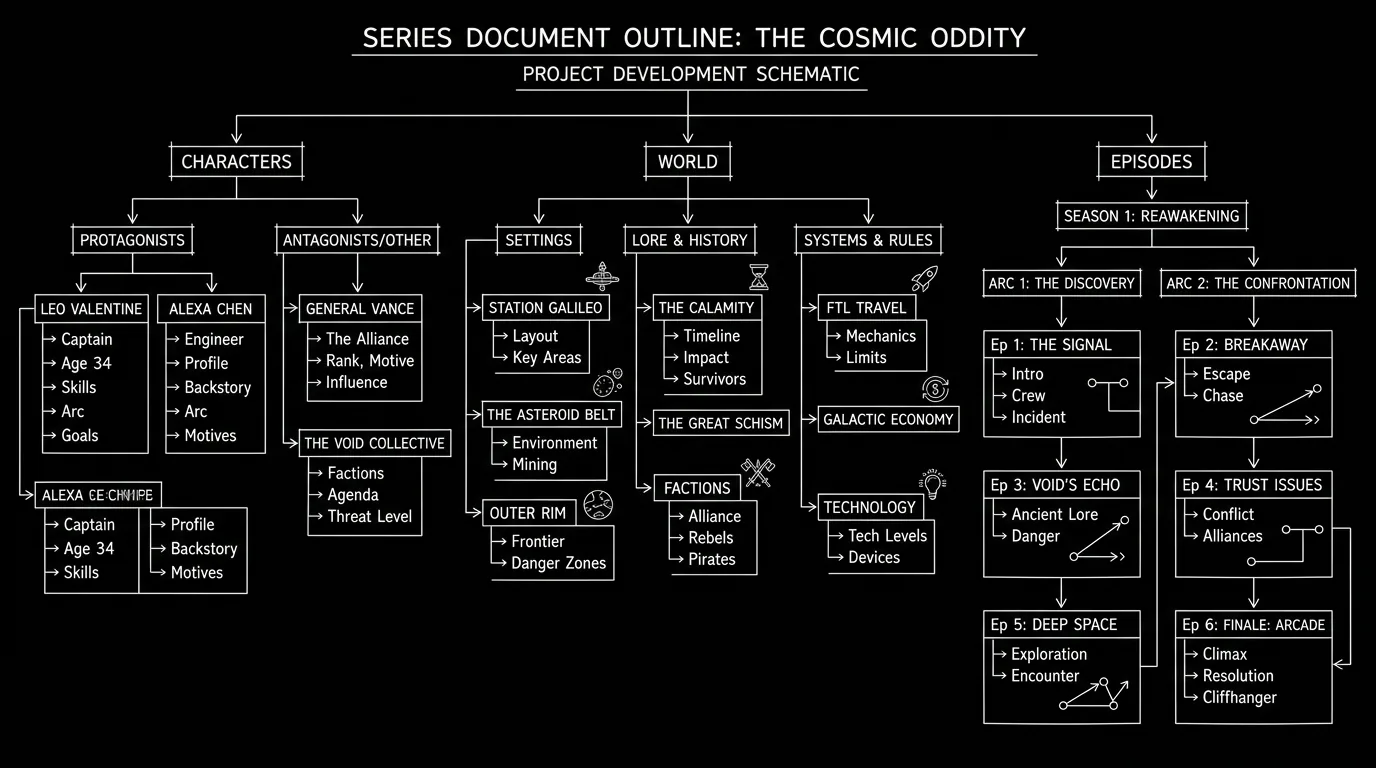
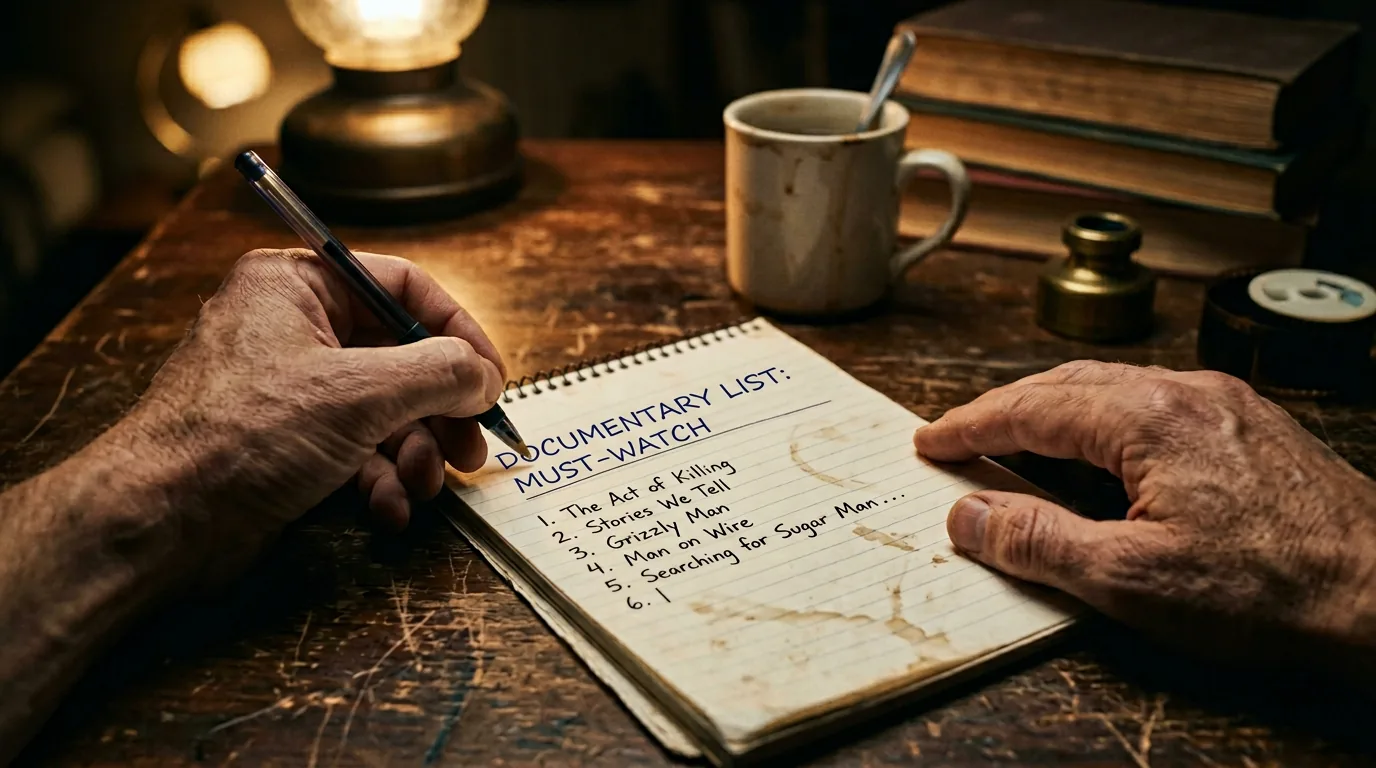
Cinematic workflow frames
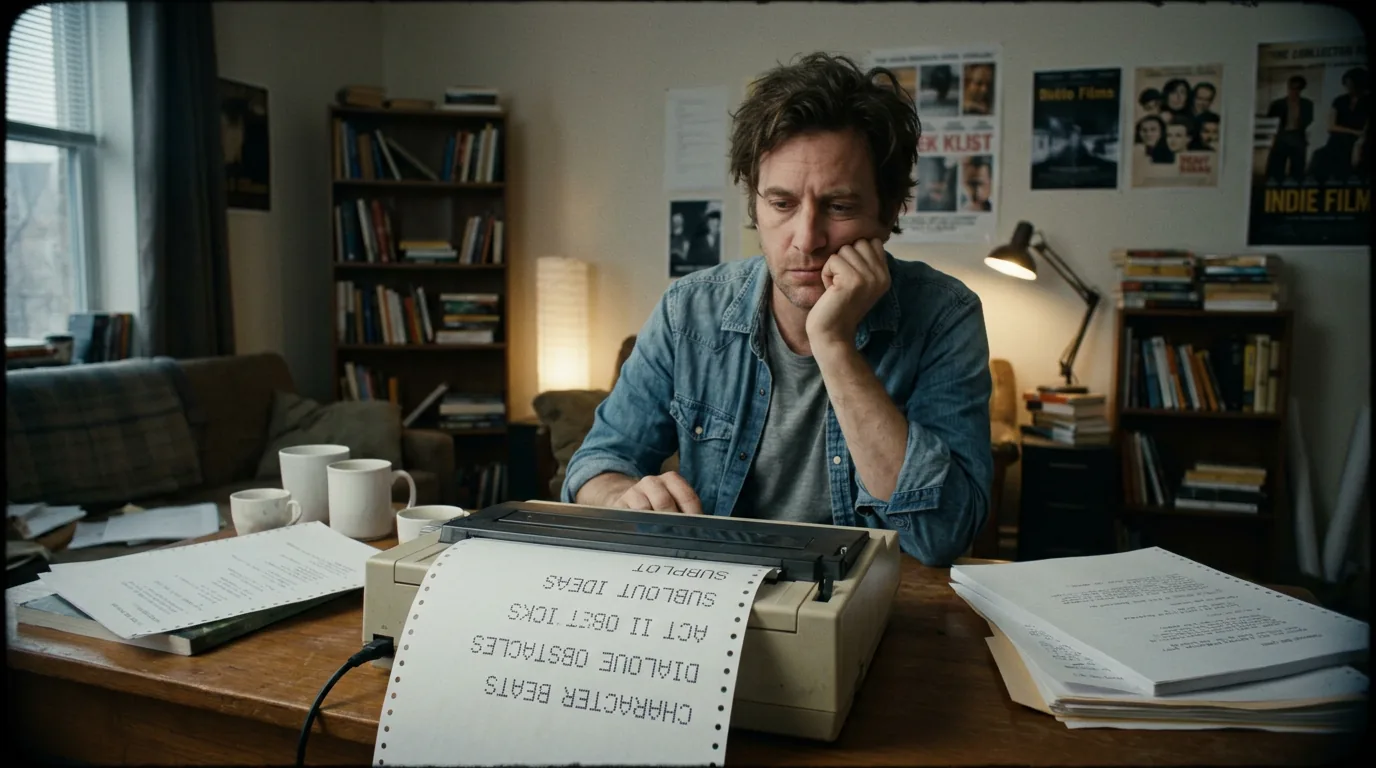
These two visuals work as a pair: the first shows Cinematic workflow still, first angle, 35mm film grain, and the second shifts to Cinematic workflow still, second angle, 35mm film grain - compare them briefly, then move on.
Why "Bad" Works Better Than "More"
Asking for "10 more ideas" often returns more of the same, safe, middle-of-the-road options. Asking for "10 bad ideas" forces the model (and you) out of the polite zone. The bad ideas include: the melodramatic twist, the on-the-nose line, the cheap laugh, the character doing the thing they'd never do. When you read that list, you're not looking for something to paste. You're looking for the one that makes you react: "I would never do that, but what if I did a version of it?" That reaction is the gold. The scene might need the character to lie. You'd been avoiding it because it felt "bad." The bad-idea list names it. Now you can write your version, nuanced, earned, instead of staying stuck in the safe version.
The Workflow: From Stuck to Unlocked
Step 1: Name the moment. "The scene needs to get from A to B. I've tried X, Y, Z. Nothing works." Or: "The character has to make a choice here. Every choice I think of feels predictable." Paste the scene summary or the beat. The prompt needs context.
Step 2: Ask for bad ideas explicitly. "List 10 bad ways this scene could resolve. Clichés, melodrama, on-the-nose, or choices that would feel unearned. One sentence each." Or: "10 things the character could do here that would feel wrong or out of character. One line each." Or: "10 dialogue lines that would be too obvious or sentimental for this moment." You're not asking for good options. You're asking for the anti-list.
Step 3: Read the list and notice your reaction. Don't pick the "best" bad idea. Notice which one makes you pause. "I'd never do that, unless…" or "That's wrong but there's a kernel." That's the idea to mine. Sometimes none of them spark. Then run the prompt again with a twist: "10 more bad ideas, different angle, e.g. too dark, too comic, too passive."
Step 4: Write your version of the spark. The bad idea said "the character lies." You're not pasting that. You're asking: what would a lie look like here that's earned? What's the half-truth? What's the lie that reveals character? You write the scene. The bad idea was the key. The scene is yours.
Step 5: If you're still stuck, invert again. "What would the worst version of this scene look like? Describe it in 3 sentences." Sometimes seeing the worst frees you to see the better-but-still-bold option. You're not writing the worst. You're using it as a boundary. "I don't want that, so I want something between that and the safe version."
| You ask for | You get | You do |
|---|---|---|
| 10 bad resolutions | List of clichéd, melodramatic, or unearned options | Find the one that sparks "unless…" and write your version |
| 10 wrong character choices | List of things that would feel out of character | Use one as permission to try a bolder, earned version |
| 10 on-the-nose lines | List of too-obvious dialogue | Avoid those; or take one and subvert it |
For unblocking at the scene level with prompts, overcoming writer's block with prompts is a close cousin. For keeping your voice when using tools, how to keep your voice with narrative suggestion tools is relevant.
Try it free
Try Screenweaver for free on your script
It is free. Import your existing project, get a clearer view of your outline, and regain control of your story structure in minutes.
Start FreeRelatable Scenario: The Confrontation That Won't Land
Two characters have to have it out. Every version feels like you've seen it before. You ask for "10 bad ways this confrontation could go. Melodramatic, on-the-nose, or clichéd." You get: shouting match, one slaps the other, someone says "I never loved you," walk-out, etc. One item: "They don't fight. One character says nothing and the other breaks down." You'd been trying to write a fight. The "bad" idea was to not fight. You write the version where one character goes silent and the other unravels. The scene lands. The bad-idea list didn't write it. It showed you the option you'd ruled out.
Relatable Scenario: The Twist That Feels Too Safe
You need a turn in the scene. Everything you've tried feels predictable. You ask for "10 bad twists, too obvious, too cheap, or too dark." One of them: "The ally was the villain all along." You'd avoided it because it's a cliché. But in your story you've planted it. The "bad" idea is the one everyone expects. So you don't do it straight. You do a version: the ally isn't the villain, but they've been withholding the one thing that would have changed everything. The bad list named the cliché. You wrote the subversion.
Relatable Scenario: The Line That's Too Polite
The character needs to say something cruel. You've softened it five times. You ask for "10 lines that would be too harsh or too direct for this character to say." You get a list. One of them is close to what you need, too raw as written, but the direction is right. You take the direction and write the line in your voice, sharp but not gratuitous. The bad-idea list gave you the upper bound. You wrote the version that stays in character but cuts.
What Beginners Get Wrong: The Trench Warfare Section
Using a "bad" idea as written. The list is for sparking, not pasting. The fix: take the idea that sparks, then write your own version. The machine's "bad" line might be melodramatic; yours can be earned.
Asking for "good" ideas at the same time. If you ask for 10 good and 10 bad, you'll get a mixed list and the safe options will dominate. The fix: ask only for bad. Let the bad list do the work of expanding the range. You choose what to elevate.
Dismissing the whole list. "These are all terrible." Some are. One might be terrible in a useful way. The fix: read each and notice your reaction. The one that makes you pause or argue is the one to mine.
Only running once. First list might not spark. The fix: run again with a different angle. "10 bad ideas that are too dark." "10 bad ideas that are too comic." You're not looking for a good idea. You're looking for the idea that unlocks you.
Expecting the machine to know your story. The bad ideas will be generic. Your job is to see the one that fits your setup. The fix: provide scene context in the prompt. "In this scene, the character has just learned X. List 10 bad ways they could respond." The more context, the more useful the bad list.
Forgetting to write. The list is a means to an end. The end is you writing the scene. The fix: as soon as one idea sparks, close the list and write. Don't keep generating. Use the key and turn the lock yourself.
Software and parameters. Use any chat-style LLM. Paste the scene summary or beat. Ask explicitly for "bad" options: clichéd, melodramatic, on-the-nose, unearned, or wrong for the character. Request 10, one sentence or one line each. Temperature 0.7–0.9 so you get variety. Then stop generating and write. For more on prompts that unstick without taking over, overcoming writer's block with prompts and prompt engineering for screenwriters are useful.
One External Reference
Creative techniques that use constraint or inversion (e.g. "worst idea first") are common in improvisation and brainstorming. The WGA and writer organizations sometimes reference craft and process; your use of "bad ideas" as a prompt is a private technique that doesn't depend on any single tool.
The Perspective
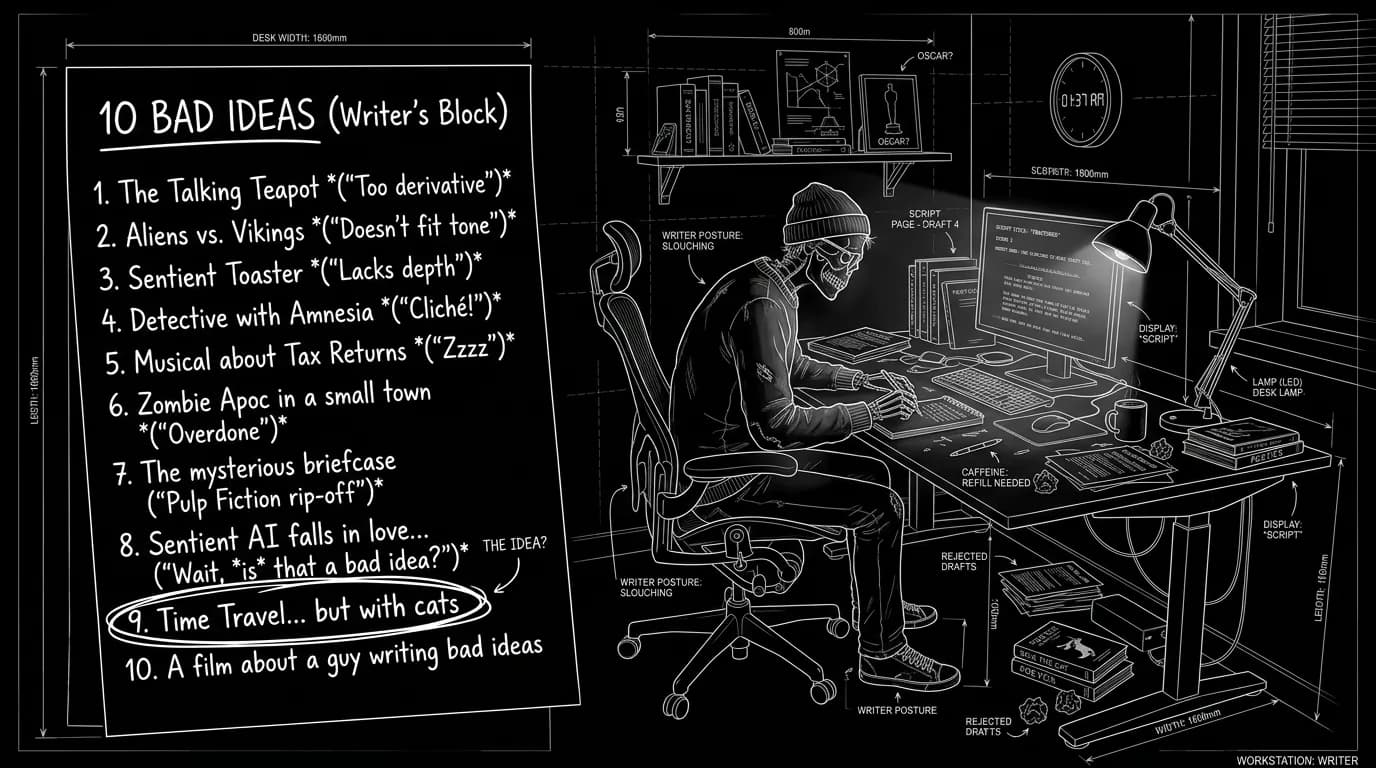
Asking for 10 bad ideas doesn't mean you'll use a bad idea. It means you'll see the options you'd been avoiding. One of them will be wrong in a useful way. Your job is to spot it, then write your version, earned, in your voice. The machine lists the doors. You open the one that leads somewhere.
Final Step
Build your next script with Screenweaver
Move from ideas to production-ready pages faster with timeline-native writing and AI-assisted story flow.
Try Screenweaver