KI-Video-Prompt-Generator
Filmische Prompts für Veo, Sora, Runway und Kling
Beschreiben Sie Ihre Einstellung, wie eine Regisseurin die Kamerafrau briefen würde: Motiv, Handlung, Bildausschnitt, Bewegung, Licht. Dieser kostenlose Generator fügt diese Angaben zu einem strukturierten Prompt zusammen, den Text-zu-Video-Modelle verlässlich verstehen, statt zu einer geratenen Kette von Adjektiven.
KI-Videomodelle reagieren am besten auf echte Filmsprache in einer festen Reihenfolge: Einstellungsgröße, Motiv, Handlung, Ort, Kamerabewegung, Licht, Objektivcharakter, Stil und Stimmung. Genau diese Struktur baut dieses Tool, mit Ausgabe als Text oder JSON zum Kopieren.
Der Prompt wird deterministisch zusammengesetzt und läuft vollständig in Ihrem Browser. Nichts von dem, was Sie eingeben, wird an einen Server gesendet.
Wählen Sie Bildausschnitt, Bewegung und Anmutung. Was Sie leer lassen, hält den Prompt schlank.
Ihr Prompt
Beschreiben Sie oben ein Motiv, und Ihr Prompt entsteht hier.
So funktioniert es
Der Generator ordnet Ihre Angaben so an, wie Text-zu-Video-Modelle sie am besten verarbeiten: zuerst der Bildausschnitt, dann Motiv und Handlung, dann der Ort, dann Kamerabewegung, Licht, Objektiv, Stil und Stimmung. Jede Option stammt aus dem echten Vokabular der Kameraarbeit, dieselben Einstellungsgrößen und Bewegungen wie in einer Einstellungsliste, damit das Modell Anweisungen bekommt und nicht Stimmungswörter. Der JSON-Reiter gibt dieselbe Einstellung als strukturierte Felder aus, für Pipelines und Stapelverarbeitung.
Wie man KI-Video-Prompts schreibt, die wirklich funktionieren
Der häufigste Fehlschlag bei KI-Video liegt nicht am Modell, sondern am Prompt: ein Haufen Stiladjektive, ohne klares Motiv, ohne konkrete Handlung, ohne Kameraanweisung. Das Modell füllt jede Lücke mit eigenen Erfindungen, und deshalb driften die Ergebnisse von Generierung zu Generierung.
Starke Prompts lesen sich wie Einstellungsbeschreibungen, nicht wie Moodboards. Ein Motiv, eine Handlung, die eine Kamera filmen könnte, ein Bildausschnitt, eine Bewegung. „Nahaufnahme eines gezeichneten Detektivs, der sich in einer regennassen Gasse eine Zigarette anzündet, langsame Fahrt nach vorn, Neonlicht bei Nacht“ schlägt „düstere filmische Noir-Stimmung, 4K, Meisterwerk“ auf jedem großen Modell.
Stimmigkeit über mehrere Einstellungen entsteht durch Wiederholung, nicht durch Glück. Legen Sie Motiv- und Ortsbeschreibung wortgleich fest und verwenden Sie sie in jedem Prompt der Sequenz, ändern Sie nur die Filmsprache. So halten KI-Filmschaffende eine Figur von der Totalen bis zur Nahaufnahme erkennbar.
Für wen das gedacht ist
- KI-Filmschaffende: erzeugen Sie einen zusammenpassenden Satz Prompts für eine ganze Sequenz, statt jeden Clip aus dem Gedächtnis zu improvisieren.
- Regie in der Vorvisualisierung: erzeugen Sie Totale, Halbnah und Nahaufnahme desselben Moments, um die Auflösung vor einem echten Dreh zu prüfen.
- Content-Teams und Studios: erhalten Sie wiederholbare, professionell brauchbare Einstellungsprompts, ohne Prompt-Folklore aus verstreuten Forenbeiträgen zu lernen.
Vom Drehbuch aus.Zum Storyboard.
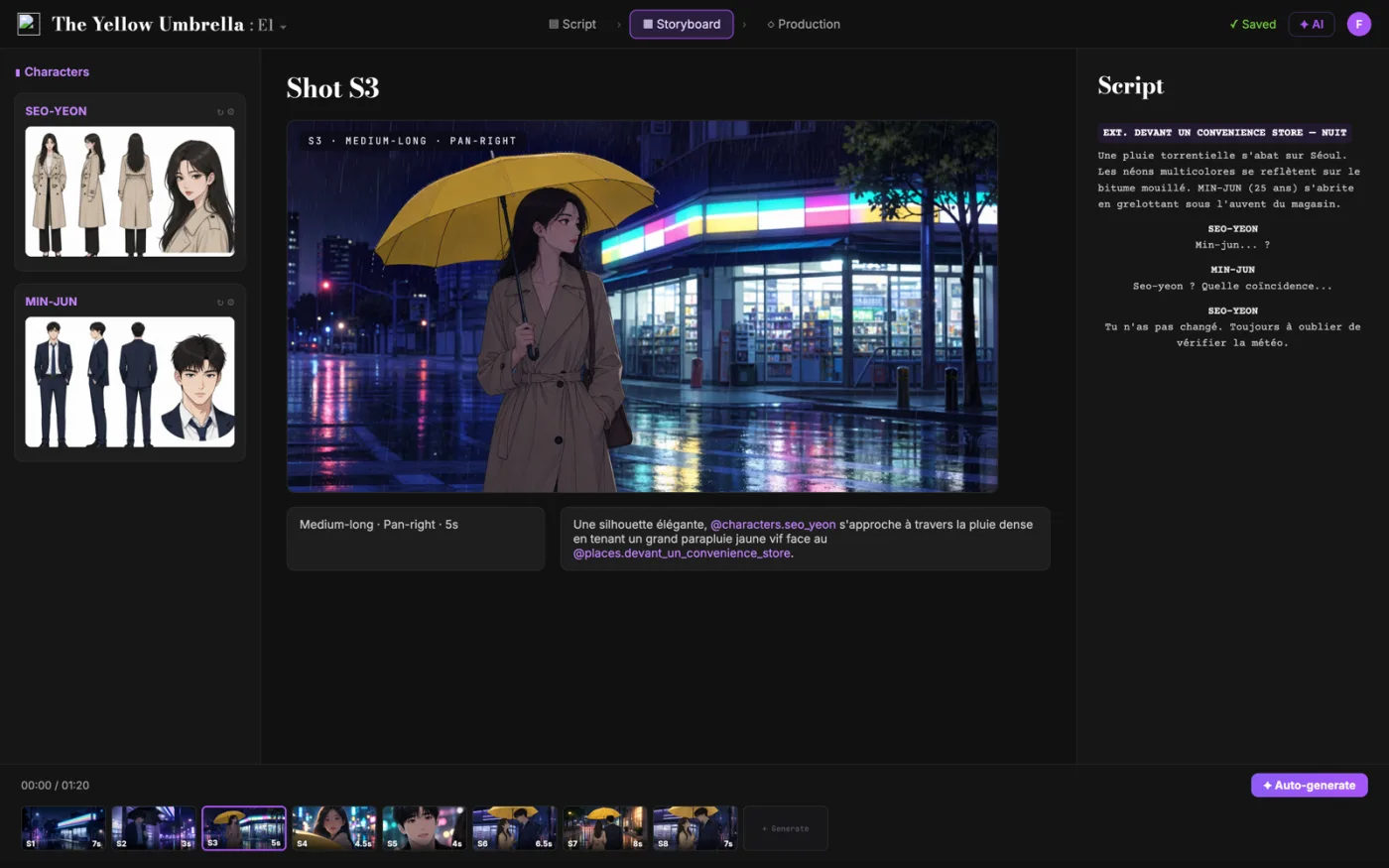
ScreenWeaver zerlegt dein Drehbuch in Einstellungen und erstellt daraus das Storyboard. Bildausschnitt, Winkel, Bewegung und Dauer bestimmst du. Figuren bleiben von Einstellung zu Einstellung gleich.
- 0 $, ohne Ablaufdatum
- Export als PDF und Final Draft
- Mac, Windows, Linux, iPad
Prompt-Generator für KI-Video: der komplette Leitfaden
Es baut einen strukturierten filmischen Prompt aus echter Filmsprache: Einstellungsgröße, Kamerabewegung, Licht, Objektivcharakter, Stil und Stimmung, in der Reihenfolge, die Text-zu-Video-Modelle am besten verarbeiten.
Bei dieser Arbeit liegt das Kernproblem offen: die meisten KI-Video-Prompts sind improvisierte Adjektivketten, deshalb driften die Ergebnisse zwischen den Generierungen und treffen nie die Einstellung, die man im Kopf hatte. Bleibt es ungelöst, erzeugt es Reibung weiter unten in der Kette und langsamere Entscheidungen. Das praktische Ziel ist stimmige Prompts in echter Filmsprache, die Veo, Sora, Runway, Kling oder Seedance genau sagen, welche Einstellung entstehen soll.
Grenze, die Sie im Kopf behalten sollten: Es baut den Prompt, nicht das Video: jedes Modell versteht Sprache etwas anders, und Figuren- oder Ortskonsistenz über mehrere Einstellungen braucht eine Arbeitsweise, keinen einzelnen Prompt.
Fortgeschrittener Einsatz: Ernsthafte KI-Filmemacher führen ein Prompt-Blatt je Szene, halten wiederkehrende Beschreibungen von Figur und Ort wortgleich fest und variieren zwischen den Generierungen nur die Kameragrammatik.
Schritt für Schritt
- Beschreiben Sie Motiv und Handlung in klarer, konkreter Sprache: was eine Kamera tatsächlich sähe.
- Wählen Sie Einstellungsgröße und Kamerabewegung, die der Moment braucht, so wie Sie es einer Bildgestaltung sagen würden.
- Wählen Sie Licht, Objektivcharakter, Stil und Stimmung und kopieren Sie dann den fertigen Prompt oder seine JSON-Form.
- Verwenden Sie in jeder Einstellung der Szene exakt dieselben Formulierungen für Motiv und Ort, das schützt die Anschlüsse.
Anwendungsfälle nach Rolle
- KI-Filmemacher: einen zusammenpassenden Satz Prompts für eine Sequenz erzeugen, statt jeden Clip zu improvisieren.
- Regie: die Auflösung einer Szene previsualisieren, indem man Totale, Halbnah und Nah desselben Moments promptet.
- Content-Creator: wiederholbare Einstellungen in Werbequalität bekommen, ohne Prompt-Folklore aus verstreuten Threads zu lernen.
Häufige Fehler
- Zehn Stiladjektive stapeln statt ein klares Motiv, eine Handlung und eine Kameraanweisung.
- Die Beschreibung des Motivs zwischen Einstellungen ändern und sich wundern, dass das Gesicht driftet.
- Emotionale Abstraktionen prompten statt physischer, filmbarer Beschreibungen dessen, was im Bild ist.
Bewährte Praxis im Beruf
- Ein Prompt, eine Einstellung: beschreiben Sie eine einzelne Kameraposition, nicht eine ganze Auflösung.
- Konkret schlägt abstrakt: 'Regen tropft von einer Feuerleiter' wirkt besser als 'melancholische Stimmung'.
- Halten Sie für jede wiederkehrende Figur einen festen Beschreibungsblock und fügen Sie ihn wörtlich in jeden Prompt ein.
Behandeln Sie die Ausgabe dieses Werkzeugs als Entscheidungshilfe, nicht als Ersatz für das Schreiben. Ein starkes Drehbuch bleibt wegen seiner konkreten Entscheidungen, seiner emotionalen Genauigkeit und der Klarheit seiner dramatischen Bewegung im Gedächtnis. Werkzeuge nehmen das Rauschen weg, damit Ihre Energie dorthin geht, wo sie zählt: Figur, Konflikt, Steigerung, Auszahlung. Wenn Sie nach jedem Durchgang die Ergebnisse prüfen und die angenommenen Änderungen protokollieren, wird Ihre Arbeitsweise von Fassung zu Fassung schneller und berechenbarer. Genau das schätzen professionelle Partner: weniger Überraschungen, klarere Begründungen und ein Buch, das sich mit Absicht weiterentwickelt.
Ausführliche Fragen
Was macht einen guten KI-Video-Prompt aus?
Ein klares Motiv, eine konkrete Handlung, eine Kameraanweisung, dann Licht und Stil. Modelle verarbeiten strukturierte Filmsprache deutlich besser als einen Haufen Adjektive, und genau das baut dieser Generator.
Funktionieren Prompts bei Veo, Sora, Runway und Kling gleich?
Die Grundstruktur überträgt sich gut auf alle großen Modelle, aber jedes versteht Sprache etwas anders. Der erzeugte Prompt ist ein starker Startpunkt, rechnen Sie mit ein bis zwei Durchgängen je Modell.
Wie halte ich eine Figur über mehrere KI-Einstellungen konsistent?
Halten Sie die körperliche Beschreibung wortgleich fest und verwenden Sie sie in jedem Prompt. Konsistenz entsteht durch identische Formulierungen, und das gelingt mit einem strukturierten Werkzeug leichter als aus dem Gedächtnis.
Text- oder JSON-Prompts?
Die meisten Modelle nehmen natürliche Sprache, das ist hier die Voreinstellung. JSON hilft bei strukturierten Pipelines, Stapelverarbeitung und Werkzeugen, die feldbasierte Eingaben annehmen.
Warum sehen meine Ergebnisse jedes Mal anders aus?
Vage Prompts lassen dem Modell alle Freiheit. Je konkreter Sie Motiv, Handlung, Bildausschnitt und Licht angeben, desto enger wird der Spielraum und desto wiederholbarer das Ergebnis.
Kann ich damit einen ganzen KI-Kurzfilm machen?
Ja, behandeln Sie jeden Prompt als eine Einstellung Ihrer Shotlist. Planen Sie erst die Sequenz, halten Sie Motiv- und Ortsbeschreibungen über alle Prompts fest, und generieren Sie Einstellung für Einstellung wie eine Produktion die Auflösung dreht.
Häufige Fragen
Ja. Die hier gebaute Struktur, Bildausschnitt, Motiv, Handlung, Ort, Bewegung, Licht, Stil, überträgt sich auf alle großen Text-zu-Video-Modelle. Jedes Modell versteht Sprache etwas anders, planen Sie also pro Modell einen Feinschliff ein.
Nein. Es setzt Ihre Angaben deterministisch mit echter Filmsprache zusammen, in Ihrem Browser, ohne API-Aufrufe. Dieselben Eingaben ergeben immer denselben Prompt, und genau das braucht Stimmigkeit von Einstellung zu Einstellung.
Text passt in das Prompt-Feld jedes großen Modells. JSON ist nützlich für strukturierte Pipelines, Stapelverarbeitung und Werkzeuge, die Feldwerte annehmen.
Verwenden Sie genau dieselbe Motivbeschreibung, wortgleich, in jedem Prompt der Sequenz, und ändern Sie zwischen den Generierungen nur Einstellungsgröße, Bewegung und Handlung.
Vage Prompts lassen dem Modell die Freiheit, alles neu zu erfinden, was ihm nicht gesagt wurde. Je konkreter Sie Motiv, Handlung, Bildausschnitt und Licht angeben, desto enger wird diese Freiheit und desto wiederholbarer werden Ihre Ergebnisse.
Related tools
Szenen-zu-Clip-Planer
Eine Szene in KI-Videoclips zerlegen, die zur Längenbegrenzung Ihres Modells passen.
Figurenblatt für KI-Konsistenz
Einen wiederverwendbaren Figurenblock bauen, der Drift zwischen KI-Clips verhindert.
Prompts für Kamerabewegungen
Animierte Sammlung der Kamerabewegungen, mit Prompts zum Kopieren.
Storyboard-Vorlagen-Generator
Druckbare Storyboard-Bögen in jedem Bildformat erstellen.
You can also browse the full library on /tools.
Core blog guides
- Idea → first draft (process hub)
- Screenplay format guide 2026
- Hidden costs of “free” software
- Affordable software & TCO
- Revision passes (structure → dialogue)
Filmtechniken
Filmtechniken zum Entdecken
Jede mit einem kurzen Clip, einem Drehbuchauszug und der Zeile für die Shotlist.