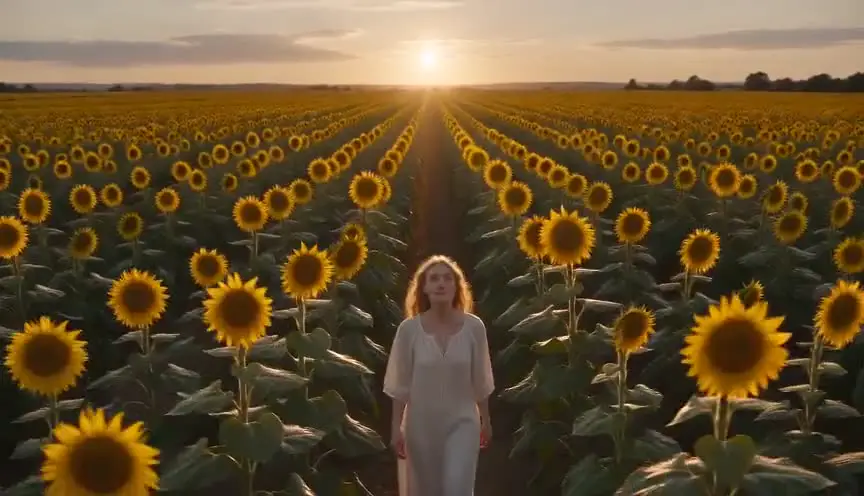
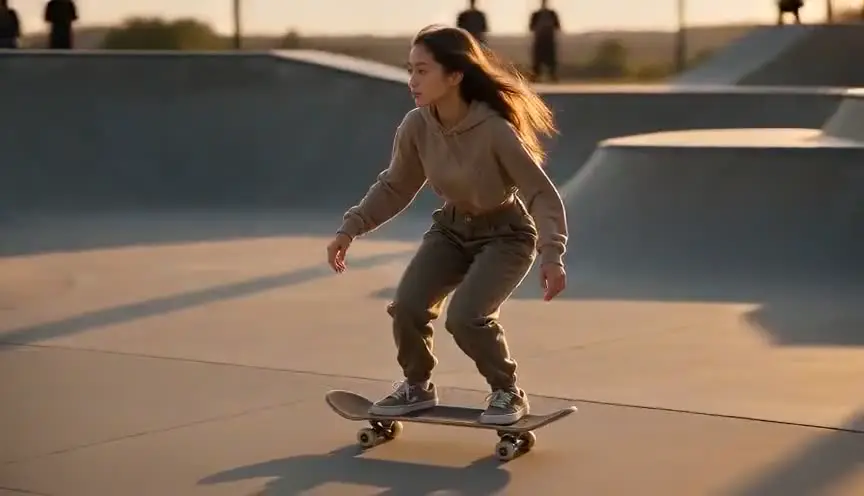
Prompts für Kamerabewegungen

Jede Kamerabewegung, animiert und zum Kopieren

Sehen Sie, was jede Kamerabewegung wirklich mit dem Bild macht, und kopieren Sie dann die genaue Formulierung, die sie in Veo, Sora, Runway, Kling und Seedance auslöst. Schluss damit, eine Fahrt zu verlangen, wenn die Einstellung im Kopf ein Schwenk ist.

Text-zu-Video-Modelle verstehen echtes Kameravokabular, aber nur, wenn Sie das richtige Wort für die richtige Bewegung nutzen. Jede Karte unten animiert eine Bewegung an derselben Szene, damit die Unterschiede sichtbar statt beschrieben sind: Ein Schwenk streicht ohne Parallaxe über das Bild, eine Seitfahrt gleitet mit Parallaxe, eine Fahrt nach vorn durchquert den Raum, wo ein Zoom ihn flach macht.

Die Animationen sind reine CSS-Demonstrationen, die in Ihrem Browser laufen. Das Kopieren eines Prompts sendet nichts an einen Server.
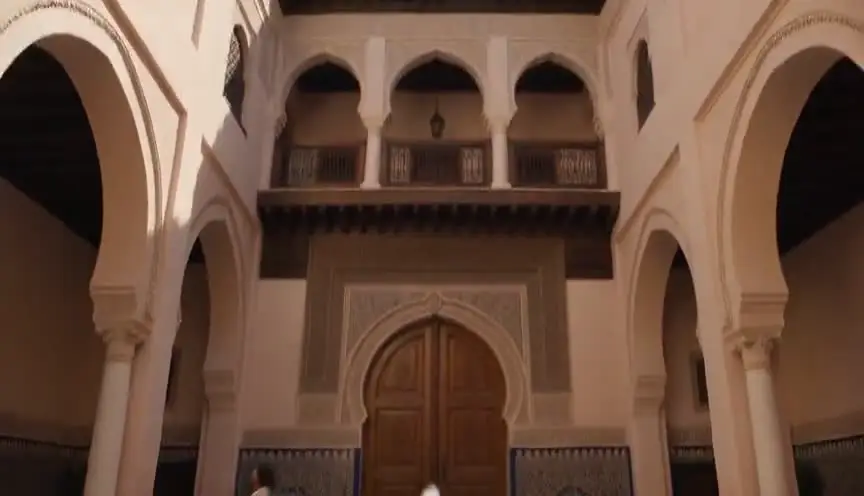
Static / Locked-off

The camera does not move at all, as if mounted on a tripod.

Wann einsetzen: Composed tableaus, dialogue, comedy framing, letting action play inside a fixed frame.

static camera, locked-off shot, no camera movement

Vollständigen Beispielprompt ansehen

Wide shot of an empty diner at dawn, static camera, locked-off shot, no camera movement.

Pan

The camera rotates horizontally on its axis, sweeping the view across the scene.

Wann einsetzen: Revealing a landscape, following action across a space, connecting two subjects.

slow pan from left to right across the scene

Vollständigen Beispielprompt ansehen

Desert canyon at golden hour, slow pan from left to right across the scene, cinematic.

Tilt

The camera rotates vertically, pivoting the view up or down from a fixed position.

Wann einsetzen: Revealing scale (a tower, a giant), moving from detail to context, hero introductions.

slow tilt upward from the ground to the sky

Vollständigen Beispielprompt ansehen

Base of a futuristic skyscraper at night, slow tilt upward from the ground to the sky.

Push-in

The camera moves physically toward the subject, tightening the frame.

Wann einsetzen: Building tension, signaling a realization, isolating a character from their surroundings.

slow push-in toward the subject, smooth cinematic camera move

Vollständigen Beispielprompt ansehen

A detective studies a wall of photographs, slow push-in toward the subject, smooth cinematic camera move, moody interior light.

Pull-back

The camera moves physically away from the subject, widening the frame.

Wann einsetzen: Endings, reveals of context or isolation, showing how small the subject is in the world.

slow pull-back away from the subject, revealing the surroundings

Vollständigen Beispielprompt ansehen

A lone figure on a rooftop, slow pull-back away from the subject, revealing the surroundings, sprawling city below.

Crash zoom

A sudden, fast zoom onto the subject, snapping the frame tighter in a fraction of a second.

Wann einsetzen: Shock beats, comedic emphasis, stylized action (Tarantino, Wright).

sudden crash zoom onto the subject

Vollständigen Beispielprompt ansehen

A cowboy's eyes narrow under his hat brim, sudden crash zoom onto the subject, western standoff.

Dolly / Truck

The camera slides laterally on a track, creating natural parallax between foreground and background.

Wann einsetzen: Moving past environments, following lateral action, elegant scene exploration.

camera trucks right, sliding laterally with natural parallax

Vollständigen Beispielprompt ansehen

Rows of neon market stalls at night, camera trucks right, sliding laterally with natural parallax.

Tracking shot

The camera travels with the subject, keeping them framed while the world streams past.

Wann einsetzen: Walk-and-talks, chases, immersing the viewer in a character's forward motion.

tracking shot following the subject as they move, subject stays centered

Vollständigen Beispielprompt ansehen

A runner sprints through rain-soaked streets, tracking shot following the subject as they move, subject stays centered.

Orbit / Arc

The camera circles around the subject in a smooth arc, keeping them centered.

Wann einsetzen: Hero moments, revealing all sides of a subject, dramatic emphasis mid-scene.

camera orbits slowly around the subject in a smooth arc

Vollständigen Beispielprompt ansehen

A samurai stands ready in a bamboo grove, camera orbits slowly around the subject in a smooth arc.

Crane / Boom

The camera rises (or descends) vertically through space, changing the angle on the whole scene.

Wann einsetzen: Openings and closings, lifting from intimate detail to god's-eye context.

crane shot rising from ground level to a high angle above the scene

Vollständigen Beispielprompt ansehen

A wedding crowd throws confetti, crane shot rising from ground level to a high angle above the scene.

Handheld

The camera is carried, with subtle natural shake and drift in every frame.

Wann einsetzen: Documentary realism, unease, action immediacy, found-footage styles.

handheld camera with subtle natural shake, documentary feel

Vollständigen Beispielprompt ansehen

Soldiers move through a smoke-filled corridor, handheld camera with subtle natural shake, documentary feel.

Whip pan

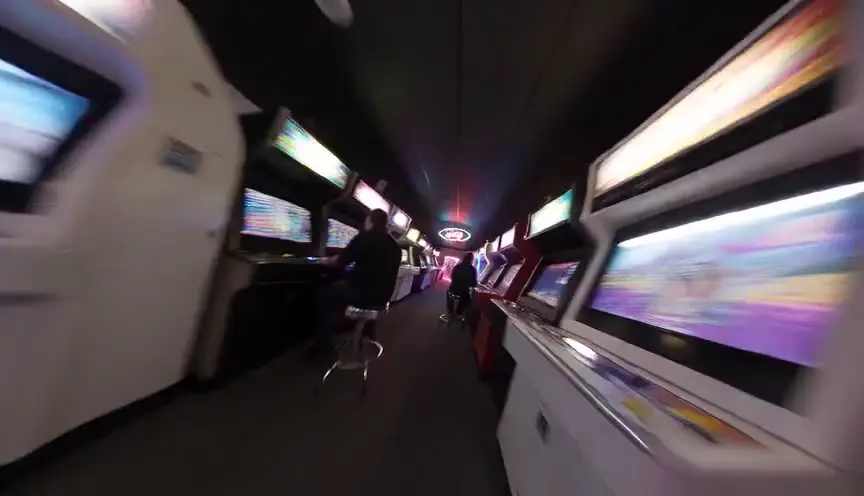
An extremely fast pan that blurs the image, snapping from one framing to another.

Wann einsetzen: Energetic transitions, comedic double-takes, connecting simultaneous actions.

fast whip pan to the right with motion blur

Vollständigen Beispielprompt ansehen

From the pitcher's wind-up, fast whip pan to the right with motion blur, to the batter waiting.

Rack focus

The lens focus shifts between two planes: foreground and background trade sharpness.

Wann einsetzen: Redirecting attention, reveals within a frame, connecting two story beats without a cut.

rack focus from the foreground subject to the background

Vollständigen Beispielprompt ansehen

A letter in trembling hands, rack focus from the foreground subject to the background, where a door slowly opens.

Dutch angle

The camera rolls on its long axis so the horizon sits tilted in the frame.

Wann einsetzen: Disorientation, psychological tension, villain framings, worlds gone wrong.

dutch angle, camera rolls to a tilted horizon

Vollständigen Beispielprompt ansehen

A hacker's face lit by monitor glow, dutch angle, camera rolls to a tilted horizon, thriller mood.

Zoom in

The lens focal length increases from a fixed position: the frame tightens but perspective flattens, with no parallax.

Wann einsetzen: Surveillance and documentary feels, retro 70s style, deliberate optical emphasis.

slow zoom in on the subject, optical zoom, no camera movement

Vollständigen Beispielprompt ansehen

A figure waits at the far end of a train platform, slow zoom in on the subject, optical zoom, no camera movement, 70s thriller style.

Zoom out

The lens focal length decreases from a fixed position, widening the frame without the camera traveling.

Wann einsetzen: Deadpan comedic reveals, stepping back from a detail to its flat context.

slow zoom out revealing the scene, optical zoom, no camera movement

Vollständigen Beispielprompt ansehen

A single melting ice cream cone on hot asphalt, slow zoom out revealing the scene, optical zoom, no camera movement, an empty amusement park around it.

Dolly zoom (Vertigo)

The camera dollies one way while the lens zooms the other: the subject stays the same size as the background warps toward or away.

Wann einsetzen: Realization, dread, vertigo, the world shifting around a character (Jaws, Vertigo).

dolly zoom vertigo effect, background warping while the subject stays the same size

Vollständigen Beispielprompt ansehen

A detective freezes as the truth lands, dolly zoom vertigo effect, background warping while the subject stays the same size.

Steadicam glide

The camera floats forward smoothly with a subtle organic sway, stabilized but alive.

Wann einsetzen: Following characters through spaces, immersive long-take feels (Goodfellas, The Shining).

smooth steadicam glide forward, floating camera movement

Vollständigen Beispielprompt ansehen

Moving through a crowded backstage corridor toward the stage lights, smooth steadicam glide forward, floating camera movement.

FPV drone dive

A first-person drone races and dives toward the subject at high speed, with aggressive momentum.

Wann einsetzen: High-energy reveals, action sequences, flythrough transitions, music video energy.

FPV drone shot diving toward the subject at high speed

Vollständigen Beispielprompt ansehen

A lighthouse on a storm-battered cliff, FPV drone shot diving toward the subject at high speed, waves exploding below.

Aerial pull-away

A drone rises and pulls back, shrinking the subject into an expanding aerial view.

Wann einsetzen: Endings, scale reveals, leaving a character to their fate, establishing geography in reverse.

aerial drone shot rising and pulling away from the scene

Vollständigen Beispielprompt ansehen

A lone car drives a desert highway at dusk, aerial drone shot rising and pulling away from the scene.

Barrel roll

The camera rotates a full 360 degrees on its long axis, rolling the whole world around the lens.

Wann einsetzen: Stylized transitions, zero-gravity or dream sequences, high-impact music video moments.

camera barrel roll, full 360 degree rotation

Vollständigen Beispielprompt ansehen

Skydivers in freefall against sunset clouds, camera barrel roll, full 360 degree rotation.

Snorricam

The camera is rigged to the subject's body facing them: the actor stays locked in frame while the world swings behind them.

Wann einsetzen: Panic, intoxication, obsession - subjective states where the world unmoors (Requiem for a Dream).

snorricam shot, camera locked to the subject while the background swings around them

Vollständigen Beispielprompt ansehen

A man sprints through a neon market in panic, snorricam shot, camera locked to the subject while the background swings around them.

So nutzen Sie diese Seite

Suchen Sie die Bewegung, die zu Ihrer vorgestellten Einstellung passt, kopieren Sie ihren Promptbaustein und setzen Sie ihn direkt nach Bildausschnitt und Motiv in Ihren KI-Video-Prompt. Jeder Baustein nutzt die Formulierung, die große Text-zu-Video-Modelle am verlässlichsten verstehen, samt einem Tempowort, denn „langsame Fahrt nach vorn“ und „harter Zoom“ sind zwei verschiedene Anweisungen und keine Varianten derselben Idee. Das vollständige Beispiel auf jeder Karte zeigt den Baustein in einem geordneten Gesamtprompt.

Kamerabewegungen in der KI-Videoerzeugung

Die Kamerabewegung ist der am häufigsten falsch genutzte Teil beim KI-Video-Prompting. Modelle wie Veo, Sora, Runway und Kling wurden auf Material trainiert, das mit echtem Filmvokabular beschrieben ist, also sind „langsamer Schwenk nach links“, „Fahrt“ und „Kran nach oben“ Anweisungen, denen sie wirklich folgen, während „epische dynamische Kamera“ nur Rauschen ist, das sie mit Vermutungen füllen.

Die klassischen Verwechslungen kosten die meisten Wiederholungen. Ein Schwenk dreht die Kamera an Ort und Stelle, ohne Parallaxe; eine Fahrt bewegt die Kamera physisch und trennt Vorder- von Hintergrund. Ein Zoom ändert die Brennweite und macht das Bild flach; eine Fahrt nach vorn durchquert den Raum und hält die Perspektive natürlich. Das Falsche zu verlangen ergibt eine Bewegung, die sich falsch anfühlt, ohne sichtbar kaputt zu sein.

Eine Bewegung pro Einstellung ist der professionelle Standard, in der KI-Erzeugung wie am echten Set. Wenn ein Moment zwei zu verlangen scheint, erzeugen Sie zwei Clips und schneiden Sie sie, oder wählen Sie die dominante Bewegung und lassen Sie den Schnitt den Rest machen. Gestapelte Kameraanweisungen in einem Prompt sind die häufigste Ursache für matschiges, driftendes KI-Material.

Für wen das gedacht ist

  • KI-Filmschaffende: verlangen Sie genau die Bewegung, die Sie im Kopf haben, statt Generierungen für Vokabelraten zu verbrennen.
  • Filmstudierende: lernen Sie das Bewegungsvokabular visuell, so wie es auf der Leinwand wirkt, nicht nur im Glossar.
  • Videoteams: teilen Sie eine einzige Referenz, damit alle Prompts in der Kette dieselbe Kamerasprache sprechen.

Camera Movement Prompts: the complete guide

It pairs an animated demonstration of every core camera movement with the copy-paste prompt fragment that reliably produces it in Veo, Sora, Runway, Kling, and Seedance.

For this workflow, the central problem is clear: camera movement names are learned from text descriptions, so creators prompt 'dolly' when they mean 'pan' and get footage that moves wrong. Left unresolved, this creates downstream friction and slower decisions. The practical target is you see each movement animated, understand what it does to the frame, and copy the exact prompt phrasing that triggers it in AI video models.

Limitation to keep in mind: Model support for camera language varies: most handle pans, push-ins, and tracking well, while complex moves like orbits and rack focus may need a second generation or a model with explicit camera controls.

Advanced workflow: AI filmmakers pair one movement per shot with the prompt generator, keeping subject descriptions locked across the sequence so the movement changes while the world stays consistent.

Step-by-Step Workflow

  1. Watch the animations and identify the movement that matches the shot in your head.
  2. Copy the prompt fragment and paste it into your AI video prompt after subject and setting.
  3. Expand the example to see the fragment used in a complete, well-ordered prompt.
  4. Keep one movement per shot: models blur or ignore stacked contradictory camera instructions.

Use Cases By Profile

  • AI filmmaker: stop guessing movement vocabulary and prompt the move you actually visualized.
  • Film student: learn what each movement does to a frame by watching it, not reading about it.
  • Video team: share one reference page so everyone's prompts use the same camera language.

Common Mistakes To Avoid

  • Stacking multiple movements in one prompt (pan + orbit + zoom) and getting muddy motion.
  • Using 'zoom' when the shot needs a push-in: zoom flattens, dolly moves through space.
  • Prompting vague words like 'dynamic camera' instead of a named, specific movement.

Professional Best Practices

  • Add a speed word to every movement: 'slow push-in' and 'fast whip pan' behave very differently.
  • Pair movement with motivation: 'tracking shot following the subject' beats 'tracking shot' alone.
  • If a model ignores the movement, move it earlier in the prompt, right after the shot type.

Treat this tool output as a decision support layer, not a replacement for authorship. Great scripts are remembered for specific choices, emotional precision, and clarity of dramatic movement. Tools help by removing noise so your energy can go where it matters: character, conflict, escalation, and payoff. If you review outcomes after each pass and keep an explicit log of accepted changes, your workflow becomes faster and more predictable from draft to draft. That consistency is exactly what professional collaborators value: fewer surprises, clearer rationale, and a script that evolves with intent.

Extended FAQ

What are the main camera movements in film?

The core vocabulary is pan, tilt, push-in, pull-back, zoom, dolly/truck, tracking shot, orbit or arc, crane or boom, handheld, whip pan, rack focus, and the dutch angle roll. Each one is animated on this page with its matching AI prompt.

Which camera movements work best in AI video models?

Pans, push-ins, pull-backs, tracking shots, and handheld styles are reliably understood by Veo, Sora, Runway, Kling, and Seedance. Orbits, crane moves, and rack focus work but may need a retry or a model with dedicated camera controls.

What is the difference between a pan and a dolly?

A pan rotates the camera in place, sweeping the view with no parallax. A dolly physically moves the camera through space, so foreground and background shift at different speeds. The two animations on this page show the difference instantly.

Why does my AI video ignore my camera movement prompt?

The most common causes are stacking several movements in one prompt, burying the movement at the end of a long prompt, or using vague language. Use one named movement, place it right after the shot framing, and add a speed word.

What is the difference between a zoom and a push-in?

A zoom changes the lens focal length from a fixed position, flattening perspective as it tightens. A push-in physically moves the camera toward the subject, keeping perspective natural. Prompt 'push-in' for cinematic results and 'zoom' only when you want the optical effect.

Can I combine camera movements in one AI prompt?

Generally one movement per shot works best. If the story needs two moves, either pick the dominant one or generate two clips and cut them together, the same way a real production would cover it.

FAQ

Häufige Fragen

Ja. Die Bausteine nutzen das Standardvokabular der Kameraarbeit, auf dem alle großen Text-zu-Video-Modelle trainiert wurden. Die Unterstützung schwankt je nach Bewegung: Schwenks, Fahrten nach vorn und Verfolgungsfahrten sind überall am verlässlichsten; Umkreisungen und Schärfeverlagerungen brauchen bei manchen Modellen einen zweiten Versuch.

Ein Schwenk dreht die Kamera an Ort und Stelle, das ganze Bild wandert also gemeinsam, ohne Parallaxe. Eine Fahrt bewegt die Kamera physisch, nahe und ferne Elemente verschieben sich also unterschiedlich schnell. Vergleichen Sie die beiden Animationen oben, und der Unterschied springt sofort ins Auge.

Meist steckt die Bewegung tief in einem langen Prompt, ist vage formuliert oder mit einer zweiten Bewegung gestapelt. Setzen Sie eine einzige benannte Bewegung direkt hinter den Bildausschnitt, ergänzen Sie ein Tempowort, und bleiben Sie bei einer Bewegung pro Einstellung.

In den meisten Fällen die Fahrt. Sie durchquert den Raum und hält die Perspektive natürlich, was filmisch wirkt. Der Zoom macht die Perspektive flach, ein bewusster Stileffekt: ideal für einen harten Zoom, falsch für eine langsame dramatische Annäherung.

Das verschlechtert das Ergebnis meist. Wählen Sie die dominante Bewegung, oder erzeugen Sie die beiden als getrennte Clips und schneiden Sie sie zusammen, genau wie eine echte Produktion eine Szene auflöst.

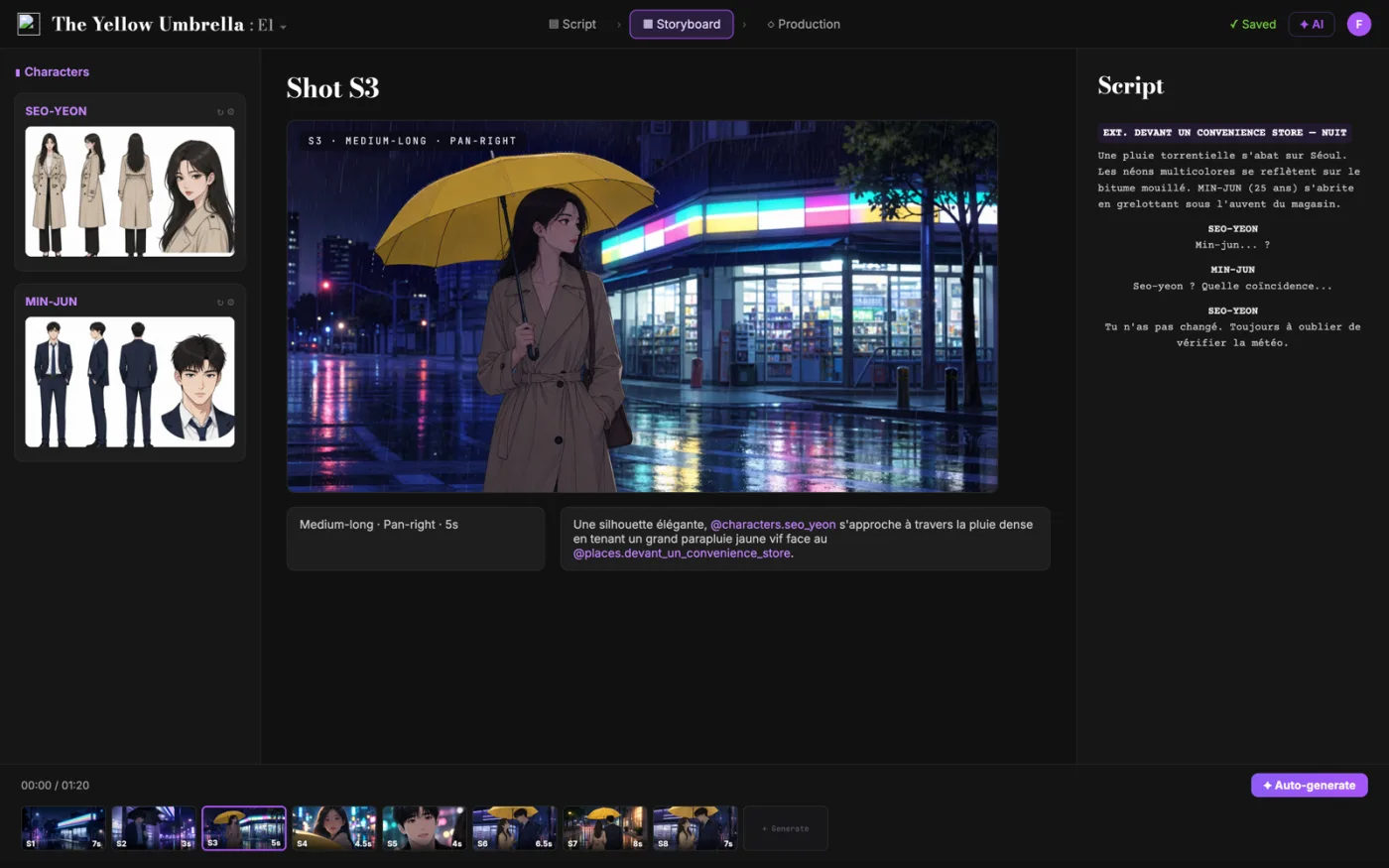
Preview of ScreenWeaver visual timeline and script rhythm

Von der einzelnen Einstellung zur ganzen KI-Filmkette

ScreenWeaver verwandelt Ihr Drehbuch in Szenen, Storyboards und Prompts Einstellung für Einstellung, mit stimmigen Figuren und Orten, damit Kamerasprache zum Plan wird statt zum Glücksspiel. Kostenlos starten.

Einstellungen kostenlos planen