Storyboard-Vorlagen-Generator
Druckbare Bögen im exakten Bildformat Ihres Projekts
Wählen Sie Ihr Ausgabeformat, entscheiden Sie über die Anzahl der Felder pro Seite und laden Sie einen sauberen, druckbaren Storyboard-Bogen als PDF. Ohne Anmeldung, ohne Wasserzeichen, mit Feldern im echten Bildformat Ihres Projekts statt in generischen Rechtecken.
Ein Storyboard hilft nur, wenn die Felder dem entsprechen, was die Kamera wirklich einfängt. Eine in 4:3 gedachte Komposition zerfällt in 2.39:1, und ein senkrechtes TikTok-Format, das in 16:9 geboardet wurde, verliert seinen Bildausschnitt ganz. Dieser Generator zeichnet jedes Feld in Ihrem echten Format, auf Letter oder A4, mit optionalen Notizfeldern für Handlung und Dialog.
Das PDF wird vollständig in Ihrem Browser erzeugt. Es wird nichts an einen Server gesendet.
Live-Vorschau
2 Spalten mal 3 Zeilen mit Feldern im Format 16:9, mit einer Einstellungsnummer auf jedem Feld.
So funktioniert es
Der Generator berechnet ein Drucklayout, in dem jedes Feld genau Ihr Bildformat behält: Er wählt das Spaltenraster, das die größtmöglichen Felder ergibt, legt die Seite bei breiten Formaten quer und bei senkrechten hoch, nummeriert jede Einstellung und ergänzt auf Wunsch Notizlinien. Live-Vorschau und heruntergeladenes PDF nutzen dieselbe Layoutrechnung, was Sie sehen, wird also auch gedruckt.
Das richtige Storyboard-Format wählen
Richten Sie die Vorlage nach der Ausgabe aus, nie umgekehrt. YouTube und Fernsehen leben in 16:9, Kinoprojekte in 1.85:1 oder 2.39:1, und TikTok, Reels und Shorts in 9:16. Im falschen Format zu boarden ergibt Kompositionen, die beim ersten Beschnitt auseinanderfallen.
Die Feldanzahl bestimmt den Rhythmus des Bogens. Fiktionale Arbeit liest sich am besten mit 3 bis 6 Feldern pro Seite, wo jede Zeichnung Gewicht hat und Platz zum Denken bleibt. Werbung und schnell geschnittene Social-Inhalte laufen oft mit 8 bis 12 kleineren Feldern pro Seite, um das Tempo zwischen engen Schnitten zu zeigen.
Das bescheidene Notizfeld verdient seinen Platz am Set. Eine Einstellungsnummer, eine Zeile Handlung, ein Dialog- oder Tonhinweis und eine Kameranotiz pro Feld: Das ist der Unterschied zwischen einem Bogen, nach dem ein Team drehen kann, und einem Stapel hübscher Zeichnungen, die niemand umsetzen kann.
Für wen das gedacht ist
- Regie und Kamera: skizzieren Sie die Auflösung in Feldern im echten Ausgabeformat, vor dem Dreh und nicht nach dem Beschnitt.
- Filmstudierende: geben Sie professionell aussehende Bögen ab, ohne am Vorabend mit der Tabellenfunktion einer Textverarbeitung zu kämpfen.
- Social- und Werbeteams: planen Sie senkrechte 9:16-Formate nativ, mit Feldern, die für das Format gemacht sind, statt aus waagerechten Bögen beschnitten zu werden.
Vom Drehbuch aus.Zum Storyboard.
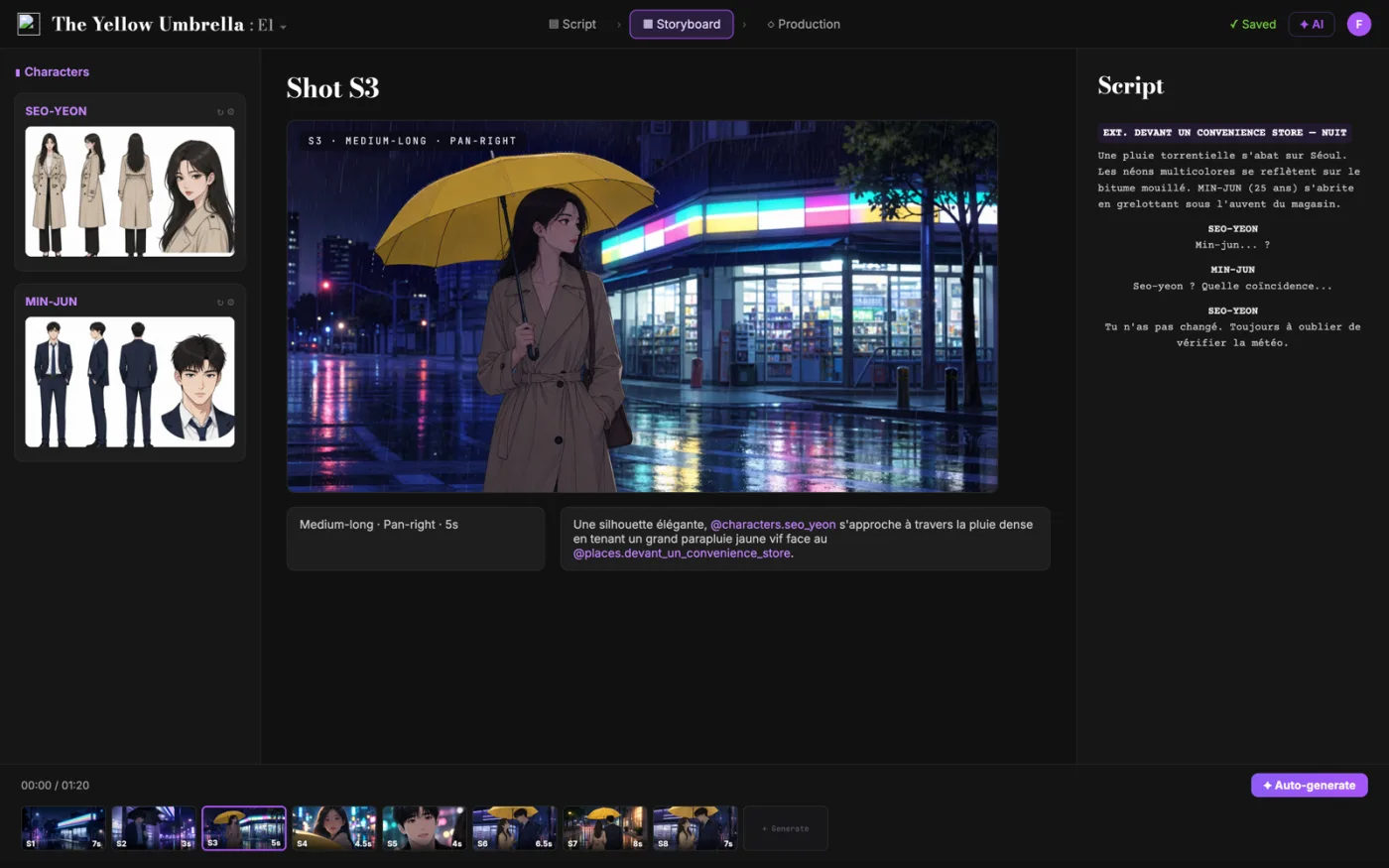
ScreenWeaver zerlegt dein Drehbuch in Einstellungen und erstellt daraus das Storyboard. Bildausschnitt, Winkel, Bewegung und Dauer bestimmst du. Figuren bleiben von Einstellung zu Einstellung gleich.
- 0 $, ohne Ablaufdatum
- Export als PDF und Final Draft
- Mac, Windows, Linux, iPad
Storyboard-Vorlagengenerator: der komplette Leitfaden
Es erzeugt druckbare Storyboard-PDFs mit Kadern in Ihrem echten Seitenverhältnis, von filmischem 2.39:1 bis zu vertikalem 9:16, auf Wunsch mit Notizfeldern für Handlung und Dialog unter jedem Kader.
Bei dieser Arbeit liegt das Kernproblem offen: die meisten Storyboard-Vorlagen zum Herunterladen sind starre PDFs in einem Seitenverhältnis und einem Layout, also zeichnet man Kader, die nicht zum Ausgabeformat passen. Bleibt es ungelöst, erzeugt es Reibung weiter unten in der Kette und langsamere Entscheidungen. Das praktische Ziel ist ein sauberes, druckbares Storyboard-Blatt mit genau Ihrem Seitenverhältnis, Ihrer Kaderzahl und Ihrer Art zu notieren.
Grenze, die Sie im Kopf behalten sollten: Es liefert leere Blätter zum Zeichnen und Planen, keine fertigen Bilder: Zeichnungen, Pfeile und Kameranotizen bleiben Ihre Arbeit.
Fortgeschrittener Einsatz: Wer zuerst boardet, druckt breite Blätter für die Kinofassung und vertikale Blätter für die Social-Auskopplung derselben Szene, damit beide Bildausschnitte vor dem Dreh geplant und nicht danach beschnitten werden.
Schritt für Schritt
- Wählen Sie das Seitenverhältnis, in dem Ihr Projekt wirklich ausgespielt wird, nicht das, das die Vorlage zufällig hatte.
- Wählen Sie die Kader pro Seite: wenige große für detaillierte Filmboards, mehr für schnelles Werbetempo.
- Schalten Sie Notizfelder ein, wenn Sie Handlung und Dialog unter jeden Kader schreiben, aus für reine Thumbnails.
- Laden Sie das PDF und drucken Sie so viele Blätter, wie die Szene braucht, oder erzeugen Sie pro Sequenz neu.
Anwendungsfälle nach Rolle
- Regie: die Auflösung in Kadern skizzieren, die dem echten Ausgabeformat entsprechen, statt in beliebigen Rechtecken.
- Studierende: professionell wirkende Boards abgeben, ohne mit der Tabellenfunktion einer Textverarbeitung zu kämpfen.
- Social-Video-Team: 9:16 nativ planen, statt ein 16:9-Board zu beschneiden und Kopfraum zu verlieren.
Häufige Fehler
- In 4:3 oder beliebigen Rechtecken boarden und merken, dass die Komposition in 2.39:1 nicht hält.
- Zwölf winzige Kader auf eine Seite quetschen für ein Drama, das sechs lesbare Kader braucht.
- Auf Notizfelder verzichten und Kameraangaben dann in Ränder schreiben, die am Set niemand lesen kann.
Bewährte Praxis im Beruf
- Filmboards lesen sich am besten mit 3 bis 6 Kadern pro Seite; Werbung und Social vertragen 8 bis 12.
- Nummerieren Sie nach Szene und Einstellung (3A, 3B), dann bleiben Blätter sortierbar, auch wenn sie am Set durcheinandergeraten.
- Drucken Sie ein leeres Blatt mehr pro Szene: die beste Idee kommt oft beim Boarden.
Behandeln Sie die Ausgabe dieses Werkzeugs als Entscheidungshilfe, nicht als Ersatz für das Schreiben. Ein starkes Drehbuch bleibt wegen seiner konkreten Entscheidungen, seiner emotionalen Genauigkeit und der Klarheit seiner dramatischen Bewegung im Gedächtnis. Werkzeuge nehmen das Rauschen weg, damit Ihre Energie dorthin geht, wo sie zählt: Figur, Konflikt, Steigerung, Auszahlung. Wenn Sie nach jedem Durchgang die Ergebnisse prüfen und die angenommenen Änderungen protokollieren, wird Ihre Arbeitsweise von Fassung zu Fassung schneller und berechenbarer. Genau das schätzen professionelle Partner: weniger Überraschungen, klarere Begründungen und ein Buch, das sich mit Absicht weiterentwickelt.
Ausführliche Fragen
Welches Seitenverhältnis soll mein Storyboard haben?
Dasselbe, in dem Ihr Video am Ende erscheint: 16:9 für YouTube und Fernsehen, 2.39:1 oder 1.85:1 für Kinoprojekte, 9:16 für TikTok, Reels und Shorts. Im falschen Verhältnis geboardete Kompositionen brechen beim Umrahmen.
Wie viele Kader pro Seite sind üblich?
Im Film sind 3 bis 6 Kader pro Seite üblich, damit jeder Kader lesbar bleibt. Werbung und schnell geschnittene Social-Inhalte nutzen oft 8 bis 12 kleinere Kader, um das Tempo zu zeigen.
Ist diese Storyboard-Vorlage wirklich kostenlos?
Ja. Blatt einstellen, PDF herunterladen, drucken, ohne Anmeldung und ohne Wasserzeichen. Alles entsteht in Ihrem Browser.
Kann ich ein vertikales Storyboard in 9:16 erzeugen?
Ja. Wählen Sie 9:16, und der Generator legt vertikale Kader auf eine Hochformatseite, passend für die Planung von TikTok, Reels und Shorts, statt vertikale Bilder in liegende Kästen zu pressen.
Was schreibt man unter einen Storyboard-Kader?
Üblich sind die Einstellungsnummer, eine Zeile Handlung, ein Dialog- oder Tonhinweis, und Kameranotizen wie Bewegung oder Objektiv. Der optionale Notizbereich unter jedem Kader ist genau dafür bemessen.
Storyboard auf Papier oder digital?
Papier bleibt der schnellste Weg, Einstellungen zu denken, besonders für rasche Thumbnails. Viele Regisseure skizzieren zuerst auf gedruckten Blättern und bauen die guten Kader dann digital nach, wo sie mit Buch und Shotlist verknüpft sind.
Häufige Fragen
Das Format Ihrer endgültigen Ausgabe: 16:9 für YouTube und Fernsehen, 1.85:1 oder 2.39:1 fürs Kino, 9:16 für TikTok, Reels und Shorts, 4:3 oder 1:1 für bestimmte Plattformen und Archivformate.
3 bis 6 für fiktionale Bögen, wo jedes Feld Detail und Platz für Anmerkungen braucht, 8 bis 12 für Werbung und schnell geschnittene Social-Inhalte, wo das Tempo zwischen den Schnitten wichtiger ist als das Detail im einzelnen Feld.
Ja. Bogen einstellen, herunterladen und so oft drucken, wie Sie brauchen. Die Erzeugung passiert in Ihrem Browser, ohne Anmeldung und ohne Branding auf den Bögen.
Ja, wählen Sie 9:16, und der Generator legt senkrechte Felder auf eine Hochformatseite, passend für das Format statt senkrechte Bildausschnitte in waagerechte Kästen zu zwingen.
Das übliche Minimum: eine Zeile Handlung, jeder Dialog- oder Tonhinweis, und Kameranotizen wie Bewegung oder Objektiv. Die Einstellungsnummer steht bereits über jedem Feld.
Related tools
Szenen-zu-Clip-Planer
Eine Szene in KI-Videoclips zerlegen, die zur Längenbegrenzung Ihres Modells passen.
KI-Video-Prompt-Generator
Filmische Prompts für Veo, Sora, Runway und Kling bauen.
Drehplan-Rechner
Schätzen, wie viele Drehtage Ihr Drehbuch braucht.
Szenenkarten-Generator
Strukturierte Szenenkarten anlegen und exportieren.
You can also browse the full library on /tools.
Core blog guides
- Idea → first draft (process hub)
- Screenplay format guide 2026
- Hidden costs of “free” software
- Affordable software & TCO
- Revision passes (structure → dialogue)
Filmtechniken
Filmtechniken zum Entdecken
Jede mit einem kurzen Clip, einem Drehbuchauszug und der Zeile für die Shotlist.