The ScreenWeaver Blog
Deep dives into modern screenwriting, visual storytelling, and how AI is reshaping the creative process.
Categories

Celtx vs ScreenWeaver: Pre-Production Script Editors Face-Off for Budget-Conscious Creators
Script plus breakdown vs script plus timeline and visuals. Where each pre-production and script tool puts its energy,and who wins.

WriterDuet vs ScreenWeaver: Real-Time Collaboration in Screenwriting – Which One Delivers Better?
Both support real-time co-writing. One is the lean collaborative script editor; the other adds a shared story map and visuals. We compare.

Squibler vs ScreenWeaver: AI-Powered Script Generators Compared for Fast Story Development
Fast first draft vs structure and visuals in one surface. Pros, cons, and who each tool is for.

Saga vs ScreenWeaver: Visual Storytelling Platforms with GPT Integration – A Detailed Breakdown
Two visual storytelling platforms: integrated assistance and structure-plus-visuals. Where they overlap and where they diverge.

LTX Studio vs ScreenWeaver: Script-to-Screen AI Tools for Filmmakers – Pros, Cons, and Winners
Script to motion vs script to structure and still visuals. Which script-to-screen tool fits your next milestone?

Fade In vs ScreenWeaver: Affordable Screenplay Software Alternatives for Cross-Platform Writing
One-time purchase and native apps vs subscription and browser. Both are cross-platform and export PDF/FDX,here's how they differ.

Why Celtx Users Are Switching to ScreenWeaver for Narrative Control
Celtx is built for production managers. ScreenWeaver is built for writers who need structure. Here's why narrative control is drawing writers from all-in-one production suites to a story-first tool.

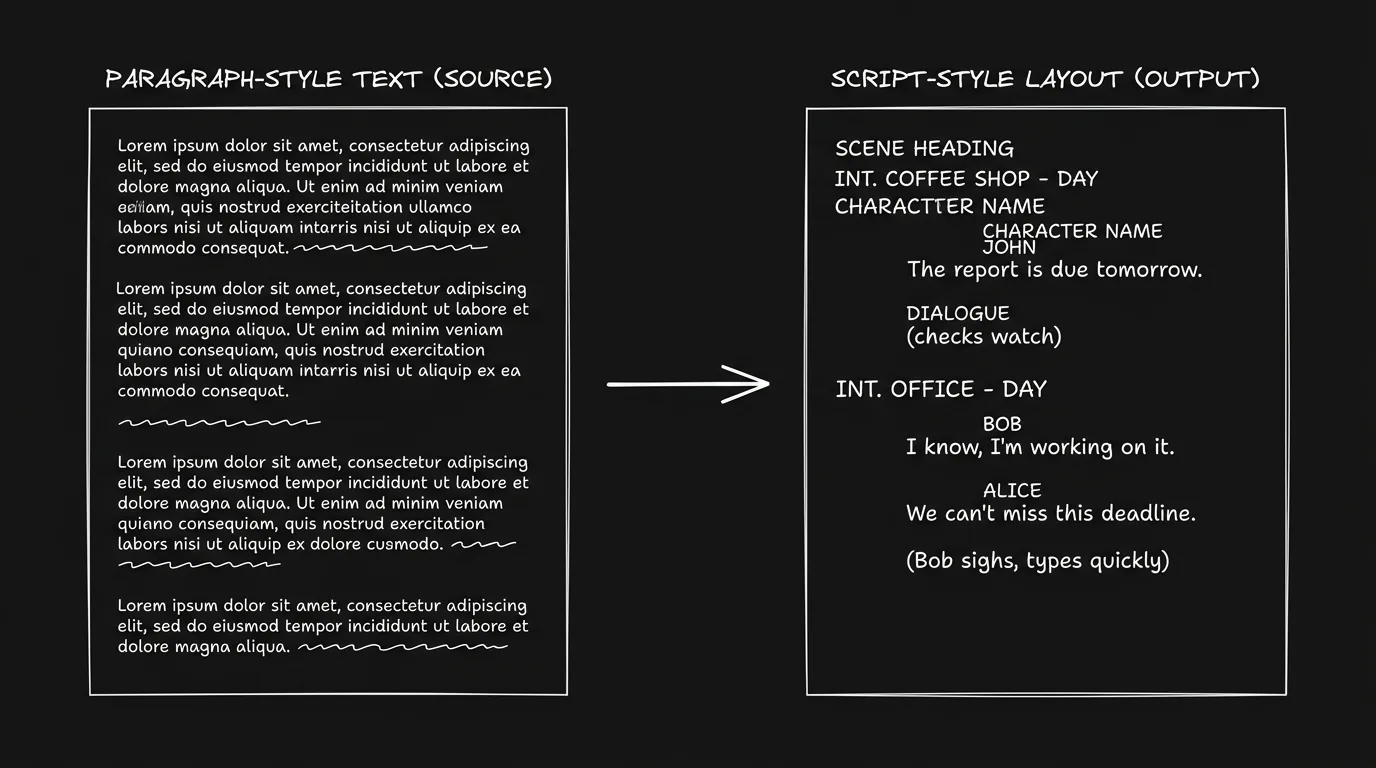
The Death of the Static Outline: Why You Need a Bi-Directional Script
Writing an outline in one doc and a script in another is obsolete. The cognitive load of switching tabs and syncing errors are real. The Living Outline,one object, two views,is the alternative.