You're reading a script. A character speaks. The parenthetical says (V.O.). Two scenes later, another character speaks. (O.S.). You've seen both. Maybe you've used both. Do you know what they actually mean? More importantly, does your reader?
Most writers treat V.O. and O.S. as interchangeable flavor text. They're not. In production, they trigger different technical decisions. In the reader's mind, they create different expectations. Using them correctly signals that you understand how film actually works,and how sound creates meaning.
The Technical Definition
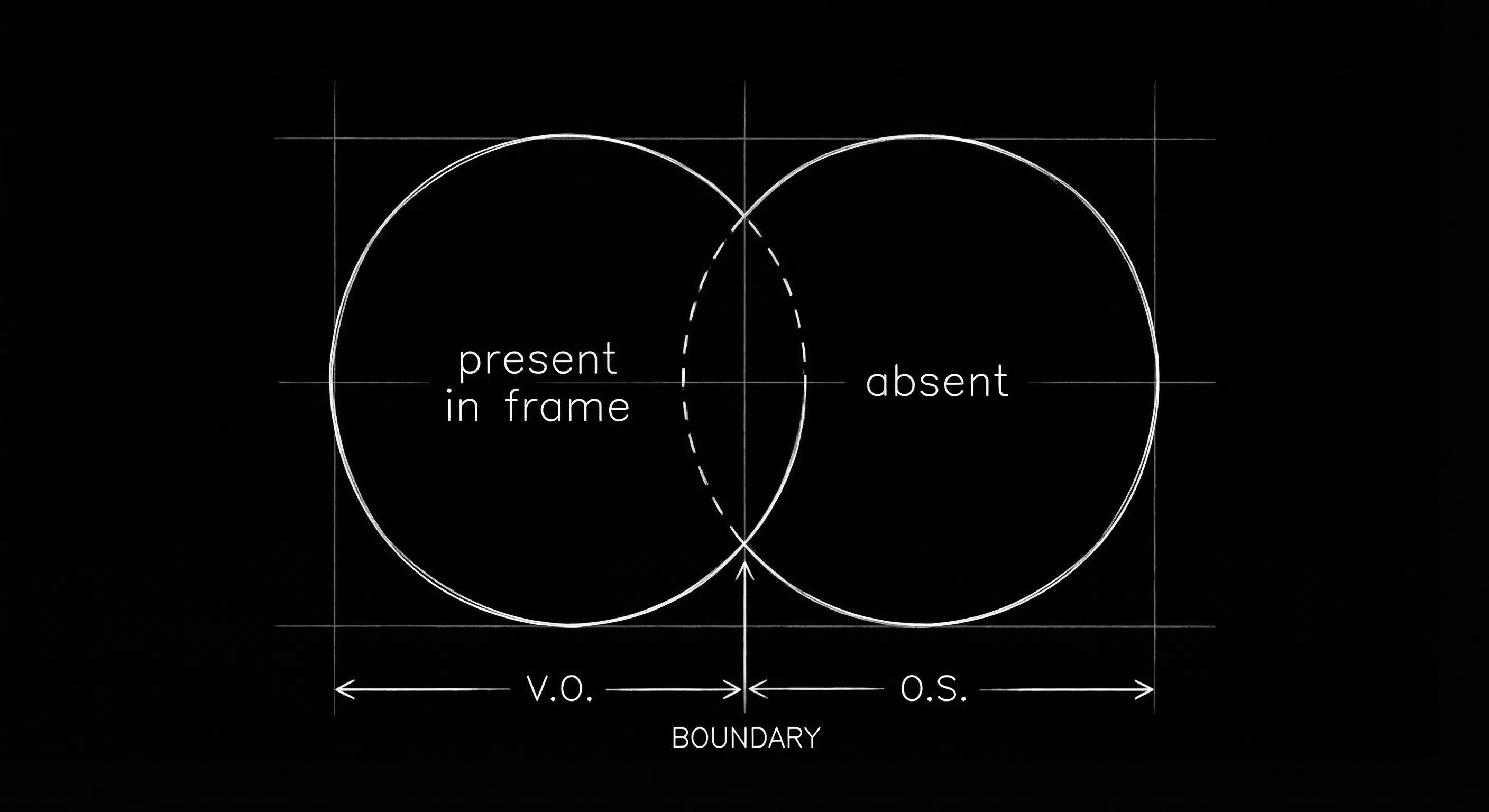
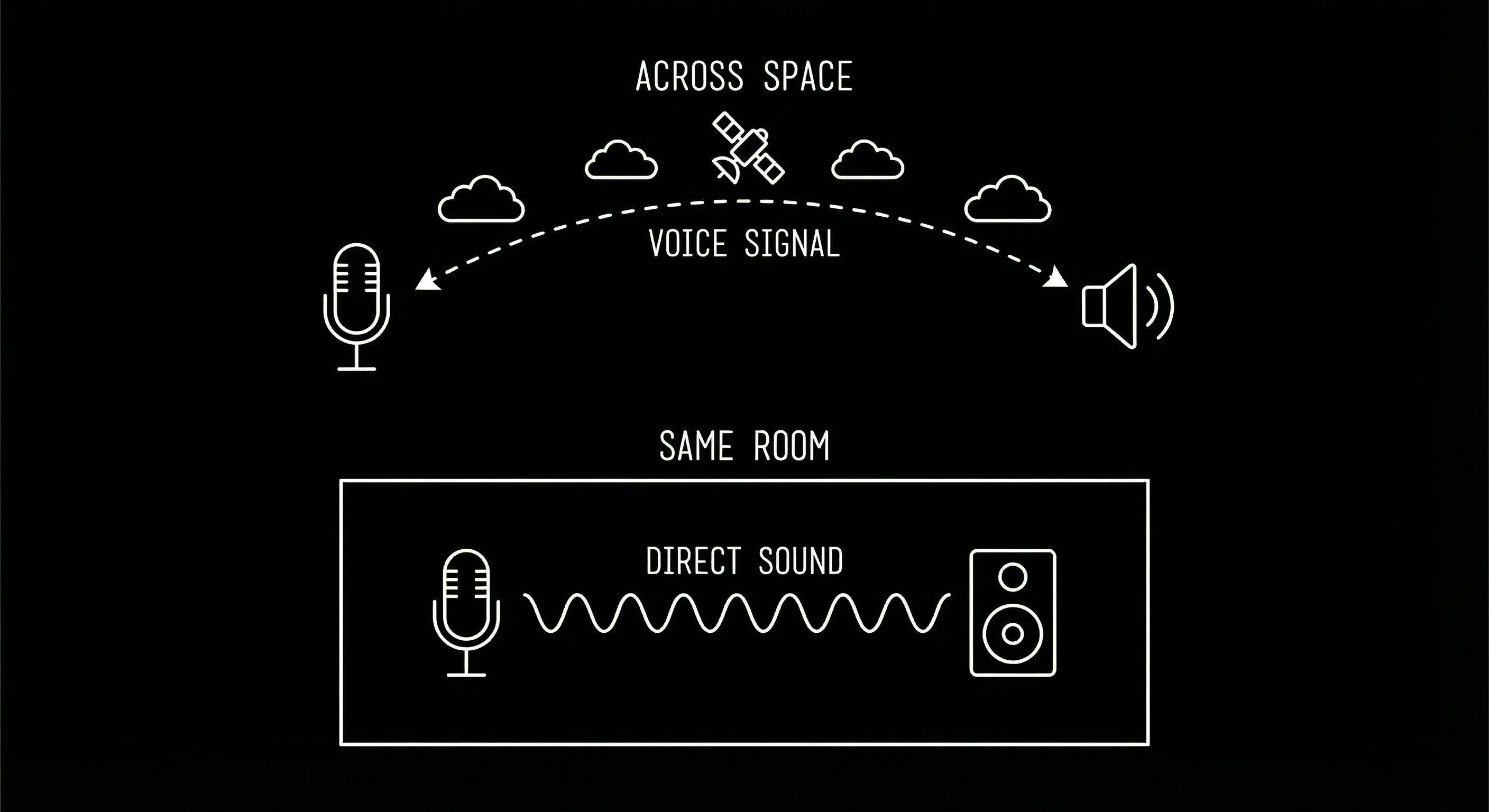
V.O. (Voice Over) means the speaker is not in the scene. They are not present in the visual space we're watching. Their voice is layered over the image,a narrator, a character remembering, someone on a phone call we hear but don't see, a recording playing.
O.S. (Off Screen) means the speaker is in the scene. They're in the same physical space. We just don't see them on camera at that moment. They might be in the next room, behind the door, in the hallway. They're present. The camera simply isn't pointed at them.
Why It Matters for Storytelling
V.O. creates distance. It separates the voice from the body. O.S. creates presence. The voice belongs to someone in the room. We feel their physical proximity.
| Usage | V.O. | O.S. |
|---|---|---|
| Narrator | ✓ | ✗ |
| Person in next room | ✗ | ✓ |
| Recorded message playing | ✓ | ✗ |
If the character could physically walk into the frame within the logic of the scene, use O.S. If they exist in a different space, time, or medium, use V.O.
The Narrative Weight of Each Choice
V.O. carries baggage. It signals reflection or omniscience. O.S. signals immediacy. Raw. Unfiltered. Consider the same line: "I never loved you." As V.O., it might be a narrator confessing,pain processed. As O.S., it's someone in the next room, saying it right now. The emotional impact shifts completely.
The purest V.O. is documentary narration: a voice that never enters the frame and still has to sound human. If you are writing one for a documentary or a history video, our guide to documentary narration that sounds like a real narrator shows how to write those lines for the ear and time each block against the picture.
For more on how dialogue functions within scene structure, our guide on subtext in film noir explores how what isn't said shapes what we hear. The next time you reach for a parenthetical, pause. Is the speaker in the scene or outside it? The answer will tell you which to use.
Final Step
Build your next script with Screenweaver
Move from ideas to production-ready pages faster with timeline-native writing and AI-assisted story flow.
Try Screenweaver