
The case file is three thousand pages. Court transcripts, police reports, witness statements, forensic analyses, newspaper clippings, appeal documents. Somewhere in those three thousand pages is a story. Not the facts, those are everywhere. The story. The shape that makes a reader or viewer feel something, that creates suspense even when the outcome is already known, that illuminates something about human nature beyond the specifics of this particular crime.
Finding that story is the screenwriter's job. And it's harder than it looks.
True crime is a paradox: the facts are fixed, but the narrative is not. Ten writers given the same case will produce ten different documentaries, each emphasizing different characters, different turning points, different themes. The facts constrain you, you can't invent, but within those constraints, you're making creative choices that shape meaning.
This is the craft of true crime scripting: identifying the narrative arc in material that wasn't designed to have one. Real events don't follow three-act structure. Real investigations meander. Real trials drag. Real justice is often ambiguous. Your job is to find the shape hiding in the chaos, or to impose one honestly, acknowledging where the story doesn't fit clean categories.
Free tool: use the Logline Workshop to build and pressure-test your logline.
Cinematic workflow frames
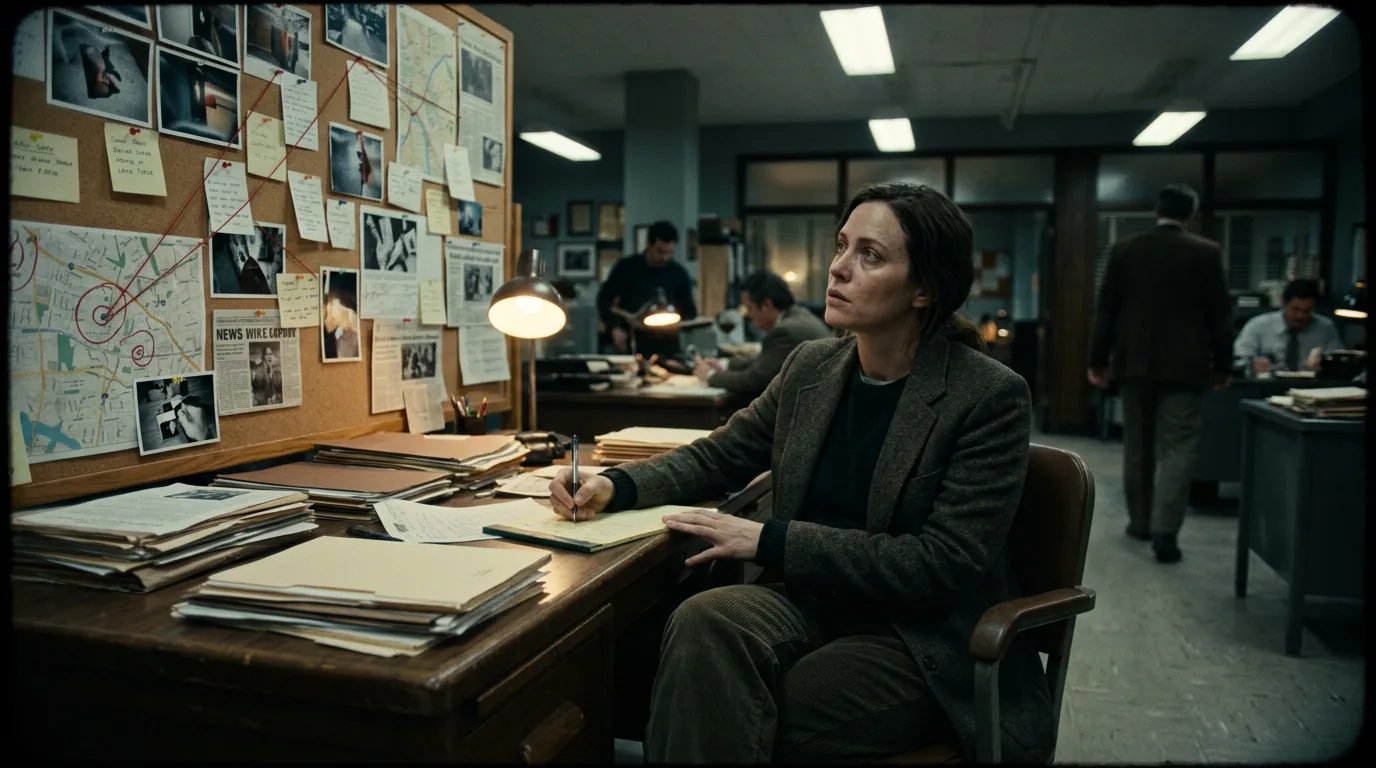
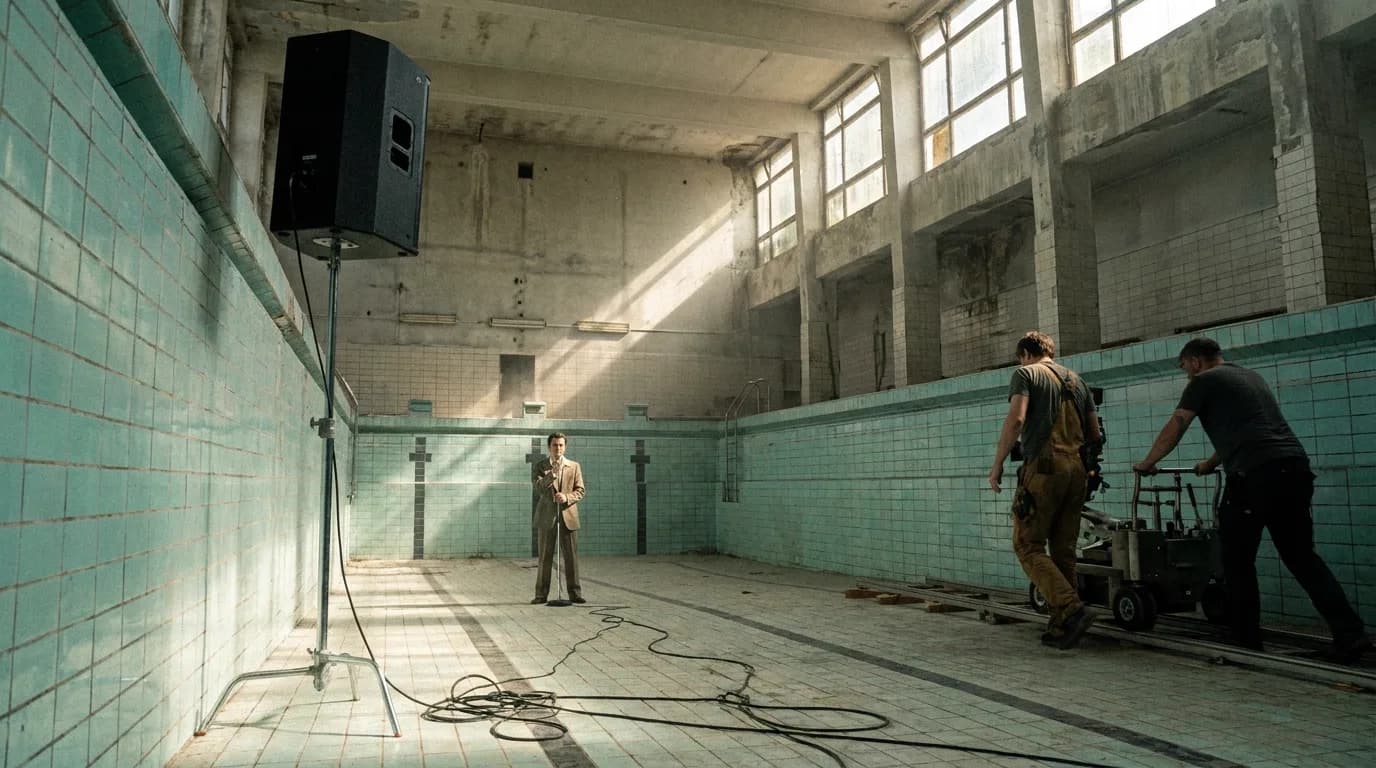
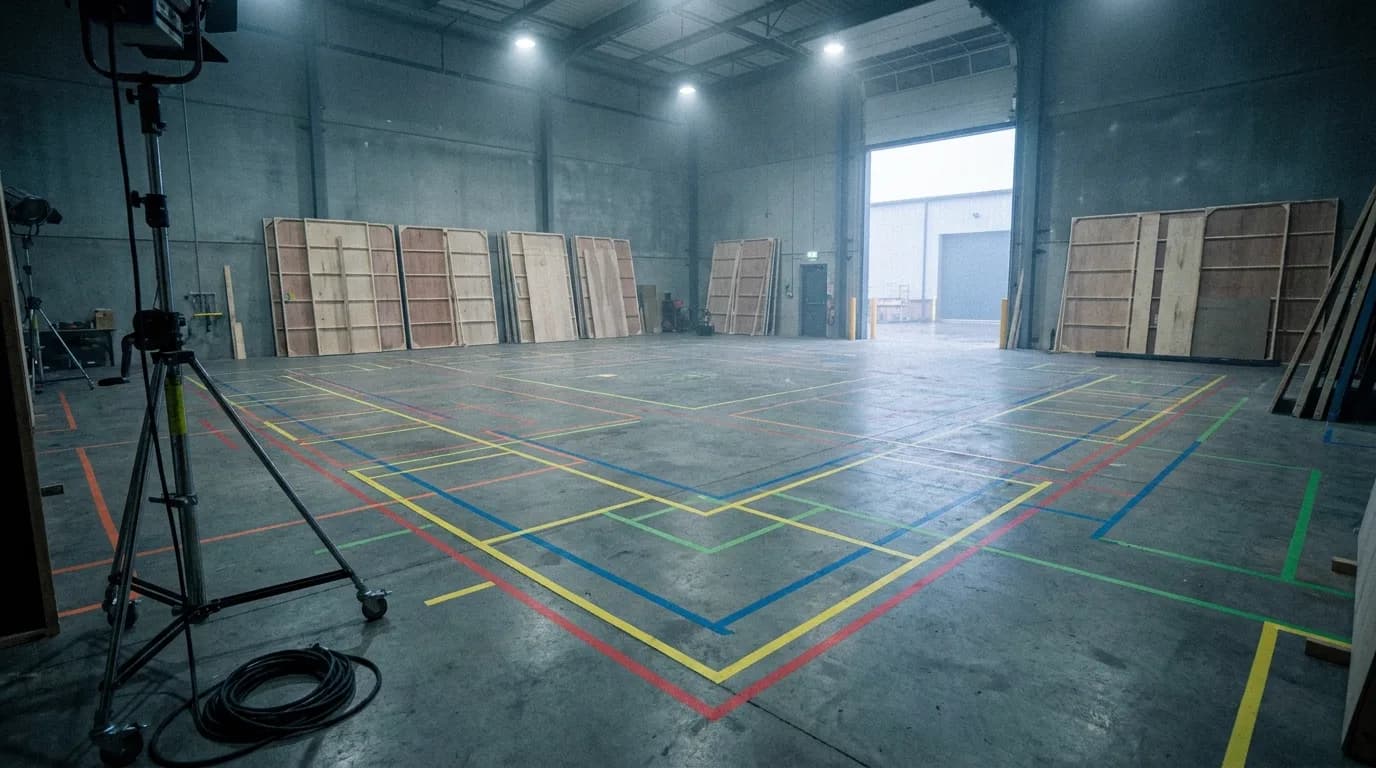
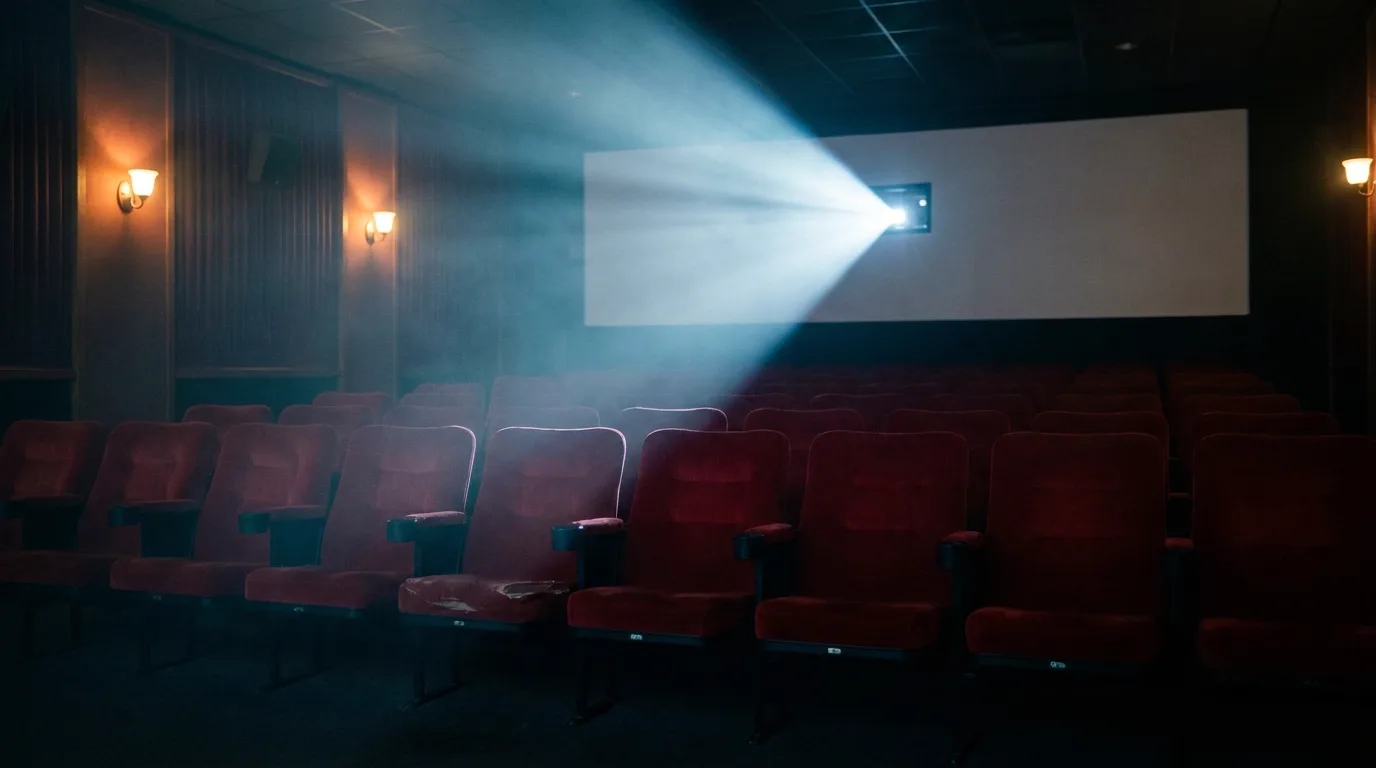
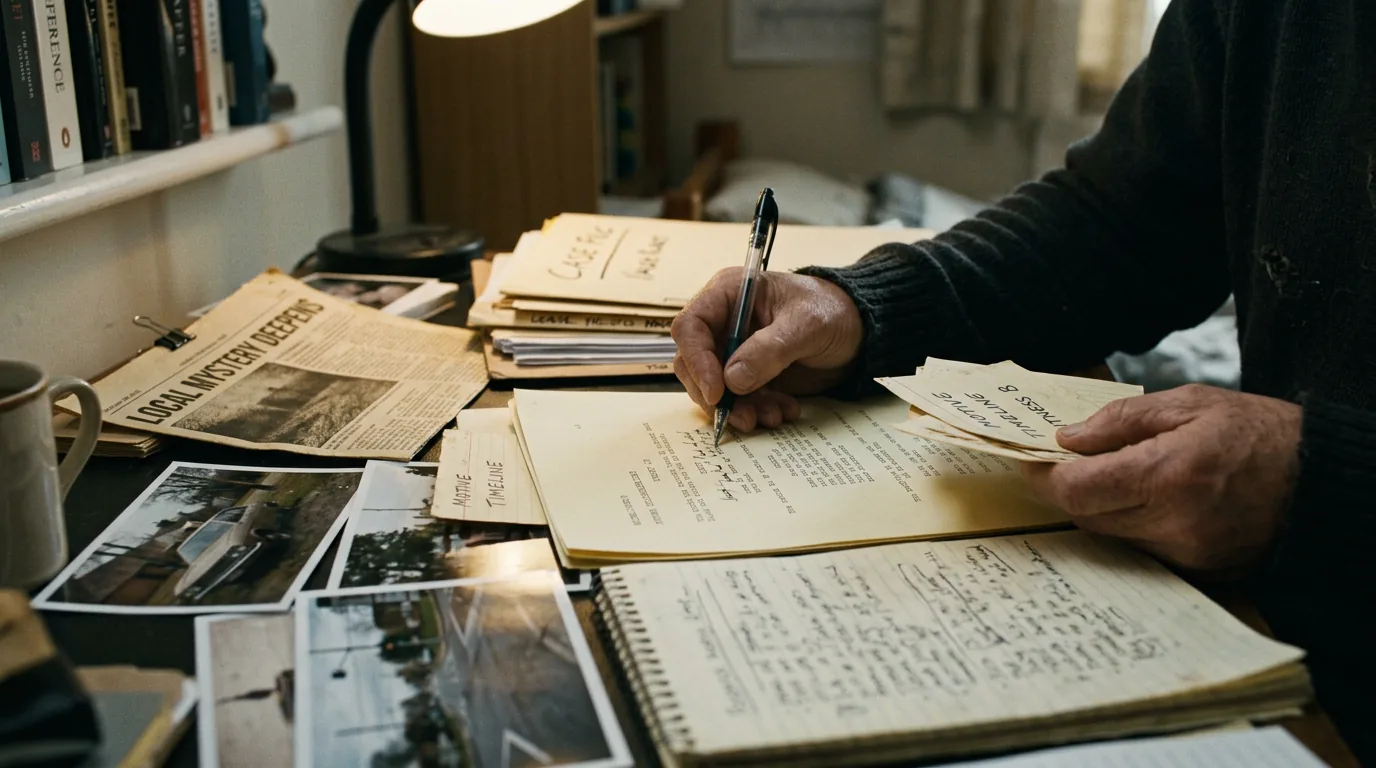
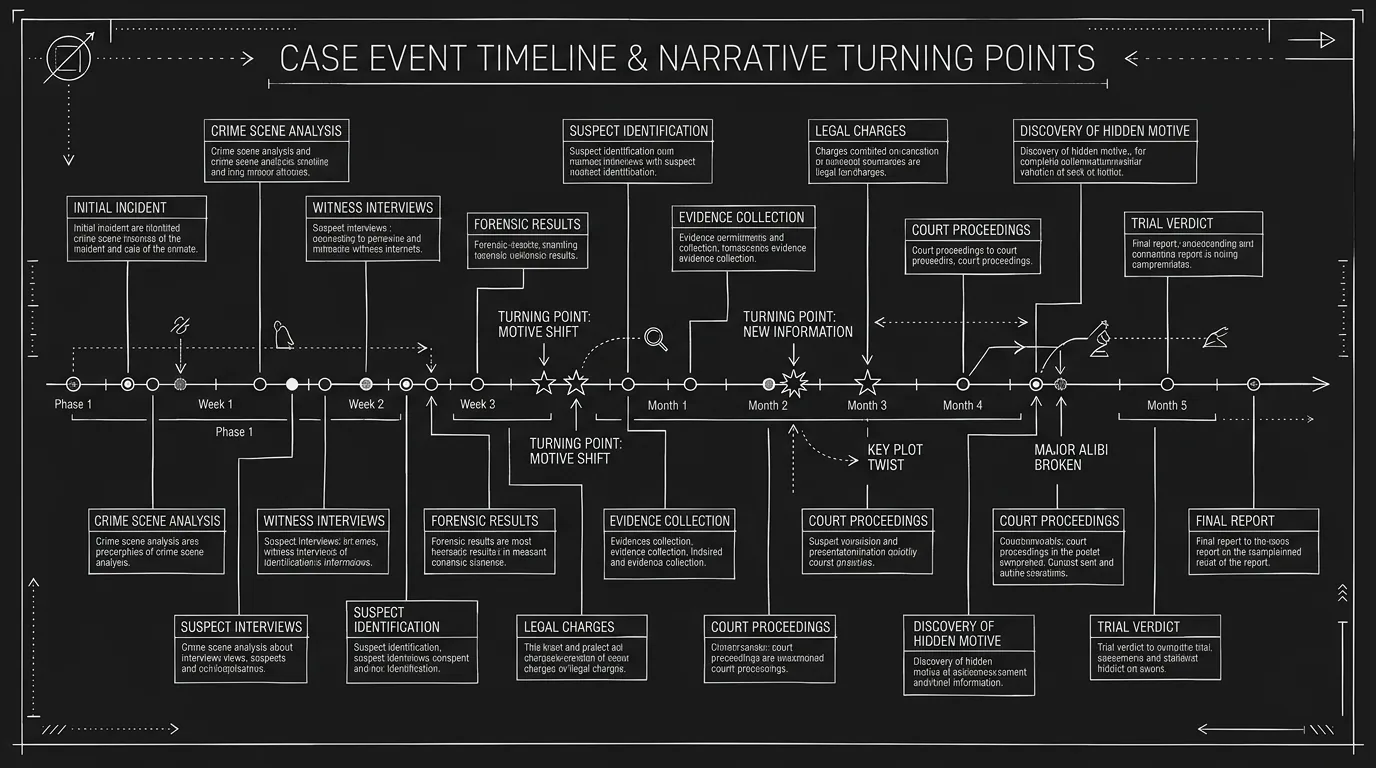
These two visuals work as a pair: the first shows Cinematic workflow still, first angle, 35mm film grain, and the second shifts to Cinematic workflow still, second angle, 35mm film grain - compare them briefly, then move on.
Why True Crime Requires Narrative Craft
There's a temptation to think that true crime writes itself. The crime is dramatic. The investigation is suspenseful. The trial has a verdict. What's the problem?
The problem is that reality doesn't pace itself. A murder case might have three years of procedural tedium between the crime and the arrest. The investigation might follow twelve dead ends before finding the right lead. The trial might include weeks of technical testimony that's legally essential but narratively inert.
If you simply chronicle events, you'll lose your audience. The information overload will bury the emotional core. The story will feel like a list of things that happened, not a narrative with momentum and meaning.
Narrative craft solves this by:
Selecting. Not every fact makes the cut. You choose what matters for your story.
Sequencing. Events might not be presented chronologically. You might start with the discovery of the body, flash back to the victim's life, then move forward through the investigation.
Emphasizing. Some moments are lingered on; others are summarized. A key interview might get five minutes; three months of legwork might get a sentence.
Framing. The same facts can tell different stories. Is this a story about a failed system? A brilliant detective? A monster? A victim who deserves to be remembered as more than a victim? Your framing shapes interpretation.
True crime isn't journalism. It's narrative built from journalistic material.
This distinction matters. Journalists report; storytellers shape. Both have ethical obligations, but the obligations differ. A storyteller must be truthful, but they're also responsible for creating an experience that resonates emotionally, which requires the tools of narrative craft.
Finding Your Angle: What Story Are You Telling?
Before you structure anything, you need an angle. The angle is your answer to the question: Why this case, told this way, now?
An angle is not a logline. It's a perspective, a lens through which the case becomes meaningful.
Common angles in true crime:
| Angle | Focus | Example |
|---|---|---|
| The Investigation | Procedural. How was the case solved? | The Jinx, Making a Murderer |
| The Victim | Humanizing. Who was this person beyond their death? | I'll Be Gone in the Dark |
| The System | Critique. What failed? Justice, media, institutions? | The Innocence Files |
| The Perpetrator | Psychological. What drove them? Can we understand? | Mindhunter, Monster |
| The Community | Sociological. How did this crime affect a place? | Atlanta Monster |
| The Mystery | Unresolved. What don't we know? | Serial Season 1 |
Your angle determines what you emphasize and what you minimize. A victim-centered documentary spends time on the person's life before the crime. A procedural spends time on detective work. A systemic critique examines institutions.
Choose your angle early. It will guide every structural decision.
The Three-Act Structure Applied to True Crime
True crime can follow traditional three-act structure, adapted to the material:
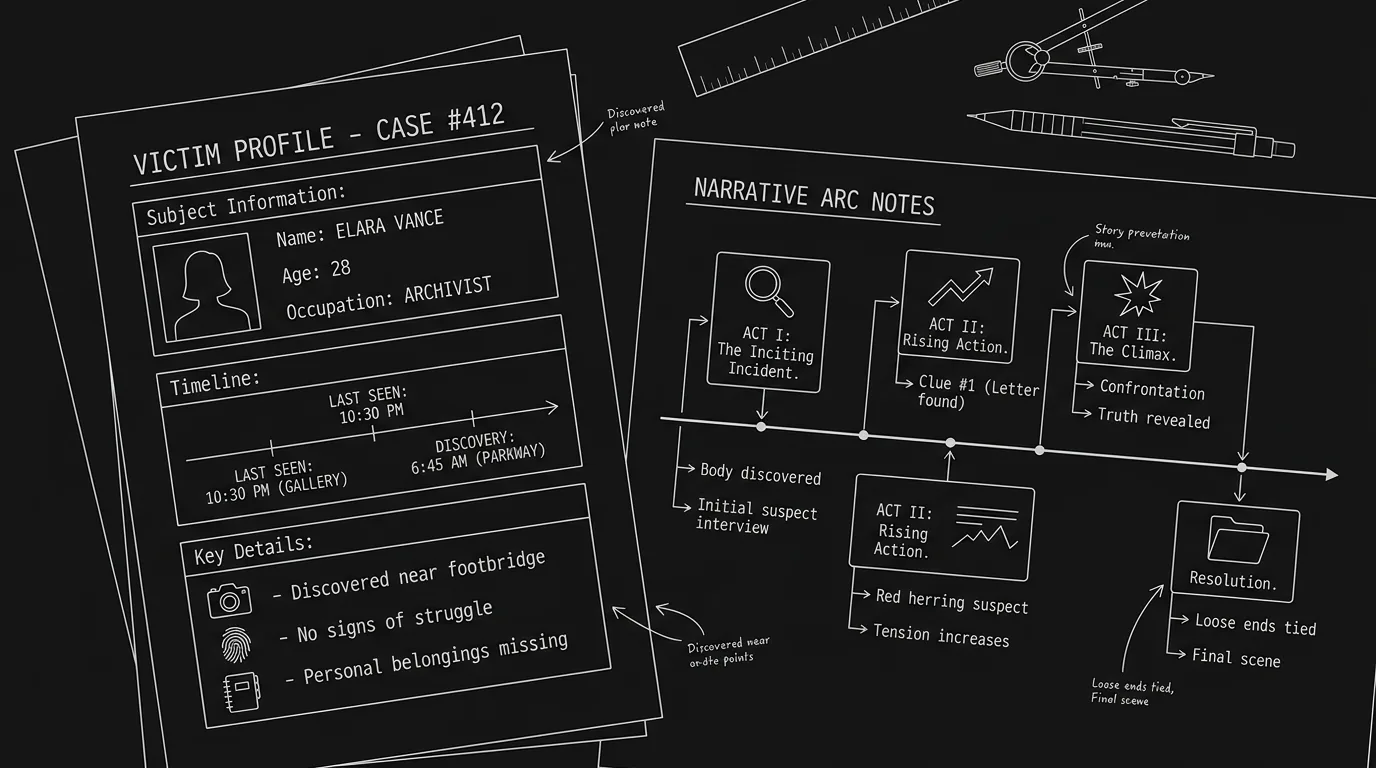
Act One: The Crime and the Question
Establish what happened (or what we think happened). Introduce the victim, the crime scene, the initial response. Pose the central question the series will answer: Who did it? Will they be caught? Will justice be served? Was this person wrongly convicted?
End Act One with a clear stakes statement. The audience knows what they're watching for.
Act Two: The Investigation and Complications
The search for truth. Introduce suspects, witnesses, evidence. Create setbacks and breakthroughs. If you're telling a wrongful conviction story, this is where doubt accumulates. If you're telling a procedural, this is where the detective work unfolds.
The midpoint often features a major revelation: a suspect is identified, a key piece of evidence emerges, an alibi collapses.
Act Two is where most true crime stories struggle. Real investigations don't have clean midpoints. You may need to impose structure through careful selection and sequencing.
Act Three: Resolution and Meaning
The trial, the verdict, the aftermath. Or, if the case is unsolved, the acknowledgment of what remains unknown. The final episode should address: What did we learn? What does this case mean beyond itself? What questions linger?
This is where you earn (or fail to earn) your angle. If you've framed this as a systemic critique, Act Three must deliver that critique. If you've centered the victim, Act Three must honor them.
Non-Chronological Structures: When to Break Time
Chronological order, crime, investigation, trial, is the default but not the requirement. Many true crime projects benefit from non-chronological structures:
In Medias Res. Start with a dramatic moment, the arrest, the discovery, the verdict, then jump back to explain how we got there. Creates immediate hook.
Dual Timeline. Cut between the original events (1987 investigation) and a present-day re-examination (2024 podcast investigation). Creates tension between past and present.
Thematic Structure. Organize by theme rather than time. Episode 1: the victim. Episode 2: the suspect. Episode 3: the evidence. Episode 4: the trial. Each episode covers the full timeline through a different lens.
Reverse Chronology. Start at the end and work backward. Rare but effective for wrongful conviction stories: start with the exoneration, then reveal how the conviction happened.
Choose your structure based on what creates the most compelling experience. Chronology is clear but can be dull. Non-chronology is engaging but risks confusion.
Try it free
Try Screenweaver for free on your script
It is free. Import your existing project, get a clearer view of your outline, and regain control of your story structure in minutes.
Start FreeThe "Trench Warfare" Section: What Goes Wrong
Failure Mode #1: Information Dump
The script tries to include every fact. Every witness. Every piece of evidence. The audience drowns in detail without narrative guidance.
How to Fix It: Choose a through-line and cut ruthlessly. Ask of every fact: Does this advance my angle? If not, cut it, or summarize it in a sentence.
Failure Mode #2: No Central Question
The script presents information without posing a question for the audience to care about. There's no suspense because there's no stakes.
How to Fix It: Define your central question explicitly. Write it at the top of your outline. Every episode should advance toward answering (or deepening) that question.
Failure Mode #3: Exploiting the Victim
The victim is reduced to a body, a plot device whose death enables the "real" story about cops and killers. Their humanity is forgotten.
How to Fix It: Spend time on who they were before the crime. Interview people who loved them. Show their life, not just their death. Honor their memory.
Failure Mode #4: Pretending Objectivity
The script presents itself as neutral, but every choice reveals a perspective. The pretense of objectivity actually hides the framing.
How to Fix It: Be transparent about your angle. You don't have to editorialize, but you should acknowledge that you've made choices, and show your work.
Failure Mode #5: No Ending
The case is unsolved, so the series just... stops. No closure, no meaning, no reflection on what was learned.
How to Fix It: An unsolved case can still have a satisfying ending. Reflect on what the investigation revealed about truth, memory, justice. Acknowledge the limits of what we know. Give the audience something to carry.
Ethical Considerations
True crime scripting carries ethical weight that fiction doesn't:
Real victims. A person died. Their family lives with that loss. Your project can help or harm them. Consult with them if possible. Represent their loved one with dignity.
Living subjects. Suspects, witnesses, and investigators may still be alive. Your portrayal affects their reputations and lives. Be accurate. Be fair. Distinguish speculation from fact.
Entertainment vs. exploitation. True crime is popular partly because violence is compelling. There's a tension between serving the audience's appetite and respecting the gravity of the subject. Navigate this consciously.
Active cases. If the case is ongoing, your project might affect the investigation or trial. Prosecutors and defense attorneys might use your material. Consider the implications.
Secondary trauma. Producers, editors, and writers working on true crime experience vicarious trauma. The material is dark. Take care of yourself and your team.
A Scenario: Structuring an Eight-Episode True Crime Series
Let's walk through structuring a hypothetical case:
The Case: A woman disappears in 1998. Her body is found six months later. A suspect is tried and acquitted. Twenty years later, new DNA evidence points to a different person.
Angle: Justice delayed. The system failed the victim, twice. Once by pursuing the wrong suspect, once by waiting two decades to retest evidence.
Episode Structure:
| Episode | Focus | Narrative Function |
|---|---|---|
| 1 | The disappearance | Hook. Who was she? What happened that night? |
| 2 | The investigation | Initial suspects. Mistakes made. |
| 3 | The first suspect | Trial. Why did the jury acquit? |
| 4 | Cold case | Twenty years of nothing. The family's pain. |
| 5 | New technology | DNA retesting. The match. |
| 6 | The real suspect | Who is he? How did he evade detection? |
| 7 | Arrest and trial | Will justice finally come? |
| 8 | Resolution and reflection | Verdict. What the case teaches about the system. |
Each episode has its own arc while advancing the larger question: Will she finally get justice?
Working with Sources
True crime scripts rely on source material:
Primary sources: Court transcripts, police reports, evidence documents. These are the foundation. Always verify.
Interviews: With detectives, attorneys, family members, witnesses. First-person accounts add texture but must be corroborated.
Secondary sources: News coverage, books, prior documentaries. Useful for context but may contain errors.
Experts: Forensic specialists, psychologists, legal scholars. Provide analysis and interpretation.
Cite your sources internally in the script or treatment. The production needs to know where information came from for fact-checking and legal review.
The Perspective: Truth Is Complex
True crime promises truth. The audience wants to know what really happened. But "what really happened" is often more complicated than a verdict.
The best true crime acknowledges this complexity. It presents evidence without pretending certainty where none exists. It explores multiple interpretations when the facts allow. It distinguishes between legal truth (what a court decided) and factual truth (what actually occurred).
Your job isn't to solve the case, you're a writer, not a detective. Your job is to tell a story that illuminates the pursuit of truth, with all its messiness.
Sometimes the truth is: we don't know. And that's a valid ending, if you've earned it by showing the audience why we don't know, and what that uncertainty means.
[YOUTUBE VIDEO: A true crime showrunner discussing how they structured a documentary series around an unsolved case, balancing the need for narrative satisfaction with the reality of incomplete answers.]
Further reading:
- For guidance on documentary treatment writing, see how to write and format a treatment for a documentary series.
- If you're working with reality footage, see the paper edit in reality TV.
- The Investigative Reporters and Editors organization has resources on investigative storytelling at ire.org{:rel="nofollow"}.
Final Step
Build your next script with Screenweaver
Move from ideas to production-ready pages faster with timeline-native writing and AI-assisted story flow.
Try Screenweaver