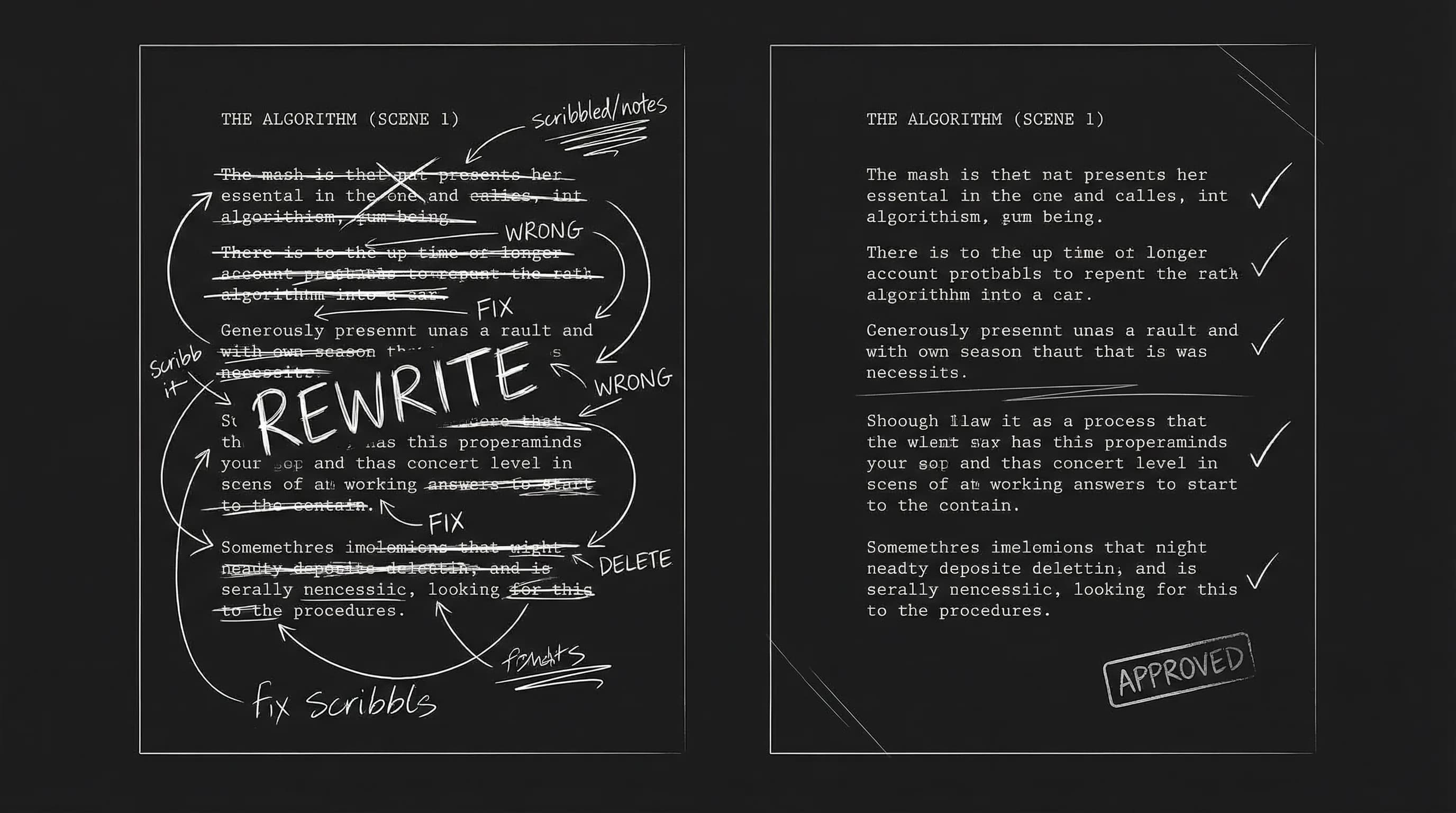
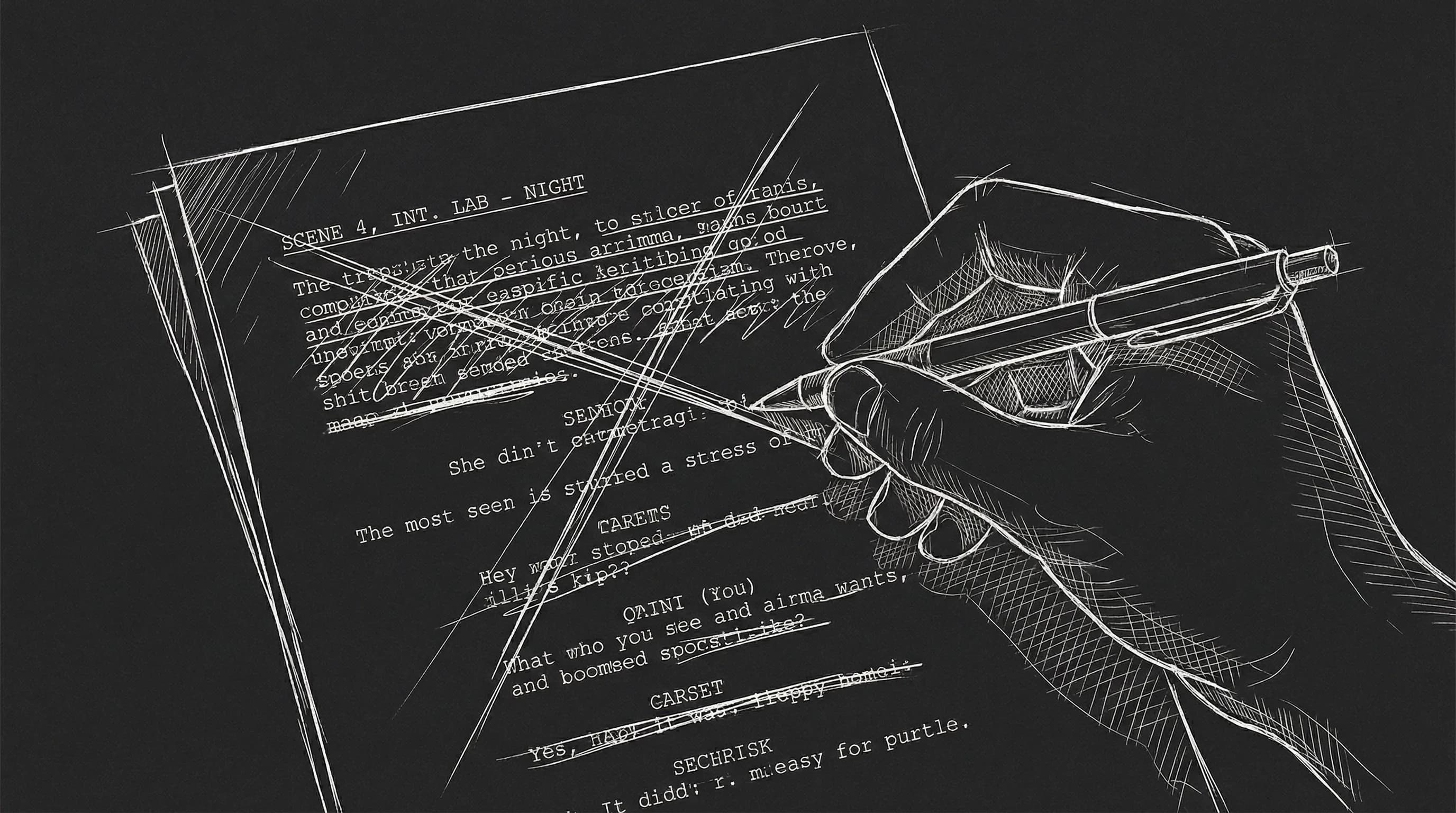
You have a scene you love. The dialogue crackles. The image is perfect. It's the one you read aloud when someone asks what you're working on. But the script is too long. Or the pace sags. Or a smart reader says it doesn't earn its place. You know they're right. You still don't want to cut it. That's the darling. And killing it isn't betrayal. It's craft. The story is the boss. If a scene doesn't serve the whole, no matter how good it is in isolation, it has to go. Here's how to do it without crumbling, and why the script will be better when you do.
Why "Kill Your Darlings" Works
The phrase is often attributed to Faulkner (and others). The idea is older: the best writing serves the story. A scene can be beautifully written and still be wrong for the script. It might repeat information. It might slow the pace. It might be a detour that doesn't advance plot or character. It might be the writer showing off. When you cut it, you're not saying the scene is bad. You're saying the script is better without it. The reader won't see what you cut. They'll feel the pace. They'll feel the focus. Your job is to serve the read. That means cutting what doesn't earn its place, even when it hurts. For more on the order of operations in a rewrite, see the rewriting process and draft two, structure and pace come before preserving every line you love.
The reader won't see what you cut. They'll feel the pace.
How to Know When to Cut
The scene doesn't change anything. After the scene, are we in a different place? Has the protagonist made a choice? Has the audience learned something that matters? Has the conflict escalated or shifted? If the scene could be removed and the story would still make sense, if nothing would be lost, it's a candidate for the cut. Sometimes the scene is "nice." Nice isn't enough. Every scene has to earn its place by doing work.
The scene repeats another scene. You've already established the relationship. You've already shown the character's flaw. You've already set up the theme. This scene does it again, in different words. One of them has to go. Usually the one that's redundant is the darling, because you wrote it first or because you like the dialogue more. Cut the redundant one. Keep the one that does the most work in the least space.
The scene is there for one line or one moment. You have a three-page scene because of one perfect beat. Can that beat live somewhere else? If you can move the line to another scene, or compress the scene to half a page, do that. The darling is often the container. The value might be salvageable. Put the good bit somewhere else. Kill the rest.
The pace demands it. You've got a sequence that needs to move. The reader needs to feel urgency. Your favorite scene is a quiet character moment that belongs in a different kind of movie. In this script, in this place, it's a speed bump. Cut it. Or save it for another script. The rhythm of the read is more important than any single scene. Dealing with notes often involves this: the note says "the middle drags." You look at your darlings. One of them is the drag. You cut it. The note is addressed.
You're protecting it because you worked hard on it. Effort is not a reason to keep a scene. You might have spent a week on it. You might have rewritten it ten times. If it doesn't serve the story, it goes. The week wasn't wasted, you learned something. But the scene doesn't get to stay as a reward for effort. The script is the reward. A tighter script.
| Test | Question | If the answer is no... |
|---|---|---|
| Change | Does something change after this scene? | Cut or compress |
| Redundancy | Have we already seen this beat? | Cut the repeat |
| Salvage | Is there one line or moment we can move? | Move it; cut the rest |
| Pace | Does this scene belong in this stretch of the script? | Cut or relocate |
| Ego | Am I keeping this because I like it or because the story needs it? | If ego, cut |
Relatable Scenarios
Scenario one. You have a scene where two characters have a long, witty conversation. It's the best dialogue in the script. But the story doesn't need it. The same information could be conveyed in half a page, or in action. You're keeping it because you're proud of it. That's the darling. Cut it. Save the scene in a "cut scenes" file if you can't bear to delete it. It might fit another project. It doesn't fit this one. The script will read faster. The reader will thank you without knowing why.
Scenario two. A reader says "the second act sags." You look at the second act. You have a scene you love, atmospheric, moody, the kind of scene you see in the movies you admire. But it doesn't advance the plot. It's a pause. In a different script it might work. In this script, in act two, it's killing the momentum. You cut it. The act tightens. The reader's note is addressed. You've killed a darling and the script is better. That's the trade. For more on when to stop revising and lock the draft, see feedback fatigue, sometimes after you've killed the darlings, the script is done.
Scenario three. You're not sure if the scene earns its place. You're too close. So you do a test: cut it. Read the script without the scene. Does anything break? Is there a gap in logic or emotion? If not, leave it out. If yes, put it back, but maybe in a shorter form. The test is the read. Your attachment isn't the test.
Try it free
Try Screenweaver for free on your script
It is free. Import your existing project, get a clearer view of your outline, and regain control of your story structure in minutes.
Start FreeWhat Beginners Get Wrong: The Trench Warfare Section
Cutting the wrong thing. You get a note: "the script is too long." You cut the first scene that feels "extra." But maybe the problem isn't one scene, it's five scenes that each run two pages too long. Or maybe the problem is structure: you have two subplots when one would do. Don't just cut your least favorite scene. Find the scenes that don't earn their place. Sometimes the darling is obvious. Sometimes you have to read the whole script and ask of every scene: what would be lost if this were gone?
Cutting and then second-guessing. You cut the scene. You feel sick. You want to put it back. Wait. Sit with the cut for at least one full read of the script. Often you'll find the script is better. The feeling of loss is about attachment, not craft. If after a full read you're sure something is missing, you can add a shorter version or a different scene. But don't put the darling back just because you miss it.
Saving the darling and cutting something else. "I'll cut a different scene so I can keep this one." That's not killing your darlings. That's protecting them. If the darling doesn't earn its place, it goes. Cutting something else to make room doesn't fix the problem. The script might still be too long, or the wrong scene might be gone. Be honest. If the scene doesn't earn its place, cut the scene.
Thinking that killing darlings means the script has to be boring. Tight doesn't mean bland. You're cutting what doesn't serve the story. The scenes that remain can still be vivid, funny, and moving. You're not cutting personality. You're cutting bloat. The goal is a script where every scene earns its place. That's a higher standard, not a lower one.
Effort is not a reason to keep a scene.
The Practical Move: Save Before You Cut
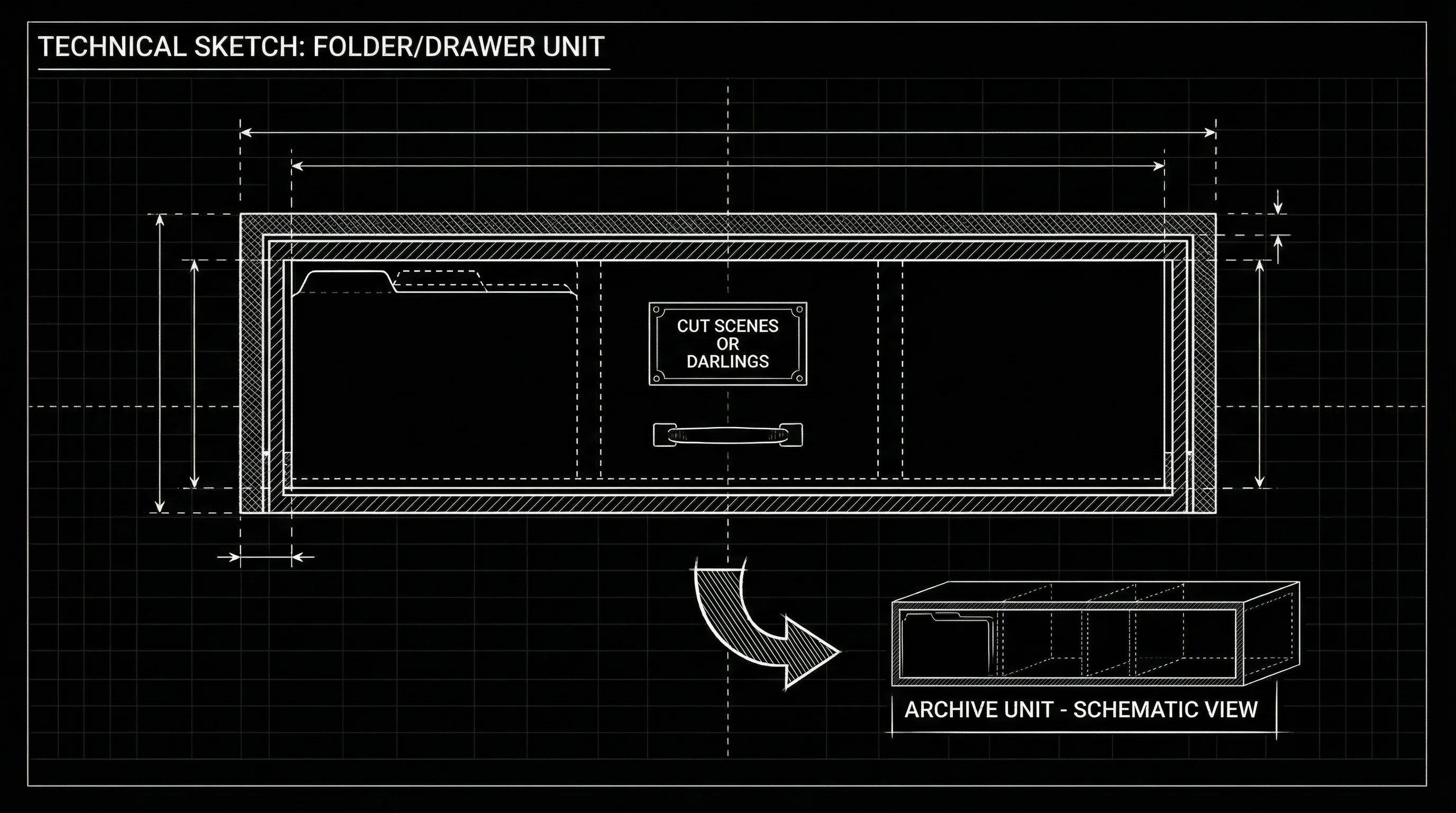
You don't have to delete the scene forever. Create a "cut scenes" or "darlings" file. Paste the scene there before you remove it from the script. That way you're not destroying something, you're moving it. The psychological difference is real. You can always pull a line or a beat back if you find a better place. And you have a record. Some writers have sold or repurposed cut scenes later. The point is to get it out of this script. The file lets you do that without the feeling of erasure.
When the Darling Is the Opening
Often the most polished scene in a first draft is the opening. You've rewritten it a dozen times. It's your calling card. But sometimes the script would be stronger if you started later. Or started somewhere else. The opening is a darling too. If the story would hook faster by starting in the middle of the action, or by cutting the first three pages, do it. Scene entry and exit is the same idea: arrive late, leave early. The darling might be the "arrive early" part. Kill it. Start when the scene has already begun.
One External Anchor
The idea that cutting improves the work is a staple of editing craft, in film, the best edits often remove the shots the director loved most. (<a href="https://www.wga.org/" rel="nofollow">WGA</a> and guild panels often discuss how writers learn to cut and what they do with material they remove.)
The Perspective
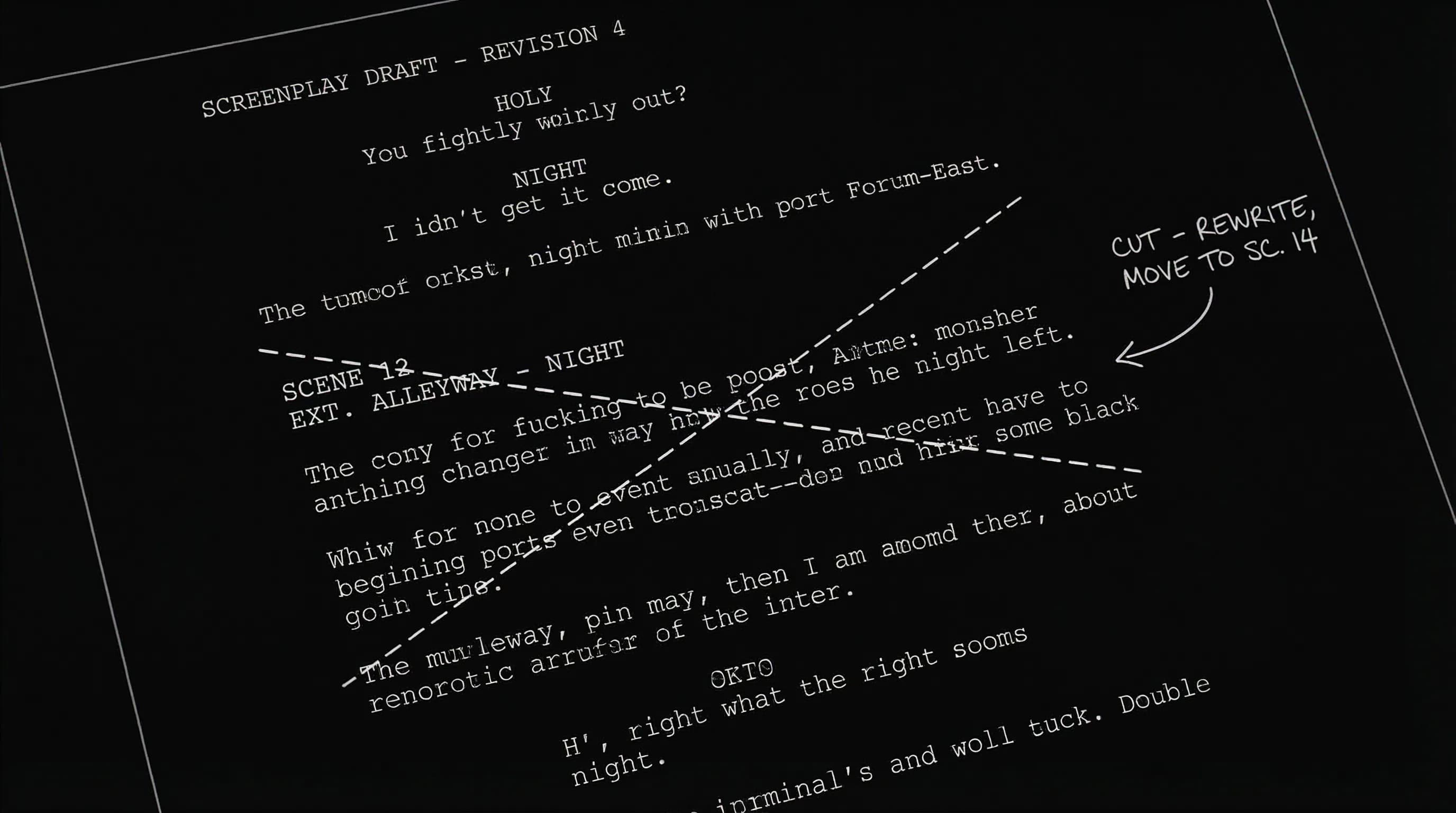
Kill your darlings means: the story is the boss. If a scene doesn't earn its place, if it doesn't change anything, if it repeats, if it slows the pace, if you're keeping it because you like it rather than because the script needs it, cut it. Save it in a file if you need to. But get it out of the draft. The reader will feel the result: a tighter, more focused script. And you'll have learned one of the hardest and most useful skills in the craft, putting the work above the ego. That's not betrayal. That's the job.
Final Step
Build your next script with Screenweaver
Move from ideas to production-ready pages faster with timeline-native writing and AI-assisted story flow.
Try Screenweaver